 MindFuelForAll
Compararte en redes: el perfeccionismo procrastina
#MindFuelForAll #miCanal #ImpostorSyndrome #PerfectionismProcrastination #SocialComparison #CompararteEnRedes #PerfeccionismoEnRedes
🎥 Mira el video: https://www.youtube.com/watch?v=3m09E9rg5cA
Compararte en redes: el perfeccionismo procrastina
#MindFuelForAll #miCanal #ImpostorSyndrome #PerfectionismProcrastination #SocialComparison #CompararteEnRedes #PerfeccionismoEnRedes
🎥 Mira el video: https://www.youtube.com/watch?v=3m09E9rg5cA
The High Cost of Keeping Up
3,108 words, 16 minutes read time.
Caleb shifted the gear into park, but he didn’t turn off the ignition. The heater was blowing a dry, dusty warmth against his face, and the old sedan hummed with a familiar, tired vibration. He sat there for a moment, the grocery bags in the passenger seat settling with a soft plastic crinkle. Through the windshield, the world was tinted in the muted shades of a late November afternoon, and his eyes, almost against his own will, drifted to the house across the street. The Miller place was glowing. It wasn’t just the professional-grade landscaping or the way their windows caught the dying light; it was the sheer, unapologetic Newness of it all. Parked in their driveway was a pristine, midnight-blue truck, the kind with a grill that looked like a wall of chrome and tires that had never seen a speck of real dirt. Caleb looked at his own hands, calloused and stained from a morning spent wrestling with a rusted lawnmower blade, and felt a sudden, sharp pang of something that wasn’t quite anger, but felt just as heavy.
He wasn’t a bitter man. If you asked the guys at the warehouse or the deacons at the church, they’d tell you Caleb was the first one to show up with a toolbox when a neighbor’s basement flooded. He loved his wife, he took pride in his work, and he usually thanked God for the roof over his head before he closed his eyes at night. But lately, the roof felt lower. The walls felt thinner. Every time he saw Miller—a guy who was perfectly nice, who always waved, who once gave Caleb’s son a signed baseball—Caleb felt a strange, hollow ache in his chest. It wasn’t that he wanted Miller to lose what he had; it was just that Miller’s “more” made Caleb’s “enough” feel like “nothing.” It was a slow-acting poison, a quiet thief that slipped into his house every time he scrolled through a filtered feed or looked across the pavement. It made the life he had built with his own sweat look like a consolation prize.
He finally killed the engine, and the sudden silence was louder than the humming had been. He stayed in the seat, staring at the chrome across the street until it blurred. He thought about the ancient words from the stone tablets, the ones about not desiring your neighbor’s house or his ox or his anything else. He used to think that command was for people with black hearts, for people who plotted and schemed. He didn’t realize it was also for the tired men in driveways who just wanted to feel like they weren’t failing a test they never signed up for. The coveting wasn’t a violent act; it was a slow erosion of his own gratitude. It was the way he looked at his wife’s aging kitchen and saw only the chipped Formica instead of the thousand meals she had cooked there with love. It was the way he looked at his son and wondered if the boy noticed the difference between their life and the one across the street.
The front door of his house opened, and a rectangle of warm, yellow light spilled out onto the porch. Sarah stood there, wrapped in an oversized cardigan, looking for him. She didn’t have a designer coat or a life that looked like a magazine spread, but she had a way of looking at him that usually made him feel like a giant. Today, however, he felt small. He felt like a man who was bringing home a bag of generic cereal and a heart full of shadows. He realized then that the “stuff” across the street wasn’t the enemy. The truck wasn’t the problem. The problem was the way he was letting the image of another man’s life become a judge over his own. He was standing in the middle of a beautiful, messy, blessed life, and he was ignoring the fire in his own hearth because he was too busy staring at the sparks from his neighbor’s chimney.
He stepped out of the car, the cold air hitting him like a splash of water. He grabbed the grocery bags, the plastic handles digging into his palms. He took one last look at the blue truck, the chrome glinting in the twilight, and he made a conscious, painful effort to let it go. It didn’t belong to him, and he didn’t belong to it. He turned his back on the Miller house and walked toward the yellow light of his own porch. It was just a house with a squeaky step and a mortgage that wasn’t paid off, but as he reached the door and Sarah smiled at him, he felt the weight in his chest loosen just a fraction. He wasn’t cured, and the itch of comparison would surely come back tomorrow, but for tonight, he chose to walk into the warmth he actually had.
Inside, the smell of roasted chicken and floor wax met him—a scent that usually meant home, but tonight felt like a reminder of the ordinary. He set the groceries on the counter, his movements heavy and deliberate. Sarah was humming a hymn, something about mercies being new every morning, and the sound grated against the static still buzzing in his brain. He wanted to tell her about the truck. He wanted to complain about the unfairness of a world where some men glide while others grind their gears into dust, but the look on her face stopped him. She looked content. It was a terrifying kind of peace, the kind that didn’t require a receipt or a warranty to stay valid.
“Caleb, you okay?” she asked, pausing with a wooden spoon in her hand. “You look like you’ve been chasing the wind.”
“Just tired, Sar,” he said, and it wasn’t a lie, though it wasn’t the whole truth. “The traffic was a bear.” He moved to the sink to wash his hands, staring at the window above the basin. It looked out over the backyard, where the grass was long and the shed door hung on a single, rusted hinge. He saw the work that needed to be done, the endless list of repairs that sucked the marrow out of his weekends. In his mind, the Miller’s backyard was a sanctuary of pavers and fire pits, a place where labor was something you paid for, not something that broke your back. He squeezed the soap too hard, a green streak of liquid trailing down the stainless steel.
He sat down at the table, the old wood groaning under his weight. His son, Leo, came skidding into the room with a drawing in his hand, a chaotic explosion of crayons that was supposed to be a spaceship. The boy held it up with a grin that suggested he had just painted the Sistine Chapel. Caleb looked at the drawing, then at his son’s scuffed knees and the hand-me-down shirt that was a size too large. A voice in the back of his head—a gritty, cynical whisper—reminded him that Miller’s kid probably had the best of everything. New cleats. A private tutor. A future paved with gold leaf.
“That’s great, buddy,” Caleb said, but his voice sounded hollow to his own ears. He felt like a fraud. How could he teach his son about being a man of God when he was currently measuring his own soul against a neighbor’s driveway? He realized that coveting wasn’t just a personal sin; it was a generational shadow. If he didn’t kill the rot now, he’d pass the infection down to the boy, teaching him to look at the world as a series of gaps to be filled rather than a landscape to be explored.
Later that night, after the house had gone quiet and the only sound was the wind rattling the loose pane in the bedroom, Caleb lay awake. The moonlight sliced through the blinds, casting a ladder of shadows across the ceiling. He thought about the rich young ruler in the stories, the man who had everything but couldn’t let go of the one thing that owned him. Caleb didn’t have much, but he realized he was being owned by the things he didn’t have. The lack was becoming his idol. He sat up, the sheets rustling, and put his feet on the cold floor. He didn’t go to the window this time. He knelt.
It wasn’t a pretty prayer. There were no stained-glass words or theological flourishes. It was the prayer of a man in the trenches, a man tired of his own skin. I’m sorry, he whispered into the dark. I’m sorry for making Your grace small. I’m sorry for acting like You’ve held out on me. He stayed there for a long time, the silence of the house pressing in around him. He didn’t feel a sudden surge of magic, but he felt the fever break. The truck across the street was still there, and his siding was still warping, but for the first time in months, the air in his own lungs felt like it was enough to live on. He went back to bed, and as he closed his eyes, he didn’t see the chrome; he saw the yellow light of his own kitchen, and for tonight, it was plenty.
The next morning broke with the same relentless grey, but the air felt thinner, easier to swallow. Caleb stood in the kitchen, the linoleum cold beneath his socks, watching the coffee pot hiss and sputter. He didn’t look out the front window. Instead, he watched Sarah come into the room, her hair sleep-mussed and her eyes soft. He realized then that he had been looking at her for weeks as a co-conspirator in a life of “less than,” rather than the woman who had stood in the rain with him to bury his father and held his hand through every lean December. He walked over and kissed her temple, the scent of her shampoo hitting him like a grounded reality.
“You’re in a better mood,” she noted, leaning into him as she reached for a mug.
“Just realized I’ve been acting like a man with a hole in his pocket,” Caleb said, his voice low and raspy. “Worrying about what’s falling out instead of what’s actually in there.”
He left for work ten minutes early. As he backed the sedan out, the familiar metallic cough of the engine didn’t grate on his nerves the way it had the day before. It was just a machine doing its job, carrying him to a place where he could earn a living for the people he loved. He passed Miller’s house. The blue truck was gone, likely already whisking its owner toward some glass-towered office. For a split second, the old itch flared up—a phantom limb of desire—but Caleb choked it out. He focused on the weight of the steering wheel and the way the heater finally kicked in, warming his hands.
At the warehouse, the day was a grind of inventory and logistics, the kind of repetitive labor that usually gave his mind too much room to wander into dark corners. But today, he stayed in the present. When a coworker complained about the measly Christmas bonus or the boss’s new boat, Caleb just nodded and kept moving. He wasn’t being a martyr; he was being a soldier. He was guarding the perimeter of his own peace, knowing that once you let one “if only” through the gates, the rest of the army would follow. He found a strange, gritty satisfaction in the work itself, the physical reality of crates and clipboards acting as an anchor against the drift of aspiration.
By the time he pulled back into his neighborhood that evening, the sun had already dipped below the horizon, leaving the sky a bruised purple. He saw the Miller house, the lights glowing with that same expensive warmth. But as he turned into his own driveway, he saw something else. Leo was in the front yard, bundled in a coat that was still a little too big, kicking a deflated soccer ball against a tree. The boy saw the car and dropped the ball, his face lighting up as if a king had just arrived in a golden carriage.
Caleb killed the engine and sat for a heartbeat. The siding was still warped. The porch still needed paint. The bank account was still a source of strategic planning rather than comfort. But as he stepped out of the car and his son tackled his knees, Caleb looked up at the grey sky and felt a sudden, sharp clarity. The rot was gone. It hadn’t been replaced by a new truck or a bigger house, but by the quiet, dangerous realization that he already had everything he needed to be the man he was supposed to be. He picked up the boy, felt the cold wind on his face, and walked into his house, leaving the rest of the world to its own shadows.
The following Sunday, Caleb stood in the back of the sanctuary, his hands shoved deep into his pockets. The preacher was speaking on the desert wanderings, on the way a whole generation of people had looked at a land of promise and saw only the giants they didn’t have the strength to fight. Caleb listened, but his mind kept drifting back to the driveway. It was raining again, a cold, needle-like drizzle that blurred the stained glass, and for the first time in a long time, he felt like he was standing on solid ground. He wasn’t there to ask for a promotion or a windfall; he was there to offer up the only thing he had left—his pride.
After the service, he ran into Miller in the foyer. The man was dressed in a suit that cost more than Caleb’s first car, but up close, in the harsh fluorescent light of the fellowship hall, Caleb noticed the deep, dark circles under Miller’s eyes. He noticed the way the man’s hands trembled slightly as he reached for a paper cup of lukewarm coffee.
“Hey, Caleb,” Miller said, his voice sounding thin, like wire stretched too tight. “Good to see you.”
“You too, Jim,” Caleb replied. He looked at the man, really looked at him, and the last of the green rot dissolved. He didn’t see a rival. He didn’t see a titan of industry. He saw a man who looked like he hadn’t slept in a week, a man who was probably white-knuckling his own steering wheel for reasons Caleb would never know. “You doing alright? You look a little worn down.”
Miller paused, a strange, flickering look passing over his face—a momentary crack in the polished veneer. “Just life, you know? It’s a lot to keep moving. Sometimes I think the more you have, the more you’re just a servant to the things you own.” He gave a hollow laugh and shook his head. “Anyway, see you around, neighbor.”
Caleb watched him walk away, moving toward that midnight-blue SUV with the heavy stride of a man carrying a pack full of lead. He realized that the “shining city on a hill” he had been envying was actually a fortress under siege. He felt a sudden, sharp pang of genuine compassion for Miller, a prayer that the man would find a way to set the weight down before it crushed him.
He walked out to his own car, the one with the dent in the rear fender and the upholstery that smelled like damp earth. He turned the key, and when the engine sputtered and finally caught, Caleb didn’t wince. He drove home through the grey afternoon, pulling into his driveway and looking at his house. It was small. It was old. It was imperfect in a thousand visible ways. But as he stepped through the door, he heard the sound of Leo’s laughter and the clatter of plates in the kitchen. He saw the warped siding and the peeling paint, and instead of seeing failure, he saw a shelter that had held firm against every storm. He was a man who owned very little, but as he sat down at his table and took Sarah’s hand, he knew he was the richest man on the block. He had finally learned the grittiest truth of all: that the only thing a man truly possesses is the peace he refuses to trade away.
Author’s Note
Coveting is a quiet rot. It doesn’t start with a heist; it starts in the driveway. It’s the hollow sound of a man measuring his soul against his neighbor’s chrome.
We’ve turned “enough” into a moving target. We look at the man next door and decide our own blessings are insults. We forget that a house is just wood and nails, and a truck is just iron and grease. When you let another man’s life define your value, you aren’t just losing your peace—you’re committing a slow suicide of the spirit.
Scripture isn’t a suggestion. It’s a blueprint for survival.
“For where your treasure is, there your heart will be also.” — Matthew 6:21
If your treasure is the midnight-blue paint on a truck that isn’t yours, your heart is already in the dirt.
This story isn’t about being poor. It’s about being free. It’s about the grit it takes to kill the envy before it kills you. It’s about the man who stops staring at the sparks from his neighbor’s chimney and starts tending to the fire in his own hearth.
The high cost of keeping up is everything you actually own. Your peace. Your gratitude. Your son’s respect.
Stop looking across the street. Look at your hands. Look at your wife. Look at the God who gave you breath. That is the only math that matters.
The rest is just noise. Leave it in the driveway.
Call to Action
If this story struck a chord, don’t just scroll on. Join the brotherhood—men learning to build, not borrow, their strength. Subscribe for more stories like this, drop a comment about where you’re growing, or reach out and tell me what you’re working toward. Let’s grow together.
D. Bryan King
Sources
Disclaimer:
The views and opinions expressed in this post are solely those of the author. The information provided is based on personal research, experience, and understanding of the subject matter at the time of writing. Readers should consult relevant experts or authorities for specific guidance related to their unique situations.
#biblicalContentment #biblicalManhood #blueCollarFaith #characterStudy #ChristianEthics #ChristianLiving #ChristianMasculinity #ChristianShortStory #ChristianTestimony #contentmentInChrist #covetousness #dailyBread #envyInMen #faithAndWork #faithBasedFiction #familyValues #gospelHope #gospelCenteredLiving #gratitude #gritLit #heartOfMan #heartPosture #homeLife #humbleLiving #internalConflict #killingEnvy #lifeOfCaleb #marriageAndFaith #materialismInChurch #menSDevotionalStory #mentalHealthAndFaith #midlifeCrisisFaith #modernMaterialism #moralDilemma #narrativeTheology #neighborhoodRivalry #overcomingGreed #peaceOfGod #peaceOverPressure #pressureToSucceed #pursuingHoliness #raisingGodlySons #redemptiveFiction #religiousFiction #religiousNarrative #resistingTemptation #saltAndLight #socialComparison #spiritualFreedom #SpiritualGrowth #spiritualRot #spiritualWarfare #statusAnxiety #stewardship #struggleWithComparison #tenthCommandment #trueWealth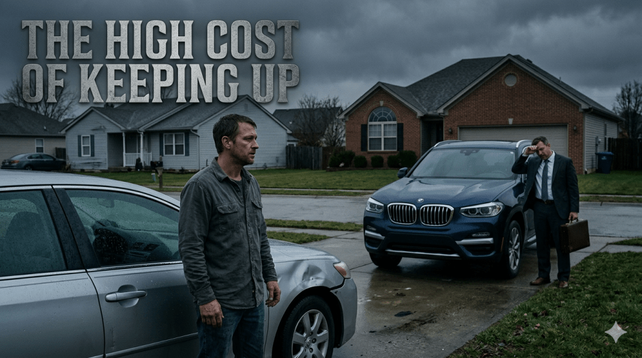
The article discusses how social anxiety in young adults is linked to a higher risk of developing digital addictions, with social comparison on online platforms identified as a key mechanism. A longitudinal study with 330 participants shows that anxiety can lead to increased online comparison, which in turn predicts addictive digital behaviors over time.
This topic is of interest to psychology readers because it highlights how emotional vulnerabilities interact with online environments and social comparison processes, shaping emerging patterns of digital dependence.
Article Title: Anxious young adults are more likely to develop digital addictions
Link to PsyPost Article: https://www.psypost dot org/how-social-anxiety-and-screen-time-comparison-fuel-digital-addiction-2026-03-26/
Copy and paste broken link above into your browser and replace "dot" with "." for link to work. We have to do it this way to avoid displaying copyrighted images.
#digitaladdiction #socialanxiety #socialcomparison #emergingadulthood #psychologyresearch
The #Cost of #Comparisons;
#Socialcomparison can trigger delayed #trauma and #unresolvedissues.
https://www.psychologytoday.com/us/blog/creating-2-pink-lines/202412/the-cost-of-comparisons
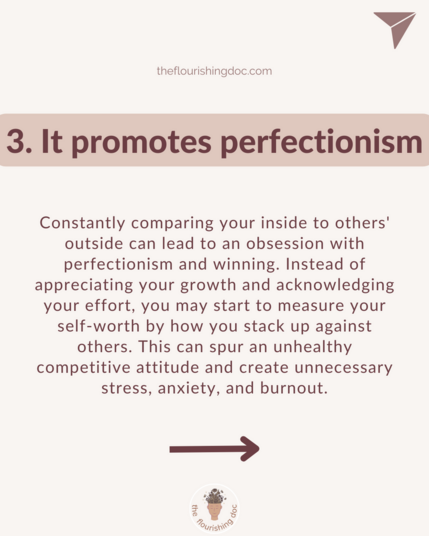
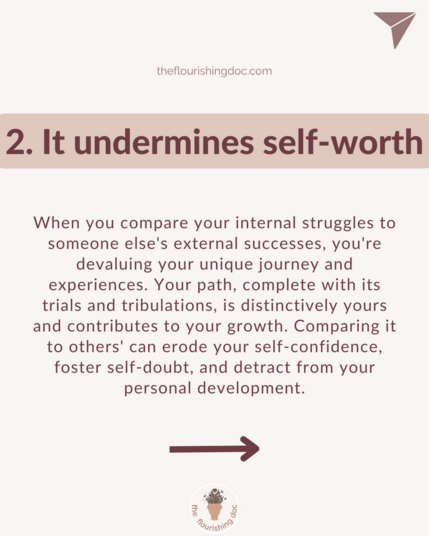
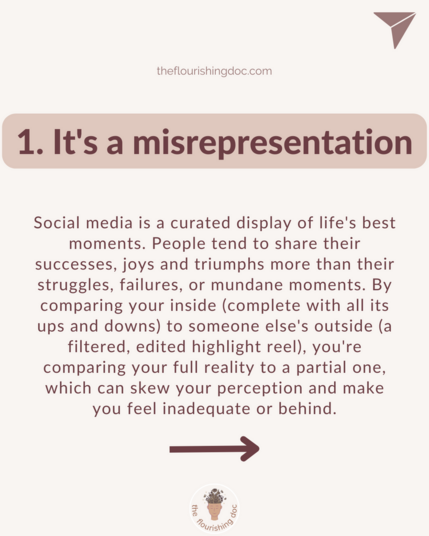
We all do it - we compare ourselves to the people we see on social media. But what we often forget is that it's like comparing our inside to someone else's outside 🍏↔️🍊
So today, I wanted to highlight why that can be harmful. Hopefully something we can all keep in mind as we scroll ahead.
#AuthenticLiving #SocialComparison #SelfLove #PersonalJourney #StopTheCompareTrap #SelfAcceptance #MindfulLiving #SelfGrowth

Paper alert: Pete McCarthy's impressive work with the Comparison Standards Scale for Appearance!
He explored the affective impact of comparison frequency and discrepancy, mediated/moderated by appearance schemas and psychopathology (N=300). Check it out:
https://journals.plos.org/plosone/article?id=10.1371/journal.pone.0280072

We introduce a novel approach to assess habitual comparison processes, while distinguishing between different types of comparison standards. Several comparison theories (e.g., social) suggest that self-evaluations use different standards to inform self-perception and are associated with wellbeing and personality. We developed the Comparison Standards Scale for Appearance (CSS-A) to examine self-reported engagement with social, temporal, criteria-based, dimensional, and counterfactual comparisons for upward and downward standards in relation to appearance. The scale was completed by three hundred participants online alongside measures of appearance schemas, social comparison evaluations, depression, anxiety, stress, self-esteem, physical self-concept, narcissism, and perfectionism. The CSS-A was found to reliably assess individual differences in upward and downward comparison frequency and affective impact for multiple comparison standards. In line with theory, CSS-A upward comparisons were more frequent than downward comparisons and coincided with negative (versus positive) affective impact. Comparison intensity (i.e., comparison frequency × discrepancy) predicted negative and positive affective impact for upward and downward comparisons, respectively. This relationship was partially mediated by appearance concern for upward comparisons (a composite of appearance schemas and physical self-concept), yet moderated by negativity for downward comparisons (a composite of depression, anxiety, stress, and self-esteem). We offer a framework for measuring the comparison process that warrants further research on underlying comparison processes, for which the CSS(-A) and experience sampling methods should serve as useful tools.
 Bryan King
 Psychotherapy Commission ACPE
 Steve Dustcircle 🌹
 Dr M | Positive Psychology
 Thomas Meyer ✅
 Chris Sikkenga