Enough in Him When Everything Says “More”

On Second Thought

“My God shall supply all your need according to His riches in glory by Christ Jesus.” – Philippians 4:19

There is a quiet tension most of us carry into each day, though we may not always name it. It is the subtle pull of discontentment, the whisper that what we have is not quite enough, that where we are is not quite right, that who we are could somehow be improved if only circumstances shifted. We live in a culture that thrives on this whisper. Every advertisement, every upgrade, every new release is designed to stir dissatisfaction. It teaches us to measure life by accumulation rather than by assurance. Yet when we come to Paul’s words in Philippians 4, we find a radically different voice—one that does not deny need but reframes it entirely.

Paul writes from a place that most would consider lacking. He is not in comfort but in confinement, not in abundance but in limitation. And yet he declares earlier in the passage, “I have learned, in whatsoever state I am, therewith to be content” (Philippians 4:11). The Greek word for content, autarkēs (αὐτάρκης), carries the meaning of being self-sufficient, but in the Christian sense, it is not self-reliance but Christ-reliance. It is the quiet confidence that what God provides is enough because God Himself is enough. This shifts the entire framework. Contentment is not the result of having everything we want; it is the result of trusting the One who provides what we need.

One of the first truths that anchors this kind of contentment is the understanding that our value is not tied to our possessions or circumstances. In a world that constantly assigns worth based on status, achievement, or accumulation, Scripture offers a different equation. Our value is rooted in relationship—specifically, our relationship with God as Father. The Greek term huiothesia (υἱοθεσία), often translated as “adoption” (Romans 8:15), reminds us that we are brought into God’s family not by merit but by grace. That means our identity is secure, regardless of external conditions. When we begin to grasp this, the pressure to prove ourselves through material gain begins to loosen.

Closely connected to this is the assurance that God truly cares for us. Paul does not say that God might supply our needs or that He will do so conditionally based on our performance. He states it with certainty: “My God shall supply all your need.” The word “supply” comes from the Greek plēroō (πληρόω), meaning to fill to the full, to complete. It carries the idea of sufficiency, not excess. God’s provision is not about indulgence but about completeness. Jesus echoed this truth in His teaching when He said, “Your heavenly Father knows that you need them” (Matthew 6:32). There is something deeply stabilizing about knowing that God’s care is not reactive but intentional. He is not scrambling to meet our needs; He has already assumed responsibility for them.

Then there is the often-challenging truth that God is in control. This becomes most evident not in seasons of ease but in moments of disruption—when a job ends unexpectedly, when relationships fracture, when plans unravel. It is in these moments that we are tempted to see ourselves as victims of circumstance. Yet Scripture invites us to see something deeper. Paul writes in Romans 8:28, “And we know that all things work together for good to them that love God.” The Greek phrase synergeō (συνεργέω) suggests a cooperative working, a divine orchestration behind the scenes. This does not mean that every event is good in itself, but that God is actively weaving all things toward a redemptive purpose.

When these truths begin to take root—our identity in God, His care for us, and His sovereign control—contentment becomes less of an aspiration and more of a natural outflow. It does not mean we stop working or striving in healthy ways, but it does mean that our striving is no longer driven by anxiety or comparison. Instead, it is grounded in trust. We go about the routine tasks of the day, not with the burden of securing our own future, but with the confidence that our future is already held.

Still, there is a paradox here that invites deeper reflection.

On Second Thought

Contentment, at first glance, seems like the absence of desire—the quieting of ambition, the settling for what is. But when we look more closely at Scripture, we discover that true contentment is not the death of desire but its transformation. Paul, who speaks so clearly about being content, is also the same man who says, “I press on toward the goal” (Philippians 3:14). He is not passive; he is deeply purposeful. The difference is not in the presence of desire but in its direction.

Here is the tension: the more we chase fulfillment in things, the more elusive contentment becomes. Yet the more we release our grip on those things and rest in God’s provision, the more contentment finds us. It is almost as though contentment cannot be pursued directly; it must be received indirectly. When we fix our eyes on Christ, when we trust His care, when we rest in His control, something shifts within us. The striving quiets, not because life has become easier, but because our foundation has become stronger.

This means that contentment is not found at the end of a perfect set of circumstances but in the middle of imperfect ones. It is not reserved for those who have “arrived” but is available to those who have surrendered. And perhaps most surprisingly, contentment does not limit our lives; it frees them. When we are no longer driven by the need to acquire or achieve in order to feel secure, we are able to live more fully, give more freely, and trust more deeply.

So the question is not whether we have enough, but whether we believe that God is enough. And when that question is answered in the heart, contentment is no longer something we struggle to create—it becomes something we learn to live.

FEEL FREE TO COMMENT, SUBSCRIBE, AND REPOST, SO OTHERS MAY KNOW


#ChristianLiving #contentmentInChrist #Philippians419 #trustingGod

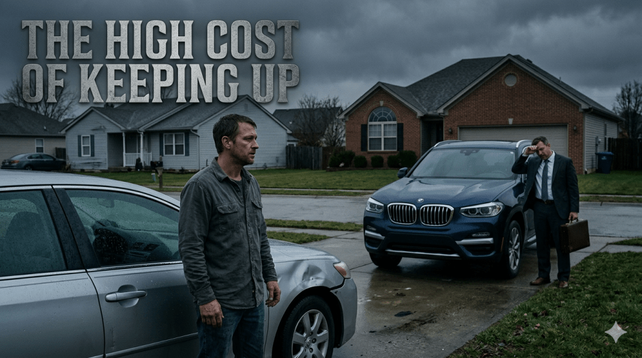
The High Cost of Keeping Up

3,108 words, 16 minutes read time.

Caleb shifted the gear into park, but he didn’t turn off the ignition. The heater was blowing a dry, dusty warmth against his face, and the old sedan hummed with a familiar, tired vibration. He sat there for a moment, the grocery bags in the passenger seat settling with a soft plastic crinkle. Through the windshield, the world was tinted in the muted shades of a late November afternoon, and his eyes, almost against his own will, drifted to the house across the street. The Miller place was glowing. It wasn’t just the professional-grade landscaping or the way their windows caught the dying light; it was the sheer, unapologetic Newness of it all. Parked in their driveway was a pristine, midnight-blue truck, the kind with a grill that looked like a wall of chrome and tires that had never seen a speck of real dirt. Caleb looked at his own hands, calloused and stained from a morning spent wrestling with a rusted lawnmower blade, and felt a sudden, sharp pang of something that wasn’t quite anger, but felt just as heavy.

He wasn’t a bitter man. If you asked the guys at the warehouse or the deacons at the church, they’d tell you Caleb was the first one to show up with a toolbox when a neighbor’s basement flooded. He loved his wife, he took pride in his work, and he usually thanked God for the roof over his head before he closed his eyes at night. But lately, the roof felt lower. The walls felt thinner. Every time he saw Miller—a guy who was perfectly nice, who always waved, who once gave Caleb’s son a signed baseball—Caleb felt a strange, hollow ache in his chest. It wasn’t that he wanted Miller to lose what he had; it was just that Miller’s “more” made Caleb’s “enough” feel like “nothing.” It was a slow-acting poison, a quiet thief that slipped into his house every time he scrolled through a filtered feed or looked across the pavement. It made the life he had built with his own sweat look like a consolation prize.

He finally killed the engine, and the sudden silence was louder than the humming had been. He stayed in the seat, staring at the chrome across the street until it blurred. He thought about the ancient words from the stone tablets, the ones about not desiring your neighbor’s house or his ox or his anything else. He used to think that command was for people with black hearts, for people who plotted and schemed. He didn’t realize it was also for the tired men in driveways who just wanted to feel like they weren’t failing a test they never signed up for. The coveting wasn’t a violent act; it was a slow erosion of his own gratitude. It was the way he looked at his wife’s aging kitchen and saw only the chipped Formica instead of the thousand meals she had cooked there with love. It was the way he looked at his son and wondered if the boy noticed the difference between their life and the one across the street.

The front door of his house opened, and a rectangle of warm, yellow light spilled out onto the porch. Sarah stood there, wrapped in an oversized cardigan, looking for him. She didn’t have a designer coat or a life that looked like a magazine spread, but she had a way of looking at him that usually made him feel like a giant. Today, however, he felt small. He felt like a man who was bringing home a bag of generic cereal and a heart full of shadows. He realized then that the “stuff” across the street wasn’t the enemy. The truck wasn’t the problem. The problem was the way he was letting the image of another man’s life become a judge over his own. He was standing in the middle of a beautiful, messy, blessed life, and he was ignoring the fire in his own hearth because he was too busy staring at the sparks from his neighbor’s chimney.

He stepped out of the car, the cold air hitting him like a splash of water. He grabbed the grocery bags, the plastic handles digging into his palms. He took one last look at the blue truck, the chrome glinting in the twilight, and he made a conscious, painful effort to let it go. It didn’t belong to him, and he didn’t belong to it. He turned his back on the Miller house and walked toward the yellow light of his own porch. It was just a house with a squeaky step and a mortgage that wasn’t paid off, but as he reached the door and Sarah smiled at him, he felt the weight in his chest loosen just a fraction. He wasn’t cured, and the itch of comparison would surely come back tomorrow, but for tonight, he chose to walk into the warmth he actually had.

Inside, the smell of roasted chicken and floor wax met him—a scent that usually meant home, but tonight felt like a reminder of the ordinary. He set the groceries on the counter, his movements heavy and deliberate. Sarah was humming a hymn, something about mercies being new every morning, and the sound grated against the static still buzzing in his brain. He wanted to tell her about the truck. He wanted to complain about the unfairness of a world where some men glide while others grind their gears into dust, but the look on her face stopped him. She looked content. It was a terrifying kind of peace, the kind that didn’t require a receipt or a warranty to stay valid.

“Caleb, you okay?” she asked, pausing with a wooden spoon in her hand. “You look like you’ve been chasing the wind.”

“Just tired, Sar,” he said, and it wasn’t a lie, though it wasn’t the whole truth. “The traffic was a bear.” He moved to the sink to wash his hands, staring at the window above the basin. It looked out over the backyard, where the grass was long and the shed door hung on a single, rusted hinge. He saw the work that needed to be done, the endless list of repairs that sucked the marrow out of his weekends. In his mind, the Miller’s backyard was a sanctuary of pavers and fire pits, a place where labor was something you paid for, not something that broke your back. He squeezed the soap too hard, a green streak of liquid trailing down the stainless steel.

He sat down at the table, the old wood groaning under his weight. His son, Leo, came skidding into the room with a drawing in his hand, a chaotic explosion of crayons that was supposed to be a spaceship. The boy held it up with a grin that suggested he had just painted the Sistine Chapel. Caleb looked at the drawing, then at his son’s scuffed knees and the hand-me-down shirt that was a size too large. A voice in the back of his head—a gritty, cynical whisper—reminded him that Miller’s kid probably had the best of everything. New cleats. A private tutor. A future paved with gold leaf.

“That’s great, buddy,” Caleb said, but his voice sounded hollow to his own ears. He felt like a fraud. How could he teach his son about being a man of God when he was currently measuring his own soul against a neighbor’s driveway? He realized that coveting wasn’t just a personal sin; it was a generational shadow. If he didn’t kill the rot now, he’d pass the infection down to the boy, teaching him to look at the world as a series of gaps to be filled rather than a landscape to be explored.

Later that night, after the house had gone quiet and the only sound was the wind rattling the loose pane in the bedroom, Caleb lay awake. The moonlight sliced through the blinds, casting a ladder of shadows across the ceiling. He thought about the rich young ruler in the stories, the man who had everything but couldn’t let go of the one thing that owned him. Caleb didn’t have much, but he realized he was being owned by the things he didn’t have. The lack was becoming his idol. He sat up, the sheets rustling, and put his feet on the cold floor. He didn’t go to the window this time. He knelt.

It wasn’t a pretty prayer. There were no stained-glass words or theological flourishes. It was the prayer of a man in the trenches, a man tired of his own skin. I’m sorry, he whispered into the dark. I’m sorry for making Your grace small. I’m sorry for acting like You’ve held out on me. He stayed there for a long time, the silence of the house pressing in around him. He didn’t feel a sudden surge of magic, but he felt the fever break. The truck across the street was still there, and his siding was still warping, but for the first time in months, the air in his own lungs felt like it was enough to live on. He went back to bed, and as he closed his eyes, he didn’t see the chrome; he saw the yellow light of his own kitchen, and for tonight, it was plenty.

The next morning broke with the same relentless grey, but the air felt thinner, easier to swallow. Caleb stood in the kitchen, the linoleum cold beneath his socks, watching the coffee pot hiss and sputter. He didn’t look out the front window. Instead, he watched Sarah come into the room, her hair sleep-mussed and her eyes soft. He realized then that he had been looking at her for weeks as a co-conspirator in a life of “less than,” rather than the woman who had stood in the rain with him to bury his father and held his hand through every lean December. He walked over and kissed her temple, the scent of her shampoo hitting him like a grounded reality.

“You’re in a better mood,” she noted, leaning into him as she reached for a mug.

“Just realized I’ve been acting like a man with a hole in his pocket,” Caleb said, his voice low and raspy. “Worrying about what’s falling out instead of what’s actually in there.”

He left for work ten minutes early. As he backed the sedan out, the familiar metallic cough of the engine didn’t grate on his nerves the way it had the day before. It was just a machine doing its job, carrying him to a place where he could earn a living for the people he loved. He passed Miller’s house. The blue truck was gone, likely already whisking its owner toward some glass-towered office. For a split second, the old itch flared up—a phantom limb of desire—but Caleb choked it out. He focused on the weight of the steering wheel and the way the heater finally kicked in, warming his hands.

At the warehouse, the day was a grind of inventory and logistics, the kind of repetitive labor that usually gave his mind too much room to wander into dark corners. But today, he stayed in the present. When a coworker complained about the measly Christmas bonus or the boss’s new boat, Caleb just nodded and kept moving. He wasn’t being a martyr; he was being a soldier. He was guarding the perimeter of his own peace, knowing that once you let one “if only” through the gates, the rest of the army would follow. He found a strange, gritty satisfaction in the work itself, the physical reality of crates and clipboards acting as an anchor against the drift of aspiration.

By the time he pulled back into his neighborhood that evening, the sun had already dipped below the horizon, leaving the sky a bruised purple. He saw the Miller house, the lights glowing with that same expensive warmth. But as he turned into his own driveway, he saw something else. Leo was in the front yard, bundled in a coat that was still a little too big, kicking a deflated soccer ball against a tree. The boy saw the car and dropped the ball, his face lighting up as if a king had just arrived in a golden carriage.

Caleb killed the engine and sat for a heartbeat. The siding was still warped. The porch still needed paint. The bank account was still a source of strategic planning rather than comfort. But as he stepped out of the car and his son tackled his knees, Caleb looked up at the grey sky and felt a sudden, sharp clarity. The rot was gone. It hadn’t been replaced by a new truck or a bigger house, but by the quiet, dangerous realization that he already had everything he needed to be the man he was supposed to be. He picked up the boy, felt the cold wind on his face, and walked into his house, leaving the rest of the world to its own shadows.

The following Sunday, Caleb stood in the back of the sanctuary, his hands shoved deep into his pockets. The preacher was speaking on the desert wanderings, on the way a whole generation of people had looked at a land of promise and saw only the giants they didn’t have the strength to fight. Caleb listened, but his mind kept drifting back to the driveway. It was raining again, a cold, needle-like drizzle that blurred the stained glass, and for the first time in a long time, he felt like he was standing on solid ground. He wasn’t there to ask for a promotion or a windfall; he was there to offer up the only thing he had left—his pride.

After the service, he ran into Miller in the foyer. The man was dressed in a suit that cost more than Caleb’s first car, but up close, in the harsh fluorescent light of the fellowship hall, Caleb noticed the deep, dark circles under Miller’s eyes. He noticed the way the man’s hands trembled slightly as he reached for a paper cup of lukewarm coffee.

“Hey, Caleb,” Miller said, his voice sounding thin, like wire stretched too tight. “Good to see you.”

“You too, Jim,” Caleb replied. He looked at the man, really looked at him, and the last of the green rot dissolved. He didn’t see a rival. He didn’t see a titan of industry. He saw a man who looked like he hadn’t slept in a week, a man who was probably white-knuckling his own steering wheel for reasons Caleb would never know. “You doing alright? You look a little worn down.”

Miller paused, a strange, flickering look passing over his face—a momentary crack in the polished veneer. “Just life, you know? It’s a lot to keep moving. Sometimes I think the more you have, the more you’re just a servant to the things you own.” He gave a hollow laugh and shook his head. “Anyway, see you around, neighbor.”

Caleb watched him walk away, moving toward that midnight-blue SUV with the heavy stride of a man carrying a pack full of lead. He realized that the “shining city on a hill” he had been envying was actually a fortress under siege. He felt a sudden, sharp pang of genuine compassion for Miller, a prayer that the man would find a way to set the weight down before it crushed him.

He walked out to his own car, the one with the dent in the rear fender and the upholstery that smelled like damp earth. He turned the key, and when the engine sputtered and finally caught, Caleb didn’t wince. He drove home through the grey afternoon, pulling into his driveway and looking at his house. It was small. It was old. It was imperfect in a thousand visible ways. But as he stepped through the door, he heard the sound of Leo’s laughter and the clatter of plates in the kitchen. He saw the warped siding and the peeling paint, and instead of seeing failure, he saw a shelter that had held firm against every storm. He was a man who owned very little, but as he sat down at his table and took Sarah’s hand, he knew he was the richest man on the block. He had finally learned the grittiest truth of all: that the only thing a man truly possesses is the peace he refuses to trade away.

Author’s Note

Coveting is a quiet rot. It doesn’t start with a heist; it starts in the driveway. It’s the hollow sound of a man measuring his soul against his neighbor’s chrome.

We’ve turned “enough” into a moving target. We look at the man next door and decide our own blessings are insults. We forget that a house is just wood and nails, and a truck is just iron and grease. When you let another man’s life define your value, you aren’t just losing your peace—you’re committing a slow suicide of the spirit.

Scripture isn’t a suggestion. It’s a blueprint for survival.

“For where your treasure is, there your heart will be also.” — Matthew 6:21

If your treasure is the midnight-blue paint on a truck that isn’t yours, your heart is already in the dirt.

This story isn’t about being poor. It’s about being free. It’s about the grit it takes to kill the envy before it kills you. It’s about the man who stops staring at the sparks from his neighbor’s chimney and starts tending to the fire in his own hearth.

The high cost of keeping up is everything you actually own. Your peace. Your gratitude. Your son’s respect.

Stop looking across the street. Look at your hands. Look at your wife. Look at the God who gave you breath. That is the only math that matters.

The rest is just noise. Leave it in the driveway.

Call to Action

If this story struck a chord, don’t just scroll on. Join the brotherhood—men learning to build, not borrow, their strength. Subscribe for more stories like this, drop a comment about where you’re growing, or reach out and tell me what you’re working toward. Let’s grow together.

D. Bryan King

Sources

Disclaimer:

The views and opinions expressed in this post are solely those of the author. The information provided is based on personal research, experience, and understanding of the subject matter at the time of writing. Readers should consult relevant experts or authorities for specific guidance related to their unique situations.

#biblicalContentment #biblicalManhood #blueCollarFaith #characterStudy #ChristianEthics #ChristianLiving #ChristianMasculinity #ChristianShortStory #ChristianTestimony #contentmentInChrist #covetousness #dailyBread #envyInMen #faithAndWork #faithBasedFiction #familyValues #gospelHope #gospelCenteredLiving #gratitude #gritLit #heartOfMan #heartPosture #homeLife #humbleLiving #internalConflict #killingEnvy #lifeOfCaleb #marriageAndFaith #materialismInChurch #menSDevotionalStory #mentalHealthAndFaith #midlifeCrisisFaith #modernMaterialism #moralDilemma #narrativeTheology #neighborhoodRivalry #overcomingGreed #peaceOfGod #peaceOverPressure #pressureToSucceed #pursuingHoliness #raisingGodlySons #redemptiveFiction #religiousFiction #religiousNarrative #resistingTemptation #saltAndLight #socialComparison #spiritualFreedom #SpiritualGrowth #spiritualRot #spiritualWarfare #statusAnxiety #stewardship #struggleWithComparison #tenthCommandment #trueWealth

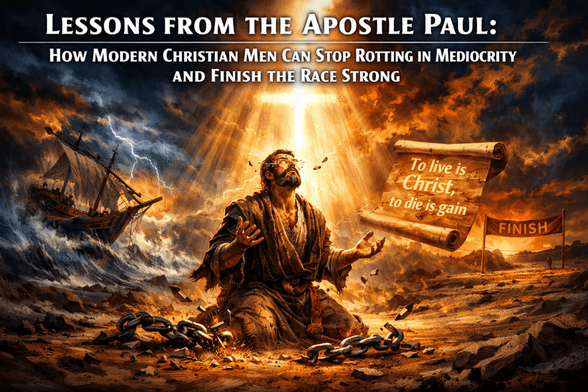
Lessons from the Life of Apostle Paul: A Guide for Modern Believers.

1,118 words, 6 minutes read time.

Christian men drift through existence half-asleep—half-hearted prayers, compromised leadership at home, excuses stacked high instead of endurance forged in fire—while the Apostle Paul blazes across Scripture as proof: God seizes the worst rebels and forges them into unbreakable warriors for the gospel. His life stands no gentle tale; it serves as brutal mirror exposing cowardice without mercy. From murderous persecutor to chained apostle declaring “to live is Christ, to die is gain,” Paul reveals exactly what radical surrender demands—and what devastation awaits refusal. This post drives home non-negotiable lessons from Paul’s Damascus conversion, relentless suffering with unshakable contentment, and final charge to finish strong. Ignore these truths, and souls rot from inside out. Face them without flinching, and God still shatters excuses to remake men today. No middle ground remains for anyone claiming Christ yet living like the world.

Paul’s Radical Conversion: God Doesn’t Negotiate with Half-Hearted Allegiance – Stop Persecuting Christ Through Comfort

The most explosive lesson from Paul strikes first: God never gently coaxes compromisers into faith—He ambushes rebels with blinding truth. Saul approved Stephen’s murder, ravaged the church, dragged believers to prison, breathing threats and slaughter. Yet on the Damascus road, pursuing destruction, Christ struck him down with light brighter than the sun: “Saul, Saul, why persecuting Me?” Blind, fasting three days, scales fell only after total surrender through Ananias. Instantly, Saul preached Jesus as Messiah in synagogues—no recovery time, no self-pity, no trauma excuses.

Christian men repeat Saul’s pre-road rebellion: persecuting Christ by clinging to comfort, sin, self while labeling it “grace.” Lukewarm prayers, neglected family devotions, secret vices scream rebellion louder than Saul’s threats. Paul’s conversion declares war on gradual drift. God takes no prisoners in half-allegiance. He demands everything immediately. Stop hiding behind “not ready” or “change later.” Current disasters—fading marriages, wayward children, dead spiritual lives—evidence abandonment of the cross. Hit knees tonight. Confess like Saul. Beg scales fall. Proclaim Christ fearlessly in homes and streets starting tomorrow. Anything less leaves blindness and chains intact. Paul rose and preached immediately because the gospel permits no delay. Follow the pattern or admit the destroyer role persists.

Enduring Hardship with Unshakable Contentment: Count All as Loss for Christ – Kill Softness Immediately

Paul’s ministry forged no victory parades; it hammered a gauntlet of suffering to crush weakness and reveal Christ’s power. Beatings, stonings (left for dead), shipwrecks, dangers from robbers and false brothers, hunger, cold, chains—yet epistles thundered from prison: “Learned in whatever situation to be content… can do all things through him who strengthens me.” Contentment equaled warrior reliance amid unrelenting fire. Warned of arrest in Jerusalem, response snapped back: “Why weeping and breaking hearts? Ready not only imprisoned but even to die… for the name of the Lord Jesus.”

Complaints over traffic, tough bosses, minor conflicts masquerade as hardship. Pathetic. Softness rots manhood and poisons households. Paul counted pedigree, achievements, comfort as rubbish compared to knowing Christ. Pressed on because to live meant Christ, to die gain—no fear, no bargaining. Stop fearing trials; fear wasted life on trivial pursuits. When pressure hits, drop to prayer, not screens. Train body and spirit to endure. Magnify Christ in chains or freedom. Families need men who finish, not fold at discomfort. Paul’s grit proves: God strengthens refusers of quit. Embrace the cross or watch legacies burn.

Finishing the Race: Paul’s Final Charge – Guard the Gospel or Die with Regrets

Paul ended execution-ready, not fading quietly. From chains, charged Timothy: fight good fight, finish race, keep faith. Guard deposit, endure hardship as soldier, share suffering for gospel. Warned of self-lovers abandoning truth, yet proclaimed word relentlessly. Legacy: churches planted, doctrine defended, Gentiles saved, Scripture expanded.

Ignore Paul’s pattern, and consequences crush: drift into cowardice, compromise truth for approval, abandon families spiritually, die regretting half-lives. Paul proves no one beyond reach—God saved chief sinner—but demands total surrender. Half-measures breed half-men. Mediocrity shouts neglect of God. Wreckage begs one thing: return immediately.

This fact should devastate every Christian man and expose how bad the drift has become: wait staff across the country name Sunday the worst day to work—not because of pagans or atheists, but because of the church crowd. Servers dread the post-service rush: large parties demanding constant attention, rude attitudes, entitlement, running tables ragged, then stiffing tips or leaving fake-money tracts with Bible verses instead of cash. “The church people are the loudest, most demanding, rudest, and cheapest,” servers report consistently. Pastors have even created sites to collect the anonymous horror stories from the industry. Sing “Amazing Grace” in the morning, then treat image-bearers like servants to be abused in the afternoon? This is not quiet witness; this is active warfare against the gospel’s reputation. The hypocrisy burns hotter than any persecution Paul faced. It proves the slide into mediocrity runs far deeper than private sin—it publicly poisons the world’s view of Christ. Face this indictment without excuse. Repent of the entitlement. Next Sunday, tip generously, thank the server by name, show genuine kindness as Christ served the least. Or keep confirming the stereotype and watch souls stay lost because of the church crowd’s behavior.

Stop now. Repent. Cry out Saul-like. Preach fearlessly. Endure everything. Finish strong for King who bought with blood. Time runs short.

The Apostle Paul’s life confronts every drifting Christian man: God remakes enemies into ambassadors through ruthless surrender. Excuses end here. Face rot, ignite fury at weakness, drop broken before God—or continue rotting. Choose. Race awaits warriors, not sleepwalkers.

Call to Action

If this study encouraged you, don’t just scroll on. Subscribe for more bible studies, share a comment about what God is teaching you, or reach out and tell me what you’re reflecting on today. Let’s grow in faith together.

D. Bryan King

Sources

Disclaimer:

The views and opinions expressed in this post are solely those of the author. The information provided is based on personal research, experience, and understanding of the subject matter at the time of writing. Readers should consult relevant experts or authorities for specific guidance related to their unique situations.

#abidingInChristMen #actsPaulConversion #apostlePaulBibleStudy #apostlePaulConversion #apostlePaulLessons #apostlePaulTestimony #apostlePaulTimeline #battleClearMind #bibleLessonsMen #biblicalManhood #chiefOfSinners #christianEnduranceTrials #christianLivingMen #ChristianManhood #christianMenContent #christianMenDiscipleship #christianMenPray #christianMenWakeUp #contentmentInChrist #costDiscipleshipPaul #damascusRoadConversion #discipleshipCostJesus #endureHardshipGospel #fathersRiseUp #finishTheRaceStrong #forgeManGodDemands #godlyManhoodPaul #graceUnderLawPaul #guardGospelDeposit #joyToughestSeasons #lessonsFromPaul #liveIsChristDieGain #menFollowingChrist #menWithoutChests #noLukewarmPrayers #paulChainsPrison #paulContentment #PaulDamascusRoad #paulEpistlesLessons #paulFinishRace #paulFormerLife #paulLessonsModernMen #paulMissionaryJourneys #paulMissionaryLife #paulPersecutionChurch #paulRadicalChange #paulRichYoungRuler #paulSufferingEndurance #PaulTransformation #paulWarningGrace #philippiansContentment #radicalSurrenderChrist #rejoiceInTrials #spiritualWarfareKnees #stopMediocrityFaith #surrenderToJesus #timothyChargePaul #toLiveIsChrist #transformedByChrist

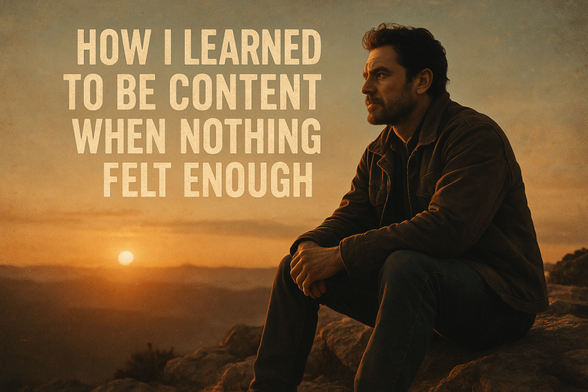
Learning to Be Content in All Circumstances

1,098 words, 6 minutes read time.

“Not that I am saying this because I am in need, for I have learned to be content whatever the circumstances. I know what it is to be in need, and I know what it is to have plenty. I have learned the secret of being content in any and every situation, whether well fed or hungry, whether living in plenty or in want. I can do all this through him who gives me strength.” — Philippians 4:11–13 (NIV)

There are days when I wake up already losing. Maybe you’ve had mornings like that too—when the weight you carried yesterday rolls into today before your feet even hit the floor. Bills on the table, pressure at work, a relationship running thin, or that quiet inner ache you rarely talk about. I’ve had seasons where I looked around at my life and thought, “If I could just fix this one thing, then I’d finally be okay.” Contentment felt like something other men experienced—men with simpler lives, lighter burdens, or better breaks than me.

But contentment isn’t a personality trait. It’s not something you get from comfort or convenience. Paul says he learned it. That means it was painful, slow, and earned through experience. And that gives a man like me hope.

When Paul wrote Philippians 4:11–13, he was chained up, tired, and dealing with uncertainties I can barely imagine. He wasn’t sitting on a beach with a cold drink. He wasn’t flush with money or surrounded by support. His circumstances were rough, but his spirit wasn’t. He found a strength that didn’t rise and fall with his situation. And honestly, I need that kind of strength in my life more than anything else.

I’ve lived long enough to know that the world will happily sell me substitutes for contentment. Achievement. Independence. Sex. Stimulation. Bigger purchases. Quick fixes. Temporary relief. But none of those things settle that deep restlessness inside. I’ve chased some of them, and I’ve paid the price for chasing them. I’ve woken up the next day feeling emptier than before.

Paul’s words hit me because he doesn’t pretend this comes naturally. Twice he says he learned it. I take comfort in that, because learning implies struggle. It implies failure. It implies falling apart before pulling together again. It means contentment isn’t a spiritual trophy; it’s a discipleship course every man takes sooner or later.

The key to Paul’s learning isn’t found in his environment but in his dependence. He writes, “I can do all this through him who gives me strength.” That verse gets quoted on locker room walls and Instagram bios, but Paul’s point isn’t about winning; it’s about enduring. It’s about having Christ be enough when nothing else is. Contentment for Paul wasn’t passive acceptance. It was a gritty, stubborn trust that Jesus would be strength in scarcity and humility in abundance.

One line from John Piper has haunted me for years: “God is most glorified in us when we are most satisfied in Him.” The first time I heard it, I didn’t know what to do with it. But over time I realized satisfaction is the soil where contentment grows. And satisfaction doesn’t come from circumstances; it comes from Christ Himself—present, trustworthy, unchanging.

There was a season when I was wrestling with disappointment so bitter I didn’t even want to pray about it. Yet something in me whispered, “If you don’t bring this to God, where else are you going to take it?” Slowly—some days reluctantly—I learned to sit with God in my frustration instead of waiting until I felt spiritual enough to talk to Him. And oddly, contentment started cracking through the surface like a stubborn plant through concrete.

One thing I’m learning is that contentment is not pretending everything is fine. It’s admitting when it’s not and still choosing Christ as your center. It’s refusing to let circumstances dictate the temperature of your soul. It’s letting Jesus show you that peace isn’t the absence of pressure; it’s the presence of Someone stronger than your pressure.

Paul says he knew what it was to be in need and what it was to have plenty. Most men I know, including myself, struggle on both sides. Need can make us desperate; plenty can make us distracted. Both situations can tempt us away from contentment. But in either place, Christ is the steady one. Contentment happens when Jesus, not the moment, becomes our measure of enough.

I’ve also noticed that contentment grows in the cracks of consistency—choosing prayer when I’m tired, gratitude when I’m frustrated, Scripture when my mind wants noise, and honesty when shame tells me to hide. These aren’t heroic choices; they’re steady ones. And steady choices are how men grow into deep-rooted lives.

If I could leave you with one honest truth from my own story, it’s this: contentment isn’t found by trying to escape your season. It’s found by meeting Christ inside it. And as odd as it sounds, some of the most spiritually formative times of my life have been the hardest ones. That’s where the secret lives—not in feeling strong, but in discovering how strong He is.

A Short Prayer

Jesus, teach me what Paul learned. Break the hold my circumstances have on my peace. Show me how to rest in You when life is heavy and how to remain humble when life is light. Be my strength, my center, and my satisfaction. Amen.

Reflection / Journaling Questions

  • What consistent practices help cultivate contentment in me?
  • What circumstances in my life currently make contentment difficult?
  • Where do I look for satisfaction other than Christ, and how do those choices affect me?
  • What is one area where I need to confess my frustration honestly to God?
  • How has scarcity or abundance shaped my spiritual life lately?

Call to Action

If this devotional encouraged you, don’t just scroll on. Subscribe for more devotionals, share a comment about what God is teaching you, or reach out and tell me what you’re reflecting on today. Let’s grow in faith together.

D. Bryan King

Sources

Philippians 4:11–13 (NIV)
John Piper / Desiring God
Piper on Satisfaction in God
Bible Gateway (NIV)
Christianity Today
The Gospel Coalition
Renovaré – Spiritual Formation
Spirituality & Practice
A Hunger for God – Piper
BibleProject Articles
Dallas Willard Center

Disclaimer:

The views and opinions expressed in this post are solely those of the author. The information provided is based on personal research, experience, and understanding of the subject matter at the time of writing. Readers should consult relevant experts or authorities for specific guidance related to their unique situations.

#biblicalContentment #biblicalEncouragement #biblicalMeditation #biblicalTeachingOnContentment #biblicalWisdom #christAsEnough #christCenteredLife #christianContentment #christianInspiration #christianMeditation #christianMensDevotion2 #christianMensSpiritualGuide #christianPerseverance #christianQuietTime #christianSpiritualDiscipline #contentmentAndFaith #contentmentHabits #contentmentInChrist #contentmentJourney #dailyDevotion #devotionalForMen #devotionalGuidance #devotionalInsights #devotionalReading #enduringHardship #enduringSeasons #faithAndPerseverance #faithInDifficultTimes #faithInTrials #findingPeaceInChrist #godFocusedSatisfaction #godlySatisfaction #gospelEncouragement #growingInFaith #innerPeaceInChrist #johnPiperContentment #learningContentment #lifeInChrist #livingSteady #mensBibleStudy2 #mensDevotional2 #mensSpiritualFormation #overcomingAnxiety #overcomingDiscontent #personalSpiritualGrowth #philippians4 #philippians4Devotional #philippians4Reflection #practicalChristianLiving #quietTimeDevotional #resilienceInFaith #satisfactionInGod #spiritualEncouragement #spiritualGrowthForMen #spiritualLessonsFromPaul #spiritualReflection #spiritualStrength #strengthThroughChrist #trustingGod #trustingJesus