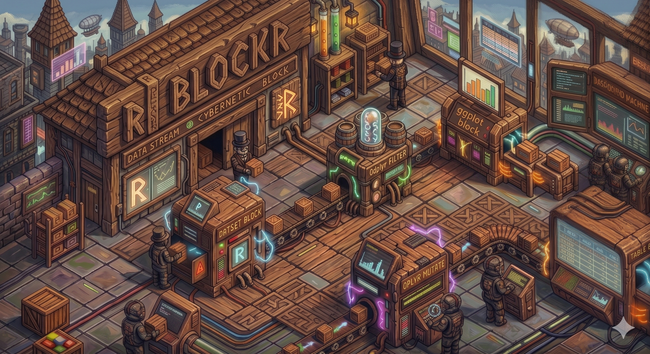
Christoph Sax and I will be teaching at #useR2026: blockr, the open source no-code workflow builder for R.

๐ŸŒŸ You'll discover:

1. How you can create dashboard in minutes
2. How to develop custom blocks, with the help of AI ๐Ÿค–
3. How to deploy ๐Ÿ›ซ

We are excited about this, after 3 years of intense development between Bristol Myers Squibb and cynkra

๐Ÿ“† When: Monday July 6, time: TBA
๐Ÿ”ฅ More about blockr: https://blockr.site/

#rstats #shiny #dashboard #nocode #datascience #reproducible

Learn how to use Go Modules for effective dependency management, version control, and reproducible builds in Go projects. Master best practices for initializing, managing, and securing Go modules in modern development workflows.

#Go Modules #dependency management #semantic versioning #Go 1.22 #reproducible builds

https://dasroot.net/posts/2026/02/go-modules-managing-dependencies/

Go Modules: Managing Dependencies Like a Pro

Learn how to use Go Modules for effective dependency management, version control, and reproducible builds in Go projects. Master best practices for initializing, managing, and securing Go modules in modern development workflows.

Technical news about AI, coding and all

Dear opensource developers,

I added an "adoption" list to the repro-env README, if you publish pre-compiled binaries and you successfully adopted it to allow anyone to reproduce them from source code to prove the absense of a build server compromise, you are very welcome to add yourself to the list. ๐Ÿ˜บ

https://github.com/kpcyrd/repro-env#adoption

#reproducible #reproduciblebuilds #supplychainsecurity #rust

GitHub - kpcyrd/repro-env: Dependency lockfiles for reproducible build environments ๐Ÿ“ฆ๐Ÿ”’

Dependency lockfiles for reproducible build environments ๐Ÿ“ฆ๐Ÿ”’ - kpcyrd/repro-env

GitHub
bits from the release team

Debian ไธ‹ไธ€็‰ˆ (forky) ๅฐ‡ๆœƒๅผทๅˆถ่ฆๆฑ‚ reproducible packaging

Reproducible builds ๆ˜ฏ็ขบไฟ open source ็š„่ปŸ้ซ” (ๆˆ–ๆ˜ฏ source available ็š„่ปŸ้ซ”) ๅœจๅŒๆจฃ็š„็’ฐๅขƒไธ‹้ƒฝๅฏไปฅ็”ขๅ‡บ็›ธๅŒ็š„ binary๏ผŒๅฑฌๆ–ผ Chain of trust ็š„ไธ€็’ฐใ€‚ Debian ๅฎฃไฝˆไธ‹ไธ€็‰ˆ่ฆๅผทๅˆถ reproducible packaging ไบ†๏ผšใ€Œbits from the release team (via)ใ€๏ผŒ็œ‹่ตทไพ†ๅ…ˆๅœจ test...

Gea-Suan Lin's BLOG

Debian 14 will only contain reproducible packages

Reproducible builds are a set of rules that apply to software development, including applications and libraries, to create a verifiable path from the source code to the binary code. It allows you to build the library or the application bit-for-bit. Reproducible builds tend to have great features, including, but not limited to:

  • Security and trust: Allows third-parties to make sure that the software hasnโ€™t been altered or tampered with.
  • Transparency in development: Makes sure that developersโ€™ code always works the same way.
  • Resilience against attacks: Allows third-parties to verify the developersโ€™ software to prevent your projects from being compromised.

Half way through the development cycle of the upcoming Debian release expected in 2027, Debian 14 Forky, the Debian release team has made a decision regarding the reproducible builds effort. Over the years with the Reproducible Builds effort that makes sure that packages get built consistently bit-for-bit, the Debian release team has decided that reproducible builds must be satisfied for the Debian packages to be approved.

A new mandate for Debian 14 Forky states that the reproducible packages, which are packages that build consistently and with confidence bit-for-bit, must be shipped. The migration software will reject the package addition or update if said package no longer becomes reproducible.

The Debian release team has also provided a link that allows you to check the package reproducibility status for the upcoming version of Debian via https://reproduce.debian.net/.

Via: Phoronix

#Debian #Debian14 #Debian14Forky #DebianForky #news #Reproducible #ReproducibleBuilds #ReproduciblePackages #Tech #Technology #update

๐Ÿ’โ€โ™‚๏ธ Want to know how to make computational research more reusableโ“
๐Ÿ‘ Join our short course on Supporting the understanding and reuse of #reproducible analysis workflows.

๐Ÿ“… Friday, May 8
๐Ÿ•“ 8:30-10:15

Check out the #NFDI4Earth poster:
From Data Rocks to #FAIR Peaks: With NFDI4Earthโ€™s services towards Harmonized Metadata and User-Centered Tools for Earth System Research.

๐Ÿ“… Friday, May 8
๐Ÿ•“ 16:15โ€“18:00

๐Ÿ‘‰ https://52north.org/events/egu-general-assemly-2026/

#reproducibleresearch #datadiscovery #EGU26 #AquaINFRA

๐ŸŒฑ In this episode of our #BMDexplained series Mathias Dillen from Meise Botanic Garden discusses the challenges of #biodiversity data and highlights the need for #reproducible harmonisation to build trustworthy science. Watch the full video on YouTube: www.youtube.com/watch?v=lpl8...
@nickbearded i think older cheap pc platform is probably better value once prices crash and they will eventually selling the sw but also the hw you know it runs really well on is a key uniter point and then you have the total package, repeat for pihole, open source pineapple, kismet, ssl/tls proxy, squid caching proxy, web server and lamp stack, etc dedicated monitoring and analytics is another, central logging is another #bashcore modules #extensions #plugins #sbom #reproducible builds #ansible playbooks