Parasitic illness sickens dozens in Kingston area
Health officials in Kingston, Ont., are reporting an outbreak of an intestinal illness that has sickened dozens of residents recently, but are struggling to discover the source.
https://www.cbc.ca/news/canada/ottawa/cryptosporidium-illness-kingston-9.7225418?cmp=rss

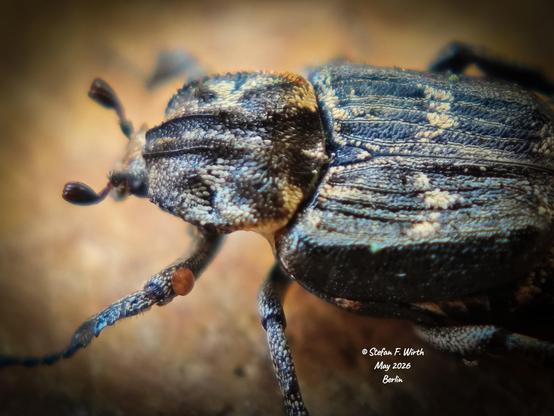
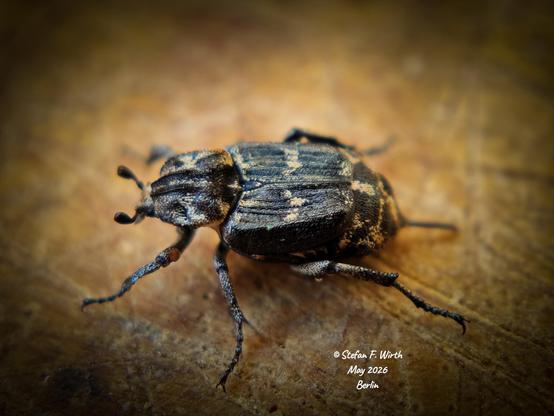
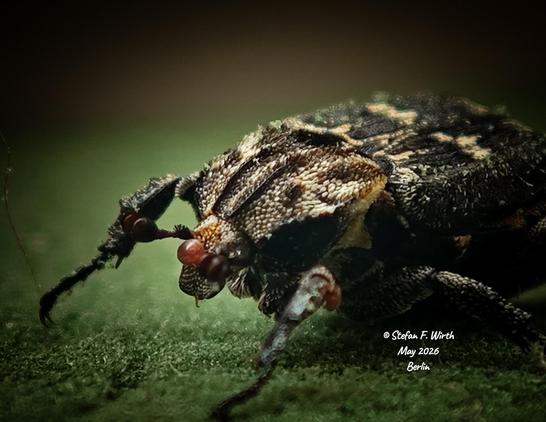
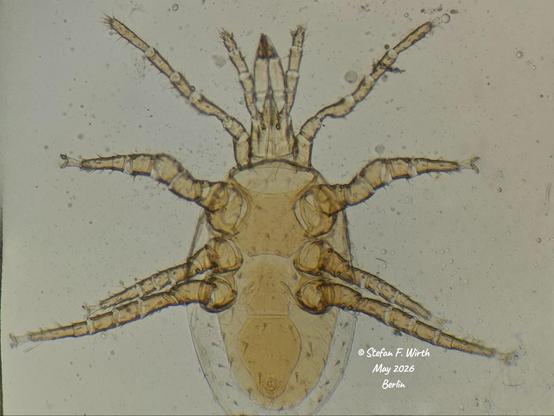
The beetle #Valgus #hemipterus is a not very rare inhabitant of Southern Europe and #CentralEurope. The #specimen shown here flew onto my windowsill in #Berlin. It harbored unidentified #mites of the #Uropodina and of #Laelapidae with the latter having conspicuous strongly developed chelicerae. The Uropodinae are #phoretic and Laelapidae either phoretic or facultatively #parasitic#StefanFWirth

Please support my work,I depend on donations:
https://ko-fi.com/sfwirth

#Photos
©S.F.Wirth

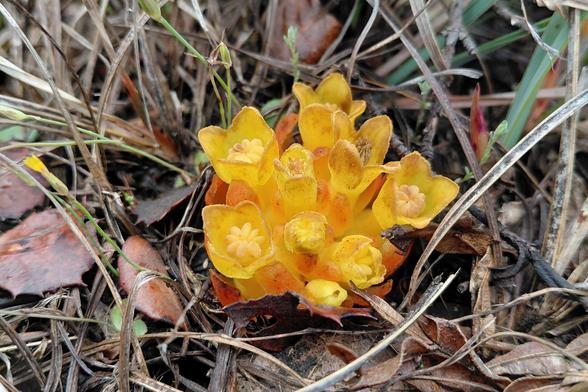
Cytinus hypocistis (fam. Cytinaceae)

[ES] Otra parásita, esta de cistáceas (jaras, jaguarzos, etc). Aparecen siempre a ras de suelo muy cerca de sus plantas hospedadoras. Por aquí las llaman chupamieles, aunque a mí me gusta más otro nombre que viene en "Flora Iberica": tetas de doncella 🤭.
Fotografiada con el móvil.

[EN] Another parasitic plant, this one in Cistaceae (rockroses). Their flowers grow at the ground level near their hosting plants. Here, they are called "honey suckers", but I prefer another name cited in "Flora Iberica": (maiden tits).
Photographed with the mobile phone.

2026/13/05, provincia de/province of Cáceres (Spain).

#cytinaceae #cytinus #cytinushypocistis
#flor #flowers #wildflowers #bloomscrolling #parasitic
#nature
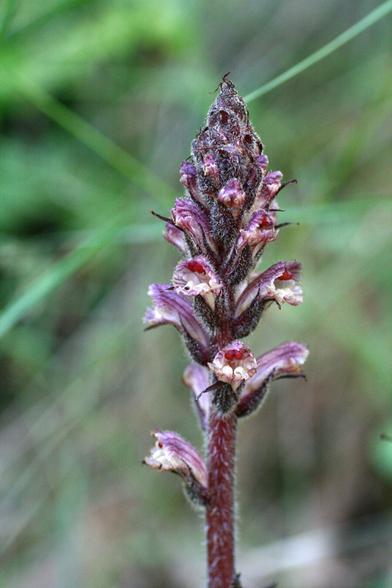
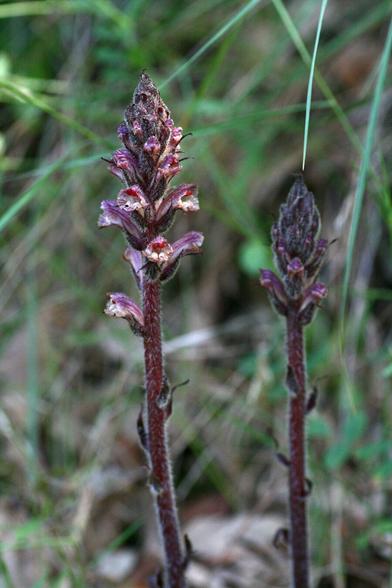
Orobanche castellana? (fam. Scrophulariaceae)

[ES] Los orobanches son plantas muy llamativas, relativamente fáciles de encontrar al borde de caminos en primavera y verano. Como plantas parásitas que son, no necesitan realizar la fotosíntesis, por lo que carecen de clorofila y de ahí sus colores ocráceos o malvas. Las flores tienen distintos colores según las especies: blanco, amarillento, rosado, azul... Esta crecía junto a una Digitaliis, lo cual, además de algunos caracteres morfológicos, me ha llevado a Orobanche castellana (O. amethystea sbsp. castellana, según "Flora Iberica").

[EN] The striking broomrapes are easy to find near roadsides in spring and summer. They are parasitic plants, so they lack of clorophyll, hence their brownish and purplish colours. The flowers' colours vary depending on the species: white, yellowish, pale pink, blue... This one grew near a Digitalis, so I think it is Orobanche castellana.

2026/05/14, provincia de/province of Cáceres (Spain)

Primera foto/First photo: ISO 1600, s 1/160, f/5,0.
Segunda foto/Second phtoo: ISO 1600, s 1/200, f/5,6.
Ambas a pulso/Both handheld.

#scrophulariaceae #orobanche #orobanchecastellana
#broomrape #flor #flowers #wildflowers #parasitic #bloomscrolling
#nature

RE: https://mastodon.scot/@kim_harding/115984446339509467

#Sarcoptes #scabiei var. hominis (#Astigmata, Acariformes) is a skin-#parasitic #mite that feeds on human #epidermal cells. Infection typically occurs via adult, mated #females.The mite has #subspecies found on both #domestic and #wild #animals. The #evolutionary direction was via #humanancestors to humans and from there #spreading first to domestic animals and then to wild animals (see ref).
© #StefanFWirth 2026

Reference
R. W. Currier er al. (2012): https://doi.org/10.1111/j.1749-6632.2011.06364.x

“Every major change in #economics has been associated with some way of adding value in society until we reach #neoliberalism,   which is fundamentally different from all the others because it is #parasitic, based upon rent #extraction and not upon value creation.”
https://www.taxresearch.org.uk/Blog/2026/01/25/neoliberalism-is-dying-whats-next/
Neoliberalism is dying: what’s next?

Are we living through the end of the neoliberal era? I think we are, and I think the moment it became undeniable was Mark Carney’s speech at Davos. Neoliberalism wasn’t an accident. It was a deliberate ideological project built around the myth that “freedom through markets” would deliver freedom for everyone. Instead,...

Funding the Future
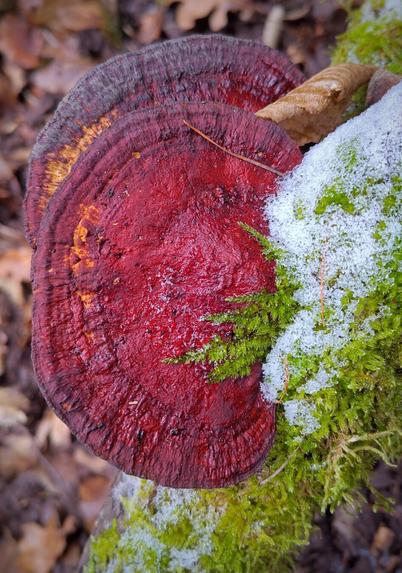
Blushing bracket (Daedaleopsis confragosa) or roodporiehoutzwam in Dutch. A bright red specimen contrasting with the green moss. It is parasitic, prefers to grow on injured willow and consumes both lignin and cellulose and in the end leaves a soft white powder where there was once wood. This is called white rot.

#fungi #mushroom #mycology #winter #moss #forest #germany #eifel #red #green #contrast #snow #parasitic #rot

10-Dec-2025
The evolutionary mysteries of a rare #parasitic plant
New study maps the strange #genomes of Asia-Pacific Balanophora species, giving new insights into the #evolution of parasitic #plants and an unconventional role of #plastids.

https://www.eurekalert.org/news-releases/1109271

#science #ecology

The evolutionary mysteries of a rare parasitic plant

At the base of mossy trees, deep in the mountains of Taiwan and mainland Japan or nestled in the subtropical forests of Okinawa, grows what most might mistake for a mushroom – but what is actually a very unique plant with some of the smallest flowers and seeds in the world. With no chlorophyll to photosynthesize with and no root system to supply it with water from the ground, Balanophora has evolved a series of extreme traits to survive entirely as a parasite on the roots of specific trees. Some species and populations produce seeds only without fertilization (obligate agamospermy) – which is exceedingly rare in the plant kingdom.    Researchers from the Okinawa Institute of Science and Technology (OIST), Kobe University, and the University of Taipei have now joined forces to survey Balanophora across its sparse and inaccessible habitats, upending our understanding of photosynthesis loss in land plants, obligate agamospermy, and the role of the plastids.   

EurekAlert!

Our latest research investigates how the African #catfish, a cornerstone species in #aquaculture, responds to naturally acquired #parasitic #infections: doi.org/10.1111/jfb.70131 #JFB

http://doi.org/10.1111/jfb.70131

Flying Parasitic Worms Use This Superpower to Ambush Prey Midair

The "worm-charging mechanism" of parasitic nematodes illustrates the wildest physics on the tiniest scales.

Gizmodo