The evolutionary mysteries of a rare parasitic plant https://www.oist.jp/news-center/news/2025/12/10/evolutionary-mysteries-rare-parasitic-plant
#Balanophora #evolution, metabolic retention in reduced #plastids, and the origins of obligate agamospermy: Petra Svetlikova et al. https://nph.onlinelibrary.wiley.com/doi/10.1111/nph.70761
"At the base of mossy trees, deep in the mountains of #Taiwan and mainland #Japan or in the subtropical forests of #Okinawa, grows what most might mistake for a mushroom – a very unique plant with some of the smallest flowers and seeds in the world"
10-Dec-2025
The evolutionary mysteries of a rare #parasitic plant
New study maps the strange #genomes of Asia-Pacific Balanophora species, giving new insights into the #evolution of parasitic #plants and an unconventional role of #plastids.
https://www.eurekalert.org/news-releases/1109271
#science #ecology

The evolutionary mysteries of a rare parasitic plant
At the base of mossy trees, deep in the mountains of Taiwan and mainland Japan or nestled in the subtropical forests of Okinawa, grows what most might mistake for a mushroom – but what is actually a very unique plant with some of the smallest flowers and seeds in the world. With no chlorophyll to photosynthesize with and no root system to supply it with water from the ground, Balanophora has evolved a series of extreme traits to survive entirely as a parasite on the roots of specific trees. Some species and populations produce seeds only without fertilization (obligate agamospermy) – which is exceedingly rare in the plant kingdom.
Researchers from the Okinawa Institute of Science and Technology (OIST), Kobe University, and the University of Taipei have now joined forces to survey Balanophora across its sparse and inaccessible habitats, upending our understanding of photosynthesis loss in land plants, obligate agamospermy, and the role of the plastids.
We❤️
#reviews! And if you're
#MORF-curious, we've got the
#PlantScience paper for you!
Li et al. explore these essential regulators that affect the
#editing efficiency of most editing sites in
#plastids and
#mitochondria!
https://doi.org/10.1111/jipb.13967 @wileyplantsci
#PlantScience #JIPB #botanyNew #ISEPpapers! Hijacking and integration of algal #plastids and #mitochondria in a polar planktonic host: Ananya Kedige Rao et al. https://www.cell.com/current-biology/fulltext/S0960-9822(25)00392-6
"Hosts steal active plastids, mitochondria, and nuclei from the microalga #Phaeocystis... Stolen plastids increase in volume, and their photosynthetic activity is boosted... Stolen mitochondria transform into a network in close association with plastids"
#Microbes #Algae #Protists #Symbiosis #Organelles #Plankton
New #ISEPpapers! Reduced plastid #genomes of colorless facultative pathogens Prototheca (#Chlorophyta) & retained for membrane transport genes https://bmcbiol.biomedcentral.com/articles/10.1186/s12915-024-02089-4
"relatives of model #algae #Chlorella include two secondarily non-photosynthetic genera – #Helicosporidium (gut #parasites of #insects) and #Prototheca, which are predominantly free-living opportunistic #pathogens of diverse vertebrates, including humans"
#Protists #Microbes #Plastids #Genomics #Evolution #Biology
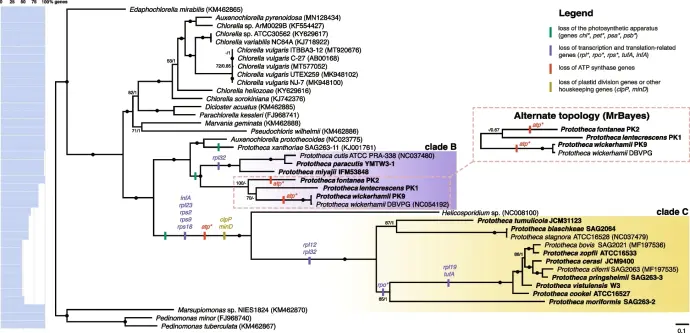

Reduced plastid genomes of colorless facultative pathogens Prototheca (Chlorophyta) are retained for membrane transport genes - BMC Biology
Background Plastids are usually involved in photosynthesis, but the secondary loss of this function is a widespread phenomenon in various lineages of algae and plants. In addition to the loss of genes associated with photosynthesis, the plastid genomes of colorless algae are frequently reduced further. To understand the pathways of reductive evolution associated with the loss of photosynthesis, it is necessary to study a number of closely related strains. Prototheca, a chlorophyte genus of facultative pathogens, provides an excellent opportunity to study this process with its well-sampled array of diverse colorless strains. Results We have sequenced the plastid genomes of 13 Prototheca strains and reconstructed a comprehensive phylogeny that reveals evolutionary patterns within the genus and among its closest relatives. Our phylogenomic analysis revealed three independent losses of photosynthesis among the Prototheca strains and varied protein-coding gene content in their ptDNA. Despite this diversity, all Prototheca strains retain the same key plastid functions. These include processes related to gene expression, as well as crucial roles in fatty acid and cysteine biosynthesis, and membrane transport. Conclusions The retention of vestigial genomes in colorless plastids is typically associated with the biosynthesis of secondary metabolites. In contrast, the remarkable conservation of plastid membrane transport system components in the nonphotosynthetic genera Prototheca and Helicosporidium provides an additional constraint against the loss of ptDNA in this lineage. Furthermore, these genes can potentially serve as targets for therapeutic intervention, indicating their importance beyond the evolutionary context.
A single cell's siesta: How non-moving #microbes manage to avoid bright light https://phys.org/news/2024-11-cell-siesta-celled-bright.html
Light-regulated #chloroplast morphodynamics in a single-celled dinoflagellate https://www.pnas.org/doi/10.1073/pnas.2411725121
"The structure that allows the chloroplast to make necessary changes was found to be a network of thin filaments. Together, these filaments form a material that can easily contract and expand in all directions."
#Protists #Algae #Organelles #Plastids #Dinoflagellates #Biology #CellBiology
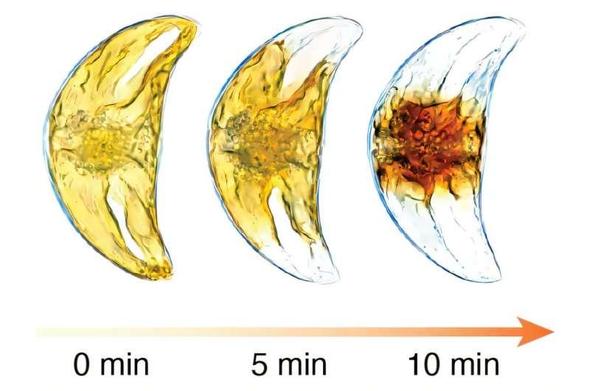

A single cell's siesta: How non-moving single-celled organisms manage to avoid bright light
Too much of a good thing is no good at all. Living organisms enjoy sunlight—in fact, they need it to stay alive—but they tend to avoid light that is too bright. Animals go to their shelter, humans have a siesta, even plants have mechanisms to avoid an overdose of light. But how do non-moving single-celled organisms deal with light that is too intense? Researchers at the University of Amsterdam have discovered the surprising answer.
#Plastids can be engineered to enhance
#photosynthetic & metabolic traits in
#plants. This study identifies a
#chloroplast-targeting peptide that is highly efficient in delivering biologically functional proteins to plastids in plants
#PLOSBiology https://plos.io/3XFeNDk 
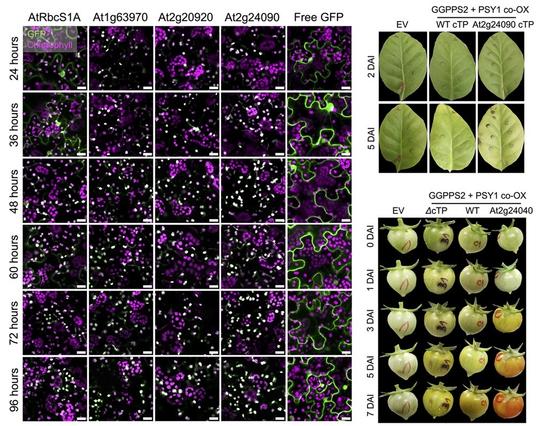
Identification of a highly efficient chloroplast-targeting peptide for plastid engineering
Plastids are important organelles that can be engineered to enhance photosynthetic and metabolic traits in plants. This study identifies a chloroplast-targeting peptide that is highly efficient in delivering biologically functional proteins to plastids in plants.

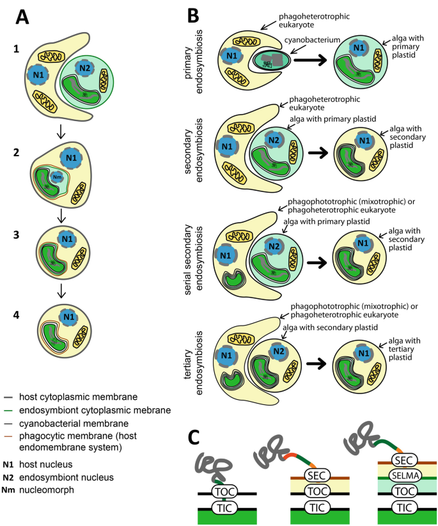
Complex Endosymbioses I: From Primary to Complex Plastids, Serial Endosymbiotic Events
A considerable part of the diversity of eukaryotic phototrophs consists of algae with plastids that evolved from endosymbioses between two eukaryotes. These complex plastids are characterized by a high number of envelope membranes (more than two) and some of them...
 ISEP
ISEP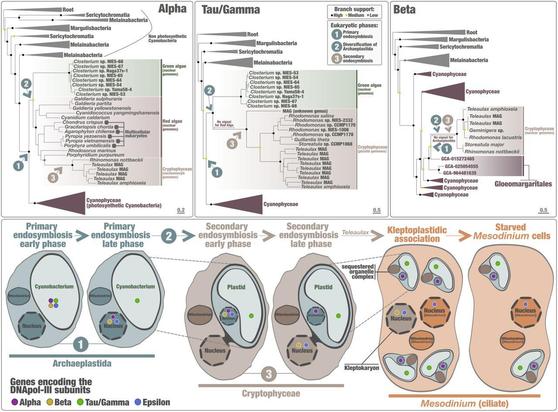
 Lukas VFN 🇪🇺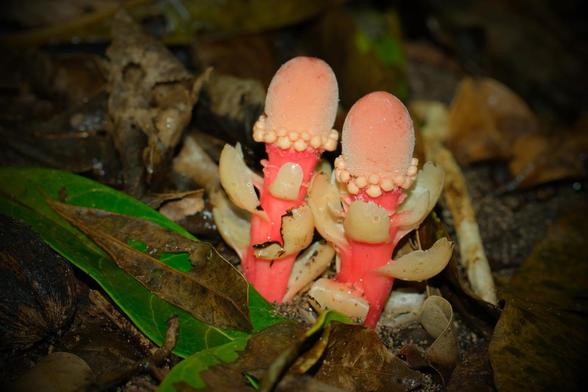
 michael
 JIPB
JIPB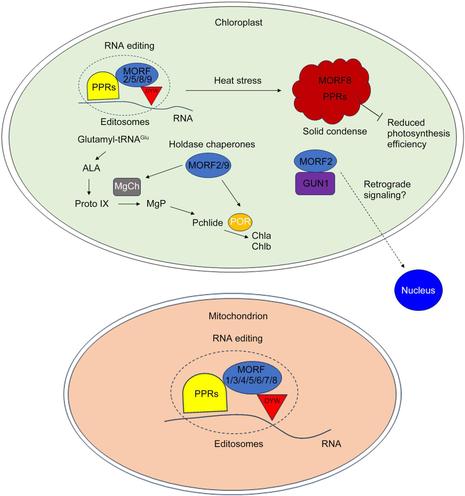

 PLOS Biology