RE: https://mastodon.scot/@kim_harding/115745720984768341
Fascinating #paleontological work about fossils in an ecological context: #bees nesting in caves and there using existing cavities in #boneremnants as #nestingsites. The fossilized bones belonged to rodents seemingly having been victims to owls.

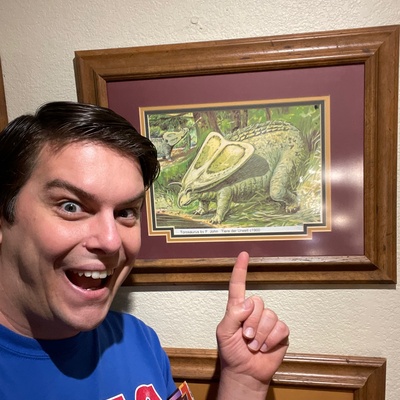
@FossilDaddy is a paleontological father figure with a love of gaming & a rock hard fossil collection - Queerty
@FossilDaddy is a popular Instagram, Twitter, TikTok gaymer who's love for gaming soon blossomed into him becoming a fossil enthusiast.
Happy
#FieldFriday from the Lower Pleistocene
#paleontological site Tsiotra Vryssi (TSR, northern Greece) with the joint University of Tübingen-University of Thessaloniki team! 🤠
🔗 Read about TSR in the
#OpenAccess paper by Konidaris et al. (2021)
https://doi.org/10.3390/quat4010001Here are some of this year’s finds from TSR! ⚒️ Articulated specimens and carnivore modified bones are common in the assemblage.
🔗Read about the
#taphonomy of TSR in the paper by Katsagoni et al. (2022)
https://doi.org/10.1080/08912963.2022.2140424
Dating of the Lower Pleistocene Vertebrate Site of Tsiotra Vryssi (Mygdonia Basin, Greece): Biochronology, Magnetostratigraphy, and Cosmogenic Radionuclides
Background and scope: The late Villafranchian large mammal age (~2.0–1.2 Ma) of the Early Pleistocene is a crucial interval of time for mammal/hominin migrations and faunal turnovers in western Eurasia. However, an accurate chronological framework for the Balkans and adjacent territories is still missing, preventing pan-European biogeographic correlations and schemes. In this article, we report the first detailed chronological scheme for the late Villafranchian of southeastern Europe through a comprehensive and multidisciplinary dating approach (biochronology, magnetostratigraphy, and cosmogenic radionuclides) of the recently discovered Lower Pleistocene vertebrate site Tsiotra Vryssi (TSR) in the Mygdonia Basin, Greece. Results: The minimum burial ages (1.88 ± 0.16 Ma, 2.10 ± 0.18 Ma, and 1.98 ± 0.18 Ma) provided by the method of cosmogenic radionuclides indicate that the normal magnetic polarity identified below the fossiliferous layer correlates to the Olduvai subchron (1.95–1.78 Ma; C2n). Therefore, an age younger than 1.78 Ma is indicated for the fossiliferous layer, which was deposited during reverse polarity chron C1r. These results are in agreement with the biochronological data, which further point to an upper age limit at ~1.5 Ma. Overall, an age between 1.78 and ~1.5 Ma (i.e., within the first part of the late Villafranchian) is proposed for the TSR fauna. Conclusions: Our results not only provide age constraints for the local mammal faunal succession, thus allowing for a better understanding of faunal changes within the same sedimentary basin, but also contribute to improving correlations on a broader scale, leading to more accurate biogeographic, palaeoecological, and taphonomic interpretations.
I'm excited beyond words to be able to be one of the leaders of the
#Gonzaga in
#Chimfunshi study abroad course in
#Zambia 🇿🇲 this summer, and in honor of the region and its
#paleontological #heritage, my
#FossilFriday posts for the next few months are going to feature
#fossils from the countries of the
#Zambezi Basin:
#Angola 🇦🇴 ,
#Botswana 🇧🇼 ,
#Malawi 🇲🇼 ,
#Mozambique 🇲🇿 ,
#Namibia 🇳🇦 ,
#Tanzania 🇹🇿 ,
#Zimbabwe 🇿🇼 , and, of course, Zambia. The first post is forthcoming, and suggestions are welcome!

UZH: Assistant Professorship tenure track in Digital Paleobiology
We are seeking candidates in the field of paleobiology with a focus on 3D-data and their analyses, databases, digitalisation, use of machine learning, or similar digital approaches to address palaeobiological questions. Profound knowledge in at least one group of fossil organisms is ex-pected. The aim of the new professorship in Digital Paleobiology is to respond to the substantial and rapidly evolving needs for acquisition and handling digital data of, e.g., digitalized specimens, CT-data, photogrammetry, and to complement existing expertise at the Paleontological Institute and the University of Zurich (UZH). Hereby, the professor will ensure the sustainability and open accessibility of the unique resources of the Natural History Museum of the University of Zurich. The successful candidate will apply new cutting-edge digital techniques to push the frontiers of paleobiology. Therefore, they will bring a strong emphasis on digitalisation techniques, experience in their application, and analysis. The professor will be expected to teach at the bachelor and master level and supervise PhD students. In particular, teaching courses on paleobiology and digital methods in paleobiology will be part of their responsibility. We further welcome active participation in regional, national and international societies and committees. The University of Zurich sees researchers as modern leaders who conduct excellent research - taking into account the Open Science principles - through their own research projects as well as the promotion of excellent junior researchers, and who help shape a future-oriented University with innovative research-based teaching. UZH provides generous research support, including dedicated funds for personnel, running expenses and competitive start-up packages. Additionally, the successful applicant is expected to acquire external research funding. Zurich's scientific environment encompasses a rich spectrum of diverse activities. Assistant professors tenure track are typically evaluated for tenure after 6 years. The employment conditions for this position follow UZH's legal regulations including part-time options. UZH is an equal-opportunities employer, and the Faculty of Science, in particular, strives to increase the percentage of women in leading positions. Therefore, qualified female researchers are particularly encouraged to apply. Care-time interruptions are considered during the evaluation of applicants of all genders. The open-minded and family-friendly city of Zurich combines the vibrant cultural scene in a modern European city with the convenient accessibility to its beautiful natural surroundings.
Still on the topic of local(-ish)
#paleontology, while it's not exactly of the
#comic or
#graphicnovel persuasion, Kirk Johnson &
#RayTroll's
#fossil travelogues
#CruisinTheFossilFreeway &
#CruisinTheFossilCoastline freely mix cartoons and paleoart alongside photographic documentation of their travels throughout North America, visiting people and places important to our
#paleontological understanding, even (or especially) if they are under-appreciated.
https://dinodadreviews.com/2018/10/29/cruisin-the-fossil-coastline/
Cruisin’ the Fossil Coastline
 Stefan F. Wirth
 J of Systematics and Evolution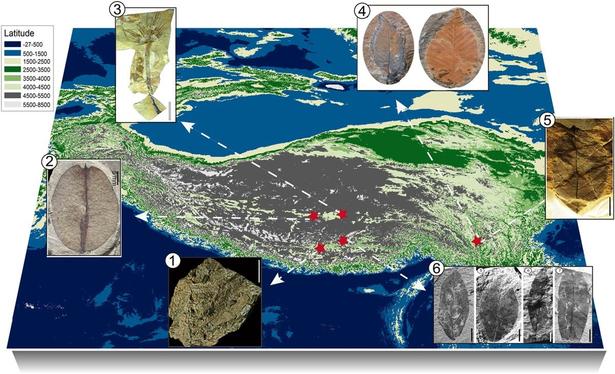
 Susan Larson ♀️🏳️🌈🏳️⚧️🌈
 Firebloom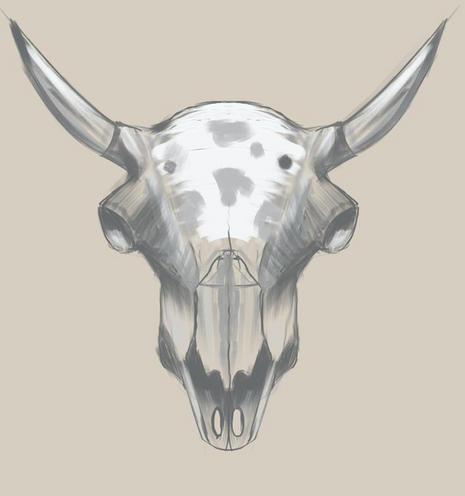
 Harvati lab at Uni Tübingen


 John Orcutt
 Kenneth De Baets
 DinoDadReviews