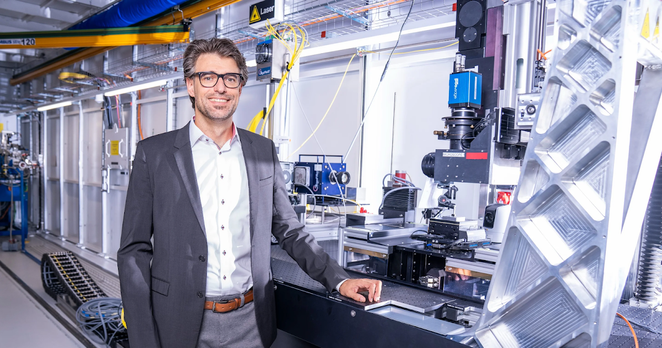
#MRI-guided #biopsy should be considered as an alternative to more established modalities of imaging guidance, such as #ultrasound or #ComputedTomography. (Luca Ginanni Corradini et al.)
🔗 https://link.springer.com/article/10.1007/s00330-023-09763-1
Objective The aim of this study is to describe the technique and to report early results of thoraco-abdominal biopsies in the Interventional Magnetic Resonance Imaging Suite (IMRIS). Materials and methods We prospectively evaluated patients with indications for MRI-guided biopsy between January 2021 and May 2022. Exclusion criteria were indication for US-/CT-guided biopsy, contraindication to percutaneous biopsy, inability to lie flat for at least 30 min, claustrophobic, severe obesity, or non-MRI compatible devices. Biopsies were performed by 3 interventional radiologists, with at least 8 years of experience in oncological interventional radiology. Epidemiological, clinical, procedural, and histopathological data were retrospectively collected. Results From an initial population of 117 patients, 57 patients (32 male, mean age 64 ± 8 y) were finally enrolled. All 57 patients suspected thoraco-abdominal malignant lesions finally underwent MRI-guided percutaneous biopsy. The mean duration of the entire procedure was 37 min (range 28–65 min); the mean duration of the total needle-in-patient time was 10 min (range 6–19 min). Technical and clinical success were obtained for all the biopsies performed. Malignancy was demonstrated in 47/57 (82%) cases and benignancy in the remaining 10/57 (18%) cases. No major complications were detected after the biopsies; two minor compliances (severe pain) occurred and were managed conservatively. Conclusion Our initial experience demonstrated the technical feasibility and the accuracy of MRI-guided biopsies of thoraco-abdominal masses. The reported data associated with the best comfort for the patient and for the operator make the use of MRI a valid alternative to other methods, especially in lesions that are difficult to approach via US or CT. Clinical relevance statement Interventional MRI is one of the most important innovations available for interventional radiologists. This method will broaden the diagnostic and therapeutic possibilities, allowing treatment of lesions up to now not approachable percutaneously. For this, it is necessary to start publishing the data of the few groups that are developing the method. Key Points • To evaluate the use of MRI as a guide for percutaneous biopsies of various districts. • Our preliminary experience confirms experience demonstrated the technical feasibility and the accuracy of MRI-guided biopsies of thoraco-abdominal masses. • Interventional MRI can become the reference method for percutaneous biopsies in particular for lesions with difficult percutaneous approach.
Open Position: Assistant #Professorship tenure track in #Digital #Paleobiology
100% @ the #Paleontological institute of the University of #Zürich #UZH
#paleobiology #paleontology #computedtomography #digitalisation #fossils #job #openposition #Evolution
@jobsecoevo
We are seeking candidates in the field of paleobiology with a focus on 3D-data and their analyses, databases, digitalisation, use of machine learning, or similar digital approaches to address palaeobiological questions. Profound knowledge in at least one group of fossil organisms is ex-pected. The aim of the new professorship in Digital Paleobiology is to respond to the substantial and rapidly evolving needs for acquisition and handling digital data of, e.g., digitalized specimens, CT-data, photogrammetry, and to complement existing expertise at the Paleontological Institute and the University of Zurich (UZH). Hereby, the professor will ensure the sustainability and open accessibility of the unique resources of the Natural History Museum of the University of Zurich. The successful candidate will apply new cutting-edge digital techniques to push the frontiers of paleobiology. Therefore, they will bring a strong emphasis on digitalisation techniques, experience in their application, and analysis. The professor will be expected to teach at the bachelor and master level and supervise PhD students. In particular, teaching courses on paleobiology and digital methods in paleobiology will be part of their responsibility. We further welcome active participation in regional, national and international societies and committees. The University of Zurich sees researchers as modern leaders who conduct excellent research - taking into account the Open Science principles - through their own research projects as well as the promotion of excellent junior researchers, and who help shape a future-oriented University with innovative research-based teaching. UZH provides generous research support, including dedicated funds for personnel, running expenses and competitive start-up packages. Additionally, the successful applicant is expected to acquire external research funding. Zurich's scientific environment encompasses a rich spectrum of diverse activities. Assistant professors tenure track are typically evaluated for tenure after 6 years. The employment conditions for this position follow UZH's legal regulations including part-time options. UZH is an equal-opportunities employer, and the Faculty of Science, in particular, strives to increase the percentage of women in leading positions. Therefore, qualified female researchers are particularly encouraged to apply. Care-time interruptions are considered during the evaluation of applicants of all genders. The open-minded and family-friendly city of Zurich combines the vibrant cultural scene in a modern European city with the convenient accessibility to its beautiful natural surroundings.

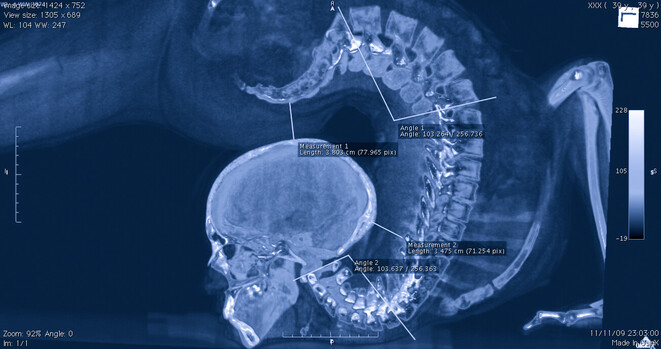
Huge, huge congratulations to OSU-CHS OMS-IV Kaylea Feldman for discovering some previously unknown human #Neuroanatomy (with clinical implications)
https://www.sciencedirect.com/science/article/pii/S2213158222003370
It's that time of year again -- the 2022 Hackaday Prize has officially launched, and we're excited to see what it turns out. This year's theme is "Sustainability, Resilience, and Circularity," and just in time, too; if the last couple of years has taught us anything, it's that we've got a lot of failure points built into the systems that run our world. As broken as things are, it's tempting to just curl up in a ball and pretend everything's fine, but that's not how hackers respond to adversity. We need to control what we can control, and there's plenty of work to be done. From sustainable energy ideas to ways to reduce the amount of stuff we throw away, from breathing new life into old equipment to building communities that can take care of themselves, there's plenty of work to be done. So get over to the Hackaday Prize page, check out the launch summit video if you need some inspiration, and get hacking. And hurry up -- things are only going to get better if people like us make it happen.
Every once in a while, we stumble upon a project that is so obviously a labor of love that we have to call it out. And it's clear that Tio Luigi's Component Codification Guide is exactly such a project. The amount of work that Luigi, aka Luiz Ferreria, put into this handbook of electronic components is mind-boggling, and if you thought a simple pictorial guide to capacitors, resistors, and inductors could never be a page-turner, think again. The artwork is gorgeous, the explanations of color-coding and other schemes for denoting values are clear and useful, and the discovery of new and unusual packages for common components is a treat. But it's the little nuggets of information that keep you reading -- did you know that the color bands denoting precision on high-voltage resistors are yellow and gray to reduce the risk of flashover through the more typical gold and silver paint? How fascinating is that!
Speaking of components, here's another treat for you: Tim Hunkin is releasing a second season of his "Secret Life of Components" series. The first season wrapped up almost a year ago, but Tim says it proved so popular and garnered enough donations that he was able to do it again. The first of five videos, "The Secret Life of Sensors," was released this past Thursday. Most of us remember Tim from "The Secret Life of Machines" series he did with the late Rex Garrod many years ago, which for all their ad hoc charm were great fun to watch. What we love about the "Components" series is that unlike the original, which was aimed at a much broader audience, these videos are aimed squarely at makers and builders, and are stuffed full of useful tidbits Tim has picked up over a lifetime of making cool stuff.
Over on the Prusa channel, there's a brief but interesting video showing how to 3D print emergency splints. Printed casts made to your exact body contours aren't exactly new, but if you've suffered an injury, it's hard to imagine that you'll be sitting down in front of Fusion 360 to design something that's a perfect fit. But the idea here is to just print a flat but flexible structure out of PLA, and post-form it to the injured extremity after gentle heating. The video recommends heating with a hairdryer or heat gun, or even by cooking it a little right on the bed of the printer or dipping it in hot water. It's important to protect the skin with some gauze padding, and to use conforming bandages, often called "vet tape," to hold the splint in place. The next step should, of course, be a trip to the doctor, but this trick might just get you out of a jam -- especially if you preprint and stash the splints.
And finally, a couple of weeks ago we featured a link to BrainLubeOnlines's collection of X-rays of common objects. If you liked that, then you love Scan of the Month, which adds an extra dimension with 3D computed tomography (CT) scans of everyday items. We appreciate the look inside gadgets like GameBoys and AirPods, but for our money, the real engineering prowess goes into the food packaging items, like ketchup and Sriracha bottle caps. Making them work while being able to manufacture them for as close to zero cost as possible is a real challenge, and worth a look inside.
#hackadaycolumns #hackadaylinks #slider #2022hackadayprize #colorcode #components #computedtomography #ctscan #design #firstaid #pla #secretlifeofcomponents #splint #sustainability #timhunkin