#Nature’s Prescription for Our Future

Why caring for nature is caring for ourselves

By Dona Bertarelli October 31, 2025

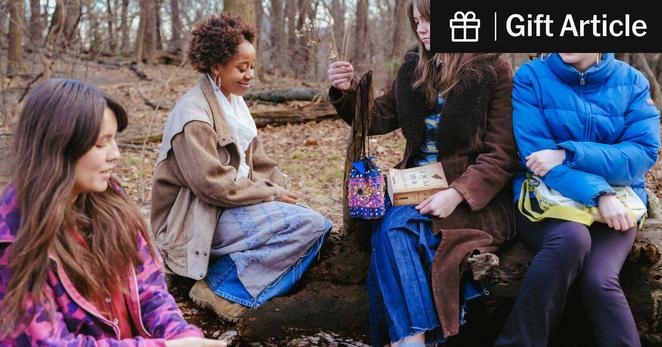
Excerpt: "Nature’s ability to sustain us is not only ecological. It is deeply personal. More and more studies show that spending time in natural environments reduces stress, lowers blood pressure, and strengthens the immune system. A large study in the United Kingdom found that those who spent at least two hours a week outdoors were 59 percent more likely to report good health and 23 percent more likely to report high well-being, regardless of age, income, or location. Other research shows that even brief moments in nature, a walk in a park, the sound of birds, the sight of water, can already ease stress, steady the mind, and sharpen our attention."

Read more:
https://nautil.us/natures-prescription-for-our-future-1245190/?utm_source=firefox-newtab-en-us

#SolarPunkSunday #MoreGreenTime #LessScreenTime #GreenBathing

Nature’s Prescription for Our Future

Nature’s Prescription for Our Future: Why caring for nature is caring for ourselves

Nautilus

#Technology for #Luddites
What Digital Does to Our Brains
April 30, 2015 by kris de decker

via #NoTechMagazine

Illustration by Luis Quiles

"It turns out that digital devices and software are finely tuned to train us to pay attention to them, no matter what else we should be doing. The mechanism, borne out by recent neuroscience studies, is something like this:

- New information creates a rush of dopamine to the brain, a neurotransmitter that makes you feel good.
- The promise of new information compels your brain to seek out that dopamine rush.

"With fMRIs, you can see the brain’s pleasure centres light up with activity when new emails arrive.

"So, every new email you get gives you a little flood of dopamine. Every little flood of dopamine reinforces your brain’s memory that checking email gives a flood of dopamine. And our brains are programmed to seek out things that will give us little floods of dopamine. Further, these patterns of behaviour start creating neural pathways, so that they become unconscious habits: Work on something important, brain itch, check email, dopamine, refresh, dopamine, check Twitter, dopamine, back to work. Over and over, and each time the habit becomes more ingrained in the actual structures of our brains.”

https://www.notechmagazine.com/2015/04/what-digital-does-to-our-brains.html

#SolarPunkSunday #TechAddiction #MoreGreenTime #BoardGames #Gardening #NatureBasedLearning #Greenbathing #TheLudditeClub #NeoLuddites #MoreGreenTimeLessScreenTime

What Digital Does to Our Brains

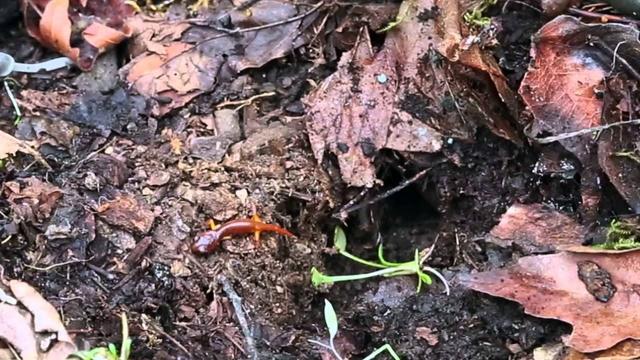
Life Under Logs at #MountBlue State Park

Division / Program: Parks and Lands
Date: August 1, 2025
Time: 11:30 AM - 12:00 PM
Location: 187 Webb Beach Road, #WeldME 04285
State Park: Mt Blue
Event Type: #NatureExploration

"Come join us for this short nature walk, where we will learn about the creatures that make their homes in the dirt and under logs.

"Meet at the nature center. Bring sturdy shoes and bug spray. Children must be accompanied by an adult. This program may be canceled in the case of rain."

Contact Name: The Park
Contact Phone: 207-585-2347
Cost: Programs are free with park admission. Day use: $1.00 ages 5-11, $5.00 Maine residents age 12-64, $7.00 non residents age 12-64, $2.00 non residents 65+; persons under 5 & Maine residents 65+ free

#MaineEvents #MaineForests
#Nature #MoreGreenTime #SolarPunkSunday
#MoreGreenTimeLessScreenTime

TOMORROW! #ForestWalk #Meditation at #RangePond State Park

Date: July 30, 2025
Time: 10:00 AM - 11:00 AM
Location: 26 State Park Rd, #PolandME 04274
State Park: Range Pond
Event Type: #NatureExploration

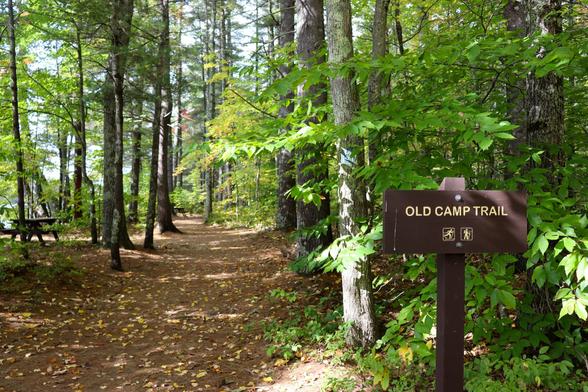
"Yes, we know it's a funny name, but here generations of Mainers have called it 'Going up to Camp'. In Japan they say '#ShinrinYoku,' which literally means 'forest bath.' Make time for yourself, life is hectic. Come over to slow down and connect with Range Pond's forest and wildlife. Enjoy an hour of quiet. Do's: Prepare to be outside, which means black fly & tick precautions. Bring a folding chair if you want to sit. Don'ts: Leave those bars of soap at home and please leave your phone in your car. Ranger Lori, a retired educator and lifelong outdoor enthusiast will facilitate this program.

"Meet at 10:00 AM at the parking lot across from the Range Pond State Park gate. Children attending programs must be accompanied by an adult. Program may be canceled due to continuous precipitation, or lightning in the area."

Contact Name: The Park
Contact Phone: 207-998-4104
Cost: Programs are free with park admission. Day use: $1.00 ages 5-11, $6.00 Maine residents age 12-64, $8.00 non residents age 12-64, $2.00 non residents 65+; persons under 5 & Maine residents 65+ free

#MaineEvents #ForestBathing #MaineForests #NatureExploration #Nature #MoreGreenTime #SolarPunkSunday #MoreGreenTimeLessScreenTime

"It’s really important for a kid to be left alone"- When #TaikaWaititi made his feelings clear about the role of tech in children's lives

By Sourav Chakraborty
Modified May 03, 2025 04:54 GMT

" 'Exactly, now they’ve all got iPads and it’s done for them! I think it’s really important for a kid to be left alone and left to figure it out for themselves how to pass the time. As a kid, I spent so much time bored and coming up with ideas of how to do things, so I’d write stories or I’d draw pictures or invent worlds through drawing or just in my head, just thinking about things. I think that a lot of my creativity has really come from being bored.' " [SO TRUE!!!]

https://www.sportskeeda.com/us/movies/it-s-really-important-kid-left-alone-when-taika-waititi-made-feelings-clear-role-tech-children-s-life

#SmartphoneAddiction #TechIsDumbingUsDown #NoAI #Imagination #LudditeClub #NeoLuddites #Luddites #LessScreenTime #MoreBoardGames #MoreGreenTime #MoreOutdoorTime #FlipPhones #MoreBooks #Smartphones #TechAddiction #TurnOffYourPhone #BePresent #ThinkForYourself #ResistTheMachine #NoSmartphonesForKids #MoreGreenTimeLessScreenTime

"It’s really important for a kid to be left alone"- When Taika Waititi made his feelings clear about the role of tech in children's lives

Taika Waititi has built an impressive career as a filmmaker and actor, working across various genres. He has earned major awards, including an Academy Award, a BAFTA, and a Grammy.

Now in College, #LudditeTeens Still Don’t Want Your Likes

Three years after starting a club meant to fight #SocialMedia’s grip on young people, many original members are holding firm and gaining new converts.

By Alex Vadukul
Jan. 30, 2025

"Biruk Watling, a college sophomore wearing a baggy coat and purple fingerless gloves, walked the chilly campus of Temple University in #Philadelphia on a recent afternoon to recruit new members to her club.
She taped a flier to a pole: '#JoinTheLudditeClub For #MeaningfulConnections.' Down the block, she posted another one: 'Do You Desire a Healthier Relationship With Technology, Especially Social Media? The Luddite Club Welcomes You and Your Ideas.'

"When a student approached, Ms. Watling dove into her pitch.

"'Our club promotes #ConsciousConsumption of #technology,' she said. 'We’re for #HumanConnection. I’m one of the first members of the original Luddite Club in #Brooklyn. Now I’m trying to start it in #Philly.

"She pulled out a #FlipPhone, mystifying her recruit.

"'We use these,' she said. 'This has been the most freeing experience of my life.'
If Ms. Watling had a missionary’s zeal, it was because she wasn’t just promoting a student club, but an approach to modern life that profoundly changed her two years ago, when she helped form the Luddite Club as a high school student in New York.

"But that was then, back when things were simpler, before she had embarked on the more independent life of a college student and found herself having to navigate QR codes, two-factor-identification logins, dating apps and other digital staples of campus life.

"The #LudditeClub was the subject of an article I wrote in 2022 — a story that, ironically, went viral. It told of how a group of teenage tech skeptics from Edward R. Murrow High School in Brooklyn and a few other schools in the city gathered on weekends in Prospect Park to enjoy some time together away from the machine.

"They #sketched and #painted side by side. They read quietly, favoring works by #Dostoyevsky, #Kerouac and #Vonnegut. They sat on logs and groused about how #TikTok was dumbing down their generation. Their flip phones were decorated with stickers and nail polish.

"Readers inspired by their message responded in hundreds of emails and comments. Reporters from Germany, Brazil, Japan and elsewhere flooded my inbox, asking me how to reach these students who were so hard to track down online. Snarky Reddit threads and think pieces sprouted. #RalphNader endorsed the club in an opinion essay, writing: 'This is a rebellion that needs support and diffusion.'"

Read more:
https://www.nytimes.com/2025/01/30/style/luddite-teens-reunion.html

Archived version:
https://archive.ph/
#SolarPunkSunday #Nature #NeoLuddite #Luddites #LessScreenTime #MoreBoardGames #MoreGreenTime #MoreOutdoorTime #FlipPhones #MoreBooks #ResistTheMachine

Luddite Teens Still Don’t Want Your Likes

Three years after starting a club meant to fight social media’s grip on young people, many original members are holding firm and gaining new converts.

The New York Times

More of this, please...!

#Rewilding’ the schoolyard — District, land trust make space for outdoor learning

by ERIC WELCH, January 31, 2025 1:00 AM

KOOTENAI — "Six months ago, a small piece of school-owned property beside Kootenai Elementary [in #Idaho] was contributing little to the students next door.

"A combination of #woods and #wetlands, the area was appealing to educators aiming to expand the school’s outdoor education opportunities, but teachers were discouraged from using it because of persistent marshiness that made it impossible to visit without tracking mud throughout the school’s halls and classrooms.

"In July, nonprofit #KaniksuLandTrust set out to change that. Since then, the organization has replaced the area’s primitive dirt trails with gravel paths, installed several culverts and a small footbridge to help students traverse the area, and created six unique outdoor classrooms designed to facilitate a variety of lesson types.

"'Just like our teachers need classrooms, outdoor educators need a classroom, too, and playgrounds are quite uninspiring spaces for outdoor education,' said Katie Cox, KLT executive director. 'The idea is really, ‘How much nature can we bring to the schools?'

"The 10-acre parcel is home to a surprisingly diverse collection of plants and features, and includes an aspen grove, a white pine forest and an area that was once home to a small orchard that still contains productive apple trees.

"A natural hill facilitates sledding and a 'boulder hop' circuit is designed to act as a homemade alternative to traditional playground structures.

"'It’s a fun space for the kids to get their wigglies out,' Cox said.

"Anita Palmer, Kootenai’s art and outdoor education specialist, is a primary user of the area. Palmer teaches lessons outside when possible and aims to help students become responsible users of the land by teaching them the '#LeaveNoTrace' principles.

"'They’re just happier outside. More engaged,' Palmer said. 'They definitely have more energy.'

"Because Palmer splits time between outdoor education and art, she also makes use of the area and its resources when helping students practice creative expression.

"This year, students in Palmer’s class have created pinecone bird feeders, traced leaves by placing them under a page and rubbing it with a crayon, and made mandala patterns in the woods using natural materials like stones and pine needles.

"In addition to outdoor education, Cox hopes instructors of core courses can also utilize the space to enhance their curriculum.

"'If teachers want to pull the kids out in order to use nature to teach math or use nature for reading time, there's space for them to do that,' Cox said. 'It can be as simple as sectioning off a space and saying, ‘How many willow trees are planted in this space? Count them and measure the longest branch with a tape measure and collect the data.'

"Elizabeth Sims, a beacon teacher at Kootenai who instructs students who struggle with behavior how to cooperate with peers and adults, uses the space to allow students to stretch their legs in a comforting environment.

"'The gym can be very overstimulating,' Sims said. 'It’s very calming being out in nature,' she added. 'Even the kids that are more high-behavior just seem more grounded out there.'

"With the #Kootenai property transformed, Cox and KLT are now turning their attention toward a pair of spaces they hope to similarly improve on the grounds of Farmin Stidwell and Washington elementary schools."

Read more:
https://bonnercountydailybee.com/news/2025/jan/31/rewilding-the-schoolyard/
#SolarPunkSunday #NatureBasedEducation #NatureBasedLearning #MoreGreenTime #LessScreenTime

‘Rewilding’ the schoolyard — District, land trust make space for outdoor learning

In July, nonprofit Kaniksu Land Trust set out to change that. Since then, the organization has replaced the area’s primitive dirt trails with gravel paths, installed several culverts and a small footbridge to help students traverse the area, and created six unique outdoor classrooms designed to facilitate a variety of lesson types.

Bonner County Daily Bee

Some good tips here! The author even mentions some mistakes he's made...

Excerpt from: #Foraging: Ultimate Guide to Wild Food

by Eric Orr

Proper Identification of #WildEdibles

"Before eating any wild plant, make 100% sure it's not poisonous.

"Find a mentor. Learning from an expert or someone more experienced will give you a higher level of confidence.

"Get a Good Book. There’s no substitute for a mentor, but a good field guide is a close second. A reference book will give you confidence as you get more comfortable with foraging.

"Learn the few dangerous species in your area before venturing into the wild to forage. If you know what poisonous plants you may encounter, you'll feel more comfortable foraging for the edible species.

"Don't always rely on common names. Common names can refer to several different plants. Some wild edible plants share the same common names as poisonous plants. Latin names are more reliable. For example, if someone offers you hemlock tea, before drinking, you might ask whether it's infused with Conium maculatum (Poison Hemlock) or with the tender tips of Tsuga canadensis (Eastern Hemlock tree). Latin was chosen to classify plants and animals because it's a dead language, so we can't expect it to evolve or change, whereas common names vary and fluctuate.

"Use all of your senses. Don't limit yourself to visual ID alone. Lots of wild edible plants have look-alikes. Learn how to differentiate similar plants by smell, feel, texture, etc. It's not a rule, but in many cases, poisonous plants are unpalatable and rank smelling. That said, taste should only be used if you're absolutely sure the plant is not poisonous. Some plants, such as water hemlock, are deadly in very small doses.

"Learn habitat. You won't find cattails on a high slope, and you won't find ramps in a swamp.

"Learn companion plants. Many plants are commonly found growing nearby certain other species. If you see yellow dock, there's a good chance pokeweed will be close by.

"Learn to follow wild edible plants through all seasons. This is important for two reasons. First is positive identification. When I was learning to forage, I misidentified the poisonous white snakeroot as wood nettle. I put the leaves in soup for a few months. Fortunately I only added it in small quantities and no one got sick. When it bloomed in July, it became clear to me that I had made a mistake. There are admittedly other subtleties of differentiation that I should have noticed, but the flowers were a dead giveaway.

"Another reason to follow wild edible plants through the seasons is to locate perennial plants that you want to harvest in early spring. For example, by the time pokeweed becomes identifiable, it's often past the point of use. If you make note of it during the warmer months, you'll know where to find it when it first appears in spring.

"Learn which parts of a wild edible plant are safe to use. Just because a wild plant is considered edible doesn't mean all parts are edible. For instance, while ripe cooked elderberries are safe to eat, the bark, stems and roots are considered poisonous. It's also important to note that some plants are only edible at certain times of the year. For example, stinging nettle shouldn't be used after it goes to seed.

"Keep a foraging journal. This is really important for developing a sense of what is available in your area when. Through months and years of recording your foraging finds, you'll gradually compile a calendar that tells you what's on the horizon for harvesting. This will also help you plan a menu schedule ahead of time."

Read more:
https://www.wildedible.com/foraging
#SolarPunkSunday #SaveTheForests #MoreGreenTime #LessScreenTime #NatureBasedLearning

Foraging: Ultimate Guide to Wild Food

Foraging: How to Find Wild Food Autumn olives, chestnuts, Kousa dogwood fruit, black walnuts, hickory nut, butternuts, sumacGet back to your primitive roots--learn how to forage safely and sustainably. More about foraging

Foraging for Wild Edibles

From: #WoodlandTrustUK

Responsible #foraging guidelines

"Leave plenty behind

"Wild food is vital for the survival of the #UK’s #wildlife.

"Forage carefully to ensure there is enough left for birds and species to consume now and to ensure plants and fungi can regenerate and reproduce. You may not be the only person foraging and plants and fungi need to produce seeds and spores to grow into the next generation."

https://www.woodlandtrust.org.uk/visiting-woods/things-to-do/foraging/foraging-guidelines/
#SolarPunkSunday #WildEdibles #Foraging #SaveTheForests #MoreGreenTime #LessScreenTime