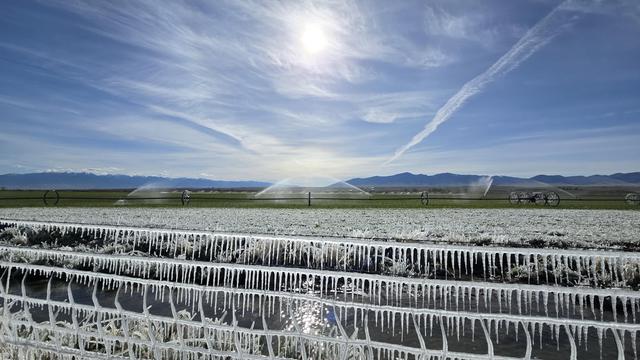
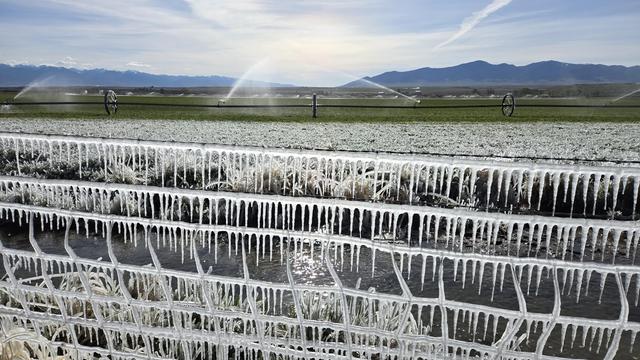
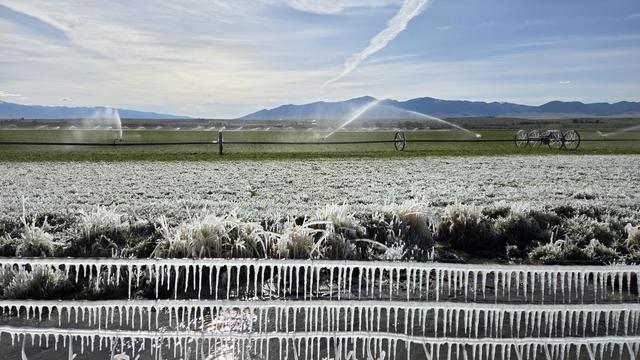
The lower Murray is officially on life support
Irrigation and the signs of a slow death
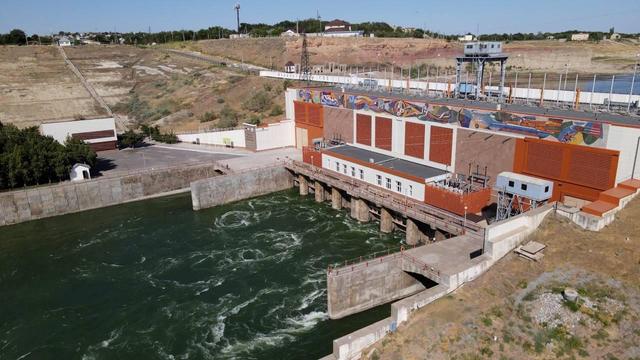
"The lower Murray supports a wealth of native Australian fauna. But the development of weirs and barrages since the twentieth century to regulate the water level and divert water for irrigation have dramatically altered the flow of the river."
"This regulation has supported increased European settlement, trade, and agriculture along the river, setting the scene for the region as we know it today. Nowadays, inflow to the Lower Lakes is about half of what it once was prior to European settlement."
“However, river regulation has drastically altered the water flow and ecology of the lower Murray. The destruction of native vegetation, poor water quality and invasive species such as foxes and carp have also taken their toll. It is increasingly clear the lower Murray region is changing at a rapid rate, to a drier and warmer climate with less flow and more extreme droughts” >>
https://theconversation.com/the-lower-murray-is-officially-on-life-support-will-we-save-it-274969
#water #rivers #MDB #extractivism #irrigation #destruction #EuropeanSettlement #biodiversity #wildlife #wetland
Converting AC Irrigation Valves To DC Operation

Water is an essential natural resource that sustains life and ecosystems. However, the increasing pressure on freshwater reserves due to climate change, rapid population growth, and industrialization is exacerbating the issue of water scarcity. In this context, wastewater reuse has emerged as a vital strategy to address water shortage. Also, it supports the United Nations Sustainable Development Goals and aligns with the principles of the circular economy. In this context, phytoremediation appears to be a viable solution that employs plant species to purify water, thereby contributing to water reuse. So, this study focuses on evaluating the feasibility of using treated wastewater from a constructed wetland for irrigation purposes. The investigation involved establishing a comprehensive monitoring plan, including sampling and analytical processes, followed by in situ and laboratory analyses of the collected water samples. The results indicate that the treated wastewater met the quality standards set by National and European legislation for irrigation purposes. Some parameters, such as chemical oxygen demand, total suspended solids, and turbidity, demonstrate high removal efficiencies, with maximum removal efficiencies exceeding 97%. The anions and potentially toxic elements showed very low values, being within the standards for water reuse for irrigation, except ammonium (NH4+), which did not comply with the standards in any of the campaigns. The SAR, with a value of less than 2, was below the maximum recommended value (MRV) of 8. Overall, the findings support the use of treated wastewater from constructed wetlands for irrigation, which offers an effective solution for water reuse and contributes to environmental sustainability.

Water is an essential natural resource that sustains life and ecosystems. However, the increasing pressure on freshwater reserves due to climate change, rapid population growth, and industrialization is exacerbating the issue of water scarcity. In this context, wastewater reuse has emerged as a vital strategy to address water shortage. Also, it supports the United Nations Sustainable Development Goals and aligns with the principles of the circular economy. In this context, phytoremediation appears to be a viable solution that employs plant species to purify water, thereby contributing to water reuse. So, this study focuses on evaluating the feasibility of using treated wastewater from a constructed wetland for irrigation purposes. The investigation involved establishing a comprehensive monitoring plan, including sampling and analytical processes, followed by in situ and laboratory analyses of the collected water samples. The results indicate that the treated wastewater met the quality standards set by National and European legislation for irrigation purposes. Some parameters, such as chemical oxygen demand, total suspended solids, and turbidity, demonstrate high removal efficiencies, with maximum removal efficiencies exceeding 97%. The anions and potentially toxic elements showed very low values, being within the standards for water reuse for irrigation, except ammonium (NH4+), which did not comply with the standards in any of the campaigns. The SAR, with a value of less than 2, was below the maximum recommended value (MRV) of 8. Overall, the findings support the use of treated wastewater from constructed wetlands for irrigation, which offers an effective solution for water reuse and contributes to environmental sustainability.

Water is an essential natural resource that sustains life and ecosystems. However, the increasing pressure on freshwater reserves due to climate change, rapid population growth, and industrialization is exacerbating the issue of water scarcity. In this context, wastewater reuse has emerged as a vital strategy to address water shortage. Also, it supports the United Nations Sustainable Development Goals and aligns with the principles of the circular economy. In this context, phytoremediation appears to be a viable solution that employs plant species to purify water, thereby contributing to water reuse. So, this study focuses on evaluating the feasibility of using treated wastewater from a constructed wetland for irrigation purposes. The investigation involved establishing a comprehensive monitoring plan, including sampling and analytical processes, followed by in situ and laboratory analyses of the collected water samples. The results indicate that the treated wastewater met the quality standards set by National and European legislation for irrigation purposes. Some parameters, such as chemical oxygen demand, total suspended solids, and turbidity, demonstrate high removal efficiencies, with maximum removal efficiencies exceeding 97%. The anions and potentially toxic elements showed very low values, being within the standards for water reuse for irrigation, except ammonium (NH4+), which did not comply with the standards in any of the campaigns. The SAR, with a value of less than 2, was below the maximum recommended value (MRV) of 8. Overall, the findings support the use of treated wastewater from constructed wetlands for irrigation, which offers an effective solution for water reuse and contributes to environmental sustainability.

🍑 Smart4Plums - one of Farmtopia’s Open Call Sustainable Innovation Pilots in Serbia. Developed by Nissatech Innovation Centre and tested at poljoprivredno gazdinstvo Darko Burdžić, this SIP combines AI-driven irrigation planning with a novel unusuality detection system, enabling farmers to react to unexpected conditions. With micro-zone water predictions and Farmtopia components, Smart4Plums helps optimise water use, maintain fruit quality, and reduce operational costs. Here is more on how Smart4Plums supports plum farming 👉https://lnkd.in/gw-537wk #Farmtopia #HorizonEurope #ResearchInnovation #ResearchImpact #FarmtopiaSIPs #PlumsFarming #PlumFarming