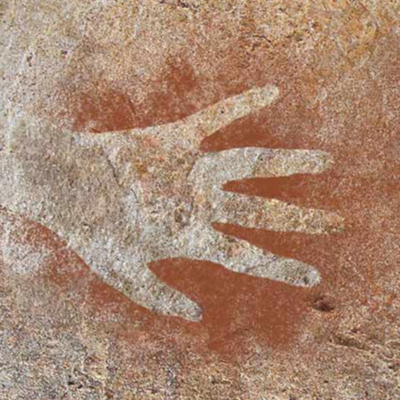
New research links Denisovan habitats to immune genes in today’s humans. From Siberia’s ticks to Southeast Asia’s malaria, ancient landscapes shaped our DNA. #Anthropology #HumanEvolution #Denisovans #Immunogenetics https://www.anthropology.net/p/denisovan-genes-and-the-ancient-geography
Denisovan Genes and the Ancient Geography of Disease

How Paleoenvironments Shaped the Immune Systems We Inherited

Anthropology.net

'The influence of genotypic and paratypic factors on the intestinal microbiome of quails' - an article in the @EDPSciences UN #SDGs #Research collection on #ScienceOpen:

🔗 https://www.scienceopen.com/document?vid=ed1c829b-4d7b-451e-9fcc-c922c1b3d53d

#ProbioticResearch #Immunogenetics #MicrobialBiodiversity #VeterinaryMicrobiology

The influence of genotypic and paratypic factors on the intestinal microbiome of quails

<p xmlns:xsi="http://www.w3.org/2001/XMLSchema-instance" class="first" dir="auto" id="d19752e86">The article discusses the features of the gastrointestinal tract microbiome of white Texas quails using various probiotic preparations and the relationship between immune genes and its biodiversity. The highest biodiversity was found in the quails of the first group, which were kept on the main feeding ration. Among the experimental groups, the highest biodiversity was demonstrated by the groups that were given the probiotics "Em-Kurunga" and "Yarosil" with water (0.6 ml/kg). Birds with all the studied immune genes have a higher biodiversity of microorganisms in the gastrointestinal tract. </p>

ScienceOpen
Transcriptomic and immunophenotypic profiling reveals molecular and immunological hallmarks of colorectal cancer tumourigenesis. https://doi.org/10.1136/gutjnl-2022-327608 #ColorectalNeogenesis #Immunogenetics #GeneExpression
Transcriptomic and immunophenotypic profiling reveals molecular and immunological hallmarks of colorectal cancer tumourigenesis

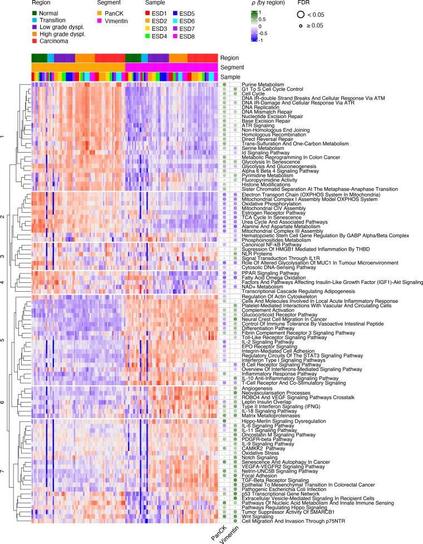
Objective Biological insights into the stepwise development and progression of colorectal cancer (CRC) are imperative to develop tailored approaches for early detection and optimal clinical management of this disease. Here, we aimed to dissect the transcriptional and immunologic alterations that accompany malignant transformation in CRC and to identify clinically relevant biomarkers through spatial profiling of pT1 CRC samples. Design We employed digital spatial profiling (GeoMx) on eight pT1 CRCs to study gene expression in the epithelial and stromal segments across regions of distinct histology, including normal mucosa, low-grade and high-grade dysplasia and cancer. Consecutive histology sections were profiled by imaging mass cytometry to reveal immune contextures. Finally, publicly available single-cell RNA-sequencing data was analysed to determine the cellular origin of relevant transcripts. Results Comparison of gene expression between regions within pT1 CRC samples identified differentially expressed genes in the epithelium (n=1394 genes) and the stromal segments (n=1145 genes) across distinct histologies. Pathway analysis identified an early onset of inflammatory responses during malignant transformation, typified by upregulation of gene signatures such as innate immune sensing. We detected increased infiltration of myeloid cells and a shift in macrophage populations from pro-inflammatory HLA-DR+CD204− macrophages to HLA-DR−CD204+ immune-suppressive subsets from normal tissue through dysplasia to cancer, accompanied by the upregulation of the CD47/SIRPα ‘don’t eat me signal’. Conclusion Spatial profiling revealed the molecular and immunological landscape of CRC tumourigenesis at early disease stage. We identified biomarkers with strong association with disease progression as well as targetable immune processes that are exploitable in a clinical setting. Data are available in a public, open access repository. The GeoMx raw and normalised data is available via FigShare <https://doi.org/10.6084/m9.figshare.16818415>. Imaging Mass Cytometry files (mcd files) and the corresponding annotation file are shared on BioImage Archive (Accession number S-BIAD587, <https://www.ebi.ac.uk/biostudies/bioimages/studies/S-BIAD587>).

Gut

"The human MPYS gene is highly heterogeneous (9, 10). Approximately 50% of Americans carry a non–wild-type (WT) (R232) MPYS allele (9). R71H-G230A-R293Q (HAQ) is the second most common human MPYS allele carried by ∼25% of Americans and ∼63% of East Asians (EAS) (9). Surprisingly, we recently found that HAQ knock-in mice do not respond to CDNs in vivo (11). In corroboration, Mogensen and colleagues (12) reported that homozygous HAQ MPYS/STING was enriched in HIV-infected individuals that were long-term nonprogressors."

#Immunology #Immunogenetics #JournalImmunology

https://journals.aai.org/jimmunol/article/209/11/2114/237342/MPYS-Modulates-Fatty-Acid-Metabolism-and-Immune

MPYS Modulates Fatty Acid Metabolism and Immune Tolerance at Homeostasis Independent of Type I IFNs

Key Points. AQ and HAQ alleles underwent natural selection during the out-of-Africa migration.Adult AQ knock-in mice are leaner than WT or HAQ mice on a chow di

American Association of Immunologists
Hello👋 I’m a research fellow and psychiatrist at the University of Cambridge. I work on interactions between the immune system, brain and behaviour esp using #ImmunoGenetics approaches. Interested in #biomarker discovery in psychiatry. Looking forward to discussions on here! #genomics #immunopsychiatry #neuroscience #neuroimmunology #introduction
Hi! Just trying out Mastadon. I am a complex trait geneticist working on the functional annotation of risk loci for SLE using multi-omic technologies. I am also a qualified mediator with a special interest in resolving disputes between PhD students and their supervisors.#Introduction #bioinformatics #SLE #multi-omic #functionalgeonomics #ImmunoGenetics #mediation #scienceculture