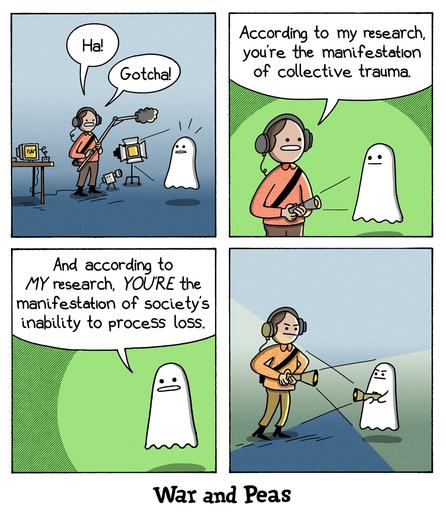
The Children of the Silent Door
I. Ma’alot, 1974
Yishai did not hear the knock.
He saw his father hear it.
That was how sound came to him: not as sound, but as changes in faces. His father’s head lifted. His mother stopped with one hand on the chair. Miriam looked toward the door. Eliahu froze in the middle of the room, one bare foot raised, as if the floor itself had spoken.
The door became the center of the world.
Yishai sat in a square of morning light, holding the wooden block he had been turning over and over in his hands. The block was smooth on one side and rough on another. He liked this. The world was made of differences he could feel.
His mother’s dress moved past him.
Blue cloth. Warm smell. Bread. Soap. Her.
She was heavy with the child inside her, one hand often resting on the roundness beneath her dress. Yishai liked to press his cheek there. Sometimes he felt movement. A secret tide. A little swimmer in the dark.
His father opened the door.
There were men outside.
Their mouths moved.
Yishai watched mouths the way other children watched birds. Mouths opened. Mouths closed. Mouths made shapes. Sometimes faces smiled afterward. Sometimes faces tightened. Sometimes hands reached for him. Sometimes doors opened.
The men’s mouths moved in the doorway.
His father’s shoulders lowered.
Perhaps the words were safe words.
Police. Searching. Terrorists.
Grown-up words. Door-opening words. Words with uniforms hidden inside them.
Then the men entered.
The room broke without sound.
One arm rose.
Light flashed.
His father folded.
Yishai blinked.
His mother’s mouth opened wider than he had ever seen it open. No sound came. No sound ever came. But her eyes changed so suddenly that Yishai knew something had entered the house that was older than language.
Eliahu fell.
Miriam disappeared behind the table.
A cup rolled across the floor, turning its white mouth over and over in the light.
His mother moved toward him, toward Miriam, toward the child inside her, toward everything at once.
Then she stopped.
Her body jerked.
Her hand brushed Yishai’s shoulder.
Then she was on the floor beside him.
He crawled to her because she was his country. He crawled to her because every road he knew led to her hands.
But her hands did not rise.
Around him the silent house filled with thunder he would never hear.
II. Galilee, 1948
Samira did not hear the shouting.
She saw the village hear it.
That was how danger came: first into the eyes of others. Her grandmother’s hand tightened around the bread. Her brother turned toward the road. Her mother lifted the baby from the mat so quickly that the baby’s head fell back like a flower on a broken stem.
Outside, people were running.
Samira stood in the doorway and watched dust rise at the edge of the village.
Dust meant goats. Dust meant carts. Dust meant boys playing chase. Dust meant weddings sometimes, when many feet came dancing up the road.
But this dust was different.
It came with mouths opened wide.
Men pointed. Women gathered children. Someone dropped a basket of figs, and the figs rolled into the dirt, splitting their purple skins.
Samira did not know the word catastrophe.
She knew her mother’s hands.
Her mother’s hands tied cloth. Her mother’s hands pushed bread into a sack. Her mother’s hands pressed Samira’s shoulders and turned her away from the doorway.
Go.
That was what the hands said.
Not in a word. In force. In trembling. In the way fingers became birds against her back.
Samira looked for her doll, the one made from rags and two black beads. It lay beside the sleeping mat. She bent to get it, but her mother pulled her upright.
No.
The doll remained on the floor, face turned toward the ceiling, as if waiting for the roof to explain.
Outside, her father stood with other men. Their mouths moved quickly. Their hands argued in the air.
Samira watched them and thought: adults are always making weather with their mouths.
Then came the flash from the road.
Not sound.
Light.
A white tear in the morning.
A man near the well fell backward. The bucket rope slid through his hand. Water spilled into the dust and vanished.
Her mother seized her.
The baby was tied to her mother’s chest. Her brother carried the sack. Her grandmother held the key.
The key was large and black and old. It had opened the same door for many years. Samira had watched it turn in the lock every morning and every evening. The key was a little iron animal. It belonged to the house the way bones belonged to the body.
Her grandmother held it even as they left.
The village moved toward the fields.
Samira turned once.
Her house was still there.
The fig tree was still there.
The doorway was still open.
Her doll was still inside.
She wanted to go back and close the door.
But her mother’s hand kept pushing.
Go.
Behind them, mouths opened. Arms waved. Dust rose. Light flashed.
The world was ending in a language Samira could not hear.
III. Ma’alot
Yishai learned the world from what remained.
A chair on its side.
A cup near the table.
A darkening place on the floor.
His mother’s sleeve beneath his cheek.
He did not know that the men had gone on. He did not know that they had entered a school. He did not know that other children, older children, children who could hear every command and cry and burst of gunfire, were now gathered beneath the same terrible sky.
He knew only the house.
And the house had become strange.
Before, everything in it had a place. The table stood. The chairs stood. The door closed and opened. His father came and went through it. His mother moved from room to room like the soul of the house itself. Eliahu ran. Miriam reached. The child inside his mother pushed against the hidden wall of her body.
Now everything was misplaced.
His father lay where fathers did not lie.
Eliahu lay where brothers did not sleep.
Miriam was small behind the table, her eyes enormous, her body twisted around pain.
His mother lay beside him, and no matter how he pressed his face into her, no matter how his fingers pulled at her sleeve, she did not gather him back into the world.
Yishai touched her hand.
It was still his mother’s hand. It had not forgotten its shape. It had not become someone else’s hand. But something had left it.
He placed his small palm in hers.
Nothing closed around him.
Outside, people were running.
He could see them through the open door, crossing and recrossing the slice of morning that had once been ordinary. Their mouths were open. Their arms were lifted. A woman’s scarf flashed red. A man bent low and vanished from view. Another man appeared with something dark in his hands.
Yishai did not understand urgency.
He understood absence.
His mother’s hand did not answer.
That was the first language of the massacre.
Not blood.
Not smoke.
Not the mouths of men.
The unanswered hand.
He sat beside her until another pair of hands came.
They were not his mother’s hands. They were rougher, hurried, trembling. They lifted him from the floor. He twisted back toward her. He reached.
The hands held him tighter.
A face leaned close to his. A stranger’s face. Wet eyes. A mouth opening and closing.
Yishai looked past the mouth.
He wanted the floor.
He wanted the sleeve.
He wanted the hand that had known him before the world broke.
But he was carried out through the silent door.
Behind him, the house remained open.
Behind him, the dead kept their places.
Behind him, thunder continued without sound.
IV. Galilee
Samira learned exile from the soles of her feet.
At first she thought they would return before nightfall.
Her grandmother had taken the key, after all.
The key meant return. The key meant the door still belonged to them. The key meant the house was waiting, offended perhaps, but waiting. Samira imagined her doll lying beside the mat, patient and solemn, guarding the room until she came back.
They walked through fields she knew and then through fields she did not know. The familiar stones ended. The familiar trees ended. Even the dust seemed different once they passed beyond the place where the village could still be seen.
Her mother kept turning back.
Each time she turned, Samira turned too.
At first, the village was a whole thing: roofs, trees, walls, the shape of home.
Then it became pieces.
Then it became a pale unevenness in the distance.
Then it became smoke.
Samira did not hear the cries behind them. She did not hear the arguing of men or the prayers of women. She did not hear the names shouted into the fields as families searched for those who had scattered.
But she saw the mouths.
All day, mouths opened around her.
Mouths asking.
Mouths accusing.
Mouths begging God.
Mouths forming names.
Mouths forming curses.
Mouths forming promises that no road could keep.
Her grandmother’s mouth moved most of all. Sometimes she touched the key hanging from her neck. Sometimes she lifted it and kissed it. Sometimes she held it in her fist so tightly that the iron left a mark in her palm.
Samira watched the mark darken.
She wondered whether the house could feel the key missing.
Toward evening, they stopped among other families beneath a line of trees. Children slept against bundles. Old men stared at nothing. Someone shared water. Someone else spread a cloth on the ground and placed bread upon it as carefully as if the earth had become a table.
Samira’s mother sat and pulled her close.
The baby slept against her mother’s chest.
Her brother looked older than he had that morning.
Her grandmother stared in the direction from which they had come.
Samira wanted to ask when they would return. But her own mouth had never been useful for asking. Her hands could ask small questions. Her eyes could ask the large ones.
She touched her grandmother’s key.
Her grandmother looked at her.
For a long time, neither moved.
Then the old woman took Samira’s hand and closed it around the key.
The iron was warm from her body.
Her grandmother pointed behind them.
Home.
Then she pointed ahead.
Go.
Samira shook her head.
The old woman’s eyes filled, but no tears fell. She touched Samira’s mouth. Then her own ear. Then the road.
There were things Samira could not hear.
There were things no one wanted to hear.
That night, under trees that did not belong to them, Samira dreamed of her doll rising from the mat and closing the door by herself.
V. The Boy Who Survived
Years later, Yishai remembered in pieces.
Not as a story. Never as a story.
Others made stories.
They knew dates. They knew names. They knew the number of the dead. They knew the names of the groups, the demands, the failures, the rescue attempt, the arguments that followed, the speeches, the ceremonies, the photographs, the memorials, the anniversaries.
They knew what to call it.
Massacre.
Terror.
Tragedy.
National wound.
They had words enough to build walls.
Yishai had images.
A cup rolling.
His father’s knees bending strangely.
His mother’s hand open.
Miriam’s eyes behind the table.
The doorway widened by men who had entered through a lie.
The flash.
Always the flash.
Not the report.
Not the crack.
Not the thunder.
Only the light.
People sometimes spoke about silence as if it were peaceful. They had never been inside his silence. His silence was crowded. It was full of faces turned toward sounds he could not hear. Full of mouths moving too late. Full of bodies struck down by things that arrived without warning.
As he grew, people looked at him with pity and tenderness and sometimes with a strange reverence, as though survival had made him a kind of holy object.
The unhurt child.
The deaf child.
The child spared.
But he did not feel spared.
He felt carried.
Carried out of the house.
Carried through years.
Carried by hands that were not the hands he wanted.
At memorials, he saw flags.
At memorials, he saw soldiers.
At memorials, he saw officials stand before microphones. Their mouths opened and closed. Translators shaped some of the words for him. Interpreters moved their hands. There were always words.
Security.
Memory.
Justice.
Never again.
Enemy.
Homeland.
Sacrifice.
He watched these words pass from mouth to hand to page, and he wondered how many words a people could speak before it heard the child on the floor.
Sometimes he looked at the faces around him and saw that they were listening only to their own dead.
He understood this.
He too listened only to his own dead.
But he wondered whether this was how the world remained broken: each people holding its murdered children like a shell against the ear, hearing only the sea of its own grief.
VI. The Girl Who Carried the Key
Years later, Samira remembered in textures.
The wool of the bundle against her cheek.
The iron key in her palm.
The dry skin of her grandmother’s fingers.
The cracked earth beneath her feet.
The first night under trees that did not know her name.
Others made histories.
They knew maps. They knew armies. They knew resolutions, borders, expulsions, battles, villages emptied, villages destroyed, villages renamed, villages remembered only by those who carried their names in the mouth like seeds.
They knew what to call it.
Nakba.
Catastrophe.
Dispossession.
Return.
Exile.
Homeland.
Loss.
They had words enough to keep wounds alive.
Samira had images.
Figs split in the dust.
A bucket rope sliding through a dead man’s hand.
Her mother pushing her forward.
Her doll left staring at the ceiling.
Her grandmother carrying the key.
The house becoming smaller behind them until it became smoke.
She grew in rooms that were not home. Then in tents. Then in crowded places where everyone had a village folded inside them. Some villages were spoken of daily, as if they were only just beyond the hill. Some villages became chants. Some became lullabies. Some became arguments. Some became photographs of elders holding keys.
The key remained.
When her grandmother died, the key passed to Samira’s mother.
When her mother died, it passed to Samira.
By then, the key opened nothing.
That was what people said.
But they were wrong.
It opened grief.
It opened memory.
It opened the room where a rag doll still waited beside a sleeping mat, because the child who had left it there had never quite grown old enough to abandon it.
At gatherings, men spoke loudly. Women spoke fiercely. Young people spoke with fire. Translators moved their hands for Samira, but she often looked away. She knew the words already.
Occupation.
Resistance.
Martyr.
Right.
Return.
Enemy.
Justice.
She did not reject them. Some were true. Some were necessary. Some were the last shelter left to a people whose houses had been taken.
But she wondered how often true words became stones.
She wondered how often stones became walls.
She wondered how often walls became graves.
Sometimes she looked at the faces around her and saw that they were listening only to their own dead.
She understood this.
She too listened only to her own dead.
But she wondered whether this was how the world remained broken: each people holding its stolen house like a shell against the ear, hearing only the sea of its own grief.
VII. The Language of the Wounded
Yishai learned signs.
Samira learned signs.
Their hands became voices.
But neither could sign to the other.
Not because their hands were incapable.
Not because their grief had no grammar.
But because history had placed them on opposite shores of the same silence.
Between them stood fathers and mothers, fighters and soldiers, refugees and mourners, graves and keys, schools and villages, doors opened by deception and doors locked against return.
Between them stood the dead.
And the dead were not neutral.
No dead child is neutral.
Each side lifted its own children before the world and said:
Look.
Each side turned away when the other lifted theirs.
Look at what was done to us.
No, look at what was done to us.
Listen to our dead.
No, listen to ours.
And so the land filled with mouths.
Mouths in parliaments.
Mouths in refugee camps.
Mouths in military briefings.
Mouths in classrooms.
Mouths in mourning tents.
Mouths in ceremonies.
Mouths on television.
Mouths at checkpoints.
Mouths at graves.
Mouths saying peace.
Mouths saying security.
Mouths saying resistance.
Mouths saying terror.
Mouths saying never again.
Mouths saying return.
Mouths saying this land is ours.
Mouths saying this land was ours.
Mouths saying God.
Mouths saying blood.
Mouths saying history.
Mouths saying enough.
But the mouths did not become ears.
And the ears did not become mercy.
Yishai grew older.
Samira grew older.
They did not meet.
He did not see the key she kept wrapped in cloth.
She did not see the empty space where his mother’s hand should have closed around his.
He did not know the name of her village.
She did not know the name of his brother.
He did not know about the doll.
She did not know about the cup.
They remained strangers.
Not enemies exactly.
Something sadder.
Unheard witnesses in a world addicted to speech.
VIII. The House Without Thunder
In the end, there was no meeting.
No conference room.
No reconciliation circle.
No table where the two old survivors sat across from each other and drew doors with trembling hands.
No translator leaning in.
No miraculous recognition.
No exchanged key.
No shared photograph.
No softening music.
No final embrace to make the reader feel forgiven.
There was only the land.
The land held everything.
The house in Ma’alot.
The emptied village in Galilee.
The school.
The road.
The door.
The key.
The cup.
The doll.
The mother’s hand.
The child who could not hear the knock.
The child who could not hear the shouting.
The children who heard everything and died anyway.
The adults who heard everything and understood nothing.
Silence did not mean absence.
Silence was full.
Full of unborn children.
Full of unreturned refugees.
Full of murdered families.
Full of frightened soldiers.
Full of boys taught to become weapons.
Full of girls taught to become memory.
Full of prayers spoken toward the same heaven.
Full of graves facing the same sun.
And over all of it, the mouths continued.
The mouths accused.
The mouths defended.
The mouths mourned.
The mouths justified.
The mouths promised peace while sharpening knives.
The mouths said dialogue.
The mouths said useless.
The mouths said listen.
The mouths said never.
The mouths said child.
The mouths said enemy.
The mouths said ours.
The mouths said theirs.
But somewhere beneath the speeches, beneath the slogans, beneath the ceremonies of grief and the machinery of revenge, two children remained seated in the first rooms of catastrophe.
Yishai on the floor beside his mother.
Samira on the road with the key in her hand.
Neither heard the gunfire.
Neither heard the orders.
Neither heard the great words by which adults made the world burn.
They saw only what the words did.
Perhaps they were called deaf because they could not hear the violence.
Perhaps they were called mute because they could not answer it.
But the land knew better.
The land had listened to everyone.
The land had heard every speech, every oath, every anthem, every command, every prayer, every curse, every justification.
And after all that hearing, the land asked its final question without a sound:
Who, then, is deaf?
Who, then, is mute?
The children?
Or the peoples who, wounded past bearing, taught themselves not to hear?
The children?
Or the nations who, terrified of each other’s grief, chose not to speak except through walls, raids, rockets, checkpoints, funerals, flags?
The children?
Or the two sides standing forever at the silent door, each knocking, each refusing to open, each unable to hear the child crying on the other side?
No answer came.
Only the cup, turning once more in the light.
Only the key, warm in a closed hand.
Only the door.
Only the silence.
#AnabaptistReflection #catastrophe #childrenOfWar #collectiveTrauma #deafness #Displacement #doors #Exile #grief #historicalFiction #intergenerationalTrauma #IsraelPalestine #IsraeliHistory #keys #literaryFiction #MaAlot #Massacre #memory #Mourning #muteness #Nakba #Nonviolence #PalestinianHistory #peace #Peacebuilding #PoliticalFiction #propheticImagination #Reconciliation #Refugees #silence #symbolicFiction #Trauma #Violence #warAndChildren gif | poison punk
 Slow Mover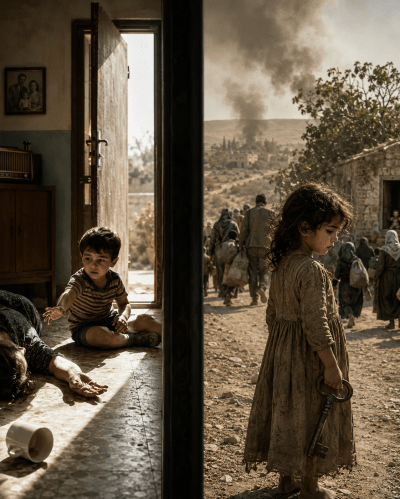
 poison punk
 Gif's Artidote
 War and Peas – Funny Comics – Funny Webcomic [Unofficial]