More portable #retrocomputing philosophizing: Whether a machine has "Instant-On" makes a huge difference in the tasks it's useful for. By this, I mean whether the machine returns to the same program and screen where you left it, when powered back on from inactivity.

Without "Instant-On", the machine demands to be used for long sessions, (else the boot time is too inconvenient) and demands your constant attention (else the power draw of leaving it sitting around powered on is wasted). Using the machine involves clearing your schedule and devoting yourself to it, like reading a book.

Examples of machines without "Instant-On": DOS-era laptops, #Book8088, #GameBoy, #MailStation.

With "Instant-On", the machine is useful for PDA-style quick jottings, grocery lists, etc. It is also useful for fun activities even in circumstances where you are likely to be interrupted.

Examples of machines with "Instant-On": #HP200LX, #HpOmniBook, #PalmPilot, #PocketPC, #TI92 (and other TI calculators), and, of course, smartphones.

While machines in the first category may offer a more immersive experience, they are far less useful to me than machines in the second category. It's like the difference between a luggable and a true mobile computer.

@thelobdegg Funny to think that some of the most recent MS-DOS oriented computers produced are using the oldest specs #book8088

It looks like the supply of #Book8088 laptops is running out.

Bought one on ebay last night, wake up to "actually these are all pocket8086 do you still want it?" (*)

May have actually been a legit error, they seem to have pulled or updated all their sales on ebay.

A quick search on AliExpress only shows a few sources.

So yeah, if you want one, better move.

(*) No I don't want a pocket laptop. The book8088 was almost too small, anything smaller would just be a toy to me.

Experimentos novos com ingredientes clássicos - Retrópolis

Nem só de micros 100% clássicos nem de reimplementações em FPGA vivem os habitantes de Retrópolis, mas também de toda uma zona cinzenta, de misturar, somar e juntar componentes clássicos e componentes novos. O Liliputing avisa que a Olimex, conhecida por fabricar SBCs e outras coisas com Linux embutido mas que também tem uma linha

Retrópolis - A cidade dos clássicos

I'm kinda heartbroken.

My #book8088 v1 has a weird display problem. it's not showing green in text mode! 💚

"White" text is basically purple. Green is barely visible. "Bright white" and "bright green" are normal, and graphics modes seem ok.

I took the cover off the screen and poked at the LCD board and poked at things and made sure the cable is well connected. I also re-seated the socketed chips under the cga "card" cover. No effect.

Yesterday, I released Free #FDISK 1.3.15. This version works around a #Book8088 BIOS bug and fixes a regression that prevents the user from changing the type of already existing partitions. This version will be part of the next #FreeDOS test release T2406.

https://github.com/FDOS/fdisk/releases/tag/v1.3.15

#FreeDOS

Release Version 1.3.15 · FDOS/fdisk

See CHANGES.MD for a list of changes. A binary package for use with FreeDOS and other DOS implementations is provided by the FDISK.ZIP file.

GitHub
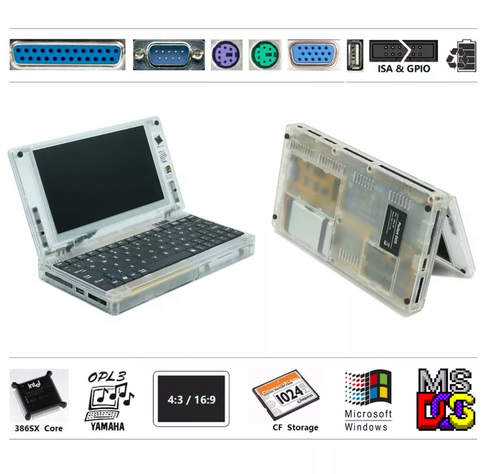
#pocket386 clear case to be released in about 15 days @polpo #hand386 #book8088

I have upgraded my #book8088 to #FreeDOS which runs without problems when `himem` and other 386 stuff is skipped during startup.

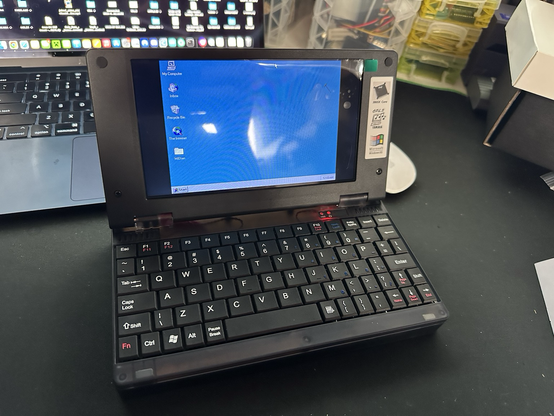
It's amazing to see Windows 3.0 and #OpenGEM are running on 600 KByte of RAM ... today this is too small to load a fancy icon file.
However, now I miss an old style COM port mouse to enjoy GUIs from the 80s.

Only one thing kills me: `defrag`. 13% of 150 MB done in 6 hours.
Well I guess nobody tried to defragment disks 40 years ago on a 4 MHz machine. 😁

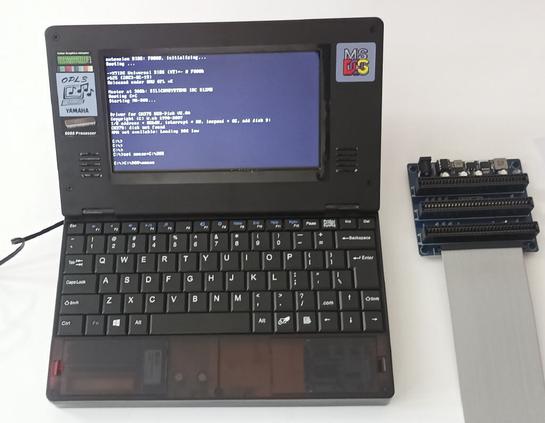
Today I have received my #book8088, an IBM XT clone like laptop, with a #8088 compatible CPU.
Everything worked out of the box with #msdos 6.22 and some software from 35+ years ago.
Pure #retrocomputing 🥰!

I cloned the 512 MB CF card to have a backup and added my own #DOS sample apps.
They started as expected ... very very slow (4.7 MHz), but it worked.

So now I have proof that all I did create with #openwatcom and #dosbox is really running on 40 year old x86 machines.