SciTech Chronicles. . . . . . . . .Mar 15th, 2025

  Mundus sine Caesaribus Vol II No 67 299 links Curated Nanomaterials could be used in more accurate sensors for healthcare. https://www.sci...

SciTech Chronicles. . . . . . . . .Feb 26th, 2025

Set the controls for the heart of the Sun... Vol II No 51 375 links Curated Rice-based baby food linked to lower ADHD risk. https://www.psyp...

` This unique many-body effect of interfacial water was consistently observed for various TiO2 particles with different crystalline structures, including brookite, anatase, and a mixture of anatase and rutile. Our results demonstrated that depositing several water layers in a water vapor environment with RH ∼ 70% is optimal for photocatalytic hydrogen evolution rather than liquid-phase reaction conditions in aqueous solutions.`

https://pubs.acs.org/doi/10.1021/jacs.4c04271

#hydrogen #photocatalysis #adsorption

Engines of Our Ingenuity 2991: Writing in Colors

Episode: 2991 Tswett and the Development of Chromatography. Today, we write in colors.

Read More >>

#Adsorption #analysis #botany #Chlorophyll #Column #FilterPaper #Pigments #plants #Purification #russia #Separation #Solvents #Warsaw

Engines of Our Ingenuity 2991: Writing in Colors

Episode: 2991 Tswett and the Development of Chromatography.  Today, we write in colors.

Houston Public Media

📣Andreas Seidel-Morgenstern wurde für seine Beiträge zu #Adsorption, #Chromatographie, #Kristallisationsprozess|en und zur Trennung von #Enantiomer|engemischen als Mitglied in die National Academy of Engineering der USA berufen - herzlichen Glückwünsch!

https://www.mpi-magdeburg.mpg.de/pm-2023-seidel-morgenstern-national-academy-engineering?c=4374594

Prof. Andreas Seidel-Morgenstern in die National Academy of Engineering der USA aufgenommen

📣Andreas Seidel-Morgenstern has been elected as a member of the National Academy of Engineering of the USA for his contributions to #adsorption, #chromatography, #crystallization processes, and the separation of #enantiomer mixtures - congratulations!

https://www.mpi-magdeburg.mpg.de/4385805/2023-02-21-andreas-seidel-morgenstern-national-academy-engineering?c=3011

Prof. Andreas Seidel-Morgenstern elected to the U.S. National Academy of Engineering

Happy to share our new publication from the #ClayHOC project: #Adsorption of the #hydrophobic organic pollutant #hexachlorobenzene to phyllosilicate #minerals in ESPR

https://doi.org/10.1007/s11356-022-24818-4

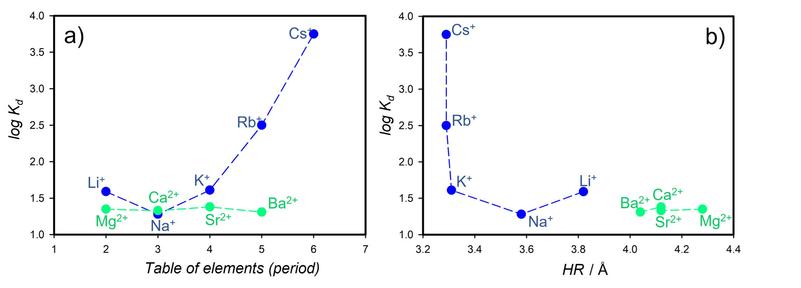
Results show relevant #adsorption of #HCB to natural #ClayMinerals. Cation-modification revealed dependence on type, radius, #hydration enthalpy of exchangeable #cations

Results support relevance of minerals for #EnvironmentalFate of #PersistentOrganicPollutants #POP in #soils #sediments

#SPME #DFT #HOC

Adsorption of the hydrophobic organic pollutant hexachlorobenzene to phyllosilicate minerals - Environmental Science and Pollution Research

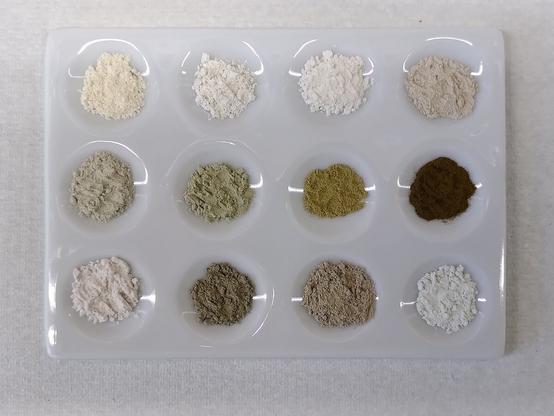
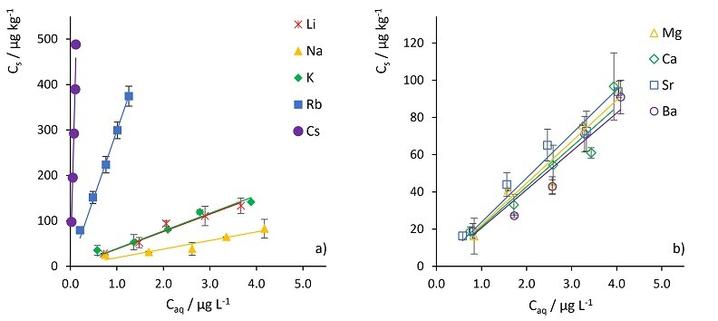
Hexachlorobenzene (HCB), a representative of hydrophobic organic chemicals (HOC), belongs to the group of persistent organic pollutants (POPs) that can have harmful effects on humans and other biota. Sorption processes in soils and sediments largely determine the fate of HCB and the risks arising from the compound in the environment. In this context, especially HOC–organic matter interactions are intensively studied, whereas knowledge of HOC adsorption to mineral phases (e.g., clay minerals) is comparatively limited. In this work, we performed batch adsorption experiments of HCB on a set of twelve phyllosilicate mineral sorbents that comprised several smectites, kaolinite, hectorite, chlorite, vermiculite, and illite. The effect of charge and size of exchangeable cations on HCB adsorption was studied using the source clay montmorillonite STx-1b after treatment with nine types of alkali (M+: Li, K, Na, Rb, Cs) and alkaline earth metal cations (M2+: Mg, Ca, Sr, Ba). Molecular modeling simulations based on density functional theory (DFT) calculations to reveal the effect of different cations on the adsorption energy in a selected HCB-clay mineral system accompanied this study. Results for HCB adsorption to minerals showed a large variation of solid–liquid adsorption constants Kd over four orders of magnitude (log Kd 0.9–3.3). Experiments with cation-modified montmorillonite resulted in increasing HCB adsorption with decreasing hydrated radii of exchangeable cations (log Kd 1.3–3.8 for M+ and 1.3–1.4 for M2+). DFT calculations predicted (gas phase) adsorption energies (− 76 to − 24 kJ mol−1 for M+ and − 96 to − 71 kJ mol−1 for M2+) showing a good correlation with Kd values for M2+-modified montmorillonite, whereas a discrepancy was observed for M+-modified montmorillonite. Supported by further calculations, this indicated that the solvent effect plays a relevant role in the adsorption process. Our results provide insight into the influence of minerals on HOC adsorption using HCB as an example and support the relevance of minerals for the environmental fate of HOCs such as for long-term source/sink phenomena in soils and sediments.

SpringerLink
Directly visualizing the cooperative adsorption of a string-like molecule onto a solid with double-stranded DNA

Macromolecules in diverse phases can adsorb onto natural systems, composite materials, and thin-film devices. In a new report now published in Science Advances, Yuma Morimitsu and a research team in applied chemistry and polymer interfaces and molecular adhesion used atomic force microscopy (AFM) to visualize well-defined double-stranded DNAs and conducted molecular dynamics simulations to identify the adsorption mechanisms of polymer chains to solid surfaces.

Phys.org

My current work is on "#ClayMinerals as sorbents for #HydrophobicOrganicChemicals - #ClayHOC" at #JLUgiessen together with my colleagues Martin Gerzabek, Daniel Tunega, and Peter Grancic from #BOKU Vienna.

Funding by #DFG and #FWF is highly acknowledged.

#adsorption #spme #pollutants #MolecularSimulations

https://gepris.dfg.de/gepris/projekt/443637168?language=en

DFG - GEPRIS - Clay minerals as sorbents for Hydrophobic Organic Chemicals (ClayHOC)

Hydrophobic organic chemicals (HOCs), such as halogenated aromatic hydrocarbons, may be highly persistent in the environment and cause harmful effects on ...