Science Team Lead - Cellular Reprogramming

Post a job in 3min, or find thousands of job offers like this one at jobRxiv!

jobRxiv

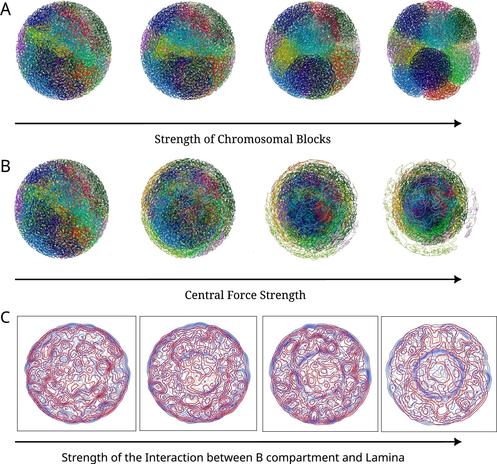
🧬 Ever wondered how the genome actually looks when it folds inside the nucleus — and how fast we can simulate it?

🔗 Multiscale molecular modeling of chromatin with MultiMM: From nucleosomes to the whole genome. Computational and Structural Biotechnology Journal, DOI: https://doi.org/10.1016/j.csbj.2024.09.025

📚 CSBJ: https://www.csbj.org/

#ChromatinModeling #3DGenome #ComputationalBiology #Genomics #MolecularModeling #GenomeArchitecture #ChromatinStructure #HiC #ATACSeq #Biophysics #StructuralBiology

Science Team Lead - Cellular Reprogramming

Post a job in 3min, or find thousands of job offers like this one at jobRxiv!

jobRxiv
Science Team Lead - Cellular Reprogramming

Post a job in 3min, or find thousands of job offers like this one at jobRxiv!

jobRxiv
Science Team Lead - Cellular Reprogramming

Post a job in 3min, or find thousands of job offers like this one at jobRxiv!

jobRxiv

#ucsc We are pleased to announce the release of a new Public Hub, UniversalEPI ENCODE for hg38. This track hub displays normalized #atacseq and #HiC interaction predictions based on ENCODE data and generated using UniversalEPI. UniversalEPI is an attention-based deep ensemble model that predicts enhancer–promoter interactions (EPIs) up to 2 Mb apart using only DNA sequence and chromatin accessibility (ATAC-seq) data.

https://genome.ucsc.edu/cgi-bin/hgTracks?hubUrl=https://boevalab.inf.ethz.ch/resources/universalepi_pred_encode/ucsc_track_hub/hub.txt&genome=hg38&position=lastDbPos

#bioinformatics

Human hg38 chr7:155,799,529-155,812,871 UCSC Genome Browser v485

I wrote my notes for using #nfcore /differencialabundance with the output of nfcore/atacseq" in the following gist: https://gist.github.com/lindenb/593ad97a884d465a04b15a8578af69b4

#nextflow #atacseq

nfcore-differentialabundance with nfcore-atacseq data

nfcore-differentialabundance with nfcore-atacseq data - README.md

Gist

For scRNA-seq and scATAC-seq, have people been using "reads" as the important measurement instead of "fragments" for the past few years? Because this paper seems to suggest people have been unintentionally over-inflating the variance in their data by counting "reads"

https://www.nature.com/articles/s41592-023-02112-6/figures/1

I thought we we figured this out a long time ago with the whole "RPKM vs FPKM vs TPM" debate in bulk RNA-seq years ago.

#single_cell #rnaseq #atacseq #compBio #bioinformatics

Fig. 1: scATAC-seq data are quantitative and fragments, rather than reads, should be counted. | Nature Methods

serious question. When one runs motif enrichment analysis, I think it is generaly desirable to know which specific peaks were found to have a motif. Why does a tool like HOMER's FindMotifsGenome.pl not report every instance of where each motif was found, and one must run a whole different tool for that task? Is this a feature more people would wish for?

#genomics #bioinformatics #atacseq #chromatin #motifs #computational #compbiology

Anyone know a good review paper / learning resource for building gene regulatory networks #GRN from #scATACseq #ATACseq and/or #scRNAseq data?
Thanks!