 lumpenproletariat
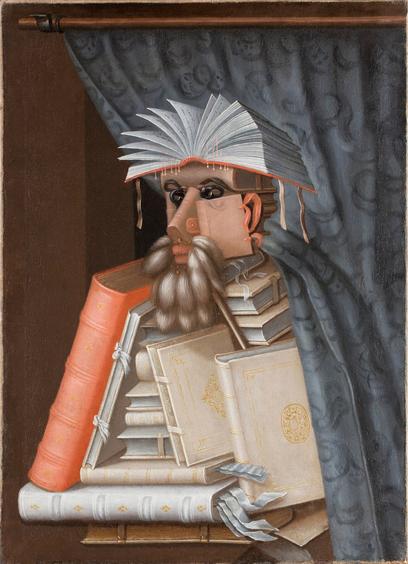
The Librarian, Giuseppe Arcimboldo, 1566
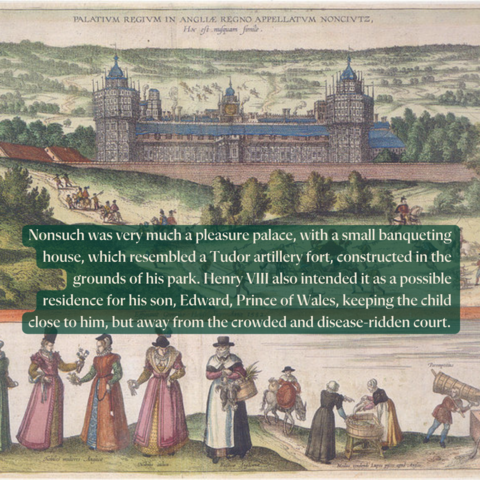
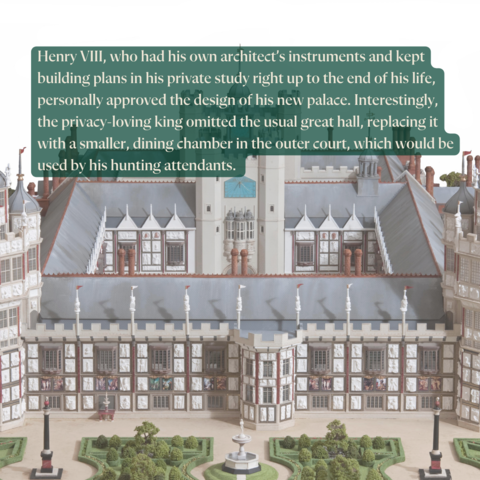
Henry VIII’s last great construction project was, in its day, the height of modernity and the epitome of Tudor opulence, but its magnificence was short-lived. Read about the fantastical Nonsuch palace and what can still be seen today, in Issue 02 of Tudor Places magazine.
#tudorplaces #tudorplacesmag #tudorplacesmagazine #nonsuchpalace #henryviii #16century #nonsuchpark #tudorarchitecture #tudorpalace

The flood, floods and mythic flood stories 7 North America
By the indigenous peoples of the Americas we can find also several myths of a great deluge. The K’iche’ and Maya peoples in Mesoamerica having the best well-known folk tales.
One of the Maya peoples, the K’iche’ (or in previous Spanish spelling: Quiché, associated with the ancient Maya civilization, reached the peak of their power and influence during the Postclassic period. El Quiché forms the heartland of the K’iche’ people. In pre-Columbian times, the K’iche’ settlements and influence reached beyond the highlands, including the valley of Antigua and coastal areas in Escuintla.
In the Popol Vuh (“Pop wuj” in proper K’iche – “the book of events”), one of the most significant surviving Mesoamerican literary documents and primary sources of knowledge about Maya societal traditions, beliefs and mythological accounts, a product of the 16th century K’iche’ people, we can find a compilation of mythological and ethno-historical narratives known to these people at that time, which were drawn from earlier pre-Columbian sources (now lost) and also oral traditional storytelling.
Like by other peoples we also can find a narrative trying to explain how everything began. They too give their version of the creation myth, they modelled from corn dough according to their genesis, relating how world and humans were created by the gods, the story of the divine brothers, and the history of the K’iche’ from their migration into their homeland up to the Spanish conquest.
The largest ethnic groups in Guatemala, ethnically Maya and living in the highlands to the north and the west of Lake Atitlán, primarily in the departments of Quetzaltenango, Totonicapan, and El Quiché, also have their story of sky without any obstruction, in which clouds were placed, gods being worried that their creations would “become as great as gods” and therefore limited the clarity with which their works saw. Thus were created the first fathers of the K’iche’. Next, the gods created the four women who would be the mothers of the K’iche’ people. Other lineage heads, whose descendants would form the other tribes, were also created in this time before the dawn. But when those people did not behave properly nest to each other, the land became undulated by the force of the gods. In the lore of the flood the world of the people is made in no place to live any more for animals and people, except for those who listened to the warning God gave and had taken their refuge in the huge canoe or ark.
By oral tradition children got warned to listen to their gods so that they would not bring judgement over them like they had done in the past by bringing water over mankind. It became considered the task within each tribe for elders to act as repositories of cultural and philosophical knowledge and to be the transmitters of such vital information, giving the next generation a warning of the importance to live properly respecting the work of the gods and making sure that people grew up with the “basic beliefs and teachings, encouraging…faith in the Great Spirit, the Creator“.
The Lac Courte Oreilles Ojibwa, one of seven federally recognized bands of Ojibwe people located in present-day Wisconsin,is a tribe of Native Americans in North America who have lived in a land which is almost entirely covered by a forest and several lakes. For them water has played a very important role. Following the Seven Fires Prophecy, that marks phases, or epochs, in the life of the people on Turtle Island, Anishinaabe leaders ordered their warriors to expand to the west after they learned that the people mentioned in the prophecy had invaded in the East.
The teachings of the ‘Seven Fires prophecy’ also state that when the world has been befouled and the waters turned bitter by disrespect, human beings will have two options to choose from, materialism or spirituality. If they chose spirituality, they will survive, but if they chose materialism, it will be the end of it. It also reminds the people of the Second Fire where the nation was camped by a large body of water. It was the time the direction of the Sacred Shell was lost and the Midewiwin was diminished in strength. Though it was also the time a boy would have been born to point the way back to the traditional ways (Could this be referring to the descendant of Noah and King David, who would be called the Messiah?). Of that saviour who comes after such deluge is being said he will show the direction to the stepping stones to the future of the Anishinabe people or people from the waters or Iyo-ḣaḣatoŋwaŋ (“cascading-waterfalls people”) later known by the French as Saulteurs (“cascaders”) and Saulteaux (“cascades”).
Funny to notice that one of their prophets wrote
“Beware if the light skinned race comes wearing the face of death. You must be careful because the face of brotherhood and the face of death look very much alike. If they come carrying a weapon … beware. If they come in suffering … They could fool you. Their hearts may be filled with greed for the riches of this land. If they are indeed your brothers, let them prove it. Do not accept them in total trust. You shall know that the face they wear is one of death if the rivers run with poison and fish become unfit to eat. You shall know them by these many things {Source: Benton-Banai, Edward, The Mishomis Book – The Voice of the Ojibway (St. Paul: Red School House Publishers, 1988).Chief Bone Necklace an Oglala Lakota from the Pine Ridge Indian Reservation (1899)The Dakota Indians, a Native American tribe composing two of the three main subcultures of the Sioux /ˈsuː/ people, with the Santee (Isáŋyathi or Isáŋ-athi; “knife” + “encampment”, ″dwells at the place of knife flint″), Woodland people who thrived on hunting, fishing and farming, who reside in the eastern Dakotas, central Minnesota and northern Iowa, plus the Yankton, and the Yanktonai (Iháŋktȟuŋwaŋ and Iháŋktȟuŋwaŋna; “Village-at-the-end” and “Little village-at-the-end”), who reside in the Missouri River area, also have oral stories about a great deluge, which still may go round.
Problem with those native people is that their stories are not yet fully recorded and by the contemporary evolution and non-interest in previous history lots of wisdom may get lost.
+
Preceding:
The flood, floods and mythic flood stories 1 Flooding and Water-waves
The flood, floods and mythic flood stories 2 Mythic theme 1 God or gods warning
The flood, floods and mythic flood stories 3 Mythic theme 2 Hebrew story of the flood
The flood, floods and mythic flood stories 4 Mythic theme 3 Chinese mythology
The flood, floods and mythic flood stories 5 Indian region
The flood, floods and mythic flood stories 6 European myths
Next: The flood, floods and mythic flood stories 8 South America
++
Rate this:
#16Century #AnishinaabePeople #AnishinabePeople #AntiguaGuatemala_ #ArkOfRefuge #Creation #CreationMyth #DakotaIndians #Dakotas #DescendantOfKingDavid #DescendantOfNoah #ElQuiché #Escuintla #EthnoHistoricalNarratives #Flood #FloodMyths #Gods #GreatFlood #GreatSpirit #Guatemala #IndigenousPeoples #IndigenousPeoplesOfTheAmericas #Iowa #IyoḣaḣatoŋwaŋCascadingWaterfallsPeople_ #KIchePeopleOrQuiché #KingDavid #LacCourteOreillesBandOfOjibwe #LakeAtitlán #Materialism #MayaCivilization #MayaMythology #MayaPeoples #Mesoamerica #MesoamericanCulture #Messiah #Midewiwin #Minnesota #MissouriRiver #NativeAmericans #NorthAmerica #OjibwePeople #PeopleFromTheWaters #PeopleOf2Fire #PopolVuhPopWujBookOfEvents_ #Quetzaltenango #Repositories #SacredShell #SanteeIsáŋyathiOrIsáŋAthiPeople #SaulteursCascadersOrSaulteauxCascadesCascadingWaterfallsPeople_ #Saviour #SaviourChrist #SevenFiresProphecy #SiouxPeople #Spirituality #Totonicapan #TransmittersOfVitalInformation #TurtleIslandNorthAmerica_ #WarningFromGod #Wisconsin #WoodlandPeople #Yankton #YanktonaiIháŋktȟuŋwaŋAndIháŋktȟuŋwaŋna_
The challenges from the World
Overview
Whether we like it or not we are all influenced by the thinking of the world around us. The way we were brought up by our parents, our education and the media around us, all affect the way we decide what is true. It’s important to remember that man’s ways of thinking always challenge what God has said. Paul tells us that:
“the mind that is set on the flesh is hostile to God, for it does not submit to God’s law; indeed, it cannot.”Romans 8 v 7
The challenges have been different in different ages. Over the past fifty or so years there has been a radical change in the way the world thinks. This has had a profound effect on our community and on our preaching and this change explains many of the problems we see.
Detail of the postmodern Abteiberg Museum in Germany. (Photo credit: Wikipedia)The older ones among us were educated in a period when “Modernism” was the world view. Younger ones have been brought in the “Postmodern” era which has a very different view. The change has been gradual, but we see the effects all around us both in the world and in our community.
Both world views bring their different challenges to what God has said. Realising this should help us all to be aware of what “modernism” and “postmodernism” are and the challenges they bring.
Some of the information in this article comes from the book “The Death of Truth” by Dennis McCallum. For those who want to know more about postmodernism this book is an interesting and enlightening read.
Modernism
The work is the “signature piece” of Intentism. It depicts some of the most influential figures of Postmodernism immersed in a life drawing class. Their efforts of objectivity are thwarted by their individual postmodern theories. (Photo credit: Wikipedia)The “modernist era” began in the sixteenth century. The ideas of humanism and evolution developed in this period. It was thought that we could prove everything by logic and reason. But people realised that some things that the church claimed to be true had been proved untrue by science. For example, the church claimed that the earth was at the centre of the universe. So the church was discredited and people rejected religion completely including the Bible. Academics and universities took over as the source of authority and what is known as “humanism” developed. If there was no God you could do what you liked as long as it didn’t hurt anyone else. “Truth” was something we could discover by our own investigation and reasoning. Hence there were many debates in religious circles about what was true.
It can be said that modernists:
Postmodernism
Academics, the thought-shapers who teach in our colleges and universities – whose opinions sooner or later influence the rest of society – are discarding modernism and embracing postmodernism in growing numbers.
The idea now is that “truth” is created, not discovered. It is asserted that there are no absolutes when it comes to “truth” so the only thing they can trust are their own feelings. They each construct their perception of our world according to their culture. If they feel an idea or principle is good, that is their “truth”. They would say that we all have different feelings and cultural biases, so we can all have different “truths”. So the quest for “truth” is pointless because we are all imprisoned by our own culture and upbringing. No-one can say that they are “right” and others are “wrong”. All “truths” are equal and valid.
It can be said that postmodernists:
It is interesting to note that in 2 Timothy 3 v1 the first thing that is mentioned about “perilous times” is “lovers of self” – a perfect description of postmodernism!
The challenges to our community
Both modernism and postmodernism challenge what God has said in the Bible.
The older ones among us who were educated in the “modernist” era may suffer from doing a little too much “reasoning” and attaching the same authority to our “reasonings” as we should give to the Bible text. We need to be very clear about the difference in authority between what the Bible text says and our opinions based on our “reasonings”.
Papers to stimulate reasoning – Front cover of the British modernist weekly ‘The New Age’ . First edition of its relaunch. (Photo credit: Wikipedia)The younger ones among us have the problem that their generation as a whole has little respect for authority. So they might not naturally have as much respect for their elders as happened in previous generations. They also have the problem that they have been educated in a system that tells them to be self-centred and question everything.
It’s little wonder then that older and younger brethren and sisters sometimes have problems understanding each other! If we appreciate what the problems are, it may help us to understand each other better. We must strive to be one in looking at the Bible text to decide the actions we take, the things we believe and how we live our lives. The scriptures are the only place to discover the truth on these things and it is with this attitude that we need to unite.
The challenges for our preaching
In the “modernist” era, people were willing to debate issues, so we could show people Biblical truth.
The real challenge we all face now is preaching to an increasingly postmodern world that accepts no outside authority and believes that we can each have our own ideas.
Postmodernism leaves our world with no real meaning in life and no real hope for the future. This is an area where we can try and fill the vacuum left by postmodernism.
We must try and show:
Some ecclesias are already reacting to this problem and our current preaching material addresses some of these issues. Whatever we do must give opportunity for God’s message to be shared.
If we all appreciate the problems, we may be able to help each other rather than resenting the differences.
We hope that this brief outline of what is happening in our world will help us all in our efforts to encourage each other on our walk to the kingdom and to encourage others to join us.
+
Preceding
Looking on what is going on and not being of it
Germinating small seeds, pebble-stones, small and mega churches and faith
Engaging the culture without losing the gospel
Looking for a biblically sound church
When not seeing or not finding a biblically sound church
The Big conversation Why it matters
Having a small church mentality
As a small church needing encouragement
Reasons why you may not miss the opportunity to go to a Small Church
+++
Further reading
+++
Related articles
Rate this:
#16Century #Academics #AppliedLogic #BeingSelfCentred #Beliefs #BibleMessage #CentreOfTheUniverse #ChallengeSFromTheWorld #Challenges #ChristadelphianCommunity #Church #DennisMcCallum #Earth #Feelings #Humanism #LoversOfSelf #ModernismTheology_ #Modernists #PostmodernEra #Postmodernism #Problems #Reasoning #Truth #World
Capitalism
Ideologically capitalism may be an economic system which manages the process of production and distribution of the goods and services, but in reality man is been taken by all the products being created and has fallen victim of its own greed.
+
To remember:
+
To take note:
Capitalism brought perhaps bigger portions of the means of production and material owned by the individual, who takes more than he really needs. This results in voracity and a figurative and literal bulimia.
Normally goods and services should be traded competitively in the free market but we notice that certain groups gain such power that they push out all competitors and get monopolies (often under the form of sub-companies, so that people do not notice it).
The owners of small capital (smallholders) are just not able to compete against the owners of capital and big concerns or multinationals.
The writer says the advantage of capitalism is “Improved quality of goods”, but we clearly can see, and in Europe it is proven that many companies lowered the quality of their products or the life-age, so that they can sell more. Quality has been left aside to gain quantity.
The writer of the article also finds it an advantage that “products are more varied”, but today we have less variety of choice than 40 years ago. The companies press and present that what they want to sell and the consumer just has to follow. Today it is impossible to find in the shops the same maps as you used for your filing cabinet 2 or more years ago.
Today we can see enough proof how capitalism fooled the people and how much it brought failure to the creation. Animals and plants have become the greatest victims of human greed and search for a capitalist world, where they can not share any more.
Unless we “embrace radical change ourselves” very soon we shall drown ourselves, taking many with us.
Perhaps more people would consider the words spoken by the new Pope Francis:
“If we destroy Creation, Creation will destroy us!”
+++
Related articles
99% of population have only 1% of country’s property,while 1% of population get 99% of country’s property.
In my opinion, Capitalism is an institutionalized system that started in Europe in the 16th century to the 19th century, the time when the development of commercial banking in Europe. In Capitalism, a group of individuals and groups can act as a specific entity that can have a trade or private property, especially capital goods such as land and human labor, in a free market where prices are determined by supply and demand, for the sake of making a profit in which its status is protected by the state through the ownership rights and obedience to the laws of the state or to those who are bound by a contract that has been arranged in a clear way, either explicit or implicit obligations and are not solely depend on the obligations and protections…
View original post 333 more words
Rate this:
#16Century #Bulimia #Capitalism #FreeMarket #Greed #MakingProfit #Materialism #Monoploy #Monopolies #Multinationals #Qquantity #Quality #QualityOfGoods #Smallholders
 TudorPlaces
 Belgian Ecclesia Brussel - Leuven

 Marcus Ampe's Space