A major step in understanding Facial Eczema disease in livestock. 🐄🐏
In a scientific article just published we investigate the fungal cause of the Facial Eczema (FE) disease in livestock. We found that there are two species of the fungus (Pseudopithomyces) on farms in NZ with identical spores but different genetics, and only one of them produces the toxin that causes FE.
For technical reasons, this species needs a new name which we call Pseudopithomyces toxicarius, in Latin this means ‘the toxin producer’.
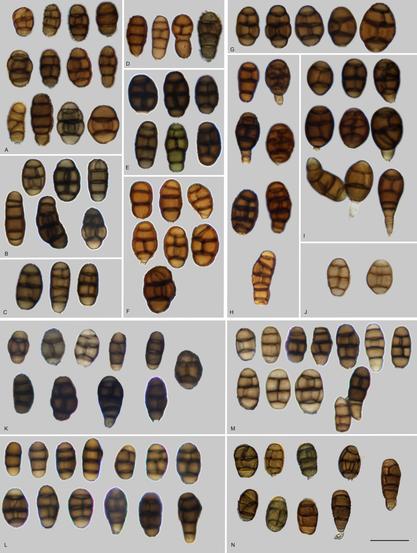
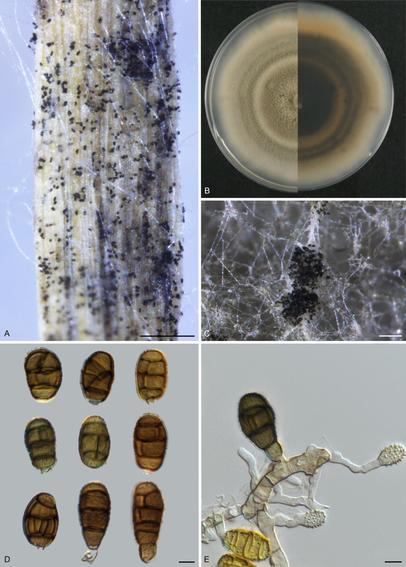
For Farmers this discovery means that the current method of accessing FE risk by spore counting could also be counting non-toxic spores leading to inaccurate assessments. The image shows the spores of three different Pseudopithomyces species, could you tell them apart under the microscope?!
We will be developing a DNA-based diagnostic for the toxic fungus.
We also clarify the taxonomy of the genus Pseudopithomyces using globally diverse isolates setting up for future discoveries in this group of fungi.
This publication is culmination of over 4 years of work in collaboration with Beef+Lamb NZ, Manaaki Whenua Landcare Research, and AgResearch.
Press release: https://beeflambnz.com/news/major-step-understanding-facial-eczema-livestock
This research was published in the journal “Studies in Mycology” available at: https://doi.org/10.3114/sim.2025.112.02
#mycology #farming #mycotoxin #nomenclature #pasture #pithomycotoxicosis #taxonomy #NZ #fungi #science
 @Co_Biologists
 mechanochemistry
 naturepoker
 David Ho
 Nonia Pariente
 PLOS Biology
 Bevan Weir