 petersuber
Update. "The need to publish in English even when it is not the local language affects the type of research undertaken & further consolidates the global North-centric view of scientific approach. The bibliometric databases on which assessments of universities and journals are based are owned by two large [corporations], and this concentration of the market has in turn concentrated the research environment. #OpenInfrastructure offers an alternative option."
https://osf.io/preprints/socarxiv/c8yq3
Update. "Most journals [make] minimal efforts to overcome language barriers. The impact factor of journals [#JIF] was negatively associated w/ adopting a number of inclusive policies…Ownership by a scientific society tended to have a positive association. Contrary to our expectations, the proportion of both #OpenAccess articles & editors based in non-English speaking countries did not have a major positive association w/ the adoption of linguistically inclusive policies."
https://doi.org/10.1098/rspb.2023.2840
https://doi.org/10.1098/rspb.2023.2840
Update. The authors of the previous piece in this thread just released a summary.
https://theconversation.com/prestigious-journals-make-it-hard-for-scientists-who-dont-speak-english-to-get-published-and-we-all-lose-out-226225
"Linguistically inclusive policies come in many forms, and can be implemented at each stage of the editorial process. They might aim to make publishing more #multilingual. Alternatively – if sticking with English – they may aim to reduce the burden on non-native English speakers."

Update. New study: "Academics who perceive high #pressure to publish tend to employ instrumental publication strategies rather than normative ones…Publishing results in open-access outlets or in native languages other than English is less important for those under pressure."
https://academic.oup.com/rev/advance-article/doi/10.1093/reseval/rvae011/7634754

Update. "Too often, scientific research in any language other than English is automatically seen as second tier, with little consideration for the quality of the work itself. This harmful prejudice ignores the work of those involved, especially in the humanities and social sciences. It also profoundly undermines the global academic community’s ability to share knowledge with society."
https://theconversation.com/english-dominates-scientific-research-heres-how-we-can-fix-it-and-why-it-matters-226198

Update. Results of two surveys of authors whose first language is not English, mostly from China, on the use of #AI tools to publish in English-language journals. "The top reported use cases for AI tools were grammar corrections/proofreading, rewriting, translation, and drafting abstracts/lay summaries."
https://www.csescienceeditor.org/article/ai-what-the-future-holds/

Artificial Intelligence: What the Future Holds for Multilingual Authors and Editing Professionals - Science Editor
Observations and predictions based on two rounds of surveys among primarily Chinese-speaking researchers conducted in early and late 2023. A Tumultuous 2 Years The increasing availability of generative artificial intelligence (AI)-based tools such as ChatGPT for writing and editing, among other academic tasks, has prompted considerable debate among researchers, universities, publishers, journals, and other stakeholders over the boundaries separating the ethical and unethical use of such tools. Some, such as the Science family of journals and the University of Hong Kong, initially imposed strict restrictions on the use of ChatGPT and other AI tools, both deeming the use of AI-generated text as plagiarism.1,2 These restrictions have since been relaxed,3-5 reflecting a general movement in academia, both in education and research, from outright bans to embracing productive and ethical use. Authors for whom English is not a first language (hereafter, multilingual authors) face greater barriers to publication than their native English-speaking counterparts.6,7 Multilingual authors have traditionally relied on editing or translation services to ensure their manuscripts meet journals’ requirements for high standards of English. However, not all can afford professional language services, and their use increases the costs associated with publishing. Generative AI tools can be a game-changer for multilingual researchers, bringing much-needed equity to academic publishing and eliminating English fluency as a barrier to research dissemination.8 As managers at a company providing (100% human) academic editing services, we were interested in how the authors we work with, the majority of whom are multilingual, perceived the recent developments in AI and […]
Update. Wonderful project. "Climate Cardinals is a youth-led nonprofit that’s accomplished quite a bit with almost no funding: translating 2 million words in four years to make scientific literature more accessible to non-English speakers." #Google just gave the project $400k.
https://www.forbes.com/sites/jeffkart/2024/04/22/climate-cardinals-plans-to-double-its-science-translation-efforts-with-new-google-backing

Update. This new study follows up on three recommendations from #COAR on #multilingualism in #repositories — "[1] declaring the language(s) of the resource and…its #metadata, [2] writing personal name/s using the writing system used in the deposited document while providing a persistent identifier to disambiguate author/s…and…[3] enabling UTF-8 support so as to promote use of the original alphabet / the writing system whenever possible."
https://zenodo.org/records/11060284
Dealing with multilingualism and non-English content in open repositories: Challenges and perspectives
Abstract Several organizations and initiatives have recently called for more support of multilingualism in research to promote epistemic plurality and raise awareness of the adverse effects of an anglocentric research ecosystem. But this support for and practice of multilingualism and linguistic diversity cannot happen in a digital or technological vacuum. Open repositories can play an important role in ensuring that research infrastructures have the ability to implement and promote multilingualism at scale in an Open Science environment. This implementation, however, is complex and does not come without its own theoretical and technical challenges. One of these challenges is to recognize that the implementation of multilingualism in open repositories can hardly be dissociated from wider concerns of discoverability, research assessment practices, and the anglocentric nature of digital infrastructures and metadata standards or protocols. Drawing on the COAR (Coalition of Open Access Repositories) recommendations report produced by the COAR Task Force on Supporting Multilingualism and non-English Content in Repositories, this article presents and critically examines how and why three particular recommendations of this document are particularly well suited to support a decolonial trajectory for the management of multilingualism in open repositories. More specifically, this article discusses the decolonial aspects and praxis underlying guidelines such as declaring the language(s) of the resource and of its metadata, writing personal name/s using the writing system used in the deposited document while providing a persistent identifier to disambiguate author/s identification and, overlapping with the latter, enabling UTF-8 support so as to promote use of the original alphabet / the writing system whenever possible, without negating the possibility to transliterate metadata by means of recognized standards (e.g. ISO). In so doing, we argue that these recommendations enable a multifaceted technology and politics of recovery that promotes a form of linguistic revitalization and strengthens linguistic diversity.
Update. Next week the Public Knowledge Project and the U of Alberta Library are hosting a conference on #OpenAccess #multilingual publishing.
https://ualberta.libcal.com/event/3797697
https://ualberta.libcal.com/event/3797697

Update. "This paper presents the challenges language ideological research still faces despite ongoing efforts to tackle #multilingualism and offers possible solutions for language ideological research to become truly inclusive."
https://www.degruyter.com/document/doi/10.1515/eujal-2024-0006/html
https://www.degruyter.com/document/doi/10.1515/eujal-2024-0006/html

Whose language counts?
This position paper makes a critical intervention in one of the mostly salient sociolinguistic debates of the recent years, that of the integration of multilingual speakers in language ideological research. Although many scholars now recognize the need for decentering the ideal(ized) ‘monolingual native speakers’, they remain the default norm in language ideological research. Indeed, despite our efforts to dismantle our own language ideologies as linguists, the implicit focus on native speakers and monolinguals proceeds to the erasure or invisibilization (Irvine & Gal 2000) of multilinguals. Drawing on research on gender-inclusive language as well as my own empirical study on L2 speakers of German, I show why integrating a higher variety of language users is necessary—not only on ethical grounds, but also on theoretical ones. Altogether, this paper presents the challenges language ideological research still faces despite ongoing efforts to tackle multilingualism and offers possible solutions for language ideological research to become truly inclusive.
Update. "Chinese-language journal editors expressed a lack of motivation to adopt #OpenAccess, unless there is a reform in the mechanism of academic publishing or a policy is imposed. On the other hand, the English-language journal editors [in #China] acknowledged that they have no other choice but to adopt open access."
https://www.mdpi.com/2304-6775/12/1/1
h/t @hannaSH

Going Open Access: The Attitudes and Actions of Scientific Journal Editors in China
This study aims to investigate the attitudes and actions of scientific journal editors in China towards open access. Semi-structured interviews were conducted with 17 Chinese editors from various scientific journals during September and October of 2022. The results indicate that the editors generally possess knowledge of open access and have implemented an appropriate open access model for their respective journals. However, the Chinese-language journal editors expressed a lack of motivation to adopt open access, unless there is a reform in the mechanism of academic publishing or a policy is imposed. On the other hand, the English-language journal editors acknowledged that they have no other choice but to adopt open access. This study helps us learn about Chinese editors’ understanding and attitudes towards open access, the current status of open access in China’s scientific journals, and the mechanisms of academic publishing in China.
Update. "The #Translations and #OpenScience project explores the potential of technology-aided translation to help produce and disseminate research in multiple languages."
https://zenodo.org/records/10972986
Exploratory studies for the creation of a technology-aided collaborative translation service in open scholarly communication
Since the Helsinki Initiative in 2019, language diversity and multilingualism have become key concerns in scholarly communication. Among the initiatives working towards a sustainable multilingual science, the Translations and Open Science project explores the potential of technology-aided translation to help produce and disseminate research in multiple languages. This report presents an overview of the four exploratory studies conducted as part of the Translations and Open Science project in order to lay the foundations of a technology-aided collaborative translation service for open scholarly communication. More detailed information can be found in the specific deliverables of each study, cited as references in the present report.
Update. "This study explores Chinese early career returnee academics’ motivations for writing and publishing in English."
https://www.nature.com/articles/s41599-024-02846-4
Why English? Exploring Chinese early career returnee academics’ motivations for writing and publishing in English - Humanities and Social Sciences Communications
To improve their research performance in international league tables, many universities in non-English language dominant settings recruit academic returnees in the hope that they will increase the quantity and quality of articles published in English-medium internationally indexed journals. This study explores Chinese early career returnee academics’ motivations for writing and publishing in English. Utilising ecological systems theory, the findings show that the microsystem is reflected in the early career returnee academics’ interaction with collaborators, while national policies constitute the exosystem. The academic culture has a noteworthy impact at the macrosystem level. This study contributes to the understanding of early career returnee academics’ motivations to write and publish in English which will assist policymakers and university administrators to create a more beneficial environment to promote the accomplishments of academic returnees.
Update. "We first introduce #translingualism and #ELF [English as a lingua franca] as equally legitimate multilingual theories. Next, we identify [their similarities and differences]…Finally, we lay out a vision for how this transdisciplinary, collaborative dialogue can help realize more equitable #multilingualism."
https://www.degruyter.com/document/doi/10.1515/eduling-2023-0012/html

Towards equitable multilingualism: promoting transdisciplinary, collaborative dialogue between English as a lingua franca and translingualism
Inspired by Hult’s (2010. Theme-based research in the transdisciplinary field of educational linguistics. In Francis M. Hult (ed.), Directions and prospects for educational linguistics , 19–32. Springer) discussion of theme-based research within educational linguistics that focuses, first and foremost, on solving problems rather than adhering to disciplinary boundaries and conventions, this article calls for transdisciplinary collaboration to resolve educational problems related to monolingualism, native-speakerism, and the hegemony of colonial ideologies. More specifically, we make a case for transdisciplinary dialogue between English as a lingua franca (ELF) and translingualism. We argue that these two research fields, with their increasingly converging interests and goals as well as distinct strengths, can make a greater impact in addressing persistent educational problems through targeted collaboration, research, and (language) pedagogy based on equitable multilingualism (e.g., Ortega, Lourdes. 2019. SLA and the study of equitable multilingualism. The Modern Language Journal 103. 23–38). In this conceptual paper, we first introduce translingualism and ELF as equally legitimate multilingual theories. Next, we identify shared key tenets and orientations as well as distinctive vantage points of each approach that researchers and educators can take advantage of for collaboratively addressing problems within classrooms and beyond. Finally, we lay out a vision for how this transdisciplinary, collaborative dialogue can help realize more equitable multilingualism.
Update. Recent work on #AI summaries is mostly monolingual, focusing on English. "In this paper, we consequently explore how state-of-the-art neural abstract summarization models based on a multilingual encoder–decoder architecture can be used to enable cross-lingual extreme summaries of scholarly texts."
https://link.springer.com/article/10.1007/s00799-023-00373-2

Cross-lingual extreme summarization of scholarly documents - International Journal on Digital Libraries
The number of scientific publications nowadays is rapidly increasing, causing information overload for researchers and making it hard for scholars to keep up to date with current trends and lines of work. Recent work has tried to address this problem by developing methods for automated summarization in the scholarly domain, but concentrated so far only on monolingual settings, primarily English. In this paper, we consequently explore how state-of-the-art neural abstract summarization models based on a multilingual encoder–decoder architecture can be used to enable cross-lingual extreme summaries of scholarly texts. To this end, we compile a new abstractive cross-lingual summarization dataset for the scholarly domain in four different languages, which enables us to train and evaluate models that process English papers and generate summaries in German, Italian, Chinese and Japanese. We present our new X-SCITLDR dataset for multilingual summarization and thoroughly benchmark different models based on a state-of-the-art multilingual pre-trained model, including a two-stage pipeline approach that independently summarizes and translates, as well as a direct cross-lingual model. We additionally explore the benefits of intermediate-stage training using English monolingual summarization and machine translation as intermediate tasks and analyze performance in zero- and few-shot scenarios. Finally, we investigate how to make our approach more efficient on the basis of knowledge distillation methods, which make it possible to shrink the size of our models, so as to reduce the computational complexity of the summarization inference.
Update. "This paper analyses the attitudes of Polish linguists towards English for research publication…[The dominance of English contributes] to the sense of disadvantage associated primarily with manifold costs incurred by publishing in English."
https://www.sciencedirect.com/science/article/abs/pii/S1475158524000717
(#paywalled)
Update. From 670 #OpenAccess journals published in #Africa, "only 57 journals allow publication in languages other than English [#LOTE]. From these journals, between 2010 and 2020, only 26 articles appeared in an African language. The Google Scholar site reports the highest citation for articles written in the aforementioned African languages is one."
https://www.tandfonline.com/doi/full/10.1080/14790718.2024.2369172
Update. "Linguistic hegemony and language bias…can pose significant threats to the scientific community, as language morphs from being a tool of communication and exchange to becoming an obstacle. Consequently, the broader scientific community misses out on knowledge generated by non-English-speaking researchers, and these researchers, in turn, face the injustice of unequal access to the broader audience that only high-impact journals can reach."
https://criticalcarescience.org/wp-content/plugins/xml-to-html/include/lens/index.php?xml=2965-2774-ccsci-36-e20240084en.xml&lang=en
Update. "Multilingual Data Science: Ten Tips to Translate Science and Tech Content"
https://datasciencebydesign.org/blog/multilingual-data-science
One nice tip I haven't seen before: If you write a glossary to accompany your research, make it a bilingual or multilingual glossary.

Update. "The preeminence of English as the lingua franca in global science has led to English-dominant publication practices, even in non-English-speaking countries. We examine the complex dynamics of language use in scientific publications in #China…The findings underscore the risk of underestimating China’s scientific output by only counting English-language publications."
https://academic.oup.com/rev/article-abstract/doi/10.1093/reseval/rvae036/7746712

Update. "Tony Liddicoat shows that English-language research publications about #multilingualism are by and large a monolingual affair…I expand on Liddicoat's quantitative findings…Specific aspects of…English-monolingual ways of seeing multilingualism…include perceptions of multilingualism as generic and context-free; as characteristic of the present; and as constituted in textual products rather than processes of production and reception."
https://www.tandfonline.com/doi/full/10.1080/17447143.2015.1102921
https://www.tandfonline.com/doi/full/10.1080/17447143.2015.1102921
Update. "This emphasis of publishing in 'international' (i.e., English-language) journals has multiple consequences for non-native English speakers, including problems with having the quality of their English reviewed over the academic content of their work and
limited access to scientific research for those who do not speak English."
https://journals.publishing.umich.edu/jep/article/id/4847/
Research Assessment Systems and the Effects of Publication Language: Manifestations in the Directory of Open Access Books
Research assessment is a major driver of research behavior. The current emphasis on journal citations in a limited number of journals with an English focus has multiple effects. The need to publish in English even when it is not the local language affects the type of research undertaken and further consolidates the Global North-centric view or scientific approach. The bibliometric databases on which assessments of universities and journals are based are owned by two large corporate organizations, and this concentration of the market has in turn concentrated the research environment. Open infrastructure offers an alternative option for the research endeavor. The OAPEN online open access library and the Directory of Open Access Books form part of this infrastructure and we consider the pattern of languages present in the directories over time.
Update. The new issue of the Journal of Electronic Publishing (Vol 27, No 1) is devoted to Multilingual Publishing and Scholarship.
https://journals.publishing.umich.edu/jep/issue/262/info/
Update. Sorry I didn't see this sooner. Yesterday #COARA (Coalition for Advancing Research Assessment) hosted a webinar on #multilingualism and language biases in research #assessment.
https://vastuullinentiede.fi/en/events/coara-wg-webinar-multilingualism-and-language-biases-research-assessment

CoARA WG Webinar on Multilingualism and Language Biases in Research Assessment
CoARA WG on Multilingualism will organize a public webinar on Thursday 26 September 2024 from 15:00 to 16:30 CEST on multilingualism and language biases in researcher assessment. Register here. In the webinar, which takes place on the European Day of Languages, the WG action plan, on-going work and opportunities for engagement will be presented, with time for questions and discussion. The event will be held remotely (on Zoom). Registration (with short optional questionnaire) here. Personal data is processed in accordance with the privacy statement for TSV Publication Forum's events. The Zoom link will be sent to registered participants by email. The recording of the webinar and presentations will be made available after the event on the CoARA WG webpage. Program: Opening: Emanuelle Gardan (Coimbra group) WG presentation: Janne Pölönen (Federation of Finnish Learned societies - TSV) Results of surveys to researchers National Research Council of Italy: Ginevra Peruginelli (Institute of Legal Informatics and Judicial Systems/CNR) Marie Curie Alumni Association: Tereza Šímová (MCAA) European Civil Society Platform for Multilingualism: Theo Marinis (University of Konstanz/ECSPM) Bibliometric analyses: André Brasil (CWTS/Leiden University) Focus groups on policy advice and implementation: Monica Dietl (Initiative for Science in Europe - ISE) Engaging with WG activities and closing of the webinar According to the 1st core commitment of the Agreement on Reforming Research Assessment, changes in assessment practices should enable recognition of the broad diversity of valuable contributions that researchers make to science and for the benefit of society, including diverse outputs beyond journal publications and irrespective of the language in which they are communicated. A thematic Working Group on Multilingualism and Language Biases in Research Assessment has been established by members of the Coalition for Advancing Research Assessment (CoARA), which aims: to raise awareness across all fields about the importance of “multilingualism in practice of science, in scientific publications and in academic communications” (UNESCO recommendation on Open Science); to provide institutions with guidelines, toolbox and implementation proposal for recognizing, rewarding and incentivizing research carried out and communicated in all languages, and for addressing language biases in metrics, expert-assessment and rankings. Building on previous efforts, such as the Leiden manifesto, Helsinki initiative, FOLEC-CLACSO principles and ECSPM declaration, WG highlights that language biases and language priorities in research assessment are one of the most important sources of global and socio-economic inequality in science. The consequences affect researchers from all fields and citizens across all countries. For more information: Janne Pölönen, WG Coordinator, janne.polonen[at]tsv.fi
Update. A trilingual editor of an English-language journal talks about how to recognize and publish good research submitted in weak English by scientists whose first language is not English.
https://ject.edpsciences.org/articles/ject/full_html/2024/03/ject240024s/ject240024s.html
Update. If you follow this thread, you might be interested in this #ChronosHub event on Oct 9:
https://us02web.zoom.us/webinar/register/WN_cSFfJ1JRRnqx2WiynXTKvg#/registration
"For non-native English speakers, the publishing experience can be difficult to navigate…Publishing in more local languages…would be the ultimate author experience, but this might not always be feasible. What are considerations in making decisions around this? And what are the easier changes to make that could have a big impact on non-native English authors?"

Welcome! You are invited to join a webinar: Localizing the publishing experience. After registering, you will receive a confirmation email about joining the webinar.
For non-native English speakers, the publishing experience can be difficult to navigate: from interacting with publishers and their systems and platforms to writing in English. Publishing in more local languages and customizing platforms and emails would be the ultimate author experience, but this might not always be feasible. What are considerations in making decisions around this? And what are the easier changes to make that could have a big impact on non-native English authors? In this webinar we'll hear from different speakers about their experience of localising the publishing experience. Join us for an hour of short presentations, a lively discussion and bring your questions to the panel!
Update. New study: "Existing datasets [for #NLP and #LLM training] are almost all in the English language. In this work, our primary goal is to bridge the language gap by building a human-curated…dataset spanning 65 languages…Furthermore, we create the most extensive multilingual collection to date, comprising 513 million instances through templating and augmenting existing datasets across 114 languages. [We have released the] #OpenSource…Aya Dataset."
https://aclanthology.org/2024.acl-long.620/
https://aclanthology.org/2024.acl-long.620/

Aya Dataset: An Open-Access Collection for Multilingual Instruction Tuning
Shivalika Singh, Freddie Vargus, Daniel D’souza, Börje Karlsson, Abinaya Mahendiran, Wei-Yin Ko, Herumb Shandilya, Jay Patel, Deividas Mataciunas, Laura O’Mahony, Mike Zhang, Ramith Hettiarachchi, Joseph Wilson, Marina Machado, Luisa Moura, Dominik Krzemiński, Hakimeh Fadaei, Irem Ergun, Ifeoma Okoh, Aisha Alaagib, Oshan Mudannayake, Zaid Alyafeai, Vu Chien, Sebastian Ruder, Surya Guthikonda, Emad Alghamdi, Sebastian Gehrmann, Niklas Muennighoff, Max Bartolo, Julia Kreutzer, Ahmet Üstün, Marzieh Fadaee, Sara Hooker. Proceedings of the 62nd Annual Meeting of the Association for Computational Linguistics (Volume 1: Long Papers). 2024.
Update. "English-only journals have historically dominated the field [of #LIS. But] a significant number of multilingual journals have been indexed in Scopus over the past two decades. The 42 identified multilingual journals span 25 countries and encompass 18 languages…The study also uncovered disparities in journal metrics and rankings, with multilingual journals consistently scoring lower than their English-only counterparts."
https://journals.sagepub.com/doi/abs/10.1177/09610006241285510
Update. "Communicating all research in one single language means that language shapes the research too. Language shapes what is possible to express, contextualize, or reveal…Privileging the English language in scholarly communication marginalizes and disadvantages researchers who are not first-language English speakers, or not English-language speakers at all."
https://journals.publishing.umich.edu/jep/article/id/6258/
Update. "Multilingual publishing has been an ongoing and documented practice in SSH for many years, with numerous studies demonstrating the benefits of publishing research in multiple languages. However, there has been relatively little research into the extent to which multilingual publishing is practised in STEM. This chapter aims to address this gap in the literature and demonstrate that multilingual publishing is also visible in STEM fields."
https://books.google.com/books?id=1eFBEQAAQBAJ&newbks=0&printsec=frontcover&pg=PA151&hl=en&source=newbks_fb#v=onepage&q&f=false

Language and the Knowledge Economy
This volume offers a holistic understanding of the interconnections of language, specifically English, scholarly publishing, and knowledge production and circulation through a sociolinguistic lens in contemporary academia across different European settings for research purposes.The volume is organised around three parts: the first part explores individual factors underpinning knowledge production and their role in shaping scholars’ academic careers; the second part critically reflects on the challenges and opportunities for multilingual scholars in the academic landscape, examining the inherent tensions in the interactions between English and other languages; the final part considers the ways in which academic knowledge is institutionalised – at universities, private companies, and on a national scale – and the subsequent impact on knowledge dissemination. Taken together, the chapters provide a coherent and holistic overview of the affordances and limitations that different social actors experience when participating in such cycles, including the different modes of access to resources across geographic contexts and disciplinary traditions. An important contribution of the volume is the multilayered angle that it incorporates into analysing issues of scholarly publishing in today's academia, placing language as a social practice at the heart of the structuring processes that condition the creation, dissemination, and consumption of knowledge in contemporary societies.This book will be of interest to scholars in English for research and publication purposes, sociolinguistics, language and education, and applied linguistics.
Update. "Under the pressure of English as the lingua franca for research publication, local journals have changed their language policies for survival. While some discontinued their local-language editions and became English journals, others resorted to bilingual publishing through translation…[The] shift to bilingual publishing [by journals based in #Spain] increases the proportion of international contributions and widens the geographical distribution of contributing countries."
https://onlinelibrary.wiley.com/doi/full/10.1002/leap.1665
Update. A profile of Japanese biologist Tatsuya Amano and his work to foster #MultilingualResearch and spotlight discrimination against non-fluent speakers of English.
https://www.nature.com/articles/d41586-025-00157-5
(#paywalled)

Update. See the Linguistic Society of America (#LSA) Statement Against Designating English as the Official Language.
https://www.lsadc.org/content.asp?admin=Y&contentid=468
"The United States has always been a multilingual country, and this gives it strength…Citizens of the US and of all democracies inevitably have different linguistic ways of navigating their lives, and enforced monolingualism never achieves national unity…'Official English' policies do not improve economic prospects for those who arrive in the US speaking another language, nor do they improve communication for those who live in multilingual communities…Supporting and promoting multilingualism makes a nation stronger, not weaker."
#Multilingualism #MultilingualResearch #Trump #USPol #USPolitics
Update. "For the 1990-2023 period, we find that only Indonesian, Portuguese and Spanish have expanded at a faster pace than English. Country-level analyses show that this trend is due to the growing strength of the Latin American and Indonesian academic circuits. Our results also confirm…that social sciences and humanities are the least English-dominated fields. Our findings suggest that policies recognizing the value of both national-language and English-language publications have had a concrete impact on the distribution of languages in the global field of scholarly communication."
https://arxiv.org/abs/2504.21100

A smack of all neighbouring languages: How multilingual is scholarly communication?
Language is a major source of systemic inequities in science, particularly among scholars whose first language is not English. Studies have examined scientists' linguistic practices in specific contexts; few, however, have provided a global analysis of multilingualism in science. Using two major bibliometric databases (OpenAlex and Dimensions), we provide a large-scale analysis of linguistic diversity in science, considering both the language of publications (N=87,577,942) and of cited references (N=1,480,570,087). For the 1990-2023 period, we find that only Indonesian, Portuguese and Spanish have expanded at a faster pace than English. Country-level analyses show that this trend is due to the growing strength of the Latin American and Indonesian academic circuits. Our results also confirm the own-language preference phenomenon (particularly for languages other than English), the strong connection between multilingualism and bibliodiversity, and that social sciences and humanities are the least English-dominated fields. Our findings suggest that policies recognizing the value of both national-language and English-language publications have had a concrete impact on the distribution of languages in the global field of scholarly communication.
Update. "A scholarly communication ecosystem with one dominant language presents numerous inequities. Implementing multilingualism is complex and there is no single strategy to achieve it. Rather, multilingualism can take different forms, and small steps taken by different actors can add up to increase linguistic diversity. This commentary unpacks some of the complexities involved in multilingual scholarly communication and offers some concrete recommendations for moving forward."
https://ojs.lib.uwo.ca/index.php/cjils/article/view/22292
Update. "Multilingualism in science…expands the participation and dialogue among diverse communities of scientists and influences stakeholders who use science to address urgent global issues. [But] systematic and sustained implementation of multilingual scholarly communication and peer-reviewed publishing is cumbersome for journal management platforms, research teams, and editorial boards…This Research Note…proposes the first statement of the _Journal of Disaster Studies_ (JDS) on inclusive multilingualism."
https://muse.jhu.edu/article/971123

Update. New from #COAR (@coar_repositories): "This paper explores the concept of #semantic #multilingual #search: an emerging approach that retrieves information by meaning rather than by exact wording, enabling users to search in any supported language and discover relevant work across all languages…When you ask a question in your language, the entire world should have a chance to understand and respond."
Update. It's rare to see a journal editorial call for #MultilingualResearch. Here's one from _Applied and Environmental Microbiology_, published by the American Society of Microbiology.
https://doi.org/10.1128/aem.02229-25
Language barriers "do more than prevent access to opportunities. They cement unfair assumptions about scientific competence and preferentially amplify voices that are proficient, or perceived to be proficient, in the dominant language, shaping scientific discourse in narrow and exclusive ways. This editorial explores how linguistic bias sustains professional hierarchies and restricts scientific progress. It also highlights our journal’s initiatives to overcome language-based barriers in publishing and foster equitable participation in scientific exchange."
Update. "For the 1990–2023 period, we find that only Indonesian, Portuguese, and Spanish have expanded at a faster pace than English [in academic publishing]… Social sciences and humanities are the least English-dominated fields… Policies recognizing the value of both national-language and English-language publications have had a concrete impact on the distribution of languages in the global field of scholarly communication."
https://asistdl.onlinelibrary.wiley.com/doi/10.1002/asi.70055
Update. "Beginning February 11, 2026, #arXiv will require that all submissions have a full English-language version, either as the original language or as an included translation."
https://blog.arxiv.org/2025/11/21/upcoming-policy-change-to-non-english-language-paper-submissions/
Coverage of the new policy in Nature.
https://www.nature.com/articles/d41586-026-00229-0
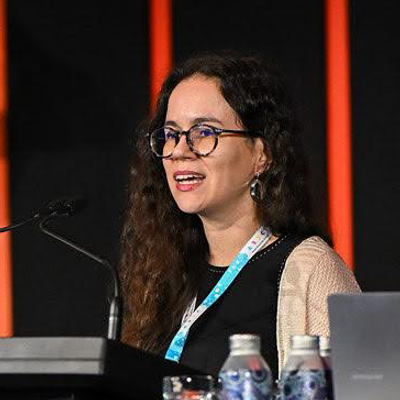 Aleksandra Lazić, PhD
Update. #AI tools are mostly trained on #English language literature and reflect the cultural assumptions of that literature. When they deliver their results in another language, the translation masks the "epistemological persistence" of those assumptions.
Primary source:
https://www.academia.edu/150614492/Epistemological_Persistence_in_Multilingual_AI_The_Illusion_of_Locality_in_Large_Language_Models
Epistemological Persistence in Multilingual AI: The Illusion of Locality in Large Language Models
Large language models (LLMs) increasingly present themselves as multilingual and culturally responsive systems, creating the appearance of local understanding across linguistic contexts. This article argues that such linguistic fluency masks a deeper