Achilles

Also known as Ahilleus or Akhilleus.

In Greek mythology, Achilles was a hero of the Trojan War who was known as being the greatest of all the Greek warriors.

He’s the main character in Homer’s Iliad. He was the son of the Nereid named Thetis & King Peleus of Phthia (& famous Argonaut). He had a few nicknames: “Swift-footed,” “Breaker of men,” “Aristos Achaion” (Best of the Greeks).

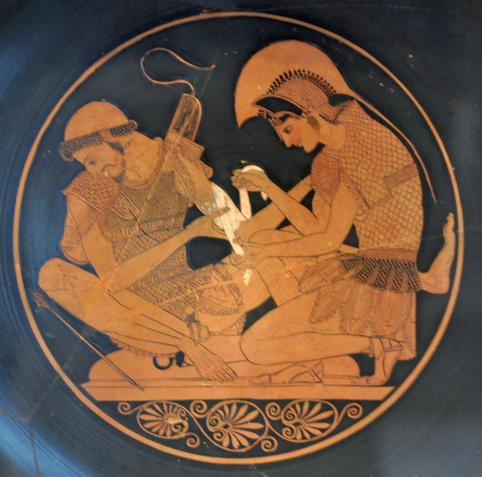
Achilles was raised in Phthia along with his childhood companion Patroclus & received his education from the centaur, Chiron. In the Iliad, he was presented as a member of the mythical tribe of the Myrmidons. The Myrmidons are/were an ancient Thessalian tribe.

Achilles’ most notable feat during the Trojan War was the unaliving of the Trojan prince Hector outside the gates of Troy. Achilles’ death isn’t shown in the Iliad. Other sources concur that he was unalived near the end of the Trojan War by Paris, who shot him with an arrow.

Later legends (beginning with Statius’ unfinished epic Achilleid, written in the 1st century CE) state that Achilles was invulnerable in all of his body except for 1 heel. According to that myth, when his mother, Thetis, dipped him in the River Styx as an infant, she held him by 1 of his heels, leaving it touched by the waters & thus his only vulnerable body part.

Achilles was the son of Thetis & King Peleus of the Myrmidons. Zeus & Poseidon had been rivals for Thetis’ hand in marriage until Prometheus (the fore-thinker) warned Zeus of a prophecy (originally said by Themis, goddess of divine law) that Thetis would have a son who would be greater than his dad. For this reason, the 2 gods withdrew their affections & had her marry King Peleus.

There’s a story that tells an alternative version of events: In the Argonautica, Zeus’ sister-wife (his literal biological sister, whom Zeus married), Hera, refers to Thetis’ chaste resistance to Zeus’ advances. It points out that Thetis was so loyal to Hera’s marriage bond (with Zeus) that she rejected Zeus.

Even though Thetis was Nereus’ daughter, she was also raised by Hera. This further explains her resistance to Zeus’ advances. Zeus was BIG mad. Zeus decreed that she would never marry an immortal.

According to the Achilleid (written by Statius in the 1st century), when Achilles was born, Thetis tried to make him immortal by dipping him in the River Styx. He was left vulnerable at the part of the body by which she held him, his left heel/tendon.

In another version of the story, Thetis anointed Achilles in ambrosia & put him on top of a fire in order to burn away the mortal parts of his body. She was interrupted by Peleus & abandoned both dad & son in a rage.

In the Iliad, Achilles isn’t completely invulnerable. He gets wounded in Book 21. For the original Greeks, Achilles was terrifying not because he was magic. But because he was just better – faster, stronger, & more relentless than any mortal man.

The Paeonian hero Asteropaios, son of Pelagon, challenged Achilles by the river Scamander. He was ambidextrous. He threw a spear from each hand. 1 grazed Achilles’ elbow. Peleus entrusted Achilles’ education to Chiron.

Chiron lived on Mount Pelion & was known as the most righteous of the Centaurs. In some accounts, Achilles’ original name was “Ligyron,” & he was later named Achilles by his tutor, Chiron.

According to Homer, Achilles grew up in Phthia with his childhood companion Patroclus. Homer tells us that Achilles taught Patroclus what he himself had been taught by Chiron, including the medical arts.

Thetis foretold that her son’s fate was either to gain glory & die young, or to live a long but uneventful life in obscurity. Achilles chose the former & chose to take part in the Trojan War.

The pivot point of Achilles’ life is Patroclus. It’s highly debated about their relationship status – cousins, friends, or lovers. The intensity of Achilles’ grief suggests a relationship beyond a regular friendship. He fasted, wept over his body openly, & demanding their ashes be mixed together.

When Patroclus is killed by the Trojan prince Hector, Achilles transforms from a brooding soldier into a terrifying force of nature.

Some post-Homeric sources claim that to keep Achilles safe from the war, Thetis (or in some versions, Peleus) hid Achilles dressed as a girl at the court of Lycomedes, king of Skyros. There, a properly disguised, Achilles lived among King Lycomedes’ daughter. With Lycomedes’ daughter, Deidamia, (Achilles started a relationship with her.) Achilles fathered 2 sons (Neoptolemus & Oneiros) there.

According to this story, Odysseus learned from the prophet Calchas that the Achaeans would be unable to capture Troy without Achilles’ help. Odysseus went to Skyros in disguise as a peddler selling women’s clothes & jewellery & put a shield & spear amongst his wares. When Achilles immediately picked up the spear, Odysseus saw through the disguise. Odysseus talked Achilles into joining him for the Greek campaign.

According to the Iliad, Achilles arrived at Troy with 50 ships. Each ship carried 50 Myrmidons. Achilles appointed 5 leaders: Menesthius, Eudorius, Peisander, Phoenix, & Alcimedon. Each leader commanded 500 Myrmidons.

When the Greeks left for the Trojan War, they accidentally stopped in Mysia. Mysia was ruled by King Telephus. In a battle, Achilles gave Telephus a wound that wouldn’t heal. King Telephus talks to an Oracle, who said that “he that wounded shall heal.” Guided by the Oracle, he arrived at Argo, where Achilles healed him in order that he might become their guide for the voyage to Troy.

According to Cypria, when the Achaeans wanted to return home, they were stopped by Achilles (who afterwards attacked the cattle of Aeneas), sacked neighboring cities (like Pedasus & Lyrnessus, where the Greeks capture the queen Briseis) & unalived Tenes (a son of Apollo), as well as King Priam’s son Troilus in the sanctuary of Apollo Thymbraios.

At the end of the Iliad, King Priam of Troy snuck into Achilles’ tent to beg Achilles from the return of his son Hector’s body. Instead of unaliving, or turning him away, Achilles openly weeps with King Priam. They share a meal & recognize their shared suffering.

At this moment, the “Breaker of men” finally acknowledges the humanity of his enemy. King Priam says his famous line to Achilles during this interaction: “I have endured what no one on earth has ever done – I have kissed the land of the name who killed my son.”

The poem ends with a description of Hector’s funeral, with the doom of Troy & Achilles himself still to come.

In Book 22 of the Iliad, Hector predicts with his last breath that both Paris & Apollo will unalive him at the Scaean Gates leading to Troy, with an arrow to the heel. In Book 23, the sad spirit of dead Patroclus visits Achilles as he just drifts off to sleep. The ghostly Patroclus asks that his bones be placed in his golden vase, along with Achilles’ bones, as a present of his mom.

Achilles’ armor was the object of a feud between Odysseus & Ajax the Great. They competed for it by giving speeches on why they deserved the armor, to their Trojan prisoners (who decided that Odyssesu got the armor). Ajax didn’t particularly care for that decision. So he cursed Odysseus.

Athena didn’t like Ajax’s curse. She said, “I got something for ya, boy.” The goddess made Ajax temporarily upset/mad with grief & anguish that he began killing sheep, thinking they were his friends. After a while, Athena lifted the madness.

Ajax realized what he’d done, he was so ashamed that he self-deleted. Odysseus eventually gave the armor to Achilles’ son, Neoptolemus.

The armor was made by Hephaestus. The Shield of Achilles was made by Hephaestus. Achilles’ legendary spear was given to him and participated in the Trojan War. It was called the Pelian Spear, which no other man could wield.

One-Time Monthly Yearly

Make a one-time donation

Make a monthly donation

Make a yearly donation

Choose an amount

$1.00 $5.00 $10.00 $1.00 $5.00 $10.00 $5.00 $10.00 $15.00

Or enter a custom amount

$

Your contribution is appreciated.

Your contribution is appreciated.

Your contribution is appreciated.

DonateDonate monthlyDonate yearly #1stCenturyCE #Achaeans #Achilleid #Achilles #Achilleus #Aeneas #AjaxTheGreat #Akhilleus #Alcimedon #Ambrosia #Apollo #ApolloThymbraios #Argo #Argonaut #Argonautica #Asteropaios #Athena #Calchas #Centaur #Chiron #Deidamia #Eudorius #GreekMythology #Hephaestus #Hera #Homer #Iliad #KingPeleus #KingPriam #KingTelephus #Ligyron #Lycomedes #Lyrnessus #Menesthius #MountPelion #Myrmidons #Mysia #Neoptolemus #Nereid #Odysseus #Oneiros #Paeonian #Paris #Patroclus #Peisander #Pelagon #PelianSpear #Phoenix #Phthia #Poseidon #PrinceHector #Prometheus #Prophecy #QueenBriseis #RiverScamander #RiverStyx #ScaeanGates #ShieldOfAchilles #Skyros #Statius #Tenes #Themis #Thessalian #Thetis #Troilus #TrojanWar #Troy #Zeus

The Nereids

In Greek mythology, the Nereid/Nereides are sea nymphs (female spirits of the sea/waters), the 50 daughters of Nereus (the “Old Man of the Sea”) & Doris (an Oceanid). They’re sisters of the Nerites. They often accompany Poseidon & can be kind to sailors (as in the Argonauts’ search for the Golden Fleece).

While they’re often grouped together as a group of sea nymphs, they represent the multifaceted nature of the Mediterranean.

The Nereids were distinct from other nymphs. Like the freshwater Naiads or the deep-ocean Oceanids. They were specifically associated with the Aegean Sea. The Nereids symbolized everything beautiful & kind about the sea. Their beautiful voices sang as they danced around their dad. They’re pictured as beautiful women crowned with branches of red coral & dressed in white silk robes trimmed with gold.

They lived with their dad, Nereus, in the depths of a golden palace. While there were 50 sisters, 3 stand out:

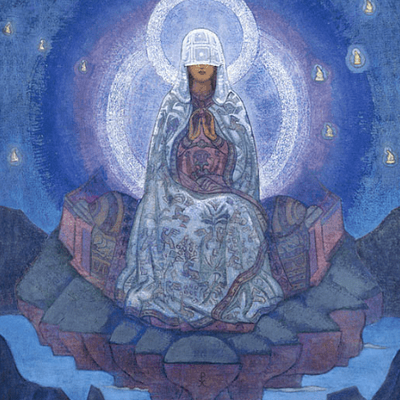
  • Thetis, the mom of a legend
    • She was so beautiful & powerful that Zeus & Poseidon courted her. Until a prophecy says that her son would be greater than his dad. To stop this prophecy from upsetting the “cosmic balance” (so Zeus’ power stayed with him), Zeus forced Thetis to marry a mortal king, Peleus. This wedding was the catalyst for the Trojan War. It’s where Eris threw the “Apple of Discord.” Thetis spent her life trying to protect her son, Achilles, from his destiny. She was 1 of the few nymphs to have a significant cult following, particularly in Laconia & Thessaly.
  • Amphitrite, the Queen of the Sea
    • Amphitrite is the “First Lady” of the ocean. Poseidon may be the king, but Amphitrite represents the sea’s actual substance. Legend says that she initially ran away from Poseidon’s romantic advancements. She hid in the Atlas Mountains to get away from Poseidon. Poseidon sent a dolphin to find her & plead his case. The dolphin successfully pleaded Poseidon’s case. She agreed to marry Poseidon. Poseidon put the dolphin in the stars as a reward (the Delphinus constellation).
  • Galatea, the beloved & the bitter
    • She was loved by the giant cyclops, Polyphemus. However, Galatea loved a mortal shepherd named Acis. In a fit of rage, Polyphemus crushed Acis with a boulder. Galatea, using her divine sea powers, transformed her lover’s blood into a river (the River Acis in Sicily) so that he could remain immortal in spirit.

In Homer’s Iliad XVIII, when Thetis cries out in sympathy for the grief of her son, Achilles, for the slain Patroclus, her sisters show up. 4 of her sisters, Cymodoce, Thalia, Nesaea, & Spio, were among the nymphs in the training of Cyrene. Later on, these 4 together with their sisters (Thetis, Melite, & Panopea) were able to help the hero Aeneas & his crew during a storm.

In 1 account, Cassiopeia boasted that her daughter, Andromeda, was more beautiful than the Nereides. The Nereids were livid at Cassiopeia’s claim. Their divine homie, Poseidon, being sympathetic towards them, sent a flood, & a sea monster to the land of the Aethiopians, demanding Andromeda’s sacrifices.

These sea goddesses were also said to reveal the mysteries of Dionysus & Persephone. The Nereids were worshipped in several parts of Greece. More specifically, in seaport towns, such as Cardamyle & the Isthmus of Corinth.

In the ancient world, the Nereids weren’t some fanciful fairy tales. They were a part of a functional religious system. Historical records show that sailors & military commanders (like Alexander the Great) offered sacrifices to the Nereids before going out on dangerous voyages.

The Nereid is the direct ancestor of the modern mermaid. The Greeks usually pictured them as fully human. But later Roman & Hellenistic art began to blend them with fish-like features.

The 3rd largest moon of Neptune is called Nereid. It was discovered in 1949 by Gerard Kuiper. The moon is famous for having 1 of the most eccentric (non-circular) orbits of any moon in the solar system. Also, there’s a “lake” in Antarctica that bears their name.

#Achilles #Acis #AcisRiver #AegeanSea #Aeneas #Aethiopians #AlexanderTheGreat #Amphitrite #Andromeda #Antarctica #AppleOfDiscord #Argonauts #AtlasMountains #Cardamyle #Cassiopeia #Cyclops #Cymodoce #Cyrene #DelphinusConstellation #Dionysus #Doris #Eris #Galatea #GerardKuiper #Greece #GreekMythology #Hellenistic #Homer #Iliad #IsthmusOfCorinth #KingPeleus #Laconia #Mediterranean #Melite #Naiads #Neptune #Nereid #Nereides #Nereus #Nerites #Nesaea #Oceanid #OldManOfTheSea #Panopea #Patroclus #Persephone #Polyphemus #Poseidon #Roman #SeaNymphs #Sicily #Spio #Thalia #Thessaly #Thetis #TrojanWar #Zeus

Oh wie schön, die Deutsche Telekom #dtag bietet beim Login gleich das Hinzufügen eines #Passkey an.

Leider ist mein Gerät nicht für Passkeys geeignet, ich kann also weder einen #Yubikey, #Token2 oder #Thetis via #Firefox oder #Chrome ausrollen.

Da muss man sich in der Implementierung schon richtig Mühe geben, um Hardware-Passkeys auszuschließen.

#Passfail

Pünktlich zum #39C3 habe ich mein #Hardwaretoken #Howto erweitert um
#OpenSSH #Authentifizierung.

Ich zeige wie man sich an #SSH Servern einloggen kann mittels #FIDO2 Device Bound #Passkeys à la #Yubikey, #Nitrokey, #Token2 #Thetis etc.

Damit liegt der geheime Schlüssel im Passkey-Token und kann nicht ohne weiteres ausgelesen werden.

Außerdem zeige ich noch wie man einen 2. externen OpenSSH-Server nur für die Hardwaretoken konfiguriert.

Viel Spaß am Gerät

https://www.cryptomancer.de/posts/20251225-opensshfido2/

OpenSSH-Authentifizierung mittels Hardwaretoken (FIDO2 Device Bound Passkeys à la Yubikey, Nitrokey, Token2, Thetis etc.)

Voraussetzung Seit Version 8.2.0 unterstützt OpenSSH FIDO2 basierte Schlüssel, also Passkeys. Dieser Schlüssel kann dabei bequem als sog. device bound passkey (fürderhin Passkey genannt) auf einem Hardware-Token liegen. Der geheime Schlüssel kann dann nicht vom Token exportiert werden und ist somit vor Diebstahl geschützt. Das Hardwaretoken fungiert dann quasi als Hardware Security Module und schützt den geheimen Schlüssel. Eingesetzt werden kann dafür ein beliebiges FIDO2-konformes Token, z.B. ein Yubikey 5 oder Security Key, Token2 R3 oder ein Thetis Security Key.

CryptoMancer.de

🏆 Mejores Llaves FIDO2 en Amazon: YubiKey 5C NFC, Nano y Thetis Pro 2025

En un mundo donde los ciberataques son cada vez más frecuentes, proteger nuestras cuentas online se ha convertido en una prioridad absoluta.

https://www.youtube.com/watch?v=QgHaZTSTYxk

#Fido2 #Yubikey #Thetis #TecnoBreak

🏆 Mejores Llaves FIDO2 en Amazon: YubiKey 5C NFC, Nano y Thetis Pro 2025

YouTube

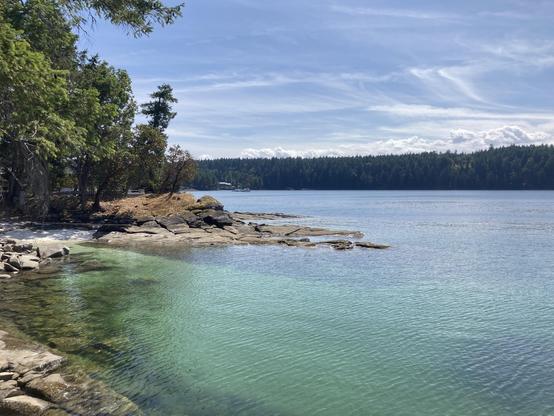
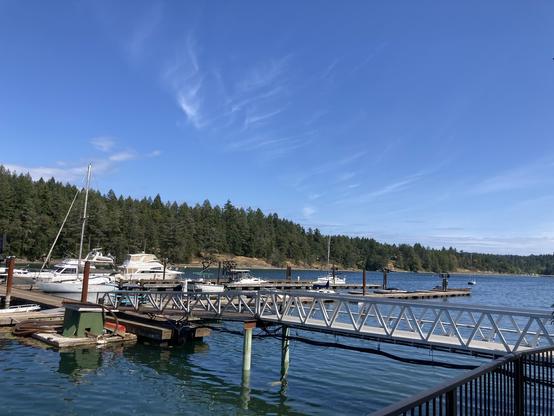
One day, I hope to visit all the #GulfIslands #BCtravel

Today we ventured to #Thetis

It's the Day of #Hermes aka Mercurius Day aka #Wednesday! 🐏

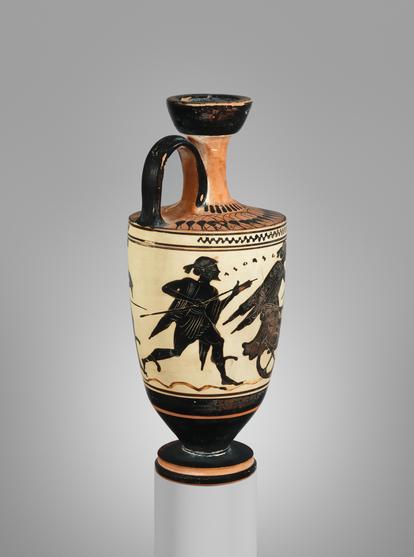
"The fair goddess [Thetis] took a dark-hued veil, than which was no raiment more black, and set out to go, and before her wind-footed swift Iris led the way; and about them the surge of the sea parted asunder. And when they had stepped forth upon the beach they sped unto heaven."
Iliad 24.93

🏛 #Hermes following #Thetis in her chariot, Terracotta lekythos ca 500 BCE

@mythology @antiquidons
#DayOfHermes #Mythology #GreekRomanArt

Have been working hard on #3dprint designs for the new CTR2-Dial controller for #smartsdr #flexradio #thetis.

Delighted to be producing the full unit for the UK and EU markets. Check out my blog post for an overview.

https://g7ufo.radio/posts/ctr2-dial/

CTR2-Dial

The radio silence this year has been mirrored by actual radio silence.

Auf einem #android #xiaomi #Redmi Handy öffnet sich sofort automatisch die #eRezeptApp wenn ein #nfc #passkey erkannt wird. Wie kann ich das abstellen?

Ich kann so keinen NFC Passkey registrieren, nur über USB 😵‍💫

Egal ob #Thetis, #Token2, #Cryptnox oder #Yubikey

Gilgameš en Achilleus

Achilleus en Patroklos (Altes Museum, Berlijn)

Ik heb vaker verteld dat er nogal wat overeenkomsten zijn tussen de diverse mythen, sagen en sprookjes. De grote vis van Sindbad de Zeeman is die van Sint-Brandaan; de voor zijn zonden gestrafte plek kan de stad Sodom zijn maar ook het klooster in het Solse Gat of het dorp van Filemon en Baukis. Zulke overeenkomsten zijn er. Om het tot heldenverhalen te beperken: het overzicht van Jan de Vries is oud maar nog altijd handig. Voor verhalen in het algemeen is er de Aarne-Thompson-Uther Index, die ik onder andere hier beschreef.

Een deel van de verklaring tussen de overeenkomsten zal zijn gelegen in de menselijke psyche: ik wil aannemen dat mannen uit alle culturen draken willen doden & prinsessen bevrijden. Ook zijn er migranten die verhalen meenemen, zoals Sjaak en de Bonenstaak. En verder springen verhaalmotieven sowieso over van de ene naar de andere cultuur. Zo kan het gebeuren dat de Olympische Spelen het een en ander gemeen hebben met het verhaal over de lijkspelen die Gilgameš voor Enkidu organiseerde.

Gilgameš en Achilleus

Ook de parallellen tussen Gilgameš en Achilleus zijn intrigerend. Het zijn beide krachtpatsers, zoals ook Simson, Cúchulainn, Rostam, Beowulf, Herakles en Siegfried. De mannetjesputter is een standaardtype, dat voortleeft in Spiderman, Wonder Woman, Batman, Jerom en The Bride.

Er zijn meer gelijkenissen. Gilgameš en Achilleus zijn halfgoden: de Griek is een zoon van de godin Thetis, de Mesopotamiër is zelfs voor tweederde goddelijk. Dit is inherent aan het krachtpatsertype, zie het overzicht van De Vries nog even. Een andere gelijkenis tussen Gilgameš en Achilleus, eveneens behorend tot het standaardrepertoire, is dat ze een vriend hebben, Enkidu en Patroklos. Parallellen te over natuurlijk: David en Jonathan, Herakles en Iolaos, Asterix en Obelix.

Specifieker is dat de verhalen over Gilgameš en Achilleus ook thematisch overeenstemmen. Immers, beide helden verliezen hun vriend, en deze confrontatie met de eindigheid van het leven leidt tot inzicht. Dit is minder algemeen, al komt het Nibelungenlied natuurlijk pas op gang als Kriemhild haar partner Siegfried verliest, waarna we wachten op de mokerslag van de slotregel. De overeenkomst met het Nibelungenlied is overigens niet helemaal zuiver, want het literair knappe is vanzelfsprekend dat het inzicht wél de lezer maar niet Kriemhild bereikt.

Er zijn meer overeenkomsten tussen Gilgameš en Achilleus, en ik heb er voor dit blogje nog even naar gekeken, maar ik voor mij vind ze zelden overtuigend. Eén voorbeeld is dat Homeros een mooie vergelijking inlast waarin hij Achilleus’ rouwbeklag vergelijkt met het gebrul van een leeuw, en dat de redacteur van het Epos van Gilgameš iets soortgelijks schrijft. Tja. Zoveel vergelijkingsmateriaal stond dichters nou ook weet niet ter beschikking. Los daarvan: een leeuwenbeeldspraak ligt voor de hand als je het hebt over een held van het krachtpatsertype.

Kortom, de parallellen tussen Gilgameš en Achilleus zijn nogal standaard of nogal voor de hand liggend. Ze zijn er omdat ze er, heldenverhalen zijnde heldenverhalen, altijd zijn. Alleen het feit dat ze niet alleen hun vriend verliezen maar daardoor ook komen tot inzicht, is werkelijk opvallend. Je zou iets specifiekers willen hebben om te bewijzen dat een van de twee dichters bekend was met het – ongetwijfeld mondeling doorgegeven – werk van de ver weg wonende collega of iets soortgelijks.

Criteria

Begrijp me niet verkeerd: de overeenkomsten zijn er. Ik veronderstel dat Sin-leqi-unnini (zoals de redacteur van het Epos van Gilgameš heet) informatie heeft geput uit dezelfde zee van verhalen waaruit Homeros putte. Het zou dus vooral vreemd zijn geweest als er tussen de twee krachtpatsers géén overeenkomsten waren. Dat is de basis. Er kan daarenboven ook beïnvloeding zijn geweest: de oostelijke tekst, of iets dat erop leek, is op een of andere manier bekend geweest in het westen. Of andersom, want niets weerhoudt ons van de aanname dat de Babyloniër een Mykeens verhaal heeft gehoord.

Maar je zult zoiets moeten bewijzen. Minimaal moet je vaststellen dat er culturele contacten zijn geweest. (Dat is in dit geval overigens niet moeilijk.) Maar er zijn veel, veel meer criteria nodig. Dit is des te urgenter nu de hermeneutische buitengrens is weggevallen. Het denken daarover is, zoals de trouwe lezers van deze blog weten, het wezen van de DNA-revolutie. En ik vrees dat de oudheidkunde te weinig generalisten heeft om er echt werk van te maken.

#Achilleus #Batman #DNARevolutie #Enkidu #EposVanGilgameš #Gilgameš #Herakles #hermeneutischeBuitengrens #Homeros #Ilias #Kriemhild #leeuw #mondelingeLiteratuur #Patroklos #Siegfried #SinLeqiUnnini #Spiderman #Thetis

Mondelinge literatuur - Mainzer Beobachter

De DNA-revolutie plaatst de mondelinge literatuur centraal omdat de hermeneutische buitengrens in feite is verdwenen.

Mainzer Beobachter