Seismic study reveals hidden #megathrust #earthquake risk off #BritishColumbia

by Francesco Fiondella, Earth Institute at Columbia University
July 21, 2025

"A new study published in Science Advances has revealed the first detailed images of a newly developing #SubductionZone off the coast of British Columbia's Haida Gwaii archipelago.

"The international team of researchers collected the data for this study during a 2021 cruise by the Lamont-Doherty Earth Observatory's research vessel, the Marcus G. Langseth. They used a 15-kilometer-long underwater cable equipped with thousands of underwater microphones, called hydrophones, in the area off northern British Columbia to map the deep structure of Earth's subsurface.

"Their data confirmed that the #QueenCharlotteFaultSystem can generate powerful megathrust earthquakes, which are capable of producing strong shaking and #tsunamis.

"Megathrusts are found in areas where one tectonic plate dives beneath another, in this case the Pacific plate being pushed under the North American plate. This area is known for generating powerful tremors. In fact, the Queen Charlotte fault system represents the greatest seismic hazard in Canada, producing the country's largest recorded earthquake in 1949 and a notable earthquake in 2012 that created a tsunami.

" 'This region is actively becoming a subduction zone, so understanding the fault structure here tells us about the early stages of subduction zone development,' says lead author Collin Brandl, a postdoctoral research scientist at the Lamont-Doherty Earth Observatory, part of the Columbia Climate School.

" 'Our study provides the first direct observations of the Haida Gwaii thrust, the 'megathrust' of this system, which can help improve hazard analysis in the region, better preparing residents for future earthquakes and tsunamis.' "

Source:
https://phys.org/news/2025-07-seismic-reveals-hidden-megathrust-earthquake.html

Seismic study reveals hidden megathrust earthquake risk off British Columbia

A new study published in Science Advances has revealed the first detailed images of a newly developing subduction zone off the coast of British Columbia's Haida Gwaii archipelago.

Phys.org

All three mountains were out during my morning commute today. 🗻🗻🗻

#MtRainier #MountRainier #MtBaker #MountBaker #GlacierPeak #Tahoma #Kulshan #Dakobed #volcano #SubductionZone #Cascadia

#Cascadia #SubductionZone #earthquakes

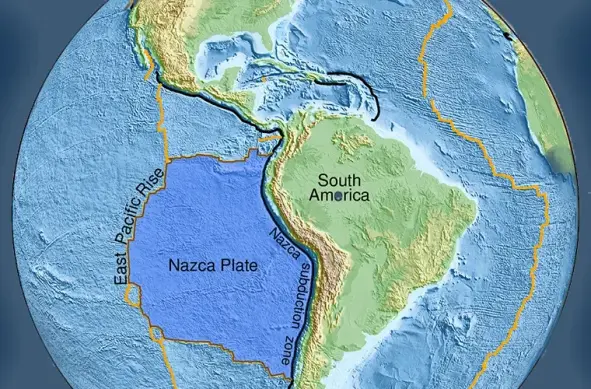
"When an earthquake rips along the Cascadia Subduction Zone fault, much of the U.S. West Coast could shake violently for five minutes, and tsunami waves as tall as 100 feet could barrel toward shore. But that’s just the start of the expected horrors.

Even if coastal towns in Northern California, Oregon and Washington withstand that seismic onslaught, new research suggests, floodwaters could seep into many of these vulnerable communities for good. That’s because entire coastal shorelines are expected to drop by as much as 6½ feet when the earthquake strikes, according to new research published Monday in the Proceedings of the National Academy of Sciences."

https://www.nbcnews.com/science/earthquakes/cascadia-subduction-zone-earthquake-even-worse-feared-rcna203020

Cascadia subduction zone earthquake could be even worse than feared

When an earthquake rips along the Cascadia Subduction Zone fault, much of the U.S.

NBC News
Unexpected And Unexplained Structures Found Deep Below The Pacific Ocean
There are zones where the seismic waves move in different ways, suggesting structures that are colder or have a different composition than the surrounding molten rock.
It is unclear what these structures are. If they were anywhere else, they could be portions of #tectonicplates that have sunk in a #subductionzone. But the Pacific is one large plate, so there should be no subduction material under it. https://www.iflscience.com/unexpected-and-unexplained-structures-found-deep-below-the-pacific-ocean-77545
Unexpected And Unexplained Structures Found Deep Below The Pacific Ocean

The formations could be recent or ancient, scientists are not sure.

IFLScience
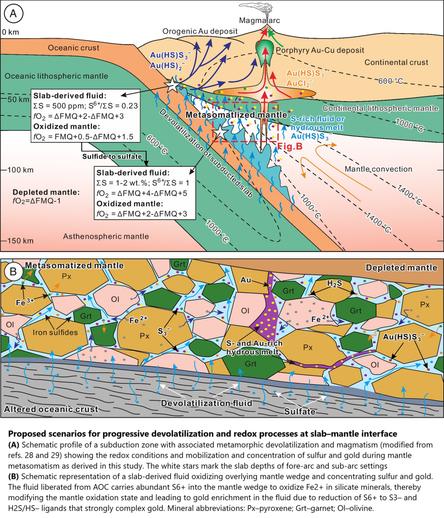
Thermodynamic model identifies how gold reaches Earth's surface

A research team including a University of Michigan scientist has discovered a new gold-sulfur complex that helps researchers understand how gold deposits are formed.

Phys.org
#Geologists Uncover Mysterious Hidden #SubductionZone Beneath #Pacific, Offering A Glimpse into Earth's Ancient Interior
This discovery reveals a hidden chapter of Earth’s history that reshapes our understanding of the planet’s inner workings. This hidden tectonic boundary, buried over 250 million years ago, challenges prevailing theories about Earth’s interior structure and offers insights into how the planet’s surface has evolved over millennia.
https://thedebrief.org/geologists-uncover-mysterious-hidden-subduction-zone-beneath-pacific-offering-a-glimpse-into-earths-ancient-interior/
Geologists Uncover Mysterious Hidden Subduction Zone Beneath Pacific, Offering A Glimpse into Earth's Ancient Interior - The Debrief

Science, Tech and Defense for the Rebelliously Curious.

The Debrief
The West Coast Is at Risk: New Megathrust Fault Research Indicates That the Next Big Earthquake Could Be Imminent

Large-scale earthquakes and tsunamis have historically affected the western regions of the U.S. and Canada and are likely to do so in the future. Off the southern coasts of British Columbia, Washington, Oregon, and northern California, a 600-mile-long strip exists where the Pacific Ocean floor gr

SciTechDaily

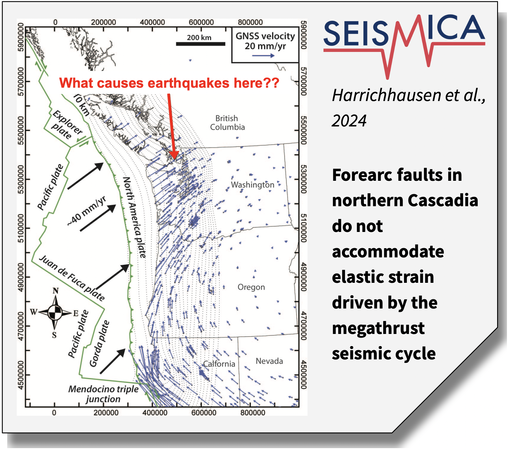
What causes onshore faults to slip in subduction zones?

Well, it turns out that the commonly held reason does not apply to the faults located in northern Cascadia.

Read Harrichhausen et al. to find out why: https://seismica.library.mcgill.ca/article/view/1177

#cascadia #SubductionZone #Seismology #earthquakescience #peerreviewed #DiamondOpenAccess #earthquake #OpenAccess #OpenScience

Forearc faults in northern Cascadia do not accommodate elastic strain driven by the megathrust seismic cycle

We employ numerical models to explore the connection between subduction zone coupling or megathrust rupture and upper plate faults in the northern Cascadia forearc. Active forearc faults north of the Olympic Peninsula exhibit similar characteristics: west-northwest strike, oblique right-lateral slip senses, and low slip rates (<1 mm/yr), but a potential to generate large (M ~ 7) earthquakes. Previous hypotheses suggest that stress in the upper plate due to interseismic coupling or coseismic rupture along the subduction zone interface could drive permanent forearc strain. To test these hypotheses, we used a 3D boundary element method model to predict slip on the LRDM if interseismic coupling or coeseismic rupture cause deformation. Our model predicts reverse left-lateral slip if the strain results solely from subduction zone coupling, or normal right-lateral slip if these faults accommodate strain during a megathrust rupture. These results contradict the observed fault kinematics. Additionally, if we use our model to mimic strain partitioning, where only the strain from the strike-slip component of subduction zone coupling is accommodated in the forearc, our results are also inconsistent observed fault kinematics. These models challenge the hypothesis that subduction zone coupling or coseismic rupture are the primary driver of permanent forearc deformation in northern Cascadia.

Seismica

The publications for the Cascadia Subduction Zone special issue are starting to come out, check them out here:
https://seismica.library.mcgill.ca/issue/view/91

Don’t miss out on contributing to this Seismica special issue!
Scope, topics, publication types, and conditions:
https://seismica.library.mcgill.ca/announcement/view/17

#cascadia #SubductionZone #OpenAccess #DiamondOpenAccess #peerreviewed #Seismology #earthquake #EarthquakeScience

Vol. 2 No. 4: Special Issue: the Cascadia Subduction Zone | Seismica