- cijnusp
https://jornal.usp.br/ciencias/cientistas-produzem-enzima-que-desmonta-protecao-de-bacteria-resistente/
#Cincias #CinciasBiolgicas #Bactriaresistente #Biofilme #Enzimas #Infecohospitalar #Staphylococcusaureus
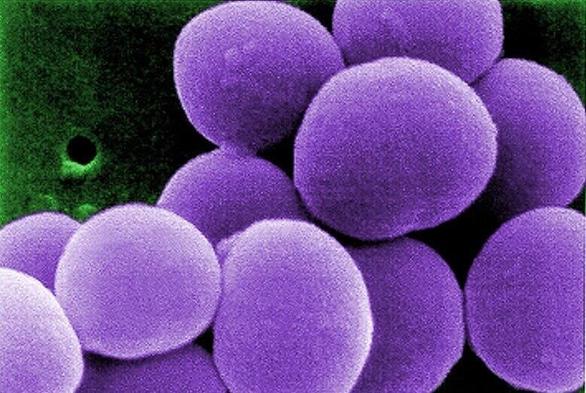
Staphylococcus aureus causes abscesses, pneumonia, and toxic shock via powerful virulence factors. #StaphylococcusAureus #MRSA #TSS #FoodPoisoning #GramPositive #CoagulasePositive #Microbiology #Pathology #USMLE #MedicalEducation
Practice your microbiology skills with this interactive drag-and-drop case on prosthetic joint infections. Learn to identify Gram-positive cocci, catalase and coagulase reactions, novobiocin sensitivity, and biofilm formation — crucial for USMLE and clinical exams.
Learn key exotoxin-producing bacteria and their mechanisms of disease. #Exotoxins #BacterialToxins #Microbiology #CorynebacteriumDiphtheriae #ClostridiumTetani #ClostridiumBotulinum #VibrioCholerae #BacillusAnthracis #StaphylococcusAureus #StreptococcusPyogenes #EColi #Pathogenesis #USMLE #MedicalEd
Test your microbiology knowledge with this interactive drag-and-drop quiz! Match each bacterial infection to its toxin and pathogenesis. Perfect for USMLE Step 1, Step 2, and medical microbiology revision.
Learn key biofilm-producing bacteria and their role in chronic and device-related infections. #Biofilm #BiofilmProducingBacteria #Microbiology #StaphylococcusEpidermidis #StaphylococcusAureus #PseudomonasAeruginosa #ViridansStreptococci #EColi #USMLE #MedicalEducation #Pathogenesis #AntibioticResist
Learn to identify causative organisms for common clinical infections: prosthetic joint infections, endocarditis, cystic fibrosis lung infections, contact lens keratitis, and pediatric otitis media. High-yield review for USMLE and clinical exams.
Learn the characteristic pigments of key bacteria for quick identification in microbiology. #PigmentProducingBacteria #Microbiology #StaphylococcusAureus #PseudomonasAeruginosa #SerratiaMarcescens #ActinomycesIsraelii #USMLE #MedicalEducation #BacterialIdentification #ClinicalMicrobiology
Enhance microbiology learning with this interactive exercise. Match bacterial species like Staphylococcus aureus, Pseudomonas aeruginosa, and Actinomyces israelii to their characteristic colors and colony appearances. Perfect for USMLE and medical students.
Two-dose treatment for staph bloodstream infections
September 16, 2025 At a Glance Two doses of the antibiotic dalbavancin produced results similar to standard 4-…
#NewsBeep #News #Headlines #antibiotic #bacteremia #dalbavancin #Dalvance #JAMA #JournaloftheAmericanMedicalAssociation #Latvia #LV #NicolasA.Turner #staph #Staphylococcusaureus #ThomasHolland
https://www.newsbeep.com/126641/
'Trends in the minimum inhibitory concentrations for four agents against methicillin-resistant Staphylococcus aureus in bloodstream infections in China: a 6-year multi-center study from 2017 to 2022' - an article published in “Decoding Infection and Transmission” on #ScienceOpen:
➡️ https://www.scienceopen.com/document?vid=532658bd-d61b-495d-a817-1c9ce5ffae95
#StaphylococcusAureus #MRSA #InfectiousDiseases #AntimicrobialResistance #Microbiology
<p xmlns:xsi="http://www.w3.org/2001/XMLSchema-instance" dir="auto" id="d1436043e229"> <i>Objective:</i> <i>Staphylococcus aureus</i> bacteremia is a critical and pernicious infection, and in particular methicillinresistant <i>Staphylococcus aureus</i> (MRSA) is increasing in treatment failure. This study analyzed trends in the minimum inhibitory concentrations (MICs) of limited antimicrobials against MRSA bloodstream isolates in China; specifically, the antibiotics vancomycin, daptomycin, linezolid, and teicoplanin. </p><p xmlns:xsi="http://www.w3.org/2001/XMLSchema-instance" dir="auto" id="d1436043e240"> <i>Methods:</i> A total of 3901 <i>S. aureus</i> blood isolates, including 1065 MRSA isolates, were collected from ten Chinese provinces between 2017 and 2022. Broth microdilution was used to establish the MICs for the four antimicrobials. The geometric mean MICs (GM MICs), MIC50s (inhibition of 50 % of <i>S. aureus</i>), MIC90s (inhibition of 90 % of <i>S. aureus</i>), and MICs distribution were determined for each year. </p><p xmlns:xsi="http://www.w3.org/2001/XMLSchema-instance" dir="auto" id="d1436043e254"> <i>Results:</i> The geometric mean inhibitory concentration of vancomycin for MRSA isolates increased from 0.58 mg/L in 2018 to 1.01 mg/L by 2022; and that of linezolid decreased from 1.52 mg/L in 2017 to 0.94 mg/L in 2022. Daptomycin and teicoplanin demonstrated no clear trends. MRSA isolates with vancomycin MICs ≤ 0.5 mg/mL significantly decreased from 77.1 % in 2018 to 8.8 % in 2022. For linezolid, those with MICs >1 and ≤ 2 mg/L also decreased from 62.8 % in 2017 to 26.1 % in 2022. The highest geometric mean MICs of daptomycin, linezolid, vancomycin, and teicoplanin were respectively seen in Yunnan (0.465 mg/L), Henan (1.368 mg/L), Gansu (0.908 mg/L), and Hubei (0.579 mg/L); whereas the lowest values were observed in Jiangxi (0.355 mg/L), Yunnan (0.896 mg/L), Yunnan (0.600 mg/L), and Henan (0.438 mg/L). MRSA isolates originating from tertiary care hospitals exhibited lower sensitivity for teicoplanin than those from non-tertiary care hospitals. </p><p xmlns:xsi="http://www.w3.org/2001/XMLSchema-instance" dir="auto" id="d1436043e259"> <i>Conclusions:</i> MRSA isolates from bloodstream infections in China are presently showing lower sensitivity to vancomycin and higher sensitivity to linezolid. </p>
Abstract The use of tetracyclines in medicine, veterinary medicine, and stock raising has led to the spread of bacterial resistance to tetracycline, particularly among dangerous representatives of Staphylococcus aureus. Therefore, the analysis of resistance to tetracycline and the creation of approaches to overcome it are extremely relevant. Studies of 64 clinical isolates of S. aureus, which were characterized by moderate biofilm formation, showed that 33 of them contained plasmid DNA. A significant spread (in 96% of studied isolates) of the known transmissible tetracycline resistance genes tet(K) and tet(M) was shown in the examined plasmid-containing doxycycline-resistant clinical isolates of S. aureus. Plasmid-containing doxycycline-resistant clinical isolates with tet(K) and tet(M) genes lost resistance to the tetracycline antibiotic doxycycline after treatment of their cells with gold nanoparticles of 30 nm in a concentration of 3.2–9.6 μg/mL or medium-sized silver of 30 nm in a concentration of 20–40 μg/mL. Elimination of tet genes responsible for acquired resistance was confirmed by PCR.
Source: EBio Medicine, https://www.thelancet.com/journals/ebiom/article/PIIS2352-3964(24)00460-2/fulltext
Summary
Background
To date, global priorities for new vaccine R&D have not been systematically identified for endemic pathogens. As part of Immunisation Agenda 2030 (IA2030), we have systematically identified priority endemic pathogens for new vaccine R&D based on country and regional stakeholder values to address this need.
Methods
MCDA surveys targeting policy makers and immunisation stakeholders in each World Health Organization (WHO) region were used to weight eight criteria for prioritisation. Applying those weights to regional pathogen data yielded regional top ten pathogen lists, which are intended to inform regional deliberations on R&D priorities. The regional top ten lists were combined into an IA2030 global priority list. To inform R&D, use cases for new vaccines and monoclonal antibodies were identified, then categorized in terms of the activities needed to accelerate progress.
Findings
In five out of six WHO regions, Annual deaths in children under five and Contribution to antimicrobial resistance were the most heavily weighted criteria. How participants weighted the criteria was not associated with their region, biographical characteristics, or areas of expertise. Five pathogens were common priorities across all regions: M tuberculosis, HIV-1, K pneumoniae, S aureus, and Extra-intestinal pathogenic E coli. Six pathogens were priorities in single regions. Combining regional top ten lists provided a global list of 17 priority pathogens for new vaccine R&D. Thirty-four distinct use cases were identified for new products targeting these pathogens. While most are in the “Advance product development” category, ten are in the “Research” category and seven are in the “Prepare to implement” category.
Interpretation
These priorities for new vaccine R&D will help stakeholders better respond to regional and country needs. The use cases will inform R&D and enable monitoring of R&D under IA2030.
____
#abstract #bacteria #eColi #health #HIVAIDS #infectiousDiseases #klebsiellaPneumoniae #mycobacteriumTuberculosis #news #research #science #staphylococcusAureus #vaccines #WHO
Antibiotic Zevtera (Ceftobiprole medocaril) approved by FDA for treatment of CABP, ABSSSI and SAB
The broad-spectrum fifth-generation cephalosporin antibiotic, Zevtera (Ceftobiprole medocaril sodium Inj.)...........
#ABSSSI #Antibiotic #BroadSpectrum #CABP #Ceftobiprolemedocaril #cephalosporin #FDA #pneumonia #SAB #Staphylococcusaureus #Zevtera
SCIE