Research Information: Springer Nature divests Scientific American and Spektrum der Wissenschaft. “Springer Nature has announced the sale of its consumer media businesses, including the science publication Scientific American in the United States and Spektrum der Wissenschaft in Germany.”

https://rbfirehose.com/2026/06/24/research-information-springer-nature-divests-scientific-american-and-spektrum-der-wissenschaft/
Research Information: Springer Nature divests Scientific American and Spektrum der Wissenschaft

Research Information: Springer Nature divests Scientific American and Spektrum der Wissenschaft. “Springer Nature has announced the sale of its consumer media businesses, including the scienc…

ResearchBuzz: Firehose

Even the most renowned scientific publishers seem to skip the copy editing process these days.

Screenshot from a peer-reviewed article published by #SpringerNature.

“The APC [Article Processing Charge] to publish Gold Open Access in Nature […] is […] €10850.00.“ 😱

#GoldOpenAccess #OA #naklar #SpringerNature #academicChatter

More of this, please...!

New #OpenAccess #Journal to Launch Following Resignation of Editorial Team from #NaturalLanguageSemantics

Posted by Professor Caroline Edwards on 2 June 2026

"The #OpenLibraryOfHumanities is pleased to announce the launch of a new diamond open access journal in linguistics, following the resignation of the editorial team of Natural Language Semantics (#NLS) from #SpringerNature. The editors are launching a new journal, Semantics of Natural Languages , with the Open Library of Humanities.

"The editorial team’s resignation follows ongoing concerns about Springer Nature putting pressure on editors to accept and publish more articles. Commercial publishers like Springer Nature are increasingly using this tactic to grow the revenue they receive for open access publishing via Article Processing Charges. The resigning editors have the support of the editorial board of Natural Language Semantics, including the original founders of that journal, which was established in 1993 and has long been recognised as one of the leading journals in formal semantics and theoretical linguistics.

"Semantics of Natural Languages is launched at OLH as the intellectual heir to Natural Language Semantics, which was originally published by Kluwer Academic Publishers before its acquisition by Springer in 2003. Semantics of Natural Languages is a linguistics journal dedicated to the study of meaning in natural languages, with a particular focus on the relation between meaning and linguistic structure. While the journal is firmly grounded in semantics, it welcomes contributions that draw on insights from related fields such as #logic, #PhilosophyOfLanguage, #psycholinguistics and cognition, #typology and the core domains of #linguistics — provided the work is specifically directed toward linguists and advances our understanding of semantics.

"OLH’s Executive Director, Professor Caroline Edwards, said of the move: 'It’s fantastic to be supporting another research community to regain editorial control of its journal and leave Springer Nature. At OLH, we’re seeing a growing number of furious academics ready to withdraw their labour from unscrupulous commercial publishers like Springer Nature. We’re excited to work with the editors and authors at Semantics of Natural Languages and give the journal a positive future.'

"The editors of Semantics of Natural Languages commented: 'We’re grateful to be able to work with the OLH to make our journal accessible for free to all $authors and $readers. #AcademicJournals should serve academics, #NotForProfitPublishers, and we consider the #DiamondOpenAccess model the future of academic publishing. We are proud to join this movement and help to expand its presence in semantics and linguistics more generally.'

"The Open Library of Humanities is proud to provide the long-term funding and support needed to bring this journal into diamond open access. This support is made possible by the university libraries, funding councils, and library consortia that collectively support the OLH.

"About #OLH: The Open Library of Humanities is an award-winning, academic-led publisher of 36 diamond open access journals based at #Birkbeck, #UniversityOfLondon. With initial funding from the Andrew W. Mellon Foundation and subsequent support from Arcadia, a charitable fund, the platform covers its costs by payments from an international library consortium rather than any author fee. This funding mechanism enables equitable open access in the #humanities disciplines, with charges neither to readers nor authors."

Source:
https://www.openlibhums.org/news/943/

Visit the new journal here: https://snl-journal.org/

#SolarPunkSunday #SharingInformation #OpenAccessJournals #OpenLibraries #SharingKnowledge #OpenAccess

New Open Access Journal to Launch Following Resignation of Editorial Team from Natural Language Semantics

The Open Library of Humanities is pleased to announce the launch of a new diamond open access journal in linguistics, following the resignation of the editorial team of Natural Language …

Open Library of Humanities
* I'm not making this up: Here's one of many DOIs taken from a reference list at the end of an article published by #SpringerNature:

Second desk-rejection for my I-Field Theory manuscript from Foundations of Physics (same editor), again without technical feedback or peer review.

Rejections without reasons prevent productive dialogue and make it impossible to address concerns I don't know about.

The paper remains on Zenodo for anyone who wants to engage with the physics: https://zenodo.org/records/20390108

#Physics #TheoreticalPhysics #SpringerNature #OpenScience #AcademicPublishing #Entropy #FoundationsOfPhysics

The Irreversibility Field (I-Field):A Classical Framework for Fundamental Irreversibility in Physics

 We present the I-field: a classical scalar field minimally coupled to matter whose equation of motion contains an explicit time-asymmetric dissipation term, derived from the Euler-Lagrange-Rayleigh (ELR) formalism [@rayleigh1877]. The field does not modify the gravitational sector: Einstein's field equations are unchanged, and the total stress-energy tensor of matter plus I-field is covariantly conserved. In the limit $\gamma \to 0$ the theory reduces exactly to standard classical field theory.  The dissipation term $\gamma u^\mu \partial_\mu \mathcal{I}$, where $u^\mu$ is the four-velocity of the cosmological rest frame and $\gamma > 0$ is a coupling constant, is odd under time reversal while every term derived from a Lagrangian is even. This explicit breaking of time-reversal symmetry at the level of the field equation --- rather than through boundary conditions or statistical postulates --- has three consequences derived as theorems within the framework:   1. The I-field carries a covariant entropy production density   $\sigma_{\mathcal{I}} = \gamma\dot{\mathcal{I}}^2 \geq 0$   pointwise, establishing the second law of thermodynamics as   a field-theoretic identity rather than a postulate.     2. The energy transferred from matter to the I-field is strictly   non-negative, providing a microscopic account of dissipation   without invoking a heat bath or environment.     3. The preferred time direction is globally well-defined,   identified with the cosmological rest frame in which the   cosmic microwave background is isotropic [@fixsen2009].     The theory is self-contained and makes no modifications to the gravitational sector. The framework provides a minimal, classical extension of standard field theory in which irreversibility is fundamental rather than

Zenodo
Ah, the timeless quest for "understanding" in #science — an eternal dance where the jargon gets bigger as the actual #insights shrink. 🤯🔍 Who knew that #publishing with Springer Nature was the true path to enlightenment, or at least to an ever-growing #research cart? 🛒✨
https://link.springer.com/article/10.1007/s42113-026-00271-1 #understanding #SpringerNature #HackerNews #ngated
Illusions of Understanding in the Sciences - Computational Brain & Behavior

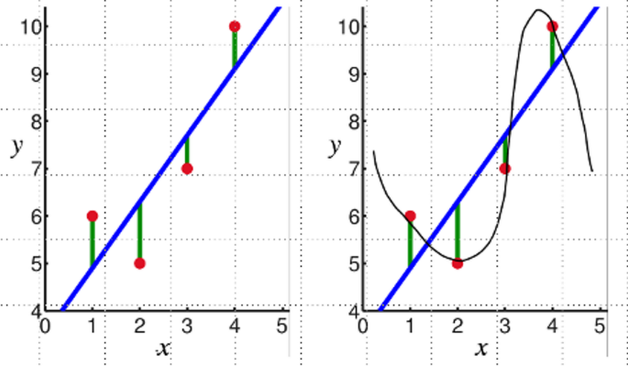
Scientists seek to understand the causes of observed phenomena. Beliefs that they have succeeded are based on understanding that is rarely or possibly never complete, and varies in depth and quality. Most often scientists believe they understand more than they do, making their belief an illusion. This illusion then persists in explanations scientists provide in print, in talks, or in discussions. The illusion that a scientist has a valid and complete explanation tends to be magnified when the data are well described by mathematical and computer simulation models due to the precision of such models and their ability to predict well; prediction does not imply causality, but gives the illusion that it does. The first part of this essay supports the case for the universality of partial and incomplete levels of understanding by showing the difficulty of reaching a deep level of understanding for even a simple analysis and model that most scientists use and believe they understand: linear regression. The second part highlights some implications of the existence of many levels of understanding and explanation, and their use by scientists for design, testing, analysis, and theory development. It discusses the way that deduction and induction depend on the levels of understanding and the implications of the illusion that a scientist’s understanding is deep. It makes a case that the many incomplete levels of understanding affect, often unwittingly, the ways scientists design experiments, test theories, comprehend, communicate, and teach.

SpringerLink

Despite the sanctions, Springer Nature publishes around 200 Russian journals, helping Russia remain active in the scientific community. For more details, see the article by Oleksii Plastun and Valeriia Kotelnykova.

https://zn.ua/eng/sanctions-and-russian-science-how-worlds-major-scientific-publisher-helps-circumvent-them.html
#science #sanctions #Russia #SpringerNature #warinUkraine

Sanctions and Russian Science: How World’s Major Scientific Publisher Helps Circumvent Them

Despite its statements of support for Ukraine, Springer Nature publishes approximately 200 Russian journals. The publisher uses intermediaries and Cypriot offshore companies to circumvent sanctions and pay royalties to researchers in Russia.

Зеркало недели | Дзеркало тижня | Mirror Weekly

After submitting a research paper to a journal of scientific publisher #SpringerNature, my e-mail inbox is flooded with science #SPAM (”Dear researcher $FullName, please consider publishing your latest research at $FakeyFakeJournalXY…”).

I wonder if there is a connection. 🤔

It's good to see my friends Mei-Chi S. ☘️ and Charles S. have published a new book! I am looking forward to reading it!
https://link.springer.com/book/10.1007/978-3-031-93642-5
#SpringerNature #ComplexAnalysis
Complex Analysis in One Variable and Riemann Surfaces

This Graduate Texts in Math presents an introduction to Complex Analysis in one variable and Riemann surfaces, from both classical and modern points of view.

SpringerLink