 The Open Buddhist University
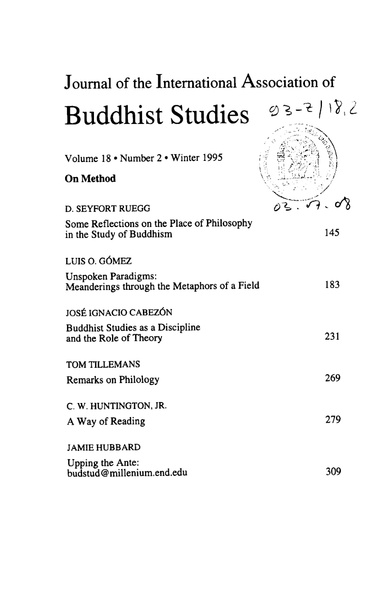
📰 Meanderings Through the Metaphors of a Field (A free, 48-page article from 1995)
Tags: #Humanities #BuddhistStudies
https://buddhistuniversity.net/content/articles/unspoken-paradigms-meanderings_gomez-luis-o
📰 Meanderings Through the Metaphors of a Field (A free, 48-page article from 1995)
Tags: #Humanities #BuddhistStudies
https://buddhistuniversity.net/content/articles/unspoken-paradigms-meanderings_gomez-luis-o
Sprache und Denken —formt deine Sprache deine Wahrnehmung?
Die #SapirWhorf-Hypothese:umstritten, aber nicht tot. Die starke Version ist widerlegt — die schwache hat empirische Belege. Sprecher mit reichhaltigerem Farbvokabular verarbeiten visuelle Unterschiede schneller. Absolute Richtungssprachen formen das räumliche Denken anders.
Sprache erschafft die Wirklichkeit nicht—aber sie filtert sie.
#Sprachwissenschaft #Kognition #Linguistik #CognitiveLinguistics #language #humanities
to me the failed city
https://subspacewagon.systems/to-me-the-failed-city/
Her stone horses of law and reclamation
https://subspacewagon.systems/her-stone-horses-of-law-and-reclamation/
_____
https://archive.org/search?query=creator%3A%22Richard+J+Tilley%22
https://www.subspacewagon.io
https://www.selections.directory
_____
#Poetry #PoemADay #PoetryCommunity #Poem #TodaysPoem #WritingCommunity #Literature #Songs #books #humanities #amwriting #theology #WritersOfMastodon #writing #art #poetics #critcalThinking #community #bookstodon #sociology #humanRights #disability #RuleOfLaw #Law
The Sneeze: I Started Cuba’s First Independent Magazine. Then My Problems Began.
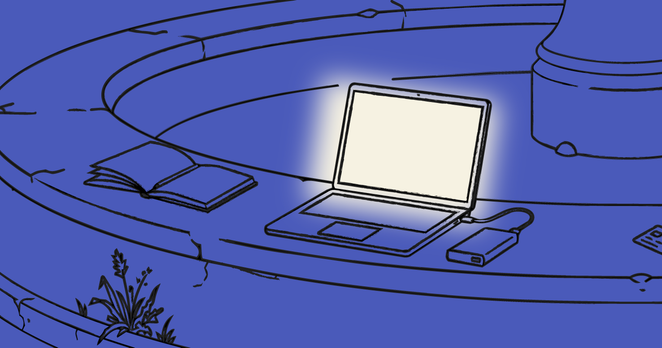
> It’s a truism that if a place is especially challenging to write about, then journalism is urgently necessary there. In our case, this was absolutely correct. Six decades of Cuban history were festering under the country’s blanket of silence, giving us a collective identity crisis. In all that time, only a handful of journalistic initiatives — it’s hard to know precisely how many; I’m aware of fewer than 10 — managed to rebel against these conditions without leaving the island. The most successful were in the 1990s, after the collapse of the Soviet Union. Cuba Press, a news agency with six typewriters located in the house of the poet Raúl Rivero, managed to report on the national hangover, as did Habana Press, an agency directed by Joaquín Torres, who dictated his articles over the phone to the exiles running Cubanet and Radio Martí. > > Without a free press, Cuba’s history and memory were at the mercy of power. Living there as a journalist was like being a zombie who knows he’s dead. I ruminated constantly on one idea: If, in the future, somebody tried to reconstruct early-21st-century Cuba from a press archive, what they would find would be the story of a country that didn’t exist. Our mission was to bring reality back. We wanted to hold a mirror up to Cuba, show the island what the hell it was. Otherwise, what had we gone to college for? Sat through all those lectures? Did we just do it to hang diplomas on our walls? We’d been so rebellious, so anti-establishment. Were we going to let our dreams of change die? If not, we needed to build our own home for the work we wanted to do. > > The arrival of widespread internet made us try our luck. Without that event, which transformed the nation, we wouldn’t have had a chance. In 2015, the government installed Wi-Fi hotspots in 33 public plazas. In those parks, an hour of internet cost two dollars. For the first time in their lives, Cubans could go outside and get online. The high price meant choosing between internet and clothes or food, but before, you could only use it in hotels — which cost even more — or job centers. > > Cuba’s constitution declares that the Communist Party, which is the only legal political organization, has regulatory jurisdiction over all radio, TV and print media. It also prohibits journalism outside this sphere. Starting an independent magazine meant declaring war on the government.
Her stone horses of law and reclamation
https://subspacewagon.systems/her-stone-horses-of-law-and-reclamation/
____
https://archive.org/search?query=creator%3A%22Richard+J+Tilley%22
https://www.letters.directory
https://www.violencestudies.com
____
#Poetry #PoemADay #PoetryCommunity #Poem #TodaysPoem #WritingCommunity #Literature #Songs #books #humanities #amwriting #CreativeWriting #WritersOfMastodon #writing #art #poetics #critcalThinking #community #bookstodon #sociology #humanRights #disability #RuleOfLaw #Law #SmallWeb #SupportHumanArtists
Paraphrasing God’s Copse
https://subspacewagon.systems/paraphrasing-gods-copse/
____
https://archive.org/search?query=creator%3A%22Richard+J+Tilley%22
https://www.subspacewagon.io
https://www.letters.directory
https://www.violencestudies.com
https://www.selections.directory
____
#Poetry #PoemADay #PoetryCommunity #Poem #TodaysPoem #WritingCommunity #Literature #Songs #books #humanities #amwriting #CreativeWriting #WritersOfMastodon #writing #art #poetics #critcalThinking #community #bookstodon #sociology #humanRights #disability #RuleOfLaw #Law #SmallWeb
Algol, Part III
https://archive.org/details/algol-part-iii-by-richard-j-tilley
to me the failed city
https://subspacewagon.systems/to-me-the-failed-city/
irenic milk ritual under occupation
https://subspacewagon.systems/irenic-milk-ritual-under-occupation/
#Poetry #PoemADay #PoetryCommunity #Poem #TodaysPoem #WritingCommunity #Literature #Songs #books #humanities #amwriting #CreativeWriting #WritersOfMastodon #writing #art #poetics #critcalThinking #community #bookstodon #sociology #humanRights #disability #RuleOfLaw #Law #SupportHumanArtists
The Trouble We Go Through
https://subspacewagon.systems/the-trouble-we-go-through/
___
https://archive.org/search?query=creator%3A%22Richard+J+Tilley%22
https://www.subspacewagon.io
https://www.letters.directory
https://www.patience.earth
https://www.violencestudies.com
https://www.selections.directory
https://www.locate.richard.directory
___
@poetry
@writingcommunity
#Poetry #PoemADay #PoetryCommunity #Poem #TodaysPoem #WritingCommunity #Literature #Songs #books #humanities #amwriting #CreativeWriting #WritersOfMastodon #writing #art #poetics #critcalThinking #community #bookstodon #disability
to me the failed city
https://subspacewagon.systems/to-me-the-failed-city/
Three Banished Trees
https://archive.org/details/three-banished-trees-by-richard-j-tilley
___
https://www.subspacewagon.io
https://www.letters.directory
https://www.violencestudies.com
https://www.selections.directory
___
@poetry
@writingcommunity
#Poetry #PoemADay #PoetryCommunity #Poem #TodaysPoem #WritingCommunity #Literature #Songs #books #humanities #amwriting #CreativeWriting #WritersOfMastodon #writing #art #poetics #critcalThinking #community #bookstodon #humanRights #sociology #disability #RuleOfLaw #Law
 Sima
Sima RJT
RJT alyaza [they/she]
 (Older) RJT