Vocation
From the Latin vocatio/vacare, meaning “to call,” “summons.” This is an occupation to which a person is especially drawn or for which they’re suited, trained, or qualified. In modern times, it’s used in non-religious contexts; the meaning(s) of the word came out of Christianity.
There was a period where “vocation” almost exclusively referred to the clergy or the cloistered religious. The Second Vatican Council (1962-1965), specifically the document Lumen Gentium, re-emphasized that every baptized person has a primary vocation: to become a saint. This was a spiritual game changer!
The idea of vocation is central to the Christian belief that God has made each person with gifts & talents towards a specific purpose & way of life. More specifically, in the Eastern Orthodox & Catholic Churches, this idea of vocation is especially associated with a divine call to service to the Church & humanity through particular vocational life commitments such as marriage to a particular person, consecration as a religious dedication, ordination to priestly ministry (in the Church, of course) & even a holy life as a single person.
The Church generally categorizes “secondary” vocations into 4 distinct states. Each is seen as a way of giving oneself away:
- The Priesthood:
- This is a sacramental vocation. In the United States cultural context, there has been a massive historical shift. In the mid-20th century, “Irish-Catholic” culture often viewed having a son in the priesthood as the ultimate family honor.
- Consecrated Life:
- This includes monks, nuns, brothers, & sisters. They live according to the Evangelical Councils:
- Poverty: Owning nothing individually.
- Chastity: Celibacy for the sake of the “Kingdom of Heaven.”
- Obedience: Following the will of their superior.
- Married Life:
- In Catholicism, marriage is a sacrament. The “call” here is for the sanctification of the spouse & the procreation/education of the kids. This was often seen as a “secondary” vocation to the priesthood. But modern theology (especially the “Theology of the Body” by Pope John Paul II) frames marriage as a primary icon of God’s love for the Church.
- The Committed Single Life:
- While not a “canonical” state in the same way as the others, the Church increasingly recognizes those who remain single to serve others, the Church, or their professions with a level of flexibility & dedication that married people cannot maintain.
The American Catholic experience of vocation is unique. In the late 19th & early 20th century, Catholic vocations helped build the American infrastructure of healthcare & education. The Sisters of Mercy & Daughters of Charity built more hospitals & schools in the United States than almost any other group.
The Sisters of Mercy founded a hospital (St. Rita’s/Mercy Health) in our founder’s hometown. This particular hospital was built in 1918 to combat the Spanish flu pandemic.
One-Time Monthly Yearly
Make a one-time donation
Make a monthly donation
Make a yearly donation
Choose an amount
$1.00 $5.00 $10.00 $1.00 $5.00 $10.00 $5.00 $10.00 $15.00
Or enter a custom amount
$
Your contribution is appreciated.
Your contribution is appreciated.
Your contribution is appreciated.
DonateDonate monthlyDonate yearly
#1918 #CatholicChurch #Catholicism #Celibacy #Chastity #Christian #Christianity #Consecration #DaughtersOfCharity #Early20thCentury #EasternOrthodox #EvangelicalCouncils #HolyOrders #Hospitals #IrishCatholic #KingdomOfHeaven #Late19thCentury #Latin #LumenGentium #Marriage #MercyHealth #Mid20thCentury #Nuns #Obedience #PopeJohnPaulII #Poverty #Priest #Procreation #Sacraments #Saint #SecondVaticanCouncil #SistersOfMercy #SpanishFlu #StRitaS #TheologyOfTheBOdy #UnitedStatesOfAmerica #Vocare #Vocatio #Vocation Liam O'Mara IV, PhD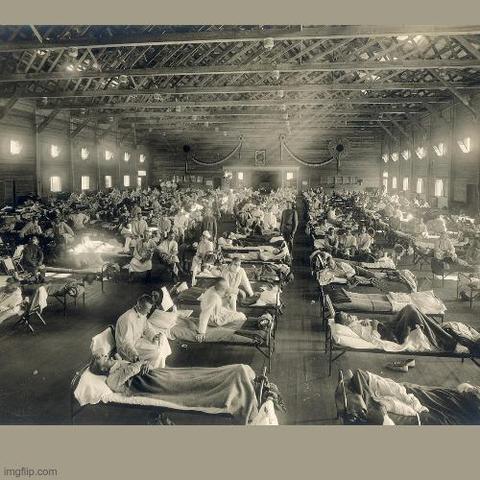
 Spirituality & Religious Studies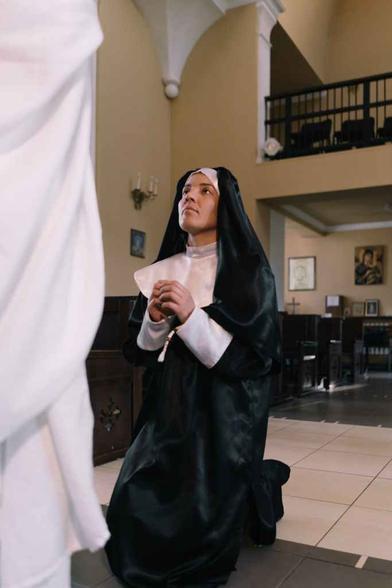
 IndieAuthors.Social News
 earthling
 World History Encyclopedia
 Andrew Shields
 Vintage Edmonton
 ISOGG
ISOGG
 Education & Knowledge
 Flipturns 🏊♀️ 📷 🦋