 Bryan
BryanThe Sustainable Impact and Innovation Pipeline (SIIP) - Conversation with HAXTheWeb
https://www.youtube.com/watch?v=TNF0uzYi9Kk

The Sustainable Impact and Innovation Pipeline (SIIP) - Conversation with HAXTheWeb
https://www.youtube.com/watch?v=TNF0uzYi9Kk
No fuel shortage in country, PSU oil firms managing supply smoothly: Former BPCL Marketing Director (Lead) #PSU #BPCLMarketingDirectorLead #socialnewsxyz

New Delhi, May 24 (SocialNews.XYZ) Amid concerns over fuel availability in some areas, Bharat Petroleum Corporation Limited Former Marketing Director Sukhmal Kumar Jain on Sunday said there is no shortage of petrol or diesel in... - Social News XYZ
No fuel shortage in country, PSU oil firms managing supply smoothly: BPCL Marketing Director #PSU #BPCLMarketingDirector #socialnewsxyz

New Delhi, May 24 (SocialNews.XYZ) Amid concerns over fuel availability in some areas, Bharat Petroleum Corporation Limited Marketing Director Sukhmal Kumar Jain on Sunday said there is no shortage of petrol or diesel in the... - Social News XYZ
Whatsminer P566Z P564Z power supply for M63 M63S series
For more details, please visit:https://www.zeusbtc.com/ASIC-Miner-Repair/Parts-Tools-Details.asp?ID=4026
#whatsminer #psu #powersupply #crypto #cryptomining #bitcoinmining #btcmining #asicminer #miner #zeusmining #bitcoinminer
Hey Fedi!
I'm debugging a faulty computer and the PSU is dead. I have limited supplies (pun intended!) to test with. So I was wondering:
Can a desktop PC run from two PSUs? Like, can I use additional PCIE / molex connectors from a second PSU, to be able to power everything?
(Is any control passed on the big ATX1 cable bundle, or if it's all just power?)
Edit: I'm thinking of combining two known-good, but weaker ones to replace the dead, stronger one.

#ThrowbackThursday #2007CE #holga #analogphotography #multipleexposure #hedges #portland #psu #pole #stopsign #surreal #ghostly #streetart #photomanipulation #nogenerativeai
Hedging on a Monolith Amidst Signs of Stopping
From 2007: "This is several exposures of hedges near PSU. I don't remember how many in a row I shot, but they are lined up equidistant & I tried to catch each from roughly the same distance. Only the last one had the pole directly in front of it. It becomes quite ghostly."

Finding the differences in a series of power supplies
https://www.lttlabs.com/articles/2026/05/05/testing-psu-series
#HackerNews #power #supplies #PSU #testing #electronics #technology #differences #analysis


 Gopi Adusumilli
 ZEUS MINING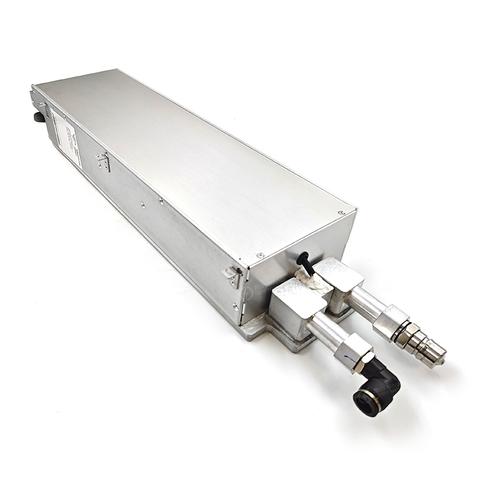
 szakib
 Johnny R
 Ricardo Wang
 Hacker News
 Shawn Brink