I love how delightfully diabolical evolution can be.

A new article in Annual Review of Entomology is about the plant pathogens that are vectored between plants by herbivorous insects. These plant pathogens invade plant tissues and make plants sick. To get between plants they hitch a ride inside plant-feeding insects. The healthier the insect the more plants it will feed on.

So, what do the microbes do? They manufacture chemicals that make their insect hosts stronger. Several ways that they do this have been discovered "from balancing a nutritionally deficient diet" to "upgrading its defensive biochemistry against natural enemies."

Wild!

"Plant Pathogens Moonlighting as Beneficial Insect Symbionts" by
Aileen Berasategui and Hassan Salem

https://www.annualreviews.org/content/journals/10.1146/annurev-ento-121423-013411

#entomology #SpeciesInteractions #mutualism #ecology #PlantPathogens #Herbivory #insects

Plant Pathogens Moonlighting as Beneficial Insect Symbionts

Herbivorous insects can shape the epidemiology of disease in plants by vectoring numerous phytopathogens. While the consequences of infection are often well-characterized in the host plant, the extent to which phytopathogens alter the physiology and development of their insect vectors remains poorly understood. In this review, we highlight how insect-borne phytopathogens can promote vector fitness, consistent with theoretical predictions that selection should favor a mutualistic or commensal phenotype. In doing so, we define the metabolic features predisposing plant pathogens to engage in beneficial partnerships with herbivorous insects and how these mutualisms promote the microbe's propagation to uninfected plants. For the vector, the benefits of co-opting microbial pathways and metabolites can be immense: from balancing a nutritionally deficient diet and unlocking a novel ecological niche to upgrading its defensive biochemistry against natural enemies. Given the independent origins of these tripartite interactions and a number of convergent features, we also discuss the evolutionary and genomic signatures underlying microbial adaptation to its dual lifestyle as both a plant pathogen and an insect mutualist. Finally, as host association can constrain the metabolic potential of microbes over evolutionary time, we outline the stability of these interactions and how they impact the virulence and transmission of plant pathogens.

Annual Reviews

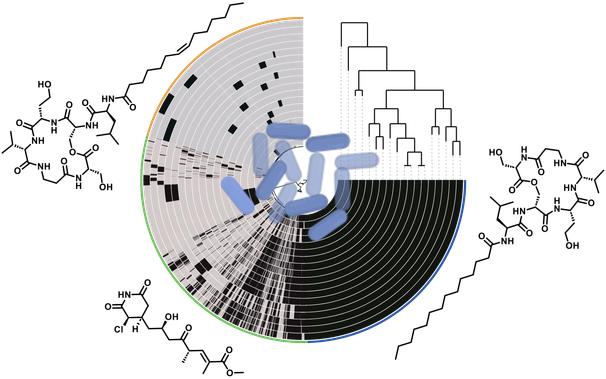
The plant pathogen #Pseudomonas syringae adapts to its environment using unique #NaturalProducts. We identified new compounds that help the bacterium to fight competitors and thrive in diverse ecological niches.

🗞️ PR: https://lmy.de/vcZyU
📝 Publication in Angewandte Chemie International Edition: https://doi.org/10.1002/anie.202503679

@dfg_public

#NewPaper #PlantPathogens #Syrilipamides #Secimides #MicrobialDefense #BacterialGenomics #GenomicAnalysis #GeneCluster #Metabolomics #LeibnizHKI

🌱 International Day of Plant Health🌱

Today, we highlight an often-overlooked topic: plant health – vital for food security, biodiversity, and sustainable agriculture.

In our current research at Hochschule Bonn-Rhein-Sieg and Julius Kühn-Institute, we’re tackling a key question:
How can we detect plant diseases and pests before visible symptoms appear?

🔬 The answer: With the nose of chemistry!
We analyze volatile organic compounds (VOCs) that plants emit when under stress or attacked by
🦠 bacteria,
🍄 fungi, and
🪲 insect pests.

Using advanced GC-MS technology (gas chromatography-mass spectrometry), we aim to identify these unique molecular “scent signatures” and use them as an early-warning system to detect harmful organisms before they cause damage.

🧪 Our goal: to “sniff out” plant diseases and pests.

#PlantHealth #InternationalPlantHealthDay #VOCs #GCMS #EarlyDetection #Pathogens #InvasiveSpecies #AnalyticalChemistry #ScienceForSustainability #PlantPathogens #PlantProtection #VOCAnalysis

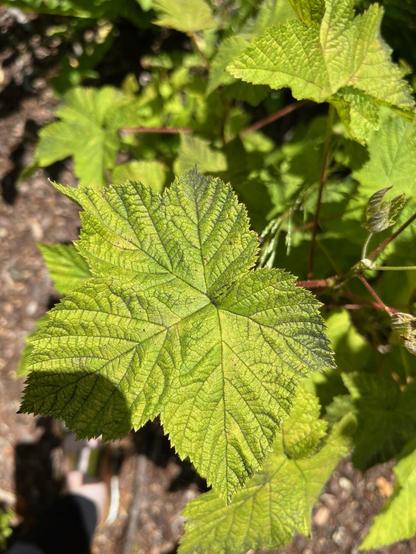
Hey folks! A friend of mine is seeing a black discoloration on thimbleberry leaves in their yard. It doesn't match any of the few things I know. Can anyone help? #plantpathogens #pnwnativeplants #nativeplants
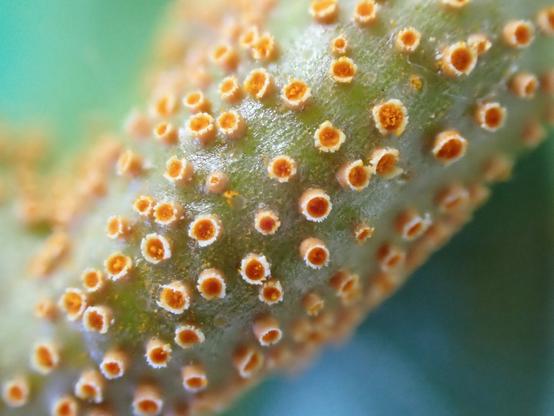
Not a mushroom but still a fungus: Ash Rust (Puccinia sparganioidis). This family of obligate plant pathogens is highly host-specific and often can infect only one or two different species of hosts.
#FungiFriday #PlantPathogens

Unravelling the microbial world in European soils https://ecoevocommunity.nature.com/posts/unravelling-the-microbial-world-in-european-soils #bacteria #fungi #mushrooms

Patterns in soil #MicrobialDiversity across Europe: Maëva Labouyrie et al. https://www.nature.com/articles/s41467-023-37937-4

"We observed an incredible diversity beneath our feet. We detected more than 25’000 #fungal and 79’000 #bacterial taxa. #Microbial richness & diversity are highest in more disturbed areas, such as #croplands and #grasslands, but potential #PlantPathogens are more abundant in these areas as well"

Unravelling the microbial world in European soils

Soil biodiversity assessments are necessary for its better protection and monitoring. Here, we present the first Europe-wide assessment and show that a higher microbial diversity can also mean more potential pathogens. We propose guidelines for environmental policy actions.

Springer Nature

Understanding how the “heart” of the plant works may lead to protecting plants from pathogens

Researchers have discovered the secrets behind how plants move sugar using a protein called the SUC transporter. This breakthrough solves a long-standing mystery of the plant ‘heart’ and sheds new light on how plants defend themselves from pests.

https://globalplantcouncil.org/understanding-how-the-heart-of-the-plant-works-may-lead-to-protecting-plants-from-pathogens/ via Aarhus University #plantscience #plantsci #science #plants #plantpathogens #plantdisease #molecularbiology

Understanding how the “heart” of the plant works may lead to protecting plants from pathogens - The Global Plant Council

Researchers have discovered the secrets behind how plants move sugar using a protein called the SUC transporter. This breakthrough solves a long-standing mystery of the plant 'heart' and sheds new light on how plants defend themselves from pests.

The Global Plant Council

Great use of #Alphafold multimeter to screen 11k pairs of interaction between small secreted peptides from #plantPathogens and defense related hydrolases with experimental verification

https://www.biorxiv.org/content/10.1101/2023.04.03.535425v1

Common Plant Pathogens and How to Treat Them Organically

Into every garden, some plant disease will fall. Recognizing them and treating them early with organic solutions will keep your garden thriving.

Gardening
Sensor #NLR #immune proteins activate #oligomerization of their NRC helpers in response to #plantpathogens
Kamoun and cowokers, The Sainsbury Lab
https://www.embopress.org/doi/full/10.15252/embj.2022111519