Is Indonesia’s Nickel Industry Honeymoon on the Rocks?


Indonesia’s Nickel Industry is Being Squeezed from Inside and Outside. Is the Honeymoon Over? Tempo.co

By M. Faiz Zaki for Tempo.co, May 18, 2026

Indonesia’s nickel industry is under pressure. The Iran-Israel war, backed by the United States, has created a global energy crisis that has driven energy prices sharply higher and impacted industrial production in Indonesia.

Arif Perdanakusumah, chairman of the Indonesian Nickel Industry Forum (FINI), said domestic pressures are increasingly squeezing the industry. “Including regulation and business uncertainty.” He spoke with Tempo.co on May 13.

Arif noted that the nickel ore production quota in this year’s work plan and budget (RKAB) was set at 270 million tons, down from the 2025 RKAB of 379 million tons.

Despite the cut in the quota, the benchmark price for nickel (HMA) has jumped from about US$14,599 per dry metric ton (dmt) in December 2025 to roughly US$17,802 per dmt.

Even so, this year’s quota is below industry demand of 340–350 million tons, based on production capacity, installed capacity, and the production capability of nickel processing and refining projects.

The large demand is driven by several new projects, particularly high-pressure acid leaching (HPAL) projects, which require 40 to 50 million tons of ore. HPAL is a technology that produces high-quality nickel specifically for supplying the requirements of electric vehicle batteries.

Arif explained that nickel companies were also impacted by a decree issued by the energy and mineral resources minister (Kepmen ESDM No. 144.K/MB.01/MEM.B/2026) that amended an earlier regulation (No. 268.K/MB.01/MEM.B/2025) that provided for Guidelines for Setting Benchmark Prices for the Sale of Metallic Mineral Commodities and Coal. The change affects the mineral benchmark price (HPM) used for limonite ore, the feedstock for HPAL plants. “Our current calculations show that if companies operate with the existing cost structure they will eventually incur losses and bleed,” said Arif.

The decree affects the nickel limonite pricing formula: a previous benchmark near US$17 per ton moved to US$43 per ton now while the market price sits at US$28 per ton. This price spike automatically increases the production cost of one ton of nickel mixed hydroxide precipitate (MHP) by US$4,000 to $5,000, putting companies at risk of losses.

FINI has submitted an alternative pricing formula and urged the government to reconsider the limonite benchmark, arguing the current level will kill the HPAL industry.

Roy Arman Arfandy, president director of PT Trimegah Bangun Persada Tbk (also known as Harita Nickel), said a planned rise in mining royalties would sharply cut company profits. He added that at a 10 percent margin and with planned export duties, the company would be unprofitable—an outcome compounded by soaring diesel costs which have roughly doubled from about Rp15,000 per liter to about Rp30,000 per liter. “The situation is actually difficult for the nickel industry,” Roy said.

Energy and mineral resources minister Bahlil Lahadalia and finance minister Purbaya Yudhi Sadewa recently agreed to delay implementing the higher mining royalties and planned export duties which had been scheduled to take effect June 1, 2026.

Roy also said company finances are threatened by new rules on foreign-exchange repatriation from resource exports (DHE), set to take effect the same day. The industry still faces a proposed windfall tax, and a 15 percent global minimum tax, despite earlier incentives such as tax allowances and holidays granted to pioneer industries.

The industry also faces mounting financial risks as many nickel producers remain heavily reliant on bank loans and could see rising levels of bad debt, Arif Perdanakusumah said.

The sector has also been hit by a skyrocketing increase in sulfur prices — from about US$200 to US$250 per ton in 2023 to US$1,137 per ton on May 13, 2026. Sulfur is processed into sulfuric acid which is used to leach low‑grade nickel. Arif said roughly 80 percent of global sulfur supply originates in the Middle East and that sulfur now accounts for around 56 percent of HPAL project costs, up from roughly 25 percent.

Arif urged the government to develop a nickel‑industry roadmap to bolster domestic supply and provide policy stability. He said industry players were caught off guard by the sudden changes to the RKAB quota and other measures. “Policy stability is what we actually want,” he said.

He predicted that the pressure on the nickel industry this year would also ripple beyond the mining and manufacturing. He said that one of the most affected areas would be food vendors and boarding houses, typically used by industry employees, as the number of workers is expected to decrease.

The complaints expressed by business leaders in the nickel industry are similar to those voiced by Chinese companies investing in Indonesia. Through the China Chamber of Commerce in Indonesia, they have already written to Indonesia’s President Prabowo, urging improvements to the investment climate in Indonesia.

The letter was sent primarily because many Chinese companies have invested and contributed to economic growth, job creation, improved industrial performance, and the implementation of social programs in Indonesia, but are now under pressure from overly strict regulations, heavy law enforcement, and allegations of corruption and extortion from the authorities.

“These problems have severely disrupted normal business operations, directly undermined long-term investment confidence, and causing widespread concern among Chinese investment companies regarding the current business environment and their future development in Indonesia,” the statement, quoting from the letter, said.

The Chinese Chamber of Commerce also questioned the nickel ore production quota which was cut by more than 70 percent. The impact they feel is disruptive to the development of downstream industries for new and renewable energy and stainless steel.

They also complained about the mandatory foreign exchange retention (DHE) requirement, which creates high levels of uncertainty for resource exporters who are required to deposit 50 percent of their foreign exchange earnings in state-owned banks for at least one year. They see this regulation as detrimental to company liquidity and long-term operations.

Responding to the complaints of Chinese business operators, Deputy Minister of Investment and Downstreaming Todotua Pasaribu said the letter expressing concerns to the Indonesian government was reasonable, given the current situation. He also confirmed there would be a meeting with Chinese investors about this issue. “We consider this a positive step that provides input to the government,” he said.

For the Ministry of Investment and Downstreaming, Todotua said, creating a conducive investment climate is a key priority for the government. Investors directly also have to process a variety of commodities that Indonesia possesses. The benefits include greater employment and stronger economic growth.

M. Faiz Zaki has been a journalist at Tempo since 2022. He graduated from the Anthropology Program at Airlangga University, Surabaya. He usually covers legal and crime issues.

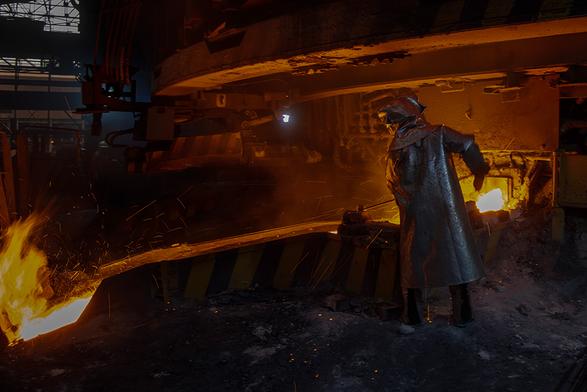
This post is based on https://www.tempo.co/ekonomi/industri-nikel-tertekan-geopolitik-kebijakan-pemerintah-2136386. Featured image credit: Workers using fire-resistant clothing remove nickel ore from a furnace during the furnace process at PT Vale Indonesia Tbk’s smelter in Sorowako, East Luwu, South Sulawesi, October 21, 2025. ANTARA/Nova Wahyudi

Rate this:

#AgreementOnReciprocalTrade #AmerikaSerikat #Business #China #CleanEnergy #EnergyTransition #EV #Governance #Greenwashing #Indonesia #Iran #Law #Maluku #Mining #Nickel #nikel #Pertambangan #Politics #RegionalIndonesia #Sulawesi #Tariff #UnitedStates #War

Op-Ed: Indonesia–China partnership more fragile than it appears, East Asia Forum

Indonesia–China partnership more fragile than it appears

By Klaus Heinrich Raditio, Driyarkara School of Philosophy, and Ardhitya Eduard Yeremia, Universitas Indonesia, East Asia Forum, East Asian Bureau of Economic Research (EABER), April 28, 2026

During the presidency of Joko Widodo, China became more central to Indonesia than at any point in the past. Widodo left office with China as Indonesia’s second-largest source of foreign investment. China also emerged as the largest export destination for Indonesia’s nickel-processing hubs that supported Indonesia’s ambition to build a downstream mineral industry.

Through these developments, Widodo transformed the Indonesia–China comprehensive strategic partnership from a largely diplomatic symbol into one underpinned by significant economic cooperation.

This impression appeared to deepen during the first year of Prabowo Subianto’s presidency. Jakarta seemed open to Beijing’s proposal for joint development in the South China Sea through a controversial joint statement. A 2+2 dialogue mechanism was established between their foreign and defence ministries in April 2025. Two months later, they inaugurated an integrated electric-vehicle battery manufacturing centre in Indonesia. Against this backdrop, some observers began to argue that Indonesia was ‘sleepwalking into strategic alignment with China’.

Yet the trajectory appeared to shift in the second year Prabowo’s presidency. In July 2025, the framework for a US–Indonesian reciprocal trade agreement was announced, with the Agreement on Reciprocal Trade signed in February 2026. Under the arrangement, US tariffs on Indonesian goods would decrease from 32 per cent to 19 per cent. Though the reduction was welcomed, the agreement was widely perceived in Indonesia as unfair. The decision raised questions about Indonesia’s bargaining power in negotiations with Washington while also casting uncertainty over the future of Indonesia–China strategic relations.

Three provisions of the agreement are particularly notable.

Article 3.3 on digital trade stipulates Indonesia must communicate with the United States before entering into a new digital trade agreement with another country that could jeopardise essential US interests. It represents a clear attempt by Washington to constrain Indonesia’s cooperation with China in the digital economy. China’s Digital Silk Road already has a strong presence in Southeast Asia, and Indonesia is among its key destinations in the region with Chinese firms accounting for 44 per cent of Indonesia’s e-commerce market.

Article 5.1 requires Indonesia adopt equivalently restrictive measures if the United States imposes trade restrictions on imports from a ‘third country’ for economic or national security reasons. This clause could constrain Indonesia’s economic engagement with China — Washington’s principal strategic competitor.

Article 6.1 deals with critical minerals. It requires Indonesia to restrict foreign-owned processing facilities’ excess production by ensuring conformity with Indonesia’s mining quota. And it bars foreign-owned industrial parks and processing facilities from receiving preferential legal entitlements.

While the language of ‘foreign-owned’ is nominally neutral, it obscures a specific reality — a substantial majority of Indonesia’s nickel processing facilities are backed by Chinese capital. The industrial parks in Morowali, Weda Bay and elsewhere were built on Chinese investment — the very foundation of the economic partnership that Widodo cultivated. Article 6.1 effectively subjects that foundation to new restrictions negotiated not with Beijing but with Washington.

Collectively, these provisions of the agreement restrict a wide spectrum of Indonesia’s engagement with China. Despite the comprehensive strategic partnership supposedly being at its strongest, Jakarta obliged to the provisions. Indeed, by agreeing to controversial provisions that could potentially target a ‘third country’, Indonesia appears willing to disregard China’s strategic interests.

This highlights a key difference between Widodo and Prabowo in managing relations with major powers. Widodo maintained close engagement with China but not necessarily at the expense of US–Indonesian relations. By contrast, Prabowo appears to accommodate US interests in a manner that risks undermining Indonesia’s strong engagement with China, albeit incidentally.

Despite the positive trajectory of the post-Suharto era and Widodo’s further deepening of economic ties, Indonesia–China relations still rest on a fragile foundation.

On the Chinese side, Beijing frequently emphasises multilateralism and engagement with the Global South, including through its vision of a ‘community of shared future’. Yet if China seeks to maintain Indonesia as a key partner amid growing geopolitical competition, it must ensure that the relationship rests on deeper and more solid foundations. A purely pragmatic partnership driven by short-term economic interests may prove insufficient… Read the whole piece at https://eastasiaforum.org/2026/04/28/indonesia-china-partnership-more-fragile-than-it-appears/. Ardhitya Eduard Yeremiais Assistant Professor at the Department of International Relations, Universitas Indonesia. Klaus Heinrich Raditio is Lecturer in Chinese Politics at the Driyarkara School of Philosophy, Jakarta. https://doi.org/10.59425/eabc.1777370400

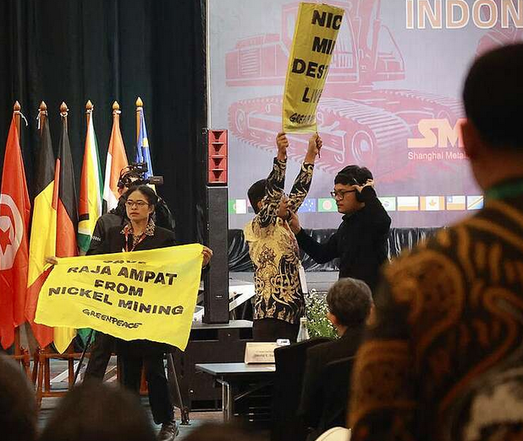
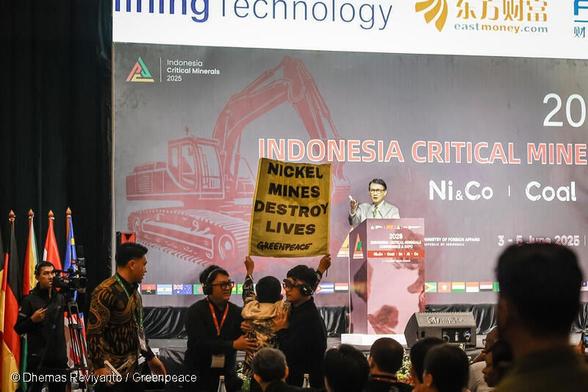
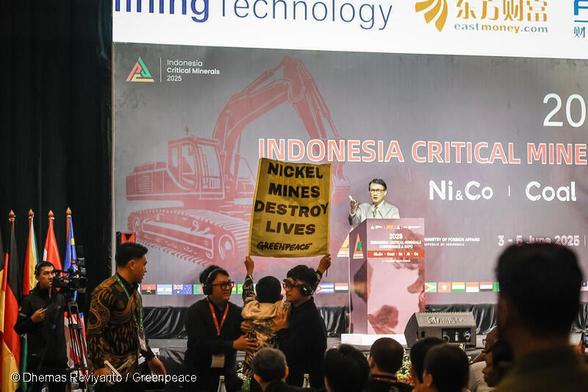
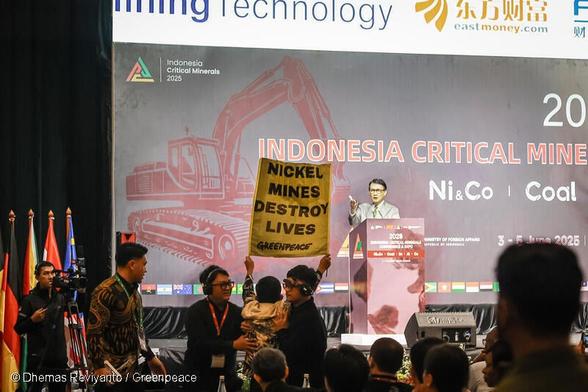
Featured image credit: Greenpeace Indonesia activists unfurl banner “Nickel Mines Destroy Lives” as Deputy Foreign Minister Arief Havas Oegroseno delivers speech at the Indonesia Critical Minerals Conference 2025, Jakarta. https://www.greenpeace.org/indonesia/siaran-pers-2/63070/aktivis-greenpeace-aksi-di-konferensi-nikel-internasional/ and https://www.greenpeace.org/international/story/75271/greenpeace-pictures-of-the-week-23/ ©Dhemas Reviyanto/Greenpeace.

In related news:

Rate this:

#AgreementOnReciprocalTrade #AmerikaSerikat #China #CleanEnergy #Economics #Economy #Energy #EnergyTransition #ForeignPolicy #Indonesia #JokoWidodo #Mining #Nickel #nikel #OpEd #Pertambangan #PrabowoGibran #PrabowoSubianto #RegionalIndonesia #SouthChinaSea #Sulawesi #UnitedStates

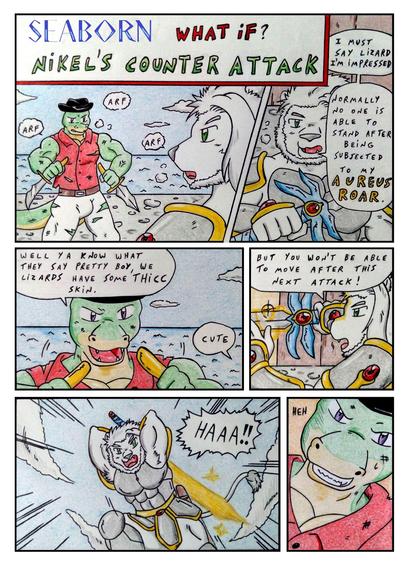
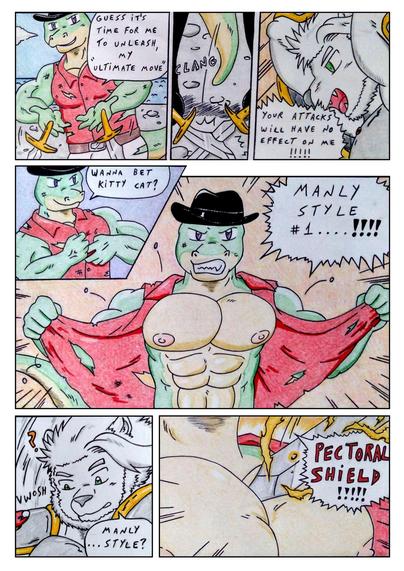
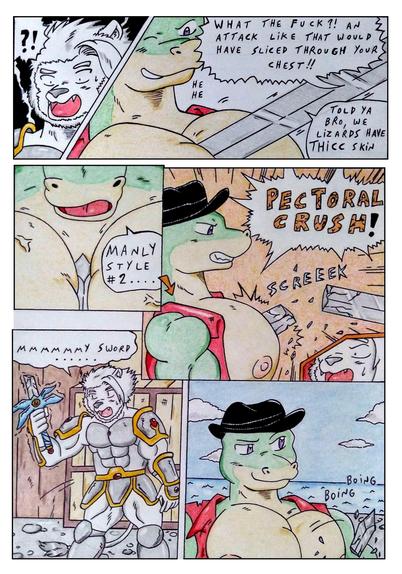
Comic - Seaborn: What if?
Nikel's Counter Attack
Pages 1,2,3
Commission for prettyhumanguy ♥️
Thank you again!!!

This spin-off comic tells a different turn of events during the fight of Nikel vs Albino! 🦎💥🦁
Please enjoy =)

#furry #furrybara #bara #comic #manly #nipples #pecs #bigpecs #lizard #nikel #lion #albino #armor #medieval #porttown #port #fight #sword #daggers #traditionalArt #nipples #abs #openshirt #gay #gayart #gaycomic #gaycomics #furrycomics #medieval #medievalfantasy

Nikel doing the vlatt23 pose trend.
This trend is interesting and hot, how I could not give it a try with one of my characters?
And it's perfect for Nikel, he's so sexy licking his own bicep🔥
Now in colors!
Colored with pastels + colored pencils

#trend #seductive #sexy #lickingbicep #licking #suggestive #traditionalArt #tongue #pastels #coloredpencils #lizard #nikel #reptile #gay #gayart #furry #bara #muscles #bicep #nipples #pecs

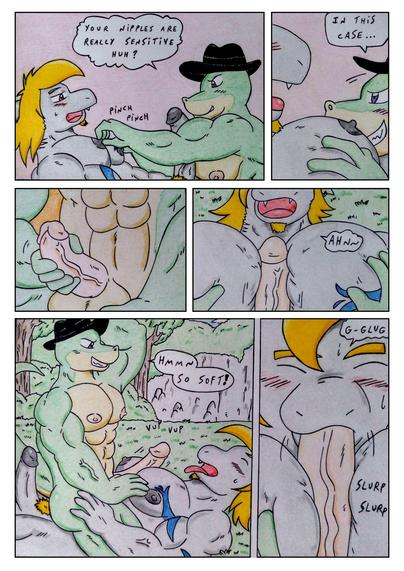
Comic - Alternate Payment
Pages 5,6,7,8
Commission for Sharky (telegram)

His hunk shark oc Shane and my hot oc Nikel found an alternative way to resolve a situation in the middle of the forest!

#furry #bara #orgasm #cum #cumming #TraditionalArt #shark #lizard #comic #lizard #sharky #shark #nikel #gaysex #pecs #bigpecs #nipples #internal #nippleplay #nipplefetish

Comic - Alternate Payment
Pages 1,2,3,4
Commission for Sharky (telegram)

His hunk shark oc Shane and my hot oc Nikel found an alternative way to resolve a situation in the middle of the forest!

#furry #FurryArt #furrybara #pecs #nipples #nippleplay #nipplefetish #gay #comic #TraditionalArt #shark #lizard #Nikel #bara #muscular #biceps #muscles #gaysex

Video Viral Safety China vs Control Room Morowali 2025: Fakta, Kontroversi, dan Dampaknya

#Terviral - #Video #viral #Safety #China vs #Control #Room #Morowali memicu perbincangan publik di #Indonesia. Simak #fakta lengkap, #kontroversi, serta dampaknya bagi #industri #nikel nasional. Industri nikel di Morowali, Sulawesi Tengah, kembali menjadi sorotan publik setelah muncul sebuah video viral yang memperlihatkan ketegangan antara pekerja asal China (Safety Officer)…

https://terviral.id/video-viral-safety-china-vs-control-room-morowali/

Video Viral Safety China vs Control Room Morowali 2025: Fakta, Kontroversi, dan Dampaknya - Terviral

#Terviral - #Video #viral #Safety #China vs #Control #Room #Morowali memicu perbincangan publik di #Indonesia. Simak #fakta lengkap, #kontroversi, serta dampaknya bagi #industri #nikel nasional. Industri nikel di Morowali, Sulawesi Tengah, kembali menjadi sorotan publik setelah muncul sebuah video viral yang memperlihatkan ketegangan antara pekerja asal China (Safety Officer) dengan staf lokal di Control Room #Terviral - #Video #viral #Safety #China vs #Control #Room #Morowali memicu perbincangan publik di #Indonesia. Simak #fakta lengkap, #kontroversi, serta dampaknya bagi #industri #nikel nasional. Industri nikel di Morowali, Sulawesi Tengah, kembali menjadi sorotan publik setelah muncul sebuah video viral yang memperlihatkan ketegangan antara pekerja asal China (Safety Officer) dengan staf lokal di Control Room

Terviral - Info Viral, Terlaris, Terbaik dan Terpopuler

I just want to show you this little teaser for a comic I'll be posting soon!
Featuring Nikel and another surprise character that already appeared here!
Expect alot of TIDDIES! >:3

#lizard #nikel #bara #BaraFurry #male #manly #pecs #nipples #tiddies #nippleplay #TraditionalArt #wip #WIPWednesday #comic #gay #art #MastoArt #ArtistsOnMastodon #nsfw

Energy Transition: Indonesia revokes nickel mining permits in Raja Ampat after protest, Reuters

Indonesia revokes nickel ore mining permits in Raja Ampat after protest

Reporting by Stanley Widianto; Editing by David Stanway for Reuters, June 10, 2025

JAKARTA, June 10 (Reuters) – Top nickel ore producer Indonesia revoked permits for four mining firms in Raja Ampat in its easternmost region of Papua, the country’s energy minister said on Tuesday, after concerns about their environmental impact sparked a public outcry.

Protests against mining in Raja Ampat, a picturesque UNESCO-designated Global Geopark known for its marine biodiversity, dominated Indonesian social media last week, with users sharing a graphic of the area’s blue waters with the hashtag #SaveRajaAmpat.

Bahlil Lahadalia, Indonesia’s energy minister, said President Prabowo Subianto decided to revoke the permits of the four nickel companies in the area starting on Tuesday in order to protect the surrounding environment from further damage.

“We need to protect these areas by paying attention to marine life and conservation,” he said.

The nickel companies are PT Nurham, PT Kawei Sejahtera Mining, PT Anugerah Surya Pratama, PT Mulia Raymond Perkasa, which operate on islands in and around Raja Ampat.

The government did not grant quotas to the four companies as they failed to meet administrative requirements, Bahlil said, meaning they are currently not in production. Read the whole report here https://www.reuters.com/sustainability/indonesia-revokes-nickel-ore-mining-permits-raja-ampat-after-protest-2025-06-10/

In earlier news…

What’s the True Cost of Your Nickel? Greenpeace Pictures of the Week

Greenpeace International, 6 June 2025

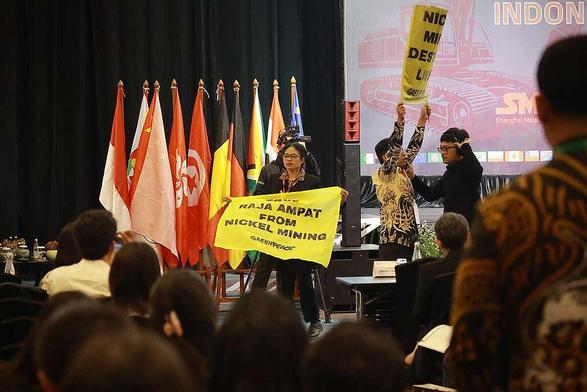
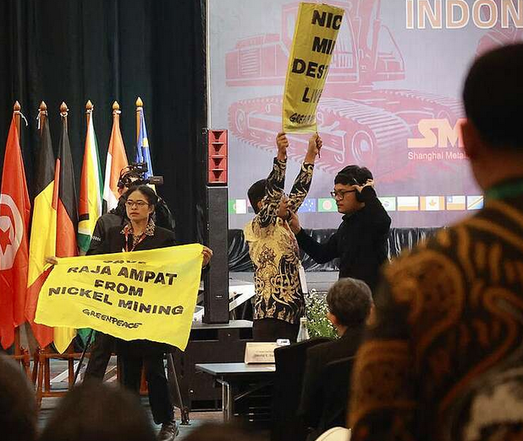
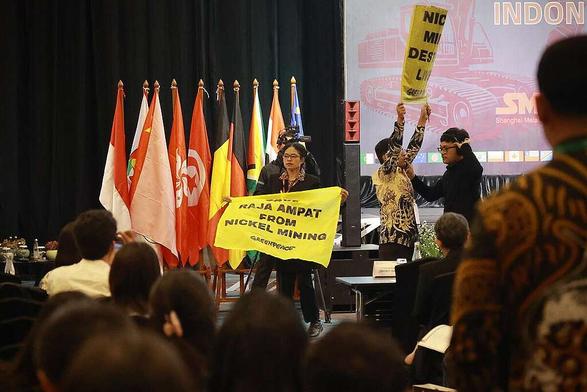
Greenpeace Indonesia activists, alongside four young West Papuans from the Raja Ampat archipelago in Eastern Indonesia, staged a peaceful protest today at the Indonesia Critical Minerals Conference to expose the devastating environmental and social consequences of nickel mining and smelting.

The activists deployed a banner reading, “What’s the True Cost of Your Nickel?” and unfurled others with messages: “Nickel Mines Destroy Lives” and “Save Raja Ampat from Nickel Mining.

The protest extended beyond the conference hall, with Greenpeace Indonesia activists and Papuan youth displaying banners in the exhibition area outside.

Messages such as “Nikel Bukan Masa Depan” (Nickel is Not the Future) and “Save Raja Ampat the Last Paradise” were prominently displayed amidst industry booths and attendees.

This post is based on https://www.greenpeace.org/international/story/75271/greenpeace-pictures-of-the-week-23/.

© Dhemas Reviyanto / Greenpeace – https://www.greenpeace.org/international/story/75271/greenpeace-pictures-of-the-week-23/Greenpeace Indonesia activists unfurl banner “Nickel Mines Destroy Lives” as Deputy Foreign Minister Arief Havas Oegroseno gives speech at the Indonesia Indonesia Critical Minerals Conference 2025 Jakarta. https://www.greenpeace.org/indonesia/siaran-pers-2/63070/aktivis-greenpeace-aksi-di-konferensi-nikel-internasional/

In related news:

In earlier news…

The Suffering Behind the War of Words Between Former Widodo Trade Minister Tom Lembong and Ministers Luhut & Bahlil

Press Release, Mining Advocacy Network (JATAM), Jan 26, 2024

Indonesia’s Investment Minister Bahlil Lahadalia and Coordinating Minister for Maritime Affairs and Investment Gen. (Retd.) Luhut Binsar Pandjaitan have issued strong responses to remarks made by Thomas Lembong, co-head of the national presidential election campaign of candidates Anies Baswedan and Muhaimin Iskandar, about Indonesia’s nickel processing policy and electric vehicle industry.

In a recent post by the podcast Total Politik, Lembong, a former Trade Minister and head of Indonesia’s Investment Coordinating Board (BKPM), criticized the extensive smelting initiatives, warning that domestic oversupply risks could depress nickel prices.(1) He also highlighted Tesla’s shift in China to Lithium Ferro Phosphate (LFP) batteries, which eliminates the need for nickel altogether.(2)

https://youtu.be/f9fT1LyJumQ?si=KG9mlF5z64rw0ZWn

The ensuing war of words reflects a focus among Indonesia’s political elite on industrial priorities rather than the welfare of impacted communities. Neither Lembong, nor Ministers Luhut and Bahlil, have publicly acknowledged the detrimental effects of nickel downstreaming on local populations, which has left many impoverished while boosting industry profits.(3) Nickel extraction expansion has displaced communities, polluted water sources, damaged marine ecosystems, degraded forests, and triggered health crises, violence, criminalization, and workplace accidents—some resulting in fatalities.

Also Read: Elections: China Downstream, The Tentacles of Indonesia’s Nickel Oligarchy By Project Multatuli

This dire situation is evident across Indonesia’s major nickel industrial estates, from PT Indonesia Morowali Industrial Park (IMIP) in Morowali in southern Sulawesi, PT Gunbuster Nickel Industry in North Morowali, Virtue Dragon Nickel Industry in Konawe, Indonesia Weda Bay Industrial Park (IWIP) in Central Halmahera in Maluku province, to the industrial complexes on Obi Island under the Harita Group’s control.

The political and business dynamics of these clashes, set against the backdrop of Indonesia’s 2024 presidential election, reveal more than just the flaws in President Joko Widodo’s accelerated nickel downstreaming agenda. Co-ordinating Minister Luhut and Minister Bahlil’s opposition to Lembong’s criticisms could be seen as defending vested interests within Indonesia’s political-business complex.(4)

Minister Bahlil, for instance, has ties to PT Meta Mineral Pradana, a nickel mining company with two concessions in North Konawe, Southeast Sulawesi, owned by his PT Papua Bersama Unggul (90% ownership) and PT Rifa Capital (10%).

Similarly, Co-ordinating Minister Luhut’s stake connects him to PT Energi Kreasi Bersama (Electrum), a joint venture between PT GoTo Gojek Tokopedia Tbk and PT TBS Energi Utama Tbk (TOBA), a company owned by Luhut. Electrum focuses on developing an integrated electric vehicle ecosystem, from manufacturing electric motorcycles and battery technology to battery swapping stations and charging infrastructure. Through GoTo, Luhut’s interests align with Garibaldi “Boy” Thohir, a recent vocal supporter of the presidential election candidates Prabowo Subianto and President Joko Widodo’s son Gibran.(5) Boy Thohir holds shares in and sits on the Board of Commissioners of GoTo.(6)

Ultimately, the high-profile clash involving Tom Lembong, Luhut, and Bahlil appears to prioritize personal and industrial interests over the environmental and social toll of nickel extraction. The nickel debate, rather than addressing the plight of affected communities or mitigating environmental destruction, seems geared toward securing political gains in Indonesia’s 2024 presidential election.

Also Read: Transition: Mass Movements NU and Muhammadiyah To Get Cabinet Posts in New Government After Accepting Mining Permits, Tempo

Regardless of whether Tesla relies on Indonesian nickel, mining operations in Sulawesi, Maluku, and Papua continue unabated, with scant regard for the suffering of residents and ongoing environmental degradation.

This article is based on https://jatam.org/id/lengkap/derita-warga-di-balik-saling-serang-tom-lembong-vs-luhut-bahlil

In related news:

Rate this:

#Business #CleanEnergy #Economics #Energy #EnergyTransition #Environment #EV #IllegalMining #LingkunganHidup #Mining #Muhammadiyah #Nickel #nikel #NU #Papua #Pertambangan #pilpres2024 #renewableEnergy #SaveRajaAmpat #sustainability #tomlembong #totalpolitik

Energy Transition: What’s the True Cost of Your Nickel? Greenpeace International

What’s the True Cost of Your Nickel? Greenpeace Pictures of the Week

Greenpeace International, 6 June 2025

Greenpeace Indonesia activists, alongside four young West Papuans from the Raja Ampat archipelago in Eastern Indonesia, staged a peaceful protest today at the Indonesia Critical Minerals Conference to expose the devastating environmental and social consequences of nickel mining and smelting.

The activists deployed a banner reading, “What’s the True Cost of Your Nickel?” and unfurled others with messages: “Nickel Mines Destroy Lives” and “Save Raja Ampat from Nickel Mining.

The protest extended beyond the conference hall, with Greenpeace Indonesia activists and Papuan youth displaying banners in the exhibition area outside.

Messages such as “Nikel Bukan Masa Depan” (Nickel is Not the Future) and “Save Raja Ampat the Last Paradise” were prominently displayed amidst industry booths and attendees.

This post is based on https://www.greenpeace.org/international/story/75271/greenpeace-pictures-of-the-week-23/.

© Dhemas Reviyanto / Greenpeace – https://www.greenpeace.org/international/story/75271/greenpeace-pictures-of-the-week-23/Greenpeace Indonesia activists unfurl banner “Nickel Mines Destroy Lives” as Deputy Foreign Minister Arief Havas Oegroseno delivers speech at the Indonesia Critical Minerals Conference 2025, Jakarta. https://www.greenpeace.org/indonesia/siaran-pers-2/63070/aktivis-greenpeace-aksi-di-konferensi-nikel-internasional/

In related news:

In earlier news…

The Suffering Behind the War of Words Between Former Widodo Trade Minister Tom Lembong and Ministers Luhut & Bahlil

Press Release, Mining Advocacy Network (JATAM), Jan 26, 2024

Indonesia’s Investment Minister Bahlil Lahadalia and Coordinating Minister for Maritime Affairs and Investment Gen. (Retd.) Luhut Binsar Pandjaitan have issued strong responses to remarks made by Thomas Lembong, co-head of the national presidential election campaign of candidates Anies Baswedan and Muhaimin Iskandar, about Indonesia’s nickel processing policy and electric vehicle industry.

In a recent post by the podcast Total Politik, Lembong, a former Trade Minister and head of Indonesia’s Investment Coordinating Board (BKPM), criticized the extensive smelting initiatives, warning that domestic oversupply risks could depress nickel prices.(1) He also highlighted Tesla’s shift in China to Lithium Ferro Phosphate (LFP) batteries, which eliminates the need for nickel altogether.(2)

https://youtu.be/f9fT1LyJumQ?si=KG9mlF5z64rw0ZWn

The ensuing war of words reflects a focus among Indonesia’s political elite on industrial priorities rather than the welfare of impacted communities. Neither Lembong, nor Ministers Luhut and Bahlil, have publicly acknowledged the detrimental effects of nickel downstreaming on local populations, which has left many impoverished while boosting industry profits.(3) Nickel extraction expansion has displaced communities, polluted water sources, damaged marine ecosystems, degraded forests, and triggered health crises, violence, criminalization, and workplace accidents—some resulting in fatalities.

Also Read: Elections: China Downstream, The Tentacles of Indonesia’s Nickel Oligarchy By Project Multatuli

This dire situation is evident across Indonesia’s major nickel industrial estates, from PT Indonesia Morowali Industrial Park (IMIP) in Morowali in southern Sulawesi, PT Gunbuster Nickel Industry in North Morowali, Virtue Dragon Nickel Industry in Konawe, Indonesia Weda Bay Industrial Park (IWIP) in Central Halmahera in Maluku province, to the industrial complexes on Obi Island under the Harita Group’s control.

The political and business dynamics of these clashes, set against the backdrop of Indonesia’s 2024 presidential election, reveal more than just the flaws in President Joko Widodo’s accelerated nickel downstreaming agenda. Co-ordinating Minister Luhut and Minister Bahlil’s opposition to Lembong’s criticisms could be seen as defending vested interests within Indonesia’s political-business complex.(4)

Minister Bahlil, for instance, has ties to PT Meta Mineral Pradana, a nickel mining company with two concessions in North Konawe, Southeast Sulawesi, owned by his PT Papua Bersama Unggul (90% ownership) and PT Rifa Capital (10%).

Similarly, Co-ordinating Minister Luhut’s stake connects him to PT Energi Kreasi Bersama (Electrum), a joint venture between PT GoTo Gojek Tokopedia Tbk and PT TBS Energi Utama Tbk (TOBA), a company owned by Luhut. Electrum focuses on developing an integrated electric vehicle ecosystem, from manufacturing electric motorcycles and battery technology to battery swapping stations and charging infrastructure. Through GoTo, Luhut’s interests align with Garibaldi “Boy” Thohir, a recent vocal supporter of the presidential election candidates Prabowo Subianto and President Joko Widodo’s son Gibran.(5) Boy Thohir holds shares in and sits on the Board of Commissioners of GoTo.(6)

Ultimately, the high-profile clash involving Tom Lembong, Luhut, and Bahlil appears to prioritize personal and industrial interests over the environmental and social toll of nickel extraction. The nickel debate, rather than addressing the plight of affected communities or mitigating environmental destruction, seems geared toward securing political gains in Indonesia’s 2024 presidential election.

Also Read: Transition: Mass Movements NU and Muhammadiyah To Get Cabinet Posts in New Government After Accepting Mining Permits, Tempo

Regardless of whether Tesla relies on Indonesian nickel, mining operations in Sulawesi, Maluku, and Papua continue unabated, with scant regard for the suffering of residents and ongoing environmental degradation.

This article is based on https://jatam.org/id/lengkap/derita-warga-di-balik-saling-serang-tom-lembong-vs-luhut-bahlil

In related news:

Rate this:

#China #CleanEnergy #climateChange #Democracy #Energy #EnergyTransition #Environment #EV #HumanRights #Indonesia #LingkunganHidup #Mining #News #Nickel #nikel #Papua #pilpres2024 #Politics #PrabowoGibran #renewableEnergy #sustainability #tomlembong #totalpolitik