 Stories From Indonesia
Is Indonesia’s Nickel Industry Honeymoon on the Rocks?
Indonesia’s Nickel Industry is Being Squeezed from Inside and Outside. Is the Honeymoon Over? Tempo.co
By M. Faiz Zaki for Tempo.co, May 18, 2026
Indonesia’s nickel industry is under pressure. The Iran-Israel war, backed by the United States, has created a global energy crisis that has driven energy prices sharply higher and impacted industrial production in Indonesia.
Arif Perdanakusumah, chairman of the Indonesian Nickel Industry Forum (FINI), said domestic pressures are increasingly squeezing the industry. “Including regulation and business uncertainty.” He spoke with Tempo.co on May 13.
Arif noted that the nickel ore production quota in this year’s work plan and budget (RKAB) was set at 270 million tons, down from the 2025 RKAB of 379 million tons.
Despite the cut in the quota, the benchmark price for nickel (HMA) has jumped from about US$14,599 per dry metric ton (dmt) in December 2025 to roughly US$17,802 per dmt.
Even so, this year’s quota is below industry demand of 340–350 million tons, based on production capacity, installed capacity, and the production capability of nickel processing and refining projects.
The large demand is driven by several new projects, particularly high-pressure acid leaching (HPAL) projects, which require 40 to 50 million tons of ore. HPAL is a technology that produces high-quality nickel specifically for supplying the requirements of electric vehicle batteries.
Arif explained that nickel companies were also impacted by a decree issued by the energy and mineral resources minister (Kepmen ESDM No. 144.K/MB.01/MEM.B/2026) that amended an earlier regulation (No. 268.K/MB.01/MEM.B/2025) that provided for Guidelines for Setting Benchmark Prices for the Sale of Metallic Mineral Commodities and Coal. The change affects the mineral benchmark price (HPM) used for limonite ore, the feedstock for HPAL plants. “Our current calculations show that if companies operate with the existing cost structure they will eventually incur losses and bleed,” said Arif.
The decree affects the nickel limonite pricing formula: a previous benchmark near US$17 per ton moved to US$43 per ton now while the market price sits at US$28 per ton. This price spike automatically increases the production cost of one ton of nickel mixed hydroxide precipitate (MHP) by US$4,000 to $5,000, putting companies at risk of losses.
FINI has submitted an alternative pricing formula and urged the government to reconsider the limonite benchmark, arguing the current level will kill the HPAL industry.
Roy Arman Arfandy, president director of PT Trimegah Bangun Persada Tbk (also known as Harita Nickel), said a planned rise in mining royalties would sharply cut company profits. He added that at a 10 percent margin and with planned export duties, the company would be unprofitable—an outcome compounded by soaring diesel costs which have roughly doubled from about Rp15,000 per liter to about Rp30,000 per liter. “The situation is actually difficult for the nickel industry,” Roy said.
Energy and mineral resources minister Bahlil Lahadalia and finance minister Purbaya Yudhi Sadewa recently agreed to delay implementing the higher mining royalties and planned export duties which had been scheduled to take effect June 1, 2026.
Roy also said company finances are threatened by new rules on foreign-exchange repatriation from resource exports (DHE), set to take effect the same day. The industry still faces a proposed windfall tax, and a 15 percent global minimum tax, despite earlier incentives such as tax allowances and holidays granted to pioneer industries.
The industry also faces mounting financial risks as many nickel producers remain heavily reliant on bank loans and could see rising levels of bad debt, Arif Perdanakusumah said.
The sector has also been hit by a skyrocketing increase in sulfur prices — from about US$200 to US$250 per ton in 2023 to US$1,137 per ton on May 13, 2026. Sulfur is processed into sulfuric acid which is used to leach low‑grade nickel. Arif said roughly 80 percent of global sulfur supply originates in the Middle East and that sulfur now accounts for around 56 percent of HPAL project costs, up from roughly 25 percent.
Arif urged the government to develop a nickel‑industry roadmap to bolster domestic supply and provide policy stability. He said industry players were caught off guard by the sudden changes to the RKAB quota and other measures. “Policy stability is what we actually want,” he said.
He predicted that the pressure on the nickel industry this year would also ripple beyond the mining and manufacturing. He said that one of the most affected areas would be food vendors and boarding houses, typically used by industry employees, as the number of workers is expected to decrease.
The complaints expressed by business leaders in the nickel industry are similar to those voiced by Chinese companies investing in Indonesia. Through the China Chamber of Commerce in Indonesia, they have already written to Indonesia’s President Prabowo, urging improvements to the investment climate in Indonesia.
The letter was sent primarily because many Chinese companies have invested and contributed to economic growth, job creation, improved industrial performance, and the implementation of social programs in Indonesia, but are now under pressure from overly strict regulations, heavy law enforcement, and allegations of corruption and extortion from the authorities.
“These problems have severely disrupted normal business operations, directly undermined long-term investment confidence, and causing widespread concern among Chinese investment companies regarding the current business environment and their future development in Indonesia,” the statement, quoting from the letter, said.
The Chinese Chamber of Commerce also questioned the nickel ore production quota which was cut by more than 70 percent. The impact they feel is disruptive to the development of downstream industries for new and renewable energy and stainless steel.
They also complained about the mandatory foreign exchange retention (DHE) requirement, which creates high levels of uncertainty for resource exporters who are required to deposit 50 percent of their foreign exchange earnings in state-owned banks for at least one year. They see this regulation as detrimental to company liquidity and long-term operations.
Responding to the complaints of Chinese business operators, Deputy Minister of Investment and Downstreaming Todotua Pasaribu said the letter expressing concerns to the Indonesian government was reasonable, given the current situation. He also confirmed there would be a meeting with Chinese investors about this issue. “We consider this a positive step that provides input to the government,” he said.
For the Ministry of Investment and Downstreaming, Todotua said, creating a conducive investment climate is a key priority for the government. Investors directly also have to process a variety of commodities that Indonesia possesses. The benefits include greater employment and stronger economic growth.
M. Faiz Zaki has been a journalist at Tempo since 2022. He graduated from the Anthropology Program at Airlangga University, Surabaya. He usually covers legal and crime issues.
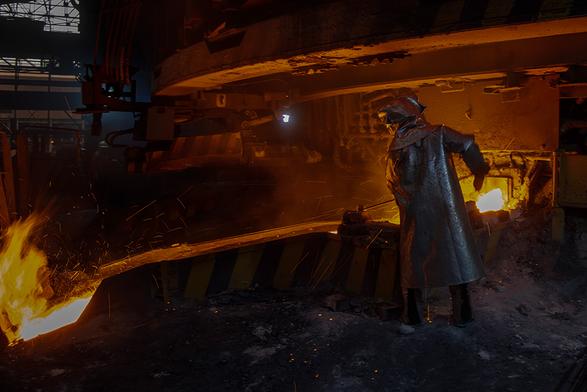
This post is based on https://www.tempo.co/ekonomi/industri-nikel-tertekan-geopolitik-kebijakan-pemerintah-2136386. Featured image credit: Workers using fire-resistant clothing remove nickel ore from a furnace during the furnace process at PT Vale Indonesia Tbk’s smelter in Sorowako, East Luwu, South Sulawesi, October 21, 2025. ANTARA/Nova Wahyudi
Rate this:
#AgreementOnReciprocalTrade #AmerikaSerikat #Business #China #CleanEnergy #EnergyTransition #EV #Governance #Greenwashing #Indonesia #Iran #Law #Maluku #Mining #Nickel #nikel #Pertambangan #Politics #RegionalIndonesia #Sulawesi #Tariff #UnitedStates #War