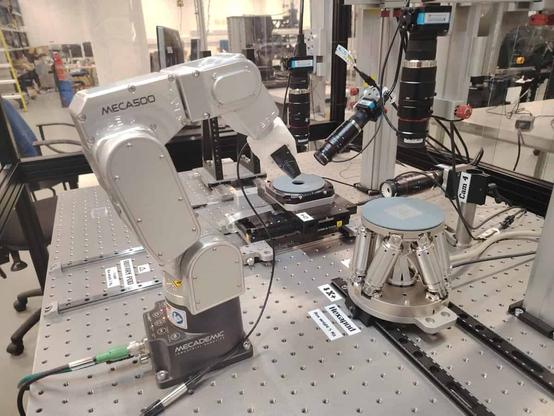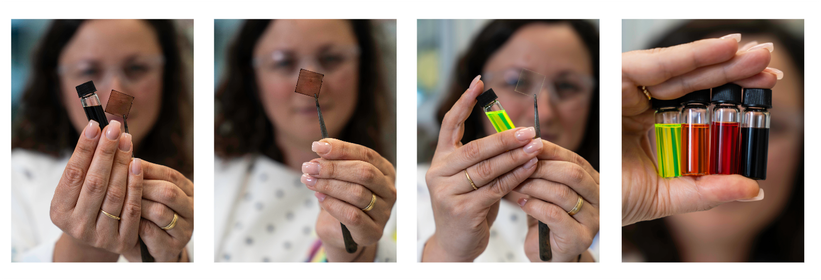
Materials scientists have developed a custom, Python-based software workflow to rapidly analyze high-resolution X-ray diffraction data, successfully measuring microscopic defects in diamond and other wide-bandgap semiconductors.
#MaterialsScience #Nanoengineering #SolidStatePhysics #sflorg
https://www.sflorg.com/2026/06/ms06242601.html
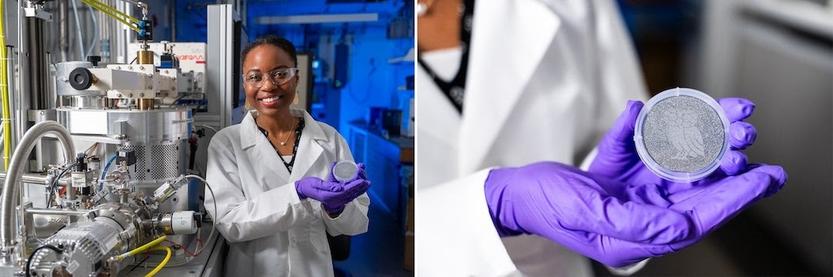
Automated Semiconductor Defect Detection

Researchers built an automated X-ray diffraction workflow to rapidly measure microscopic defects in advanced wide-bandgap semiconductors.

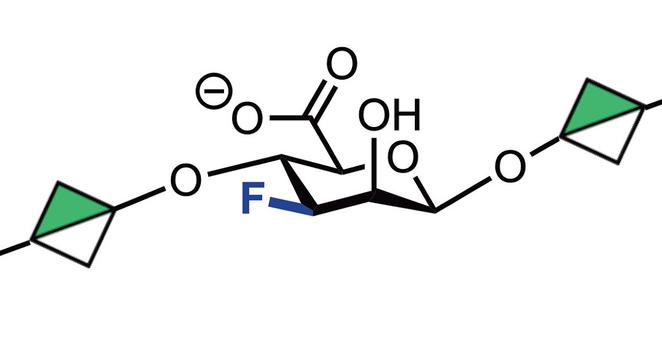
Researchers have developed precisely modified sugar building blocks that can be automatically assembled into defined structures, creating powerful new tools to study how complex carbohydrates function in biology and disease.
#ChemicalBiology #Biochemistry #Biotechnology #MaterialsScience #sflorg
https://www.sflorg.com/2026/06/bchm06242601.html
Tunable Biomolecules Unlock Complex Sugar Behavior

Scientists are using automated synthesis and fluorinated sugar building blocks to precisely study carbohydrate behavior and molecular interactions.

Janus two-dimensional (2D) semiconductors are asymmetrical materials featuring top and bottom surfaces composed of different elements. This structural asymmetry generates a robust internal electric field, making the materials highly reactive and versatile for technological applications.
#CondensedMatterPhysics #MaterialsScience #PhysicalChemistry #sflorg
https://www.sflorg.com/2026/06/ms06232601.html
Janus 2D Semiconductors: Synthesis Physics Solved

Discover how electron accumulation enables the room-temperature synthesis of Janus 2D semiconductors, advancing wearable tech and clean energy.

From fluid interfaces to thermal extremes, modern physics increasingly relies on crossing disciplinary boundaries to make sense of complex phenomena.

🔗 https://physicsworld.com/a/why-interdisciplinary-science-is-needed-more-than-ever/

#Physics #Leidenfrost #MaterialsScience #ThermalPhysics #interdisciplinary

Why interdisciplinary science is needed more than ever – Physics World

Solving today’s complex problems requires teams of scientists from a range of disciplines

Physics World
Researchers have engineered a chemically modified form of the naturally occurring clay mineral Montmorillonite that absorbs and retains large quantities of ethylene gas, effectively delaying the ripening and degradation of agricultural produce.
#MaterialsScience #PhysicalChemistry #AgriculturalScience #sflorg
https://www.sflorg.com/2026/06/ms06222601.html
Modified Clay Prevents Rapid Produce Ripening

Scientists have engineered Montmorillonite clay to absorb ethylene gas, delaying fruit ripening to enhance flavor and reduce global food waste.

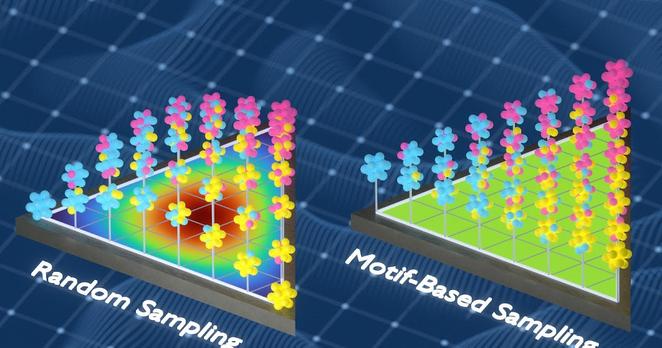
This computational technique utilizes machine learning and optimized training datasets to accurately simulate the atom-by-atom behavior of chemically complex and disordered solid materials, such as metal alloys.
#MaterialsScience #Engineering, #ComputationalChemistry #ArtificialIntelligence ( #MachineLearning ) #sflorg
https://www.sflorg.com/2026/06/ms06192601.html
Machine Learning for Metal Alloy Modeling

Discover how MIT researchers use motif-based machine learning to efficiently model the behavior of chemically disordered metal alloys.

📖 New Atlas–Rosetta publication:

Paper 0B — The Curiosity Layer
The Question That Wouldn't Go Away

Before Atlas. Before Rosetta. Before frameworks, papers, or formal models.

Just a recurring question that followed me for more than 30 years:

Why do some mathematical structures seem familiar across very different disciplines?

This essay explores the curiosity that ultimately led to Atlas–Rosetta and how modern AI transformed a long-standing question into something that could finally be investigated.

🔗 https://open.substack.com/pub/hybridmind42/p/before-atlasrosetta-the-question?utm_source=share&utm_medium=android&r=75c2ac

#AtlasRosetta #Science #Curiosity #Research #Interdisciplinary #SystemsThinking #AI #Chemistry #MaterialsScience

Before Atlas–Rosetta: The Question That Wouldn't Go Away

The Curiosity Layer (Paper 0B — Archival Edition) HybridMind42 19 June 2026

Hybridmind42

🪄 ‘Just like the “magic cake” that I like to bake with my kids.'

Chemist Loredana Protesescu is working on a 3-layer ink that contains all components needed for a solar cell. Before use it only needs to be applied to a surface.🖌️

Curious? Read more 👇
🔗 https://www.rug.nl/fse/news/science-in-focus/solar-cells/more-stable-solar-cells-and-a-three-layer-ink

🧪 #SciComm #ScienceNewsroom #materialsscience #chemistry #nano #technology #nanotechnology #research #science #engineering #scientistsOnMastodon
@universityofgroningen

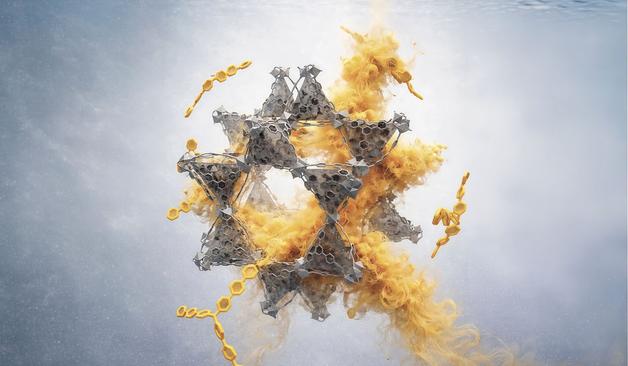
Researchers have developed novel post-assembly methods to engineer metal-organic frameworks (MOFs), resulting in highly porous, sponge-like materials with expanded capacity for gas storage and separation.
#MaterialsScience #Chemistry #ChemicalEngineering #sflorg
https://www.sflorg.com/2026/06/ms06182601.html
Expanding Porous MOFs for Clean Energy

KAUST researchers developed novel methods to expand MOFs, achieving record-high gas storage for clean energy systems.

Legacy construction chains us to fragile grids and mechanical decay. We published blueprints for a solid-state home that acts as its own power generator and atmospheric water well. By treating the structural shell as a thermal engine, it synthesizes water and sustains indoor climate homeostasis without a single mechanical HVAC compressor.

https://doi.org/10.17605/OSF.IO/V7NXB

@environment #Engineering #AWG #Thermodynamics #Physics #FutureTech #MaterialsScience #OffGrid #Acoustics @energy

OSF