Hydroelectric Dams Take a Toll on Jaguars, Tigers and Lions

As reigning apex #predators of a variety of ecosystems, #bigcats like tigers, jaguars and lions are vital for ecosystem health. Yet forest loss for hydroelectric dam building is a real threat to these majestic big cats. Aside from depriving wildlife of a home, forest loss also contributes to #climatechange. It’s ironic then that hydroelectricity, which is being developed worldwide (especially in South American and Asian countries) as an alternative energy source to fossil fuels, is a big cause of deforestation. Alternative energy is important however shouldn’t come at the cost of species under threat. Better protections are urgently needed. #Boycott4Wildlife

Often lauded as a saviour for the #environment and #climate, hydroelectric dams threaten #bigcats: #jaguars and #tigers 🐯🐅 Better protection of forests is needed to ensure endangered big #cats are protected #Boycott4Wildlife @palmoildetect.bsky.social https://wp.me/pcFhgU-9cr

Share to Twitter Share to BlueSky

Written by Tara Pirie, Postdoctoral Researcher, People and Wildlife Research Group, University of Reading. This article is republished from The Conversation under a Creative Commons license. Read the original article.

Big cats are among the most widespread top predators on Earth. Lions stalk zebra in the African savanna, tigers ambush antelope in the forests of Asia and jaguars hunt deer in the jungles of South America. They play an important role in ecosystems by regulating the numbers of these herbivores, in turn, reducing the deterioration of vegetated habitats and maintaining species diversity.

Ondrej Prosicky/Shutterstock

Tigers, lions and jaguars must cover large areas to find food, so they need a lot of energy. As with many large carnivores, big cats are under threat from habitat loss, which leaves them with less to eat. Their spread-out populations and slow reproductive rates make them particularly vulnerable. While the habitats in which big cats live range from boreal forests at high latitudes to tropical rainforests at the equator, the causes of habitat loss are largely the same: logging for wood and fuel, plantations, farming and urbanisation.

https://youtu.be/7VVv9oAtbVI

Aside from depriving wildlife of a home, forest loss also contributes to climate change. It’s ironic then that hydroelectricity, which is being developed worldwide (especially in South American and Asian countries) as an alternative energy source to fossil fuels, is a big cause of deforestation.

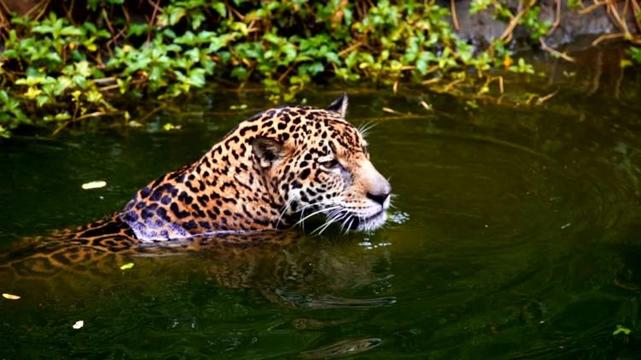
Building hydroelectric dams has caused extinctions and spread diseases in rivers globally, but the threat to ecosystems on land has largely been overlooked. In a recent study, researchers from China and Portugal investigated how existing and planned hydroelectric dams might affect two carnivores: the near-threatened jaguar (with an estimated global population of 173,000) and the endangered tiger (thought to number between 3,200 and 3,500 worldwide).

Jaguar Panthera onca

Jaguars, currently deemed Near Threatened, face a substantial habitat reduction of up to 25% in just over two decades. This decline stems from rampant deforestation for palm oil, soy,…

Keep reading by Palm Oil DetectivesAugust 28, 2022August 7, 2025

Tiger Panthera tigris

Fewer than 400 tigers remain in Sumatra due to deforestation for palm oil. Help save this endangered species. #Boycottpalmoil #Boycott4Wildlife

Keep reading by Palm Oil DetectivesJanuary 20, 2021October 8, 2025

Leopard Panthera pardus

Of all the great cats prowling the wild, few inspire as much awe and fascination as the leopard Panthera pardus. Sleek, powerful, and enigmatic, leopards are found across a staggering…

Keep reading by Palm Oil DetectivesMarch 11, 2021April 19, 2025

The distribution of jaguars and tigers has shrunk 50% and 93% respectively, but the researchers found that hydroelectric plants pose a substantial risk of further declines. They found 164 dams that already intersect the jaguar range and 421 dams that do the same for tigers. This equates to one in five tigers that are likely to be affected by dams, compared with one in 200 jaguars. Since tiger numbers are already so low, this could have a considerable influence on the population’s capacity to recover and may even result in local extinctions.

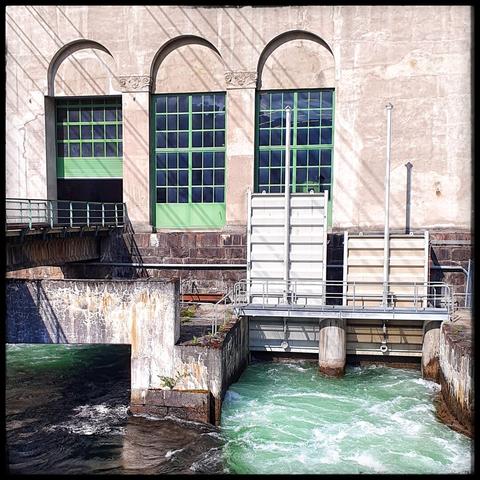
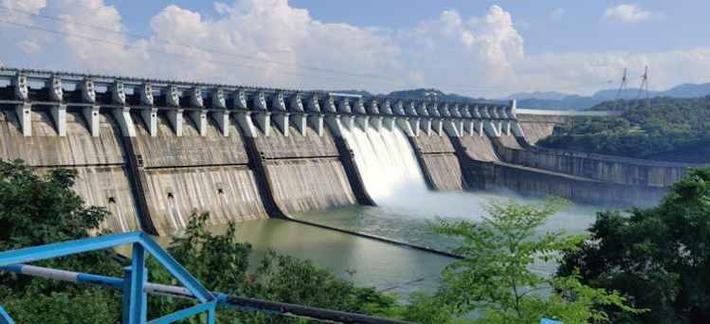
A dam on the Narmada River in India, where the endangered Bengal tiger is native. Ankit K Sinha/Shutterstock

Damning developments for big cats

Large expanses of land are flooded to create reservoirs when building hydroelectric plants in low-lying, relatively flat areas. Although tigers and jaguars can and do swim, they mainly hunt species such as deer that live on land. Sites chosen for dams typically incorporate floodplains and areas along rivers that are important for both species, since they tend to contain lots of prey.

The flooded area will force both predators and prey into surrounding areas. If the vegetation here can support the influx of herbivores, tigers and jaguars will probably persist. But if it cannot, the predators may be forced further afield in search of food, potentially drawing them into conflict with people who may kill them.

Relatively pristine habitats are under threat. The number of hydroelectric dams is set to quadruple across the jaguar’s range with a further 429 planned, while 41 are expected where tigers roam. Aside from the direct loss of habitat, these new constructions can increase the presence of people in remote areas. Roads built to access new dam sites consequently open up areas that were previously impenetrable. Roads can be a barrier to some species and kill those that try to cross. Roads can also encourage new towns and villages, which divide the habitat further.

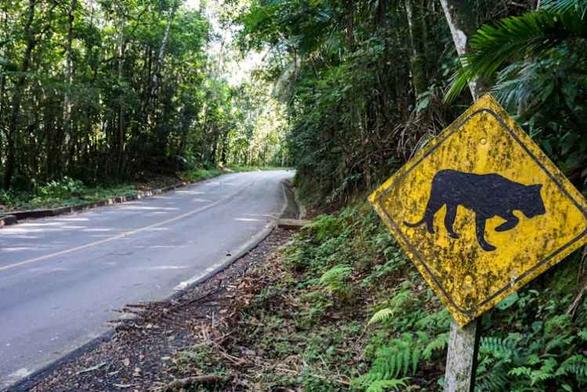
A road in Brazil which drives deep into jaguar habitat. Ricardo de O. Lemos/Shutterstock

Mitigating the damage

Where dams exist, the researchers suggest habitat loss could be limited by incorporating the surroundings into a protected area with suitable enforcement. Any new dams, though, especially in conservation areas or areas where top predators prowl, should be avoided. Sadly, most of the dams planned in Asia overlap with significant portions of the tiger’s range.

One way to mitigate the damage from building new hydroelectric plants may be to do it on slopes outside of areas that are crucial for conserving tigers and jaguars. The amount of flooded area needed to produce electricity from these plants when they’re on a slope is smaller compared to those built on lower ground, reducing the overall damage to the surrounding habitat. But impact assessments would need to confirm the plant wasn’t simply creating new issues elsewhere.

Alternative sources of energy are important for a sustainable future, but their benefits should not come at a substantial cost to species already under threat.

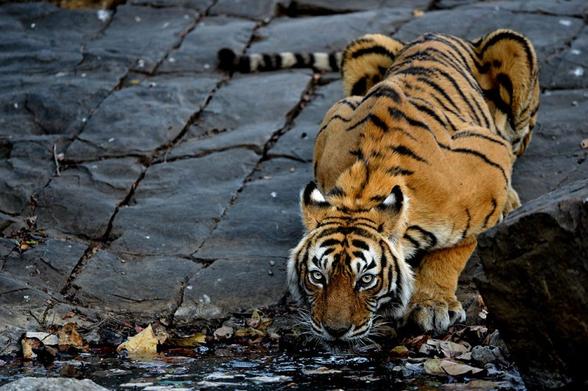
Craig Jones Wildlife Photography – A Bengal tiger drinking at a river

Written by Tara Pirie, Postdoctoral Researcher, People and Wildlife Research Group, University of Reading. This article is republished from The Conversation under a Creative Commons license. Read the original article.

ENDS

Read more animal and biodiversity stories

Marsupials thought extinct for 6,000 years found in West Papua

Two stunning marsupials thought extinct for 6000 years rediscovered in West Papua. Calls for rainforest protection even more urgent!

Read more

Do you love animals? Make every day #WorldWildlifeDay

This #WorldWildlifeDay take action for animals great and small! Reptiles insects, mammals and birds deserve better than palm oil ecocide and extinction. Make sure you Boycott palm oil

Read more

Beautiful and Doomed: Saving Bangladesh’s Langurs From Extinction

Critically endangered Phayre’s langurs and endangered capped langurs of Bangladesh, are interbreeding raising concerns about their survival, take action!

Read more

Parrot Deaths Highlight Urgent Need to Reform CITES

The legal trade is largely to blame for African grey parrots becoming endangered. Regulator CITES is broken allowing exploitation, massive reform needed now!

Read more

Jaguars and Pumas Eat More Monkeys in Damaged Forests

In fragmented forests of Mexico, big cats find it hard to locate prey ungulates instead seeking tree-dwelling #monkeys – that’s bad news for primates!

Read more Load more posts

Something went wrong. Please refresh the page and/or try again.

Take Action in Five Ways

1. Join the #Boycott4Wildlife on social media and subscribe to stay in the loop: Share posts from this website to your own network on Twitter, Mastadon, Instagram, Facebook and Youtube using the hashtags #Boycottpalmoil #Boycott4Wildlife.

Enter your email address

Sign Up

Join 3,179 other subscribers

2. Contribute stories: Academics, conservationists, scientists, indigenous rights advocates and animal rights advocates working to expose the corruption of the palm oil industry or to save animals can contribute stories to the website.

Wildlife Artist Juanchi Pérez

Read more

Mel Lumby: Dedicated Devotee to Borneo’s Living Beings

Read more

Anthropologist and Author Dr Sophie Chao

Read more

Health Physician Dr Evan Allen

Read more

The World’s Most Loved Cup: A Social, Ethical & Environmental History of Coffee by Aviary Doert

Read more

How do we stop the world’s ecosystems from going into a death spiral? A #SteadyState Economy

Read more

3. Supermarket sleuthing: Next time you’re in the supermarket, take photos of products containing palm oil. Share these to social media along with the hashtags to call out the greenwashing and ecocide of the brands who use palm oil. You can also take photos of palm oil free products and congratulate brands when they go palm oil free.

https://twitter.com/CuriousApe4/status/1526136783557529600?s=20

https://twitter.com/PhillDixon1/status/1749010345555788144?s=20

https://twitter.com/mugabe139/status/1678027567977078784?s=20

4. Take to the streets: Get in touch with Palm Oil Detectives to find out more.

5. Donate: Make a one-off or monthly donation to Palm Oil Detectives as a way of saying thank you and to help pay for ongoing running costs of the website and social media campaigns. Donate here

Pledge your support

#animals #bigCat #bigcats #biodiversity #Boycott4wildlife #cats #Climate #climateChange #climatechange #deforestation #environment #hydroelectric #JaguarPantheraOnca #Jaguars #predators #roads #TigerPantheraTigris #tigers
Green on grey 1/3

My favourite building in all the world, Såheim power plant in Rjukan, Norway. Designed by Thorvald Astrup and Olaf Nordhagen, it begun working in 1916. This tiny detail from the mammoth power station can't convey the greatness of this beautiful art nouveau industrial plant with its asymmetrical beauty and its countless details that are there for aesthetic purposes only. They don't make'm like this anymore.

#rjukan #såheim #måna #powerplant #hydroelectric #industry #artnouveau #norge #noreg #norway #trio #triptych #pixelfedsweden
Once numbering over 100K, the most regal #bird 👑🐦 in #Tanzania #Congo #SouthAfrica and #Namibia hangs on for survival against Big #PalmOil 🌴 Big #Tobacco 🚬 and #Hydroelectric dams 🚜 Help them survive! #BoycottPalmOil #Boycott4Wildlife @[email protected] youtu.be/P1IbL2cs-D4

Grey Crowned Crane Balearica r...
Grey Crowned Crane Balearica regulorum Africa

YouTube

#mwgic #Dam #LakePowell #Drought #Hydroelectric

Experts anticipate major US #reservoir could reach #critical level by end of #2026: 'Efforts have been productive' https://share.google/uDQ0VWG5LtwNEmHty

Experts anticipate major US reservoir could reach critical level by end of 2026: 'Efforts have been productive'

"The loss is equivalent to about 50 feet in elevation."

Yahoo News
Other states follow Oregon’s lead in targeting data centers’ energy costs

Officials are scrutinizing how data centers affect the electric bills of households, small businesses and other industries.

oregonlive

Sunda Flying Lemur Galeopterus variegatus

Sunda Flying Lemur Galeopterus variegatus

Locations: Thailand, Cambodia, Vietnam, Laos, Myanmar, Peninsular Malaysia, Singapore, Brunei, Indonesia (Java, Sumatra, Kalimantan, Bali), and Borneo

The Sunda flying lemur, also known as the Malayan flying lemur or Malayan #colugo, silently glides through the tropical forests of Southeast Asia, relying on ancient forests to survive. Despite their name, they are not true lemurs, nor do they fly—they are gliders, and among the most skilful in the world. This species is experiencing population declines in several parts of their range. They are threatened by #deforestation from #timber, #palmoil plantations, and #hunting by local communities. Forest loss, particularly in #Java, #Vietnam, and #Thailand, is fragmenting their populations and endangering their survival. Use your wallet as a weapon every time you shop and protect these sensitive creatures #BoycottPalmOil #Boycott4Wildlife

https://youtu.be/NUukaAK4YSI

The elegant #Sunda flying #lemur AKA #Colugo can glide 100m through trees 🪽🕊️ in #Sumatra #Kalimantan and #Borneo. Totally reliant on trees, #palmoil is a major threat to them 😿 Fight back and🌴🩸🔥☠️🧐🚫 #Boycottpalmoil #Boycott4Wildlife @palmoildetect https://palmoildetectives.com/2026/02/08/sunda-flying-lemur-galeopterus-variegatus/

Share to BlueSky Share to Twitter

Hauntingly beautiful gliding #mammal, the Malayan #Colugo/ Sunda Flying #Lemur uses a cape-like skin membrane to slide 100’s of metres through the #rainforests of SE #Asia. Fight for them and #Boycottpalmoil 🌴🙊🤮🚜🔥❌ #Boycott4Wildlife @palmoildetect https://palmoildetectives.com/2026/02/08/sunda-flying-lemur-galeopterus-variegatus/

Share to BlueSky Share to Twitter

Appearance & Behaviour

Sunda flying lemurs are hauntingly beautiful gliding mammals, with their large, forward-facing eyes adapted for night vision and a delicate, kite-shaped membrane of skin called a patagium stretching from their neck to their fingertips, tail, and toes. This structure allows them to glide over 100 metres through the forest canopy, losing as little as 10 metres in elevation. On the ground, they are nearly helpless, but in the trees, they move with astonishing agility. These quiet, nocturnal mammals spend their days curled up in tree hollows or nestled in the dense fronds of coconut trees, becoming active at dusk when they begin foraging.

Threats

Palm oil deforestation

The widespread clearing of tropical rainforest to establish palm oil plantations is one of the greatest threats to the Sunda flying lemur. These gliders rely heavily on continuous tree canopy for movement, foraging, and breeding. When forests are fragmented or entirely removed for palm oil, flying lemurs become stranded, exposed to predators, and unable to access food or shelter. This process has caused severe habitat degradation across Peninsular Malaysia, Sumatra, and Borneo.

Human persecution and hunting

In Java and some other regions, Sunda flying lemurs are hunted by local communities, including the Baduy Tribe, who increase hunting activity every four years as part of cultural practices. Though the species yields little meat, they are still killed for consumption or perceived nuisance. Hunting disrupts already fragile populations, particularly in areas where habitat loss has already reduced numbers and isolated groups.

Logging and forest fragmentation for timber

Commercial and illegal logging contribute to the rapid degradation of forests across Southeast Asia. Even selective logging can cause fragmentation, which limits the flying lemur’s ability to glide and forces them to descend to the ground—where they are highly vulnerable to predators and human threats. Logging roads also increase human access to remote forests, further accelerating hunting and forest conversion.

Competition with invasive species

In degraded habitats and plantations, Sunda flying lemurs face increased competition for food and nesting sites from invasive and generalist species such as the Plantain Squirrel (Callosciurus notatus). These squirrels are more adaptable and can dominate food sources, leaving less for the more specialised colugo. Competition like this puts additional stress on the already fragile populations of flying lemurs, especially in fragmented or edge habitats.

Urban expansion and infrastructure development

Rapid urbanisation across Southeast Asia has resulted in the encroachment of cities and towns into previously forested areas. Roads, buildings, hydroelectric dams and agricultural expansion sever vital canopy corridors and isolate populations, making gliding impossible in many urban landscapes. As a result, Sunda flying lemurs are forced to navigate unsuitable environments, increasing their risk of vehicle collisions, electrocution from power lines, and conflict with humans.

Weak protections and lack of enforcement

Although the Sunda flying lemur is legally protected in several countries, enforcement is often weak or inconsistent. In areas like Sarawak and Java, data on current populations is outdated or incomplete, making it difficult to assess trends or plan effective conservation strategies. Without strong protections and ongoing monitoring, habitat loss and hunting will continue to drive the species toward future vulnerability or extinction.

Geographic Range

Sunda flying lemurs are found across Southeast Asia, including Thailand, Cambodia, Vietnam, Laos, southern Myanmar, Peninsular Malaysia, Singapore, Brunei, and Indonesia (Java, Bali, Sumatra, Kalimantan, and Borneo). They are patchily distributed, with population declines noted in Java and possibly Sarawak. They occur in both primary and secondary forests, and are sometimes seen in plantations and gardens—but dense forest canopy is critical for their survival. Populations in disturbed habitats are less viable due to limited gliding space and reduced food availability.

Diet

The Sunda flying lemur feeds primarily on young leaves, buds, shoots, flowers, and fruits of a wide variety of forest trees. In Bako National Park, Sarawak, they have been observed feeding on over 12 tree species, with Buchanania arborescens making up over 50% of their diet. They also consume tree sap and have even been seen licking bark for water and minerals. Interestingly, they have been recorded feeding on ants (Paratrechina longicornis) in rare cases, highlighting their adaptability in changing environments.

Mating and Reproduction

After a gestation period of about 60 days, females give birth to a single young, which clings to the mother’s belly and is cradled within the folds of the patagium. The mother’s gliding membrane acts like a living pouch, offering warmth and protection as she climbs and glides through the treetops. Not much else is known about their mating systems or breeding intervals, but juveniles stay with their mothers until they are old enough to glide on their own.

FAQs

How many Sunda flying lemurs are left in the wild?

Exact population numbers are unknown, but the species is believed to be in slow decline. Localised extinctions are suspected in parts of Java and mainland Southeast Asia due to hunting and habitat fragmentation. While still widespread, their dependence on intact forests makes them vulnerable to ongoing deforestation (Boeadi & Steinmetz, 2008).

How long do Sunda flying lemurs live?

In the wild, their lifespan is estimated to be around 10–15 years, though this can vary depending on threats and environmental conditions. Data from wild populations are limited due to their elusive, nocturnal habits (Wikipedia, n.d.).

Why are they threatened by palm oil?

Palm oil plantations destroy the lowland tropical forests that flying lemurs depend on. Unlike other adaptable mammals, colugos require dense canopy cover for safe gliding, resting, and breeding. When forests are cleared, these gliders lose their ability to navigate safely, exposing them to predators and starvation. The conversion of rainforest into monoculture plantations has led to significant declines in habitat quality across their range (Lim et al., 2013; Nasir & Abdullah, 2009).

Do Sunda flying lemurs make good pets?

Absolutely not. Sunda flying lemurs are wild animals with specialised needs. They are not domesticated, and keeping them as pets leads to extreme stress, injury, or death. Capturing these animals for trade disrupts family groups and contributes to their extinction. If you care about flying lemurs, advocate against the exotic pet trade and never support it.

What conservation efforts are underway?

National laws protect the Sunda flying lemur in many range countries, and studies have been conducted in places like Bako National Park and Singapore. However, much stronger protection is needed, particularly in habitat protection and indigenous-led conservation. Conservationists recommend protecting forest patches, especially those with >95% canopy cover, to ensure their survival (Lim et al., 2013).

Take Action!

Protect the Sunda flying lemur by choosing only products that are 100% palm oil-free. Avoiding palm oil directly combats deforestation and preserves vital canopy corridors these animals depend on. Support indigenous-led agroecology and forest protection movements. Never support the exotic pet trade or keep wild animals in captivity. Every purchase you make has the power to either destroy or safeguard their rainforest homes. #BoycottPalmOil #Boycott4Wildlife

Support Sunda Flying Lemurs by going vegan and boycotting palm oil in the supermarket, it’s the #Boycott4Wildlife

Support the conservation of this species

This animal has no protections in place. Read about other forgotten species here. Create art to support this forgotten animal or raise awareness about them by sharing this post and using the #Boycottpalmoil #Boycott4Wildlife hashtags on social media. Also you can boycott palm oil in the supermarket.

Further Information

Boeadi & Steinmetz, R. 2008. Galeopterus variegatusThe IUCN Red List of Threatened Species 2008: e.T41502A10479343. https://dx.doi.org/10.2305/IUCN.UK.2008.RLTS.T41502A10479343.en. Accessed on 06 April 2025.

Lim, N. T-L., Giam, X., Byrnes, G., & Clements, G. R. (2013). Occurrence of the Sunda colugo (Galeopterus variegatus) in the tropical forests of Singapore: A Bayesian approach. Mammalian Biology, 78(1), 63–67. https://doi.org/10.1016/j.mambio.2012.06.008

Nasir, D., & Abdullah, M. T. (2009). Foraging ecology of the Sunda colugo (Galeopterus variegatus) in Bako National Park, Sarawak, Malaysia. Malayan Nature Journal, 61(4), 285–294. https://www.researchgate.net/publication/290610443_Foraging_ecology_of_the_sunda_colugo_galeopterus_variegatus_in_bako_national_park_sarawak_malaysia

Wikipedia. (n.d.). Sunda flying lemur. Retrieved April 6, 2025, from https://en.wikipedia.org/wiki/Sunda_flying_lemur

How can I help the #Boycott4Wildlife?

Take Action in Five Ways

1. Join the #Boycott4Wildlife on social media and subscribe to stay in the loop: Share posts from this website to your own network on Twitter, Mastadon, Instagram, Facebook and Youtube using the hashtags #Boycottpalmoil #Boycott4Wildlife.

Enter your email address

Sign Up

Join 3,174 other subscribers

2. Contribute stories: Academics, conservationists, scientists, indigenous rights advocates and animal rights advocates working to expose the corruption of the palm oil industry or to save animals can contribute stories to the website.

Wildlife Artist Juanchi Pérez

Read more

Mel Lumby: Dedicated Devotee to Borneo’s Living Beings

Read more

Anthropologist and Author Dr Sophie Chao

Read more

Health Physician Dr Evan Allen

Read more

The World’s Most Loved Cup: A Social, Ethical & Environmental History of Coffee by Aviary Doert

Read more

How do we stop the world’s ecosystems from going into a death spiral? A #SteadyState Economy

Read more

3. Supermarket sleuthing: Next time you’re in the supermarket, take photos of products containing palm oil. Share these to social media along with the hashtags to call out the greenwashing and ecocide of the brands who use palm oil. You can also take photos of palm oil free products and congratulate brands when they go palm oil free.

https://twitter.com/CuriousApe4/status/1526136783557529600?s=20

https://twitter.com/PhillDixon1/status/1749010345555788144?s=20

https://twitter.com/mugabe139/status/1678027567977078784?s=20

4. Take to the streets: Get in touch with Palm Oil Detectives to find out more.

5. Donate: Make a one-off or monthly donation to Palm Oil Detectives as a way of saying thank you and to help pay for ongoing running costs of the website and social media campaigns. Donate here

Pledge your support

Learn about other animals endangered by palm oil and other agriculture

Global South America S.E. Asia India Africa West Papua & PNG

Sunda Flying Lemur Galeopterus variegatus

Keep reading

Western Parotia Parotia sefilata

Keep reading

Capped Langur Trachypithecus pileatus

Keep reading

Mountain Tapir Tapirus pinchaque

Keep reading

Saola Pseudoryx nghetinhensis

Keep reading

Tucuxi Sotalia fluviatilis

Keep reading

Learn about “sustainable” palm oil greenwashing

Read more about RSPO greenwashing

Lying Fake labels Indigenous Land-grabbing Human rights abuses Deforestation Human health hazards

A 2019 World Health Organisation (WHO) report into the palm oil industry and RSPO finds extensive greenwashing of palm oil deforestation and the murder of endangered animals (i.e. biodiversity loss)

Read more

#animals #Asia #Borneo #Boycott4wildlife #BoycottMeat #BoycottPalmOil #Brunei #Cambodia #colugo #dams #deforestation #ForgottenAnimals #glidingMammal #humanWildlifeConflict #hunting #hydroelectric #Indonesia #Java #Kalimantan #Laos #lemur #Malaysia #Mammal #Myanmar #nocturnal #PalmOil #palmOilDeforestation #palmoil #poaching #rainforests #Sumatra #Sunda #SundaFlyingLemurGaleopterusVariegatus #Thailand #timber #Vietnam #VulnerableSpecies
Rewinding A Car Alternator For 240 Volt

As part of his quest to find the best affordable generator for his DIY hydroelectric power system, [FarmCraft101] is trying out a range of off-the-shelf and DIY solutions, with in his most recent v…

Hackaday
Once numbering over 100K, the most regal #bird 👑🐦 in #Tanzania #Congo #SouthAfrica and #Namibia hangs on for survival against Big #PalmOil 🌴 Big #Tobacco 🚬 and #Hydroelectric dams 🚜 Help them survive! #BoycottPalmOil #Boycott4Wildlife @[email protected] youtu.be/P1IbL2cs-D4

Grey Crowned Crane Balearica r...
Grey Crowned Crane Balearica regulorum Africa

YouTube
The Many Questions And Challenges With DIY Hydroelectric Generators

The concept of building your own hydroelectric generator seems simple at face value: use gravity to impart as much force as possible onto a turbine, which spins a generator, thus generating electri…

Hackaday