What Will Crochet Look Like in 2040?
Every generation thinks they’ve reached the peak of technology.
Then twenty years later they’re explaining to confused children why they used to print MapQuest directions or carry CDs in giant binders.
Crocheters are no different.
Right now, we’re pretty impressed with ourselves. We have digital patterns, online yarn shopping, stitch-counting apps, and video tutorials for every project imaginable.
But what will crocheting look like in 2040?
Nobody knows for sure.
That won’t stop us from wildly guessing.
Smart Hooks Will Judge Us
Today’s crochet hooks are simple.
In 2040?
Your hook will probably connect to your phone, count your stitches automatically, and gently inform you:
“That was supposed to be a double crochet.”
You’ll argue with it.
The hook will be correct.
You’ll frog three rows anyway.
Some things never change.
AI Will Design Patterns
Artificial intelligence is already writing patterns. I didn’t say they were good patterns…but you’ve likely stumbled upon a few in your day-to-day on the internet.
By 2040, you’ll probably be able to type:
“Make me a cardigan inspired by my cat, my favorite coffee mug, and the emotional trauma of trying to learn foundation stitches.”
Thirty seconds later you’ll have a complete pattern.
Will the sleeves match?
That’s another question.
Yarn Will Become Ridiculously High-Tech
By 2040, yarn companies will stop asking whether they can and start asking whether they should.
Spoiler alert:
They won’t.
Mood Yarn
Changes color based on your emotional state.
Halfway through a project you’ll discover your sweater contains:
- Optimism Blue
- Mild Frustration Orange
- Pattern Rage Red
- Existential Crisis Gray
Future therapists will diagnose stress levels by examining unfinished blankets.
Accountability Yarn
This yarn knows how many unfinished projects you own.
When your WIP count reaches double digits, it starts asking uncomfortable questions.
“Shouldn’t you finish that cardigan first?”
Nobody needs that kind of negativity.
Predictive Yarn™
Using advanced AI, this yarn knows what projects you’ll start next month.
The replacement skeins arrive before you’ve even convinced yourself you need them.
The accuracy is unsettling.
Competitive Yarn
This yarn tracks the progress of nearby crocheters.
Your blanket reaches Row 45 and suddenly receives a notification:
Karen finished hers three days ago.
Smart Yarn Labels
Current labels:
“Machine wash cold.”
Future labels:
“Based on your previous projects, I recommend you buy three more skeins.”
“You’re not going to skip swatching, are you?”
“We both know you’re making modifications.”
No matter how advanced yarn becomes, there will still be one universal truth:
A crocheter will stand in front of a closet containing 147 skeins and say:
“I don’t have anything to work with.”
And somehow, even in 2040, that statement will feel completely reasonable.
Virtual Crochet Circles
Instead of meeting in person, some groups may gather in virtual reality.
Picture it:
You’re sitting in your living room wearing fuzzy slippers.
Your friend is in another country.
Your crochet buddy is on vacation.
Yet somehow all three of you are sitting around the same virtual coffee table complaining about yarn prices.
Honestly?
That part already feels realistic.
Self-Counting Stitch Markers
The most commonly lost item in crochet history may finally evolve.
Future stitch markers might:
- Count repeats
- Track rows
- Flash when you miss a stitch
- Send notifications
Current crocheters lose stitch markers inside couch cushions.
Future crocheters will lose them after forgetting the password.
Progress.
Pattern Reading May Become Optional
Instead of reading a pattern, you may simply wear smart glasses.
The glasses highlight:
- The next stitch
- Where increases go
- Which row you’re on
- How many stitches remain
Future crocheters may never know the joy of discovering they’ve been repeating Row 14 instead of Row 15 for an entire evening.
Project Bags Will Get Smarter
Today’s project bag:
A bag.
Tomorrow’s project bag:
- Built-in lighting
- Charging ports
- Yarn management systems
- Automatic row counters
- Emergency chocolate storage
Actually, let’s hope that last one becomes available much sooner.
The Great Granny Square Revival Will Continue
Let’s be honest.
No matter what technology does, granny squares aren’t going anywhere.
Crochet trends come and go.
Yarn brands come and go.
Hooks change.
Styles change.
But somehow granny squares survive every decade.
If archaeologists uncover a crochet project in the year 3000, there’s at least a 50% chance it will involve a granny square.
Future Crocheters Will Laugh at Us
Imagine a crocheter in 2040 saying:
“Wait… you counted stitches manually?”
“You downloaded PDF patterns?”
“You had to search for yarn substitutions yourself?”
“You bought yarn without scanning it with a smart fiber analyzer?”
We’ll sound ancient.
Which is exactly how we sound when we hear stories about crocheters copying patterns by hand from magazines.
Final Thoughts
Will any of these predictions come true?
Probably some.
Definitely not all.
But one thing seems certain:
In 2040, crocheters will still buy yarn they don’t technically need.
They’ll still start new projects before finishing old ones.
They’ll still play yarn chicken.
And they’ll still insist that this next project will only take a weekend.
Some technologies are destined to change.
Crocheter optimism is not one of them.
If you could invent one futuristic crochet tool or gadget, what would it do?
#AICrochet #artificialIntelligence #creativeTechnology #Crochet #crochet2040 #crochetBlog #crochetCommunity #crochetDiscussion #crochetFun #crochetGadgets #crochetHumor #crochetInnovation #crochetInspiration #crochetLife #crochetNerd #crochetPredictions #crochetTechnology #crochetTools #crochetTrends #crochetPattern #digitalCrafting #fiberArts #freePattern #futureOfCrochet #futureTechnology #futurism #futuristicCrafting #geekCrochet #geekCulture #handmadeFuture #makerCommunity #makerCulture #modernCrochet #pattern #sciFiCrochet #scienceFiction #smartCrochet #smartTextiles #wearableTechnology #yarn #yarnAddict #yarnHumor #yarnLover #yarnStash KDS Foundation





 HodgePodge Crochet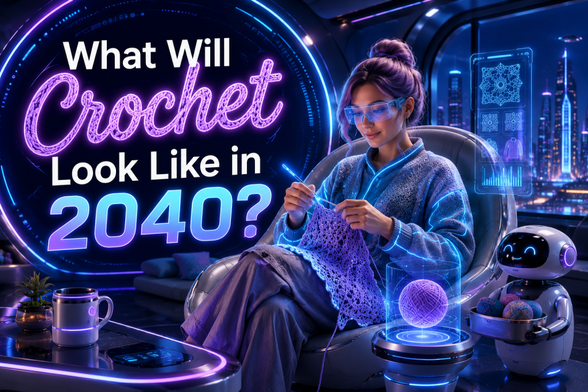
 i2notes

 Aniket