Tuatha De Danann
This “name” is usually translated as “folk of the goddess Danu.” They are also known by the earlier name: Tuath De (“tribe of the gods” or “divine tribe”). They’re a supernatural race in Irish mythology. Many of them are thought to represent deities of pre-Christian Gaelic Ireland.
The Tuatha De Danann are often pictured as kings, queens, druids, bards, warriors, heroes, healers, & craftsmen who have supernatural powers. They live in the Otherworld but interact with humans & the human world. They’re associated with sidhe.
Their traditional rivals are the Fomorians (Fomoire), who might represent the destructive powers of nature, & whom the Tuatha De Danann defeated in the Battle of Mag Tuired.
Prominent members include the Dagda (“the great god”), The Morrigan (“the great queen” or “phantom queen”), Lugh, Nuada, Aengus, Brigid, Manannan, Dian Cecht the healer, & Goibniu the smith, 1 of the Tri De Dana (“three gods of craft”).
They’re immune to ageing & sickness, & who have magic powers. The powers most often attributed to them are control over the weather & the elements, & the ability to shape shift themselves & other things.
They’re also said to control the fertility of the land. The tale De Gabail in t-Sida says the 1st Gaels had to establish friendship with the Tuatha De Danann before they could raise crops & herds.
They live in the Otherworld, which is described as either a parallel world or a heavenly land beyond the sea or under the earth’s surface. Many of them are associated with specific places in the landscape, especially the sidh mounds.
These are the ancient burial mounds & passage tombs which are entrances to Otherworld realms. The Tuatha De Danann can hide themselves with a feth fiada (“magic mist”) & appear to humans only when they wish to.
In euhemerized accounts, the Tuatha De Danann were descended from Nemed, leader of a previous wave of inhabitants of Ireland. In non-euhemerized accounts, they’re descended from Danu/Anu, a mother goddess. They came from 4 cities to the north of Ireland (Falias, Gorias, Murias, & Finias), where architecture, the arts, & magic.
According to Lebor Gabala Erenn, they came to Ireland “in dark clouds” & “landed on the mountains of the Conmaicne Rein in Connachta.” Otherwise Sliabh an Iarainn, “and they brought a darkness over the sun for 3 days & 3 nights.”
Sliabh an Iarainn (anglicized Slieve Anierin) is a mountain in County Leitrim, Ireland. It’s part of the Cuilcagh Mountains.
They immediately burnt the ships “so that they should not of retreating to them, & the smoke & the mist that came from the vessels filled the neighbouring land & air. Therefore it was conceived that they had arrived in clouds of mist.”
Led by King Nuada, they fought the First Battle of Magh Tuireadh on the west coast, in which they defeated & displaced the native Fir Bolg, who then inhabited Ireland. In the battle, Nuada lost an arm to their champion, Sreng.
Since Nuada was no longer “unblemished,” he couldn’t continue as king & was replaced by the half-Fomorian Bres, who turned out to be a tyrant.
The doctor Dian Cecht replaced Nuada’s arm with a working silver 1. (Think Bucky from Captain America.) He was reinstated as king. Back in those days, if a king wasn’t physically whole, then he wasn’t fit to be king.
However, Dian Cecht’s son, Miach, was dissatisfied with the replacement. So he recited the spell, “adult fri halt do and feith fri feth” (joint to joint of it & sinew to sinew), which caused flesh to grow over the silver over the course of 9 days & nights.
In a fit of jealous rage, Dian Cecht killed his own son. Because of Nuada’s restoration as king, Bres whined to his family & dad, Elatha, who sent him to look for help from King Balor of the Fomorians.
The Tuatha De Danann fought the Second Battle of Magh Tuireadh against the Fomorians. King Nuada was killed by King Balor’s poisonous eye. But KIng Balor was killed by Lugh (who was the champion of the Tuatha De Danann), who then took over as king.
A 3rd battle was fought against a wave of invaders, the Milesians, from the northwest of the Iberian Peninsula (present-day Galicia & Northern Portugal). These were descendants of Mil Espaine (who are thought to represent the Goidelic Celts).
The Milesians encountered 3 Tuatha De Danann goddesses, Eriu, Banba, & Fodla, who asked that the island be named after them. Eriu is the origin of the modern name Eire (which is the Irish language name for Ireland), & Banba & Fodla are still sometimes used as poetic names for Ireland.
Their 2 husbands (Mac Cuill, Mac Cecht, & Mac Greine) were kings of the Tuatha De Danann and created a magical storm in an attempt to drive them away. The Milesian poet calmed the sea with his verse, then his people landed & defeated the Tuatha De Danann at Tailtiu.
When Amergin was called upon to divide the land between the Tuatha De Danann & his own people, he cleverly allotted the portion above ground to the Milesians & the portion underground to the Tuatha De Danann.
The Tuatha De Danann were led underground into the Sidhe mounds by Manannan mac Lir & Tir na nOg onto a flowery plain/plain of honey attested to in the Voyage of Bran.
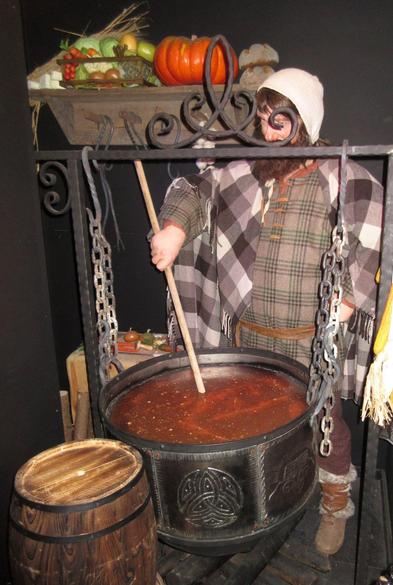
The Tuatha De Danann brought 4 magical treasure with them to Ireland, 1 a piece from their 4 cities: Dagda’s Cauldron, The Spear of Lugh, Lia Fail (The Stone of Fal), & Claiomh Solais (The Sword of Light).
One-Time Monthly Yearly
Make a one-time donation
Make a monthly donation
Make a yearly donation
Choose an amount
$1.00 $5.00 $10.00 $1.00 $5.00 $10.00 $5.00 $10.00 $15.00
Or enter a custom amount
$
Your contribution is appreciated.
Your contribution is appreciated.
Your contribution is appreciated.
DonateDonate monthlyDonate yearly
#aengus #amergin #anu #banba #battleOfMagTuired #bres #brigid #captainAmerica #celts #christian #claiomhSolais #conmaicneRein #connachta #countyLeitrim #cuilcaghMountains #dagda #dagdasCauldron #danu #deGabailInTSida #dianCecht #elatha #eriu #fethFiada #finais #firBolg #firstBattleOfMaghTuireadh #fodla #fomoire #fomorians #gaelic #gaels #galicia #goibniu #goidelic #gorias #iberianPeninsula #ireland #irish #irishMythology #kingBalor #kingNuada #leborGabalaErenn #liaFail #lugh #macCecht #macCuill #macGreine #manannan #manannanMacLir #miach #milEspaine #milesians #nemed #northernPortugal #otherworld #sidh #sidhe #sliabhAnIarainn #slieveAnierin #sreng #tailtiu #theMorrigan #theSpearOfLugh #theStoneOfFal #theSwordOfLight #tirNaNog #triDeDana #tuathDe #tuathaDeDanann2 #voyageOfBran
 1. Neu-Kelte 🌻💙💛🌻
 The Mercian Pilgrim 🌲 ⛰️
 Valters no Juglas
 Spirituality & Religious Studies
 Whatzacdrew_Comics
 MairiNicDhoiseu
 Nifty Buckles Folklore