 Alper
Alper
#AAS247 ever wonder what doing #astronomy on an #arctic #icebreaker would be like?
Ask me at
"Observing an Arctic Sunset"
iPoster 107.07 terminal 39
Mon Jan 05, 2026 9 AM MST
#ExploreAstronomy #celestialnavigation #refraction #Sun #sunset #heliophysics
Arctic sunset, 2019

I’m revising my celestial navigation theory.
I can’t but notice that these online teachers look nothing like my old RYA instructor. I’m glad to see so many young women proficient in these old skills, but I worry they’ll catch a chill.

Tell #time at #night during the Golden Age of #Piracy?
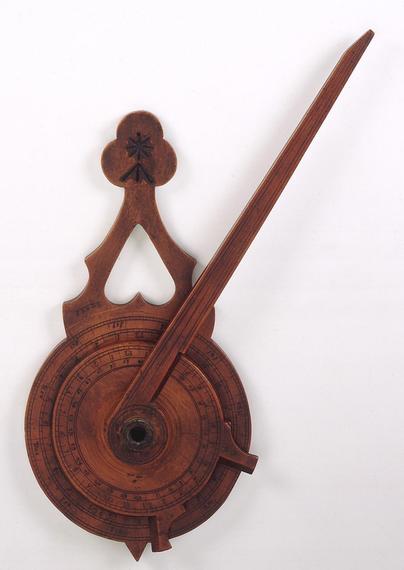
Of course, just consult your #nocturnal #star dial.
You'll also need to find #Polaris & #UrsaMajor or #UrsaMinor.
#celestialnavigation #talklikeapirate #timekeeping #stargazing #instrumentation #astronomy #histsci #constellations #science #sailing
photograph of standard wooden nocturnal for use with Ursa Major and Ursa Minor, c. 17th century. Courtesy National Maritime Museum, Greenwich, London (CC-BY-NC-ND)
Celestial navigation of a native moth
During their annual 1,000-kilometre journey to cool inland caves the Bogong moths have to rest in human hubs. There they get vacuumed and sprayed as pests with pesticides or just squashed by 'progress'. Few of the endangered species make it after their round-the-world journey to return home to Australia’s highest mountain range.
"Our results suggest that Bogong moths use stellar cues and the Earth’s magnetic field to create a robust compass system for long-distance nocturnal navigation towards a specific destination."
>>
Bogong moths use a stellar compass for long-distance navigation at night
https://www.nature.com/articles/s41586-025-09135-3
#insects #Bogong #moths #CelestialNavigation #compass #AgrotisInfusa #MagneticField #MilkyWay #EndangeredSpecies #biodiversity
Same ship, different sea
Celestial navigation will take us where she needs to go

Sextant Reflections by Henry Cordova: https://goodoldboat.com/wp-content/uploads/2018/03/50-53_GOB97_JA97_Sextant.pdf
(via Centauri Dreams)
"Each spring, billions of Bogong moths (Agrotis infusa) migrate hundreds of kilometres south to the Australian Alps, guided by the austral night sky. The discovery that they can find their way using only the stars — reported in an 18 June Nature paper — makes this moth the first invertebrate to be observed using celestial navigation for long-distance journeys."
https://www.nature.com/articles/d41586-025-01935-x
#Moths #Nature #Migrations #Bogong #Australia #Navigation #CelestialNavigation
 Retro Librarian
 Jennifer Lynn Bartlett
 AlcorNews
 Orange Menace
 BellingenNSW
 Tristram Brelstaff
 Soh Kam Yung