 Know Thyself
Creation of the Universe
(from Swami Paramarthananda’s Commentary on Drik-Drsya Viveka) What is creation? Creation can be defined as the production of an effect or a product from a cause. When an effect is produced out of a cause what happens exactly? What is the mechanism? The words cause, effect, etc., are normally used very loosely. Take the example of a potter making a variety of earthenware, like pot, jug, etc., out of a lump of clay. Clay is said to be the cause and the varieties of earthenware are said to be the effect. We say that the potter has produced, created or made many pots. The author asks the question: when one says that the potter created the earthenware, what has the potter created? On enquiry we find that the potter has not produced or created anything at all. In fact, nobody can create anything. Matter can never be created or destroyed. Thus the potter has not produced even an ounce of matter. He has not produced any substance at all. Previously there was clay and now also there is only clay alone. Then why do we say that the potter has created a pot? Then we come to know that the meaning of the word ‘creation’ is nothing but adding a shape to the already existing clay. The potter cannot and does not produce anything and all his efforts are to add a shape to the wet clay. Before shaping, there was only clay and after shaping also there is only clay. Before the shaping it is called clay. When the shape is given, the very same clay is given a new name, pot. What has the potter done? He has not produced anything. He has given a rūpam (shape or form), and in keeping with the shape, a new nāma (name) has been given, either pot or jug or plate or lid, etc. Addition of varieties of nāma-rūpa (name and form) is called creation, not production of substance. Addition of configuration to a substance is called creation. Cause plus addition of nāma-rūpa is creation. Clay plus nāma-rūpa is equal to earthenware. Gold plus nāma-rūpa is equal to ornaments. Wood plus nāma-rūpa is equal to furniture. Cause plus addition of nāma-rūpa is called ‘production’ of an effect. This is lesson number 1. Now we will go to next lesson. It was said that the potter does not produce anything but that he gives only shape. The next question that is asked is from where does the shape come. Where does the potter bring the shape from? The shape is not added by the potter. All shapes are already present in the clay itself. The spherical clay has all the geometrical shapes in potential form. Spherical shape is nothing but all the shapes in unmanifest form. Clay contains all the names and forms of earthenware in potential condition, called avyakta nāma-rūpa (unmanifest nāma-rūpa). The potter does not do anything to the substance, clay, but only brings the unmanifest nāma-rūpa into manifestation. Nothing is produced including the nāma-rūpa. Substance plus unmanifest nāma-rūpa is called the cause. The same substance plus the manifest nāma-rūpa is called the effect. What is the benefit of the efforts of the potter? He has neither created the clay nor has he created nāma-rūpa. He has only changed the unmanifest nāma-rūpa into manifest nāma-rūpa. This nāma-rūpa transformation is called creation. Creation is the manifestation of nāma-rūpa upon the substance, which substance remains the same before and after the manifestation. This is lesson number 2. What about the creation of the universe ? The universe must also be a basic substance with the manifest nāma-rūpa. If the universe is a created substance, a product or an effect, it must also be a substance with manifest nāma-rūpa. Before the production of the universe, the basic substance must have existed with unmanifest nāma-rūpa. The universe in the current condition is one basic substance with infinite nāma-rūpa. The basic substance cannot be created by any one including God. Nothing can be created by anyone including God. Gauḍapāda establishes this principle in Māṇḍūkyakārikā. Therefore, the basic substance must have been present with the unmanifest nāma-rūpa. What is that basic substance, mūla-vastu? What is the truth of this universe? Vedānta calls that basic substance, Brahman. Just as clay is the basic substance from the standpoint of earthenware, from the standpoint of the whole creation including the five elements, time, etc., the basic substance is Brahman. What is the nature of that substance? It is sat-cit-ānanda or Pure existence and pure consciousness which is limitless. Limitless existence-consciousness is the basic substance which was present before creation and is present after creation also. Now we have the basic substance with varieties of manifest nāma-rūpa. Bṛhadāranyaka Upaniṣad (6.1) says that everything in this world may be classified into names, forms and actions.The manifest nāma-rūpa has appropriate function. In fact, the nāma is given to refer to whatever the function of the rūpa is. What is the universe? It is Brahman plus manifest nāma-rūpa. Before the creation Brahman must have been present with the unmanifest nāma-rūpa. Brahman plus the unmanifest nāma-rūpa is the cause and Brahman plus the manifest nāma-rūpa is the effect. The technical name for the unmanifest nāma-rūpa, which is located upon Brahman, is māyā. Brahman plus the unmanifest nāma-rūpa māyā is the cause and Brahman plus the manifest nāma-rūpa māyā is the effect. To differentiate Brahman plus the unmanifest nāma-rūpa, the cause, and Brahman plus the manifest nāma-rūpa, the effect, two distinct names are given. Brahman plus the unmanifest nāma-rūpa māyā is called Īśvara (God). Brahman plus māyā is Īśvara. Brahman plus the manifest nāma-rūpa is called jagat (universe or world). Brahman continues to be present all the time without having any transformation at any time. During sṛṣṭi, sthiti and pralaya (creation, maintenance and dissolution), Brahman is Brahman. The substance, Brahman, continues to be the same always. The nāma-rūpa that is upon that Brahman goes through the unmanifest and manifest conditions. Conversion of unmanifest nāma-rūpa into manifest nāma-rūpa is creation. Conversion of manifest nāma-rūpa into unmanifest nāma-rūpa is dissolution. This goes on and on. Kṛṣṇa describes this process in the Bhagavad Gītā: At the beginning of the day, all things that are manifest arise from the unmanifest. At the beginning of the night, they resolve in that alone which is called the unmanifest. (8:18) There is only Brahman. In one condition it is called Īśvara and in another condition it is called jagat. The author says that this māyā, which is nothing but unmanifest nāma-rūpa and located in Brahman is also known by the name brahma-śakti. This māyā is known by the name, śakti (power). Any śakti or power cannot exist independently. It has to exist in some substance. For example, the speaking power cannot exist separately from the person that has the power. Māyā-śakti rests in Brahman depending on Brahman for its very existence. This māyā-śakti has two powers. One is the vikṣepa-śakti, the power to manifest, the power that converts the unmanifest to the manifest condition. Vikṣepa means ‘throwing out’ or ‘projecting’. The manifestation of the universe is in the hands of the vikṣepa-śakti of māyā, which rests on Brahman. The second power is āvaraṇa-śakti, the power of covering or veiling the truth. First the vikṣepa-śakti of Īśvara starts functioning at the time of creation. Īśvara is not affected by the āvaraṇa-śakti of māyā. When the vikṣepa-śakti is operating, all the unmanifest nāma-rūpa gets manifested. All the universes and the individual jīvas are thrown out. Once the jīvas and the jagat come into manifestation, the āvaraṇa-śakti of māyā becomes active and because of that, every jīva is ignorant of the basic truth that everything is Brahman plus nāma-rūpa and that the jīva is also Brahman plus nāma-rūpa. This is called ajñānam and the āvaraṇa-śakti of māyā is called ajñānam. This self-ignorance leads to the fear of mortality, which is saṃsāra. Self-knowledge is the solution for this saṃsāra. He points out that ignorance regarding one’s own nature is the cause of the bondage. This ignorance is caused by the āvaraṇa-śakti of māyā. To explain the origin of ignorance the author enters the creation topic even though it is not the main subject matter of the text. Brahman is the cause of the universe and the universe is the effect. The emergence of the effect from the cause is creation. Brahman is of the nature of sat-cit-ānanda. Thereafter we saw that any product is nothing but nāma-rūpa and does not exist substantially. Thus the world is nothing but nāma-rūpa. This world nāma-rūpa should have existed in Brahman in potential form before creation because what is in potential form alone can come into manifestation because of the law that nothing can be created or destroyed. The unmanifest nāma-rūpa is called māyā. This māyā has two powers, vikṣepa-śakti and āvaraṇa-śakti. At the time of creation, the vikṣepa-śakti operates and the āvaraṇa-śakti does not operate at the cosmic level. Īśvara is not affected by the āvaraṇa-śakti. The karmas of the jīvas determine the time of creation. During dissolution all the sañcita-karma are dormant. When a portion of the sañcita-karma of the entire cosmos is ready to fructify as the prārabdha-karma, the vikṣepa-śakti of māyā becomes operational. The vikṣepa-śakti makes the unmanifest nāma-rūpa into the manifest nāma-rūpa. All the five elements, fourteen lokas, the gross bodies, and the subtle bodies, which are all non-substantial nāma-rūpa come into manifestation. There is only one substance behind all the nāma-rūpa. That original substance, which is the only substance behind the non-substantial nāma-rūpa, is Brahman. Vikṣepa-śakti will operate until the creation of the individual jīva. After the jīvas are created, the āvaraṇa-śakti starts operating and covers the jīva with the concealing power. There is no concealment for Īśvara at the macro level. Āvaraṇa-śakti operates only at the jīva level. #Brahman #CreationOfTheUniverse #NamaRupa #NameAndForm #Self Mandar Apte | UX Designer
Update on the Last Blog Post: Genoside and Hatred of Brahman. The past, present, and future.
Forward and update to my old blog post and connecting it to today's politics to Jarange Patil.
#Brahman #Pujari #Yadnopavit #Shikha #Dalit #Muslim #Politics
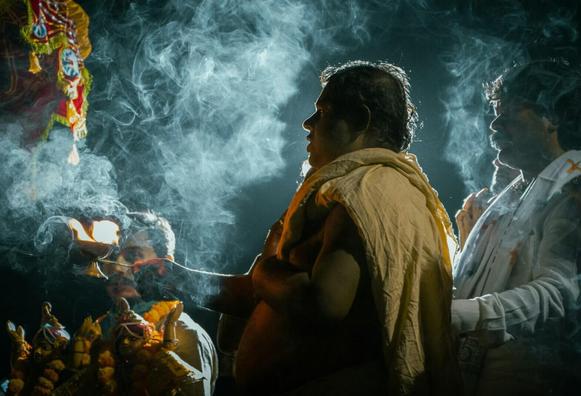
The Mentality of the Backward Class in Bharat Today. The reality of Asking for Free Reservations and Free Employment.
Reality of reservation system from my own experiences.
#India #Reservation #System #Constitution #Dalit #Brahman #Backward #Class
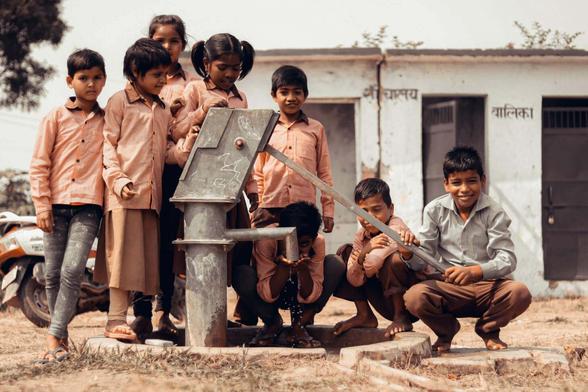
GEP Company Review – My experience with Brahmin Hatred, Insult, Frustration, and Abuse because of untrustworthy Managers and irresponsible Human Resource Managers
#Hindu #Life #Story #Brahman #Hatred #GEP #Personal #Experience #IT #Procurement #Fraud

GEP Company Review – My experience with Brahmin Hatred, Insult, Frustration, and Abuse because of untrustworthy Managers and irresponsible Human Resource Managers
#Hindu #Life #Story #Brahman #Hatred #GEP #Personal #Experience #IT #Procurement #Fraud

 FinWave Japan
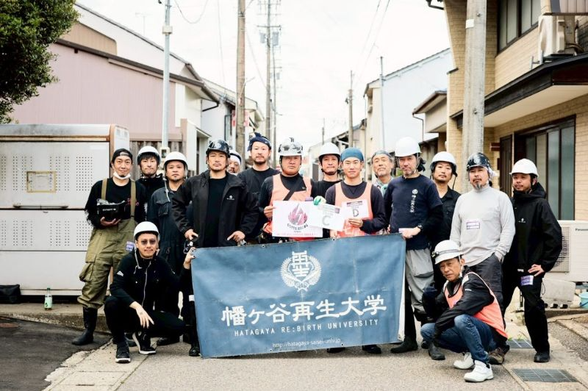
BRAHMANの復興支援活動をカード利用で応援
#エポスカード が #BRAHMAN 尽未来際 エポスカードを発行、利用額0.1%と新規入会1件1,000円を復興支援へ寄付
https://finwave.jp/archives/3995
#エポスカード が #BRAHMAN 尽未来際 エポスカードを発行、利用額0.1%と新規入会1件1,000円を復興支援へ寄付
https://finwave.jp/archives/3995


 Bharath Upendra
THE HERETIC
A kind of loneliness comes from being misunderstood by your family. My mother wants me to do Sandhya Vandanam. Chant the Gayatri Mantra. Face east. Fold my hands the right way. She wants a performance she can witness and take credit for. I understand this. I refuse to comply. I am too tired and too old for rebellion. I call it self-preservation, a refusal to hollow out what little interior life I have managed to build by filling it with someone else's beliefs. They call me a heretic.. a […]https://ridiculousbharath.wordpress.com/2026/05/13/the-heretic/

 Billboard JAPAN|Daily Ne
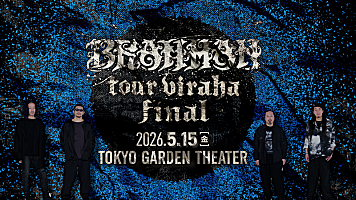
BRAHMAN、グランドクライマックス『tour viraha final』インタビュー映像公開
https://www.billboard-japan.com/d_news/detail/160710
#billboardjapan #Billboard_JAPAN_音楽ニュース #ビルボードジャパン #Billboard_JAPAN #BRAHMAN #チャート #音楽 #洋楽 #邦楽 #ミュージック #アーティスト #ランキング #ニュース
 WPS News
Cattle Farming in the Philippines: Best Practices for Sustainable Operations on Leyte Island
Baybay City | April 16, 2026
In the lush agricultural landscape of the Philippines, cattle farming represents a vital sector that supports the livelihoods of many, particularly on Leyte Island. With a diverse range of cattle breeds adapted to the country’s unique regions, including the Ilocos, Batangas, Iloilo, and Batanes Black, there is much potential for success in this endeavor. Additionally, various introduced breeds such as Hereford, Angus, and Brahman enrich the genetic diversity of the local cattle population.
The prominence of cattle farming in Asia can be attributed to their adaptability to different ecosystems, including the vast grasslands prevalent across the continent. In the Philippines, the agricultural terrain varies, and cattle have developed the ability to thrive in both tropical and subtropical climates, showcasing their resilience. However, establishing best practices is crucial for optimizing cattle farming operations.
Location and Land Management
Selecting an ideal site for cattle farming is paramount. Farmers should choose locations with easy access to ample water sources to ensure the cattle remain hydrated and healthy. Additionally, fertile pastureland is essential for grazing, supporting the nutritional needs of livestock.
Proper land size allocation plays a significant role in fostering a comfortable environment for cattle. A sheltered feeding area should be a minimum of 1.5 to 2 square meters per head, while an additional fenced loafing area of approximately 5 meters per head allows cattle to move freely and socialize—promoting overall well-being.
Sustainable Practices for Healthy Livestock
Effective pasture management, including crop rotation and intercropping, can enhance soil fertility and support the productivity of grazing lands. Regular monitoring of pasture quality and the implementation of controlled grazing patterns can prevent overgrazing, safeguarding the health of the land and the cattle.
Sheltering cattle from harsh weather conditions is equally essential. Simple structures provide shelter from heavy rains and extreme heat, ensuring the animals remain both safe and comfortable.
Routine health care, including veterinary check-ups and vaccinations, is vital for maintaining herd health. Farmers should create a health management plan, prioritizing cleanliness to reduce disease risks.
Nutrition and Feeding Strategies
Providing a balanced diet is crucial for the growth and productivity of cattle. A combination of forage, grains, and minerals can significantly affect milk and meat production. During drier seasons, supplementary feeding helps maintain cattle health and nutritional needs.
Breeding for Excellence
Choosing the right breeding practices based on farming objectives—whether focused on milk, beef, or dual-purpose production—can maximize productivity. It is vital to select breeds well-suited to the local climate and operational goals.
The Future of Cattle Farming in Southeast Asia
With increasing incomes and urbanization, the demand for beef and dairy products continues to rise. By adhering to sustainable practices and focusing on efficient management strategies, farmers on Leyte Island can create thriving cattle farming operations. These efforts not only support agricultural diversity but also contribute positively to the local economy.
As cattle farming evolves, embracing these best practices will ensure that cows remain an integral and sustainable part of the agricultural landscape in the Philippines.
#agriculture #Angus #BatanesBlack #Batangas #beefProduction #Brahman #breedingPractices #cattleFarming #CommunitySupport #cowNutrition #dairyFarming #farmingPractices #healthCare #Hereford #Ilocos #Iloilo #landManagement #livestock #livestockDiversity #pastureManagement #Philippines #ruralEconomy #sustainability #tropicalClimate #veterinaryCare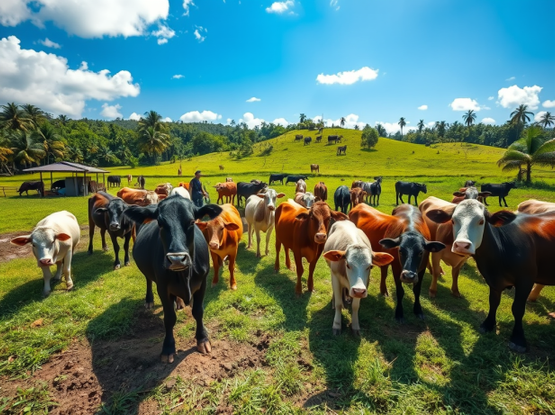
The “I” That is Seeking Liberation is Unreal: “All Are Appearances in and of Awareness” — Advaita, Gaudapada & the Seeker Who Never Was
A friend messaged “All are appearances in and of awareness” in reply to my poem “Big B” – https://selfrealization.blog/2026/04/13/big-b/.
I responded back as follows:
With such perfect understanding already in place, are you sure I might have anything else to add to that. Really, what you wrote just now is all the knowledge one needs to undertake and finish the spiritual journey with no need for any other prop. The very looking for other props is itself the obstacle to the full manifestation of the understanding that is already there…shit, one knows one has to just “keep quiet” and everything will be accomplished and yet why are we all restless?
“Sitting quietly, doing nothing;
Spring comes, and the grass grows by itself.”
~ Matsuo Basho
This (“All are appearances in and of awareness”) is all that the name-and-form analogy of the clay and pot conveys albeit in different words.
The only problem then for you and I might be that we are failing to grasp that the I that is seeking to understand and attain self-realization is itself an “appearance in and of awareness”.
Which is why Ashtavakra Gita and Gaudapada’s Verse 32 in Chapter 2 of Mandukya Karika (see below) and Sankaracharya’s Nirvana Shatakam say what they say.
Mandukya Karika 2.32 (Vaitathya Prakarana) asserts that from the standpoint of Absolute Truth (Paramartha), there is no creation, destruction, bondage, liberation, or seeker. This famous verse highlights that all dualistic experiences are illusions, and the ultimate reality is non-dual (Advaita), often interpreted as the unborn, unchanging Self. [1, 2, 3, 4, 5]
Sanskrit Verse (2.32):
न निरोधो न चोत्पत्तिर्न बद्धो न च साधकः ।न मुमुक्षुर्न वै मुक्त इत्येषा परमार्थता ॥ ३२ ॥
na nirodho na cotpattirna baddho na ca sādhakaḥ |na mumukṣurna vai mukta ityeṣā paramārthatā || 32 ||
Translation & Key Meanings:
- na nirodho: There is no destruction.
- na ca utpattiḥ: There is no creation or origin.
- na baddhaḥ: There is no one in bondage.
- na ca sādhakaḥ: There is no one practicing spiritual disciplines.
- na mumukṣuḥ: There is no seeker after liberation.
- na vai muktaḥ: There is no one liberated.
- iti eṣā paramārthatā: This is the Absolute Truth. [1, 2]
Significance:
- Non-Dual Reality: This verse by Gaudapada clarifies that the ultimate reality is entirely free from all dualistic concepts, including the processes of spiritual seeking or the state of liberation itself.
- Context: It comes within the context of analyzing the “unreality” (Vaitathya) of the world and the mind, noting that when knowledge of the Self is attained, all mental projections disappear.
- Absolute vs. Relative: While relative existence appears as a world of change, from the ultimate standpoint, no change ever occurred, as explained on VivekaVani and Tom Das. [1, 2, 6]
[1] https://vivekavani.com/m2v32/
[2] https://tomdas.com/2018/02/22/advaita-vedanta-gaudapadas-method-mandukya-upanishad-karika/
[3] https://swamij.com/upanishad-mandukya-karika.htm
[4] https://vedantastudents.com/mandukya-upanishad-with-shankara-bashyam-volume-17/
[5] https://vedantastudents.com/mandukya-upanishad-with-shankara-bashyam-volume-20/
[6] https://vivekavani.com/m3v32/