Day 8: Still on the topic of memory - a lot of people want to have a “better” memory. Improving memory is also an active research topic, as it has tremendous potential in disorders that affect memory, such as dementia. One method that is currently being studied is transcranial stimulation - basically applying small currents to the scalp. The results are still somewhat mixed and a lot more research is necessary to optimize such protocols, but that hasn’t stopped the development of commercial applications that claim unproven benefits. Yet here’s the kicker: when tested in the lab, some of these commercial devices actually had negative effects, leading to worse memory performance.

#ShyButSharing365 #neuroscience #memory #transcranial #stimulation #BrainStimulation
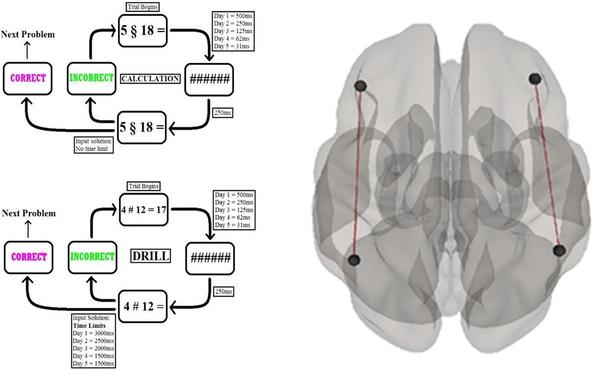
What role do cortical regions play in #mathematical learning? This study reveals the causal role of dorsolateral #PrefrontalCortex & #frontoparietal network in #math learning using #transcranial neuromodulation in human participants @PLOSBiology https://plos.io/45SyMUI
Magnetism Helps Stifle The Pain of Fibromyalgia: The data demonstrated a 40.4% pain reduction for those women stimulated magnetically. #fibromyalgia #pain #transcranial #magnetic #stimulation
https://www.instagram.com/drhowardsmithreports/reel/DIxDy7fgpML/
Howard G. Smith MD, AM on Instagram: "Magnetism Helps Stifle The Pain of Fibromyalgia The repetitive application of magnetic stimulation to the brain of those suffering from fibromyalgia produces a 2-fold reduction in their perceived pain. A multi site randomized, double-blinded international study of repetitive trans-cranial magnetic stimulation led by Brazilian and French neuroscientists included 101 women, median age 48 years, and was published in the British Journal of Anesthesia. Half the group received 3000 pulses of 10 Hz magnetic stimulation of the motor cortex over an 18 week period. The control group received sham stimulation. The data demonstrated a 40.4% pain reduction for those women stimulated magnetically versus only an 18.4% reduction for those who received the sham stimulation. The genuine treatment also led to better daily functioning. Those receiving the magnetic therapy complained of no demonstrable side effects. The bad news: pain control peaked at 8 weeks following therapy and was significantly lower by 16 weeks. This noninvasive brain therapy may provide welcome relief to those fibromyalgia unable to benefit from standard therapy after additional studies refine the protocol for optimal and lasting results. Repetitive transcranial magnetic stimulation, rTMS for short, is now approved by the US Food and Drug Administration for depression, cortical mapping, migraine with aura, and obsessive-compulsive disorder, but it can cost thousands of dollars. https://www.medscape.com/viewarticle/treating-fibromyalgia-repetitive-transcranial-magnetic-2025a10008e6 https://www.bjanaesthesia.org/article/S0007-0912(25)00102-3/fulltext #fibromyalgia #pain #transcranial #magnetic #stimulation"

0 likes, 0 comments - drhowardsmithreports on April 22, 2025: "Magnetism Helps Stifle The Pain of Fibromyalgia The repetitive application of magnetic stimulation to the brain of those suffering from fibromyalgia produces a 2-fold reduction in their perceived pain. A multi site randomized, double-blinded international study of repetitive trans-cranial magnetic stimulation led by Brazilian and French neuroscientists included 101 women, median age 48 years, and was published in the British Journal of Anesthesia. Half the group received 3000 pulses of 10 Hz magnetic stimulation of the motor cortex over an 18 week period. The control group received sham stimulation. The data demonstrated a 40.4% pain reduction for those women stimulated magnetically versus only an 18.4% reduction for those who received the sham stimulation. The genuine treatment also led to better daily functioning. Those receiving the magnetic therapy complained of no demonstrable side effects. The bad news: pain control peaked at 8 weeks following therapy and was significantly lower by 16 weeks. This noninvasive brain therapy may provide welcome relief to those fibromyalgia unable to benefit from standard therapy after additional studies refine the protocol for optimal and lasting results. Repetitive transcranial magnetic stimulation, rTMS for short, is now approved by the US Food and Drug Administration for depression, cortical mapping, migraine with aura, and obsessive-compulsive disorder, but it can cost thousands of dollars. https://www.medscape.com/viewarticle/treating-fibromyalgia-repetitive-transcranial-magnetic-2025a10008e6 https://www.bjanaesthesia.org/article/S0007-0912(25)00102-3/fulltext #fibromyalgia #pain #transcranial #magnetic #stimulation".

Instagram
At-Home Electrical Brain Stimulation For Depression: Those receiving true stimulation enjoyed a 3-fold greater improvement in their depression severity. #depression #transcranial #dcstimulation #home
https://www.instagram.com/p/DBuGughN6DG/
Howard G. Smith MD, AM on Instagram: "At-Home Electrical Brain Stimulation For Depression Neuroscientists in London and Texas now report the successful management of major depression using at-home application of transcranial direct current electrical stimulation. A total of 174 subjects with depression participated in the 10 week trial. Half of the group received 30 minute at-home electrical stimulations with a week current between two electrodes while the other half, the controls, received sham stimulation. Those receiving true stimulation enjoyed a 3-fold greater improvement in their depression severity. The rate of depression remission was twice as high for the treatment group versus the controls. At-home electrical stimulation offers another mode of therapy to those depressed individuals who either have side effects with medications or fail to respond to them. https://www.nature.com/articles/s41591-024-03305-y #depression #transcranial #dcstimulation #home"

0 likes, 0 comments - drhowardsmithreports on October 29, 2024: "At-Home Electrical Brain Stimulation For Depression Neuroscientists in London and Texas now report the successful management of major depression using at-home application of transcranial direct current electrical stimulation. A total of 174 subjects with depression participated in the 10 week trial. Half of the group received 30 minute at-home electrical stimulations with a week current between two electrodes while the other half, the controls, received sham stimulation. Those receiving true stimulation enjoyed a 3-fold greater improvement in their depression severity. The rate of depression remission was twice as high for the treatment group versus the controls. At-home electrical stimulation offers another mode of therapy to those depressed individuals who either have side effects with medications or fail to respond to them. https://www.nature.com/articles/s41591-024-03305-y #depression #transcranial #dcstimulation #home".

Instagram
Stanford scientists boost hypnotizability with transcranial magnetic brain stimulation

Researchers have discovered a method to temporarily increase hypnotizability using non-invasive brain stimulation, showing promise for pain management in fibromyalgia patients.

PsyPost
A magnetic therapy for depression gains precision
Approved over a decade ago, transcranial magnetic stimulation (TMS) is moderately effective. Tailoring the treatment to individual brains may improve results.
https://knowablemagazine.org/article/mind/2023/targeting-tms-for-depression #magnetic #therapy #depression #TMS #transcranial
Researchers at the Ruhr University Bochum have succeeded in a special form of classic conditioning. In a group of 75 people, they showed that effects of #transcranial #magnetic #stimulation, or #TMS for short, can only be triggered by hearing a sound
#Neuroscience #sflorg
https://www.sflorg.com/2023/04/ns04242301.html
Effects of brain stimulation can be conditioned

Artificially induced change in nerve cell activity

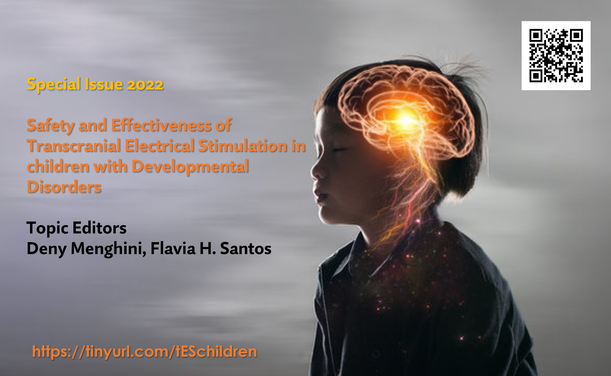
"Safety and Effectiveness of #Transcranial Electrical Stimulation in #Children with Developmental Disorders", edited by Dr Deny Menghini and Dr Flavia H. Santos

#neurology, #psychiatry #paediatrics #brain #NIBS #tDCS #tRNS #tAS #tES

[https://lnkd.in/eXW58Bxm]

#CognitiveScience @mathcog

Safety and Effectiveness of Transcranial Electrical Stimulation in Children with Developmental Disorders

Transcranial electrical stimulation (tES), as direct transcranial stimulation (tDCS), is an emerging neuroscientific approach that can be used to explore structure-function relationships as well as to develop innovative therapeutic tools in neurodevelopmental (autism, learning disorder, ADHD), psychiatric (anorexia nervosa, Tourette's syndrome), and neurological (cerebral palsy, post-stroke aphasia) disorders in pediatrics. Despite several attempts to use novel therapeutic interventions in pediatric populations, the conclusions that studies reach are limited by:(i) the heterogeneity of results, at times, even conflicting; (ii) the poorly understood brain mechanisms underlying behavioral improvements or recovery of function; (iii) the risks and potential ethical concerns associated with the application of these techniques in pediatric populations. iv) the need for protocols to examine adverse effects.Delving into the applications of tES, even of less explored techniques (e.g., random noise transcranial stimulation or alternating transcranial stimulation), identifying influencing factors (e.g., age, severity of disorder), studying the physiological effects related to tES and its safety risks, could help clarify the current heterogeneity in the literature. Moving to

Frontiers