Today in Labor History March 6, 1925: Miners in Cape Breton, Canada, struck against the British Empire Steel Corporation (BESCO). They’d been striking against BESCO regularly for the past 5 years over wage cuts. The 1925 strike lasted 5 months. Company police killed one miner, William Davis. BESCO eventually went bankrupt. These strikes were part of the Canadian Labour Revolt (1918-1925) led by the One Big Union. The Vancouver General Strike (1918) and the Winnipeg General Strike (1919) inspired the OBU and subsequent strikes of the Labor Revolt. The OBU was also influenced by the IWW, the Spartacist Uprising in Germany, and the Communist Revolution in Russia. The OBU was a syndicalist labor union that sought to overthrow capitalism and replace it with a socialist system based on worker control of the workplace.

#workingclass #LaborHistory #capebreton #steel #strike #union #GeneralStrike #winnipeg #vancouver #canada #spartacist #IWW #communism #onebigunion #socialism #syndicalism #Revolution #communism #russia

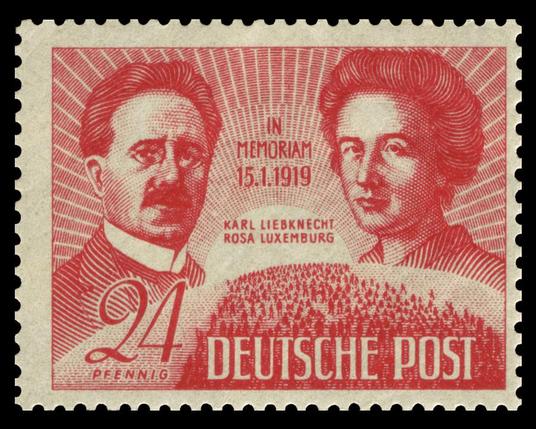
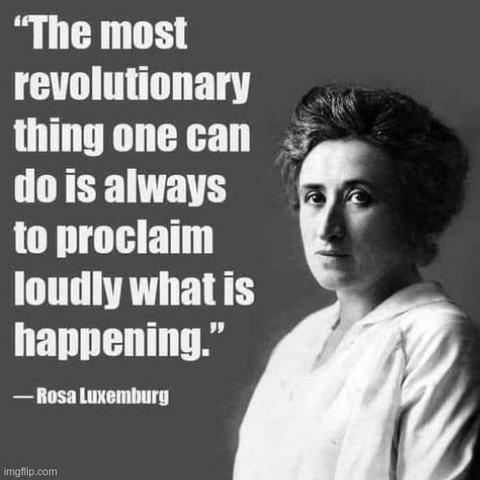
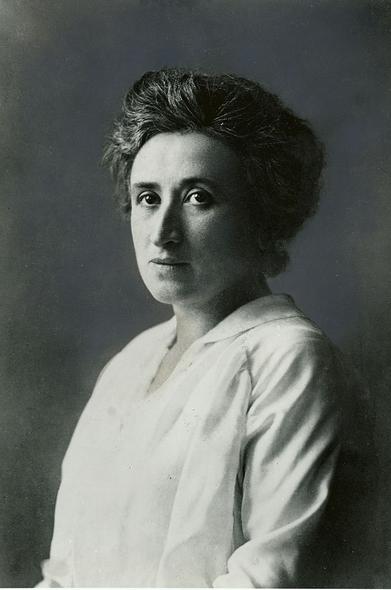
Today in Labor History March 5, 1871: Rosa Luxemburg (1871-1919) was born in Zamosc, Poland. Together with Karl Liebknecht, she helped found the radical Spartacus League in 1916. The Spartacists and other leftwing Council Communists launched an uprising to replace the Social Democratic government with a communist one. Many of the workers obtained arms. They tried, but failed, to get the support of the Navy, which remained neutral in the conflict. However, the Social Democrats got the anti-Communist Freikorps paramilitary to fight for their side. Many of the ultranationalist Freikorps members were suffering from PTSD from WWI. Many went onto to become members of the Nazi Party and served in the SS. The Freikorps had weapons and military equipment leftover from WWI and were able to quash the uprising within a week. Up to 200 people died in the fighting, including 17 Freikorps soldiers. The Social Democrats captured, beat and executed Liebknecht and Luxemburg.

#workingclass #LaborHistory #RosaLuxemburg #spartacist #communism #nazis #uprising #ptsd #execution #socialdemocrat #germany #poland #fascism

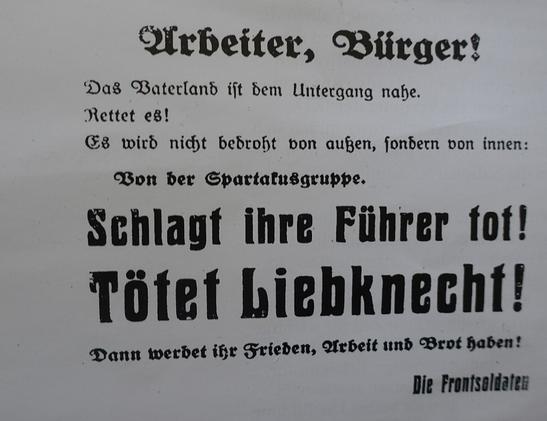
Today in Labor History January 15, 1919: Rosa Luxemburg and Karl Liebknecht, founders of the Spartacist League and the German Communist Party, were murdered. On January 7, the Spartacists called a General Strike to overthrow the moderate Social Democratic government. 500,000 workers participated. To quash the rebellion, the Social Democrats utilized the Freikorps, a right-wing paramilitary composed of World War I veterans, many of whom were suffering from PTSD, and many of whom went on to become Nazis, including Heinrich Himmler. The Freikorps slaughtered 200 people during the week-long uprising. Demonstrations and further unrest broke out in response to the assassinations of Luxemburg and Liebknecht. The Freikorps quashed these, too, as well as the soviets that had been implemented in Bavaria and other parts of Germany. In all, they slaughtered over 5,000 people.

#workingclass #LaborHistory #rosaluxemburg #karlliebknecht #communist #spartacist #generalstrike #uprising #nazis #rebellion #soviet

On #ThisDayInHistory in 1919, German #socialist revolutionaries #RosaLuxemburg & #KarlLiebknecht were tortured & murdered by #Freikorps. Players in the #NovemberRevolution that toppled the kaiser, they thought the #Spartacist uprising against the #SPD a mistake (it sadly failed).

Today in Labor History January 5, 1919: Karl Liebknecht and Rosa Luxemburg launched the Spartacist Uprising in Berlin. Part of the post-WWI Revolution occurring throughout Germany, the Spartacist uprising was essentially a power struggle between the Spartacists and other Council Communists (left-wing, anti-authoritarian communists) against the Social Democrats. 500,000 workers participated in the General Strike they called for January 7 to replace the moderate Social Democratic government with a communist one. Many of the workers obtained arms. They tried, but failed, to get the support of the Navy, which remained neutral in the conflict. However, the Social Democrats got the anti-Communist Freikorps paramilitary to fight for their side. The Freikorps had weapons and military equipment leftover from WWI and were able to quash the uprising within a week. The Freikorps was comprised of WWI vets, many of whom were suffering from PTSD. Many went on to became Nazis. Up to 200 people died in the fighting, including 17 Freikorps soldiers. The Social Democrats captured, beat and executed Liebknecht and Luxemburg.

#workingclass #LaborHistory #spartacist #berlin #wwi #communism #nazis #RosaLuxemburg #generalstrike #ptsd #uprising #Revolution

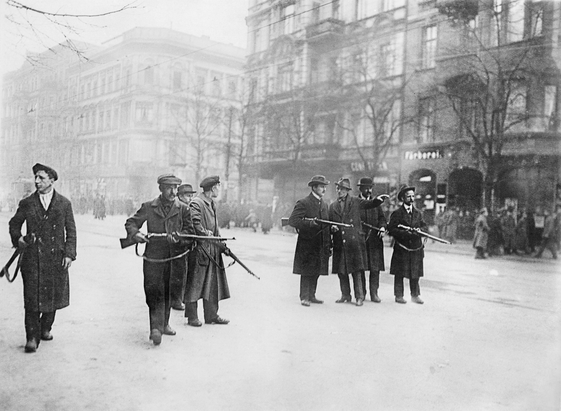
Spartacist irregulars holding a street in Berlin, Germany, 1919

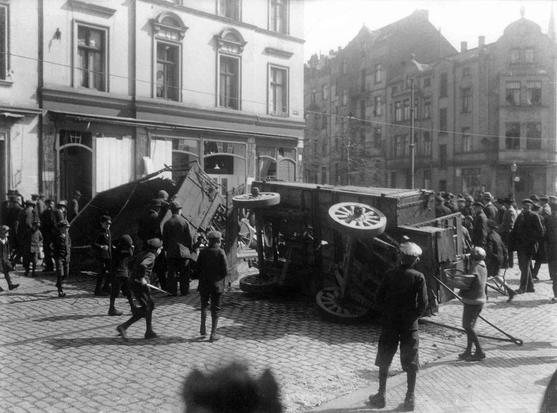
The Spartacist uprising mobilized hundreds of thousands of revolutionary workers, soldiers, and sailors who took to Berlin’s streets in January 1919, with armed groups occupying newspaper buildings and strategic sites. Despite the name, the revolt was largely spontaneous—the Spartacus League and Communist Party leadership had limited control over the masses, with Rosa Luxemburg actively opposing the premature action.

The insurgent forces lacked military organization and coordination, with many participants seeking unity among socialist factions rather than armed confrontation. They faced overwhelming firepower from government-deployed Freikorps militias—right-wing paramilitary units of former frontline soldiers who used flamethrowers, artillery, and machine guns to brutally crush the poorly-armed workers.

Today in Labor History October 23, 1874: Otto Rühle (1874-1943) was born on this day in Freiberg. Ruhle was a left council communist of the Spartacist League. Along with Karl Liebknecht, Rosa Luxemburg and Franz Mehring, Ruhle helped found the magazine Internationale. Ruhle opposed both world wars, Leninism, fascism, and Bolshevism. Early in his life, Rühle trained and worked a school teacher. He created a socialist Sunday school and criticized traditional school in “Work and Education” (1904), “The Enlightenment of Children About Sexual Matters,” (1907), and “The Proletarian Child” (1911). In 1912, the people elected him to the Reichstag as a Social Democrat. However, he is much more well known for his role as a leader of the Council Communist movement, along with Anton Pannekoek. They opposed the state communism of the Soviet Union. They advocated for Workers Councils and Council Democracy. Lenin attacked them in his pamphlet, “Left-wing Communism: An Infantile Disorder.”

#workingclass #LaborHistory #ottoruhle #germany #councilcommunism #communism #spartacist #rosaluxemburg #soviet #lenin #fascism #education #children #school

Today in Labor History June 28, 1916: 50,000 workers staged a one-day protest strike against the trial of Karl Liebknecht for his anti-war protests. He was a Left Communist and member of Parliament, one of the very few to denounce the Armenian Genocide by the Ottomans. He later formed Spartacist League, with Rosa Luxemburg, and together they helped lead the 1918 Communist revolution. The Prussian army assassinated them, making them martyrs for the socialist cause throughout Europe.

#workingclass #LaborHistory #communism #karlliebknecht #Revolution #armenia #genocide #spartacist #rosaluxemburg #socialism

Today in Labor History March 6, 1925: Miners in Cape Breton, Canada, struck against the British Empire Steel Corporation (BESCO). They’d been striking against BESCO regularly for the past 5 years over wage cuts. The 1925 strike lasted 5 months. Company police killed one miner, William Davis. BESCO eventually went bankrupt. These strikes were part of the Canadian Labour Revolt (1918-1925) led by the One Big Union. The Vancouver General Strike (1918) and the Winnipeg General Strike (1919) inspired the OBU and subsequent strikes of the Labor Revolt. The OBU was also influenced by the IWW, the Spartacist Uprising in Germany, and the Communist Revolution in Russia. The OBU was a syndicalist labor union that sought to overthrow capitalism and replace it with a socialist system based on worker control of the workplace.

#workingclass #LaborHistory #capebreton #steel #strike #union #GeneralStrike #winnipeg #vancouver #canada #spartacist #IWW #communism #onebigunion #socialism #syndicalism #Revolution #communism #russia

Today in Labor History March 5, 1871: Rosa Luxemburg (1871-1919) was born in Zamosc, Poland. Together with Karl Liebknecht, she helped found the radical Spartacus League in 1916. The Spartacists and other leftwing Council Communists launched an uprising to replace the Social Democratic government with a communist one. Many of the workers obtained arms. They tried, but failed, to get the support of the Navy, which remained neutral in the conflict. However, the Social Democrats got the anti-Communist Freikorps paramilitary to fight for their side. Many of the ultranationalist Freikorps members were suffering from PTSD from WWI. Many went onto to become members of the Nazi Party and served in the SS. The Freikorps had weapons and military equipment leftover from WWI and were able to quash the uprising within a week. Up to 200 people died in the fighting, including 17 Freikorps soldiers. The Social Democrats captured, beat and executed Liebknecht and Luxemburg.

#workingclass #LaborHistory #RosaLuxemburg #spartacist #communism #nazis #uprising #ptsd #execution #socialdemocrat #germany #poland #fascism