The recording and slides for our community webinar, “Check your Metadata Quality with the DataCite Metadata Dashboard,” are now available. See how the new dashboard helps you spot gaps, track progress, and improve DOI metadata quality. Watch, learn, and improve your metadata: https://youtu.be/wstEsFZ1Esk

@kelly
#DataCite #Metadata #MetadataQuality #PersistentIdentifiers #PIDs #DOI #ResearchData #OpenScience #FAIRData #ScholarlyInfrastructure #OpenInfrastructure #OpenResearch
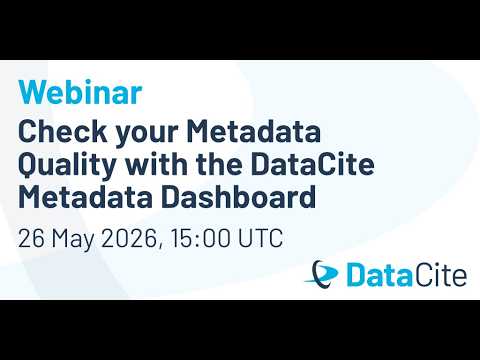
Check your Metadata Quality with the DataCite Metadata Dashboard

YouTube

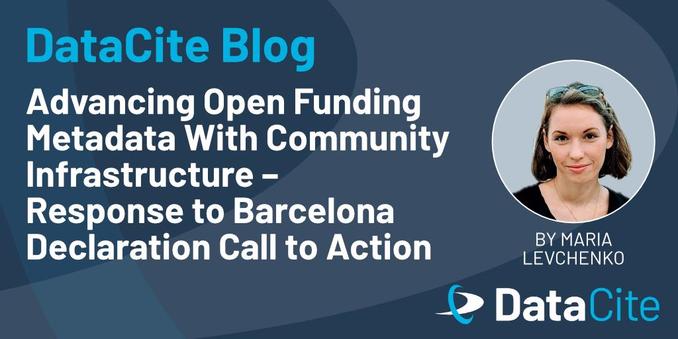
Open funding metadata is the backbone of transparent research. In our response to the Barcelona Declaration Call to Action, we show how DataCite is advancing award DOIs, funder PIDs & metadata enrichment to connect funding with research impact: https://doi.org/10.5438/9dw2-8g96

@BarcelonaDORI

#OpenFundingMetadata #PersistentIdentifiers #PIDs #DOIs #AwardDOIs #ResearchImpact #OpenScience #OpenResearch #ScholarlyInfrastructure #Metadata

It's Global Accessibility Awareness Day! Accessibility goes beyond alt text & color contrast; it means identifying barriers, improving usability & supporting inclusive access to open infrastructure. Read our accessibility statement on how we improve our website & services: https://datacite.org/accessibility-statement/

#GAAD #Accessibility #DigitalAccessibility #A11y #InclusiveDesign #OpenInfrastructure #OpenScience #ScholarlyInfrastructure

5/ Infrastructure: JDK 21, Gradle 9, TensorFlow 2.17 (Python 3.10–3.11), pdfalto 0.6.0, wapiti 1.5.1, virtualenv/conda support for DeLFT.
6/ Full release notes → https://github.com/kermitt2/grobid/releases/tag/0.9.0

#GROBID #OpenSource #NLP #ScholarlyInfrastructure
6/6

Release 0.9.0 · grobidOrg/grobid

What's Changed Added Conflict of interest and author contributions statement extraction in header and segmentation models #1319 Extract figures, tables and equations from back/annex sections #1215...

GitHub
Final draft of the revised Principles of Scholarly Infrastructure (#POSI) is open for public review. 📅 Feedback deadline: Aug 22, 2025. #POSI @norfireland.bsky.social #OpenResearch #OpenScience #ScholarlyInfrastructure #ResearchMatters

RE: https://bsky.app/profile/did:plc:np4nwymjsbbwnhvyk36m4dyz/post/3lvdcig3dhk2y
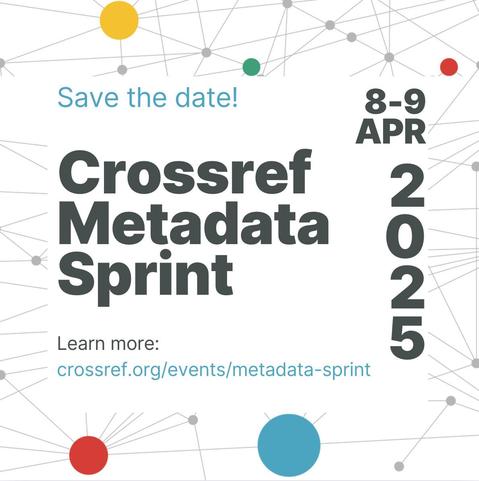
Happening in #Madrid, 8-9 April 2025, join the Crossref #Metadata Sprint 2025 to pitch a project or work with others on themes like:
✅ Integrity of the scholarly record
✅ Metadata quality and completeness
✅ Accessibility for all
This event is all about building solutions together. Technical skills are not required—just your passion for improving #scholarlyinfrastructure. Limited spots available—submit your idea today: https://www.crossref.org/events/metadata-sprint/
Crossref Metadata Sprint - Crossref

Version en español | Versão em português Metadata sprint in São Paulo (4–6 March 2026) We are excited to announce the upcoming Metadata Sprint in São Paulo, Brazil, which will take place 4–6 March 2026. This is the second Metadata Sprint organized by Crossref and our first to be held in Latin America with the participation of SciELO. In recognition of the region’s diversity, the event will be held in three languages – Portuguese, Spanish, and English, to support the opportunity for active participation for all.

www.crossref.org
Kitchen Essentials: An Interview with Hylke Koers of STM Solutions - The Scholarly Kitchen

In today's Kitchen Essentials post, Alice Meadows interviews Hylke Koers, Chief Information Officer for STM Solutions about his organization and his career in scholarly infrastructure

The Scholarly Kitchen
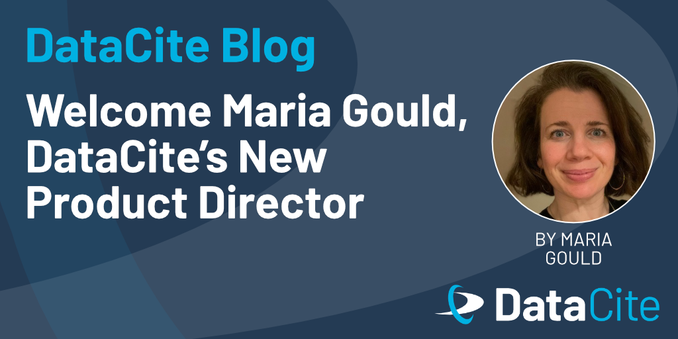
We're happy to welcome Maria Gould as DataCite's new Director of Product! 🥳
Read her first DataCite blog post about Portland's iconic bridges & her career journey emphasizing the importance of connections in scholarly infrastructure. https://doi.org/10.5438/7gm5-eb06
#OpenResearch #OpenInfrastructure #PersistentIdentifiers #BuildingBridges
#ProductDevelopment #CommunityDriven #ScholarlyInfrastructure
Welcome Maria Gould, DataCite’s New Product Director - DataCite

Greetings to the DataCite community! I’m Maria Gould, and I’ve just joined DataCite as Director of Product. I’m excited to have this opportunity to introduce myself and share a bit about where I’m from and how I got here.  I live in Portland, Oregon, USA, where the city is bisected by the Willamette River. Twelve different bridges span the river to connect the city’s east and west sides, enabling vehicles, trains, pedestrians, and bicyclists (and one bagpiping unicyclist!) to travel back and forth. As boats and cargo ships travel up and down the river, some bridges are high enough for them to pass under, and the rest are designed to lift up temporarily to let them through. Each bridge has a unique design and its own character, but they all serve a common purpose of connecting the city and letting those within it get from one place to another.

DataCite

As we transition from one calendar year to the next we tend to look in 2 directions. 1st we look backwards at events that defined the year that was. We then look to the future & try to predict events that will define the year to come.

Here I provide a roundup of articles, blog posts & initiatives I found interesting & useful from last quarter of 2023.

Predictions... stay tuned.

#Retractions #TrustIntegrity #PeerReview #AI #ScholarlyInfrastructure #OpenScience #OA

https://tonyhopedale.com/blog/f/a-roundup

A Roundup

As we transition from one calendar year to the next we tend to look in two directions. First we look backwards at the events that defined the year that was. We then look to the future and try to predict the events that w...

Tony Alves

Here's a paper to announce, authored with my colleagues, Barbara Lancho-Barrantes and Diane Pennington Rasumussen!

'Measuring the concept of #PID literacy : user perceptions and understanding of persistent identifiers in support of open #scholarly #infrastructure

The paper is available openly here: https://doi.org/10.1515/opis-2022-0142 or https://strathprints.strath.ac.uk/84311/

#PersistentIdentifiers #PIDgraph #repositories #OpenInfrastructure #scholarlyinfrastructure #metadata #repositories #retrieval @openstrath

Measuring the Concept of PID Literacy: User Perceptions and Understanding of PIDs in Support of Open Scholarly Infrastructure

The increasing centrality of persistent identifiers (PIDs) to scholarly ecosystems and the contribution they can make to the burgeoning “PID graph” has the potential to transform scholarship. Despite their importance as originators of PID data, little is known about researchers’ awareness and understanding of PIDs, or their efficacy in using them. In this article, we report on the results of an online interactive test designed to elicit exploratory data about researcher awareness and understanding of PIDs. This instrument was designed to explore recognition of PIDs (e.g. Digital Object Identifiers [DOIs], Open Researcher and Contributor IDs [ORCIDs], etc.) and the extent to which researchers correctly apply PIDs within digital scholarly ecosystems, as well as measure researchers’ perceptions of PIDs. Our results reveal irregular patterns of PID understanding and certainty across all participants, though statistically significant disciplinary and academic job role differences were observed in some instances. Uncertainty and confusion were found to exist in relation to dominant schemes such as ORCID and DOIs, even when contextualized within real-world examples. We also show researchers’ perceptions of PIDs to be generally positive but that disciplinary differences can be noted, as well as higher levels of aversion to PIDs in specific use cases and negative perceptions where PIDs are measured on an “activity” semantic dimension. This work therefore contributes to our understanding of scholars’ “PID literacy” and should inform those designing PID-centric scholarly infrastructures that a significant need for training and outreach to active researchers remains necessary.

De Gruyter