Will 'AI-Assisted' #Journalists Bring Errors and #Retractions ?

Meet the "journalist" who "uploads press releases or analyst notes into #AI tools and prompts them to spit out #articles that he can edit and #publish quickly," according to the Wall Street Journal. "AI-assisted stories accounted for nearly 20% of Fortune's web traffic in the second half of 2025.
#AiSlop #journalism #journalist

https://news.slashdot.org/story/26/04/05/2119210/will-ai-assisted-journalists-bring-errors-and-retractions?utm_source=rss1.0mainlinkanon&utm_medium=feed

Will 'AI-Assisted' Journalists Bring Errors and Retractions? - Slashdot

Meet the "journalist" who "uploads press releases or analyst notes into AI tools and prompts them to spit out articles that he can edit and publish quickly," according to the Wall Street Journal. "AI-assisted stories accounted for nearly 20% of Fortune's web traffic in the second half of 2025." An...

Interesting case in which the usual issues surrounding the retraction of a journal article are further complicated by a NY state law criminalizing the distribution of information that endangers health.
https://retractionwatch.com/2026/04/02/judge-lawsuit-controversial-adolescents-paxil-study-329/

PS: Apart from the specific issues raised by this case (whether a certain antidepressant is safe and effective for teenagers), I'm interested in this more general question: Do US journals have a #FirstAmendment right not to retract articles, regardless of the circumstances, for example, even when the articles have been shown to be false and harmful and even when local law prohibits the distribution of such information? Is "forced retraction" a kind of #censorship prohibited by the Constitution?

Before you comment, note that this cases raises a lot of important questions about our tolerance for harm. But I'm trying to raise a slightly different question about the interaction of scholarly norms and public law.

#Law #Retractions #USLaw
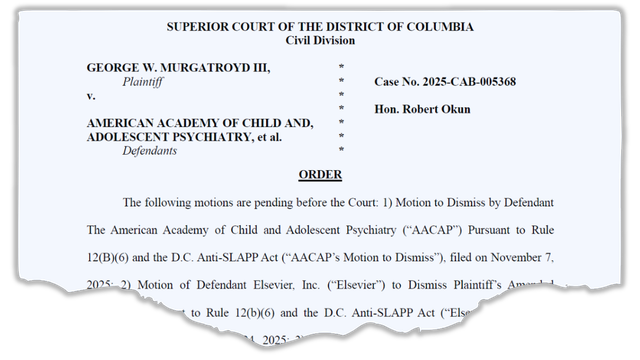
Judge tosses lawsuit over controversial Paxil ‘Study 329’

A judge has dismissed a legal challenge aimed at forcing Elsevier to retract a long-criticized study that concluded the antidepressant Paxil was safe and effective for teens. The 2001 paper, publis…

Retraction Watch
Guest post: A call to end the ‘impact on conclusions’ test for retraction

The Ship of Theseus paradox asks, if you replace all the wood in a ship, is it still the same ship? Likewise, is it possible to change all the facts inside an article without altering its conclusio…

Retraction Watch

📄🔍 Zurückgezogene Artikel zitieren, ohne es zu merken?

Retractions rechtzeitig zu erkennen ist gar nicht so einfach. Allein 2023 wurden weltweit mehr als 10.000 wissenschaftliche Artikel zurückgezogen. Mit Retraction Watch und dem Zotero-Plugin behält man den Überblick und erkennt Retractions direkt in der eigenen Literaturverwaltung.

#RetractionWatch #Retractions #Zotero #GuteWissenschaftlichePraxis #OpenScience #Openness

https://www.tub.tuhh.de/blog/2026/02/23/retraction-watch-zurueckgezogene-artikel/

Zitiert und nicht bemerkt? So hilft Retraction Watch, zurückgezogene Artikel zu finden - Universitätsbibliothek TU Hamburg

Retraction Watch unterstützt dabei, zurückgezogene wissenschaftliche Artikel zu erkennen. In diesem Beitrag stellen wir den Service vor.

Universitätsbibliothek TU Hamburg

Somebody managed to wind their shorts into a painful twist for all.

"The Authors have retracted this Article as they could not reach agreement on data ownership. The data used in this study originated from the thesis work of the first author and was supervised by a researcher who is not listed as an author and who did not grant permission for the use of the data."

#retractions

https://www.nature.com/articles/s41598-026-40318-8

Retraction Note: Enhanced climate change resilience on wheat anther morphology using optimized deep learning techniques - Scientific Reports

Nature

Ars Technica: Editor’s Note: Retraction of article containing fabricated quotations. “That this happened at Ars is especially distressing. We have covered the risks of overreliance on AI tools for years, and our written policy reflects those concerns. In this case, fabricated quotations were published in a manner inconsistent with that policy. We have reviewed recent work and have not […]

https://rbfirehose.com/2026/02/16/editors-note-retraction-of-article-containing-fabricated-quotations-ars-technica/
Editor’s Note: Retraction of article containing fabricated quotations (Ars Technica)

Ars Technica: Editor’s Note: Retraction of article containing fabricated quotations. “That this happened at Ars is especially distressing. We have covered the risks of overreliance on AI tool…

ResearchBuzz: Firehose

Can we trust “guidelines on how to write a scientific paper”? We analysed 71 “Write a Scientific Paper” guidelines that were widely used and cited for years as best practices.

 https://doi.org/10.1080/10875301.2026.2622096

Facts:
▪️ 555 citations
▪️ 48 papers carry an editorial expression of concern
▪️ 30 (42%) have been retracted!

#AcademicPublishing #ResearchIntegrity #Retractions #ScholarlyCommunication #Bibliometrics #PublicationEthics #PeerReview

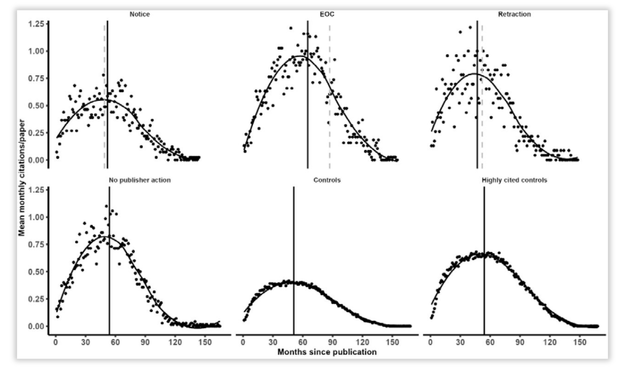
Little blogpost reporting an analysis of recent (2021-2025) retractions of highly-cited papers in relation to #PubPeer comments. https://deevybee.blogspot.com/2026/02/the-role-of-pubpeer-in-retractions-of.html
#retractions #publishing
An analysis of PubPeer comments on highly-cited retracted articles

PubPeer is sometimes discussed as if it is some kind of cesspit where people smear honest scientists with specious allegations of fraud. ...

New data suggest that just like regular journals (i.e., non-GlamMagz), also female authors really do seem to publish higher quality articles - which, consequently, leads to fewer #retractions for both:

https://bjoern.brembs.net/2026/01/retraction-data-are-still-useless-almost/

#womeininstem

Retraction data are still useless – almost

Retractions of scholarly articles are a rare event, affecting only about 0.02-0.04% of articles in total (but yearly rates are going up dramatically). This means that data about retractions are not even close to being representative of the scholarly literature […] <a class="more-link" href="https://bjoern.brembs.net/2026/01/retraction-data-are-still-useless-almost/">↓ Read the rest of this entry...</a>

bjoern.brembs.blog

Retraction data are still useless – almost

Retractions of scholarly articles are a rare event, affecting only about 0.02-0.04% of articles in total (but yearly rates are going up dramatically). This means that data about retractions are not even close to being representative of the scholarly literature at large. In particular, when the non-retracted literature contains anything from 40% to over 80% of unreliable work, even today's retraction rates of around 0.2% or so seem totally negligible, in the grand scheme of things. After all, […]

https://bjoern.brembs.net/2026/01/retraction-data-are-still-useless-almost/