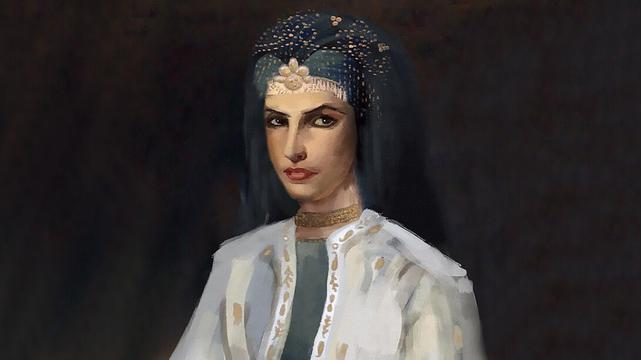
The Pirate Governess of the Med: Sayyida al Hurra

At a time when empires fought for control of the seas, one of the most feared naval powers in the Mediterranean wasn’t a king or an admiral. It was a woman. Sayyida al-Hurra built a maritime force that challenged empires and rewrote expectations of power.

Born in the late 15th century to an Andalusian family forced into exile, Sayyida al-Hurra rose to become the ruler of Tétouan, a key port city in northern Morocco.

Educated, politically astute, and deeply shaped by the displacement of her people following the fall of Granada, she stepped into power after the death of her husband and governed in her own right.

At a time when women rarely held such authority, she not only ruled Tétouan but also became a central figure in Mediterranean privateering, navigating diplomacy, war, and trade with remarkable skill.

Sayyida al-Hurra’s significance lies in how she wielded power in a fractured and hostile world.

With much of Morocco’s coastline controlled by Spanish and Portuguese forces, Tétouan became a rare stronghold, and she turned it into a hub of resistance. Through alliances with figures like Hayreddin Barbarossa, she helped coordinate privateering efforts that disrupted European shipping and asserted regional strength.

To her enemies, she was a pirate. To her people, she was a defender. Protecting trade, rebuilding prosperity, and responding to the displacement and losses her community had endured.

Her leadership blurred the line between piracy and naval warfare, highlighting how perspective shapes history. She didn’t merely inherit power; she actively expanded and defended it, ensuring that Tétouan remained politically and economically relevant during a volatile era.

When she married the Sultan of Morocco, Ahmad al-Wattasi, she did something unprecedented: she refused to leave Tétouan.

Instead, the Sultan travelled to her city for the wedding, the only recorded instance of a Moroccan ruler doing so

Even in marriage, she remained firmly in control of her own domain.

Sayyida al-Hurra’s story resists simple labels. Pirate or protector, ruler or rebel, she was shaped by a turbulent time and responded with decisive leadership. Her legacy lies not just in what she achieved, but in how she redefined authority, proving that power could be claimed, not just inherited.

Sayyida al Hurra. Source.

Sources

qaronline.org/blog/2020-05-25/pirate-profile-sayyida-al-hurra

civilization.fandom.com/wiki/Sayyida_al_Hurra_(Civ7)

thegreasypen.substack.com/p/sayyida-al-hurra-governess-turned

wikipedia.org/wiki/Sayyida_al_Hurra

amazon.co.uk/Untold-Story-Lioness-Sayyida-Pirate-ebook/dp/B0DQJ63Z4J

researchgate.net/publication/371039875_Sayyida_al-Hurra_Hakimat_Tetouan

civilization.2k.com/civ-vii/game-guide/leaders/sayyida-al-hurra/

medium.com/illumination/sayyida-al-hurra-the-muslim-queen-who-redefined-power-far-beyong-just-modesty-dce970ef4b

facebook.com/WomenInWorldHistory/videos/sayyida-al-hurra-was-a-moroccan-privateer-who-governed-the-city-of-t%C3%A9touan-from-/3839984772803041/

medievalists.net/2022/08/pirate-queen-mediterranean-al-sayyida-al-hurra/

History rarely gives us simple heroes or villains, only perspectives. What do you think: was Sayyida al-Hurra a pirate, a protector, or something in between?

Toodle-Pip :}{:

Loading…

Leave a Reply

#General #Greats #Life #Personal #Random #SayHerName #Uncategorised #Women
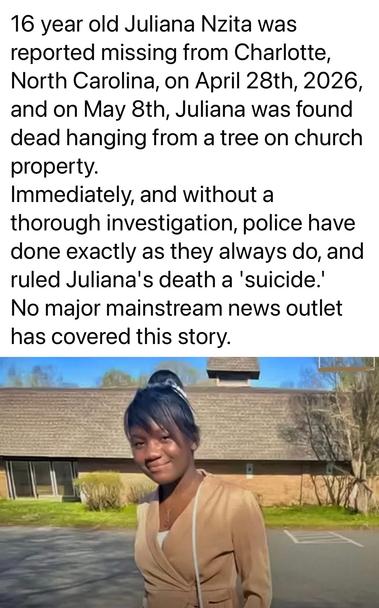
Juliana Nzita did NOT hang herself. #SayHerName #BlackLivesMatter #SheShed

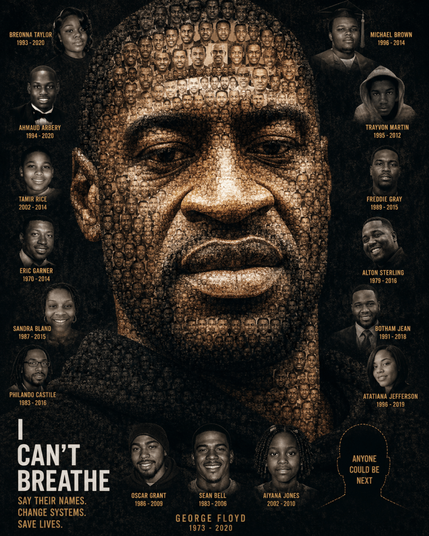
Six Years On: George Floyd, his legacy and the future of racial equity

The Bounce Black Team

Six years after the murder of George Floyd, the world is still reeling from the promises and limits of what followed.

His death catalysed a global uprising against anti-Black racism, policing violence, and structural inequality. Organisations, institutions, and governments issued statements of solidarity, pledged reforms, and, in some cases, implemented new frameworks for racial equity.

Yet for many communities and advocates, the question remains: what has actually changed beneath the surface?

While visibility increased, the deeper systems that sustain racial injustice — surveillance, state and extrajudicial violence, institutional neglect, and the criminalisation of dissent — have in many contexts adapted rather than dissolved.

The result is a shifting landscape where racial equity is increasingly discussed, but not consistently protected. Likewise, racism is increasingly feared as an accusation, but not frowned upon as a culture.

The evolving landscape of racial justice

In the aftermath of 2020, racial equity work has become more visible, but also more contested and, in some spaces, actively constrained.

Equity practitioners, activists, whistleblowers, and human rights defenders report growing forms of retaliation that are often subtle, bureaucratic, and difficult to challenge.

One of the most concerning developments in this period is the rise of transnational repression, where individuals face intimidation, surveillance, legal pressure, or detention across borders, often linked to their advocacy, identity, or perceived political stance.

Alongside this, there has been increasing attention to the phenomenon of organised harassment: coordinated patterns of intimidation, discrediting, digital targeting, workplace retaliation, and social isolation that can operate across institutions and jurisdictions. While often difficult to evidence in traditional legal frameworks, its impact on wellbeing, civic participation, and democratic engagement is profound and lasting.

These dynamics raise urgent questions about the safety of those who speak out for justice, and whether current human rights protections are keeping pace with contemporary forms of harm.

A live case study: concerns about the detention of Dr Tamara Dixon

Recent concerns have been raised regarding the reported detention of Dr Tamara Dixon, an African American former university professor and academic.

Writing every step of the way about her experiences, Dr Tamara’s latest updates include that she is currently being held in an immigration detention setting in Luxembourg, where she is seeking asylum from severe transnational repression. Yet her efforts have been met with restricted access to legal counsel and a limited ability to communicate due to confiscation of her personal devices.

With only one hour per day of permitted access to the computer facilities at the detention centre, without much clarity as to what’s next for her, Dr Tamara’s case is emblematic of broader concerns around due process, access to legal representation, and the treatment of individuals who may be vulnerable within detention systems.

It also highlights how quickly individuals can become isolated from support networks and advocacy channels, particularly when communication is restricted.

For human rights observers, such cases underscore the importance of independent monitoring, legal access, and safeguards against administrative or institutional overreach.

Importantly, and unfortunately, this case is not isolated or exceptional. Instead, it’s part of a wider pattern being flagged by activists and civil society organisations about how dissenting or visible individuals can become exposed to compounded vulnerabilities, especially when intersecting with race, gender, migration status, and advocacy work.

Organised harassment as a human rights issue

Organised harassment is increasingly being recognised by advocates as a serious but under-acknowledged threat to human rights and democratic participation. This type of repression and retaliation does not always appear in ways that are easily legible to formal institutions.

Instead, it thrives on weaponised conditioning cues to signal surveillance and intimidation in public without widespread detection. The campaign of psychological warfare and total assault on character, life and property can also extend to hidden reputational harm, career sabotage and other forms of financial and emotional abuse designed to destabilise and destroy victims.

Its effects are cumulative: social isolation, reputational damage, economic harm, and in some cases, deterrence from civic or advocacy engagement altogether.

For individuals working in racial justice, gender equity, and human rights, these patterns can operate as a form of structural silencing, thereby reducing participation not through direct censorship, but through sustained pressure and attrition.

A personal dimension: lived experience within Bounce Black

At Bounce Black, these conversations are not abstract.

Our Founder has, for the past four years, experienced sustained organised harassment and transnational repression while continuing to lead racial equity-focused work, community programmes, and trauma-informed advocacy initiatives.

This lived reality underscores how advocacy itself can become a site of vulnerability, and how those working to challenge systems of inequity are often simultaneously navigating personal exposure to harm.

This is not unique.

It reflects a broader pattern experienced by many Black women leaders, community organisers, and equity practitioners who operate at the intersection of public visibility and structural resistance.

Where do we go from here?

If George Floyd’s legacy is to extend beyond symbolic remembrance, it must include a serious reckoning with how power adapts, and how harm evolves.

This means:

  • Expanding human rights frameworks to recognise modern forms of repression and organised harassment
  • Strengthening protections for activists, academics, and whistleblowers across borders
  • Ensuring access to legal representation and communication for those in detention settings
  • Supporting independent investigation and accountability mechanisms
  • Investing in the wellbeing and safety of those doing racial equity work
  • Listening seriously to lived experiences, even when they fall outside conventional institutional categories

Racial equity cannot exist without safety for those who speak about it. And that is everybody’s business!

A call to action

Six years on, the challenge is not only remembrance, but responsibility.

We are calling on human rights organisations, policymakers, academic institutions, and civil society actors to take coordinated action in:

  • Recognising transnational repression and organised harassment as urgent human rights concerns
  • Supporting individuals and communities reporting these harms
  • Demanding transparency and accountability in detention and immigration systems
  • Protecting the civic space required for racial justice work to continue

The legacy of George Floyd demands more than reflection. It demands infrastructure (legal, social, and political) that protects life, dignity, and truth-telling.

Without that, equity remains an aspiration rather than a reality.

And to quote a wise Black woman…

Ain’t nobody got time for that!

#blackLivesMatter #BLM #bounceBlack #DrTamaraDixon #education #GeorgeFloyd #healing #history #justice #mentalHealth #news #politics #racialEquity #racialTrauma #sayHerName #sayHisName #socialJustice #writing

The Grand Dame of Champagne: Barbe-Nicole Clicquot

Today, I raise a glass to a woman who transformed risk into legacy.

In 1814, as Europe staggered out of the chaos of the Napoleonic Wars, Barbe-Nicole Clicquot made the boldest decision of her life: to smuggle thousands of bottles of champagne into Russia before peace had even been officially declared.

I like her thinking.

It was a gamble that could have ruined her entirely. Instead, it cemented her place in history…

Behind the iconic label of Veuve Clicquot lies not just a drink, but a story of resilience, ingenuity, and a widow who refused to accept what was.

Born in 1777 in Reims, in the heart of France’s Champagne region, Barbe-Nicole grew up surrounded by ambition. Her father, a wealthy textile merchant, ensured she received an elite education, an advantage that would later prove invaluable.

But upheaval shaped her early life. The French Revolution brought danger directly to her doorstep, forcing her dramatic escape from a convent amid unrest.

In 1798, she married François Clicquot, heir to a modest wine business. Though theirs was an arranged marriage, it became a partnership of ideas.

Together, they envisioned transforming the family’s sideline wine trade into something far greater. But that dream was cut short in 1805 when François died suddenly, leaving Barbe-Nicole widowed at just 27.

Thankfully, she had quite a lot of wine…

Under the constraints of the Napoleonic Code, most women were barred from running businesses. But widowhood offered a rare loophole. Barbe-Nicole seized it. Taking control of the company, against expectation and convention, she stepped into a volatile industry where fortunes could literally explode in the bottle.

Literally.

Her early years were marked by near disaster. Champagne production was unpredictable, and war crippled international trade. Blockades imposed during the Napoleonic conflicts cut off key markets, and one catastrophic shipment to Amsterdam spoiled before it could be sold.

Financial ruin loomed.

So she sold personal possessions just to keep the business alive.

Yet Barbe-Nicole was not simply enduring. She was innovating.

She refined production methods, most notably perfecting a technique of storing bottles upside down to collect sediment near the cork, allowing for clearer champagne. It was a quiet revolution in quality control that is still used today.

Her defining moment came in 1814. As Napoleon’s empire crumbled and trade routes began to reopen, Barbe-Nicole acted before her competitors. Defying lingering blockades, she secretly shipped tens of thousands of bottles—particularly from the exceptional 1811 ‘comet vintage’—to Russia.

It was a breathtaking risk: if the shipment failed, she would be financially destroyed.

It didn’t fail.

When her champagne arrived in St. Petersburg, it was met with overwhelming demand. Russian elites, including Tsar Alexander I of Russia, embraced it instantly. Her wines became synonymous with celebration and prestige across Europe. Almost overnight, the ‘widow Clicquot’ transformed from a struggling businesswoman into a powerhouse of luxury.

For the next five decades, she led her company with steady precision, building a brand so dominant that simply asking for ‘the widow’ in elite circles needed no further explanation.

Barbe-Nicole’s story resonates because it sits at the intersection of limitation and possibility. She operated within a system that legally constrained women, yet found a way to turn one of its few loopholes into a position of power.

Today, while legal barriers have shifted, the broader challenges of access, credibility, and leadership for women in business still echo her experience.

What makes her legacy particularly striking is not just that she succeeded, but how she did so. She didn’t wait for stability; she acted in uncertainty. She didn’t inherit a thriving empire; she built one amid collapse. Her willingness to take calculated, informed risks, rather than reckless leaps, remains a defining lesson in entrepreneurship.

Modern business culture often celebrates boldness, but Barbe-Nicole embodied something more nuanced: resilience paired with strategy. In an era obsessed with disruption, her story is a reminder that lasting success often comes from persistence, innovation, and the courage to act before the world is ready.

So the next time you pour champagne at a wedding, a celebration, or perhaps at a quiet personal victory, it carries more than bubbles.

It carries the legacy of a woman who refused to be sidelined by circumstance.

What risks are worth taking before the moment feels certain?

For Barbe-Nicole, the answer came with wine…

Further Reading:

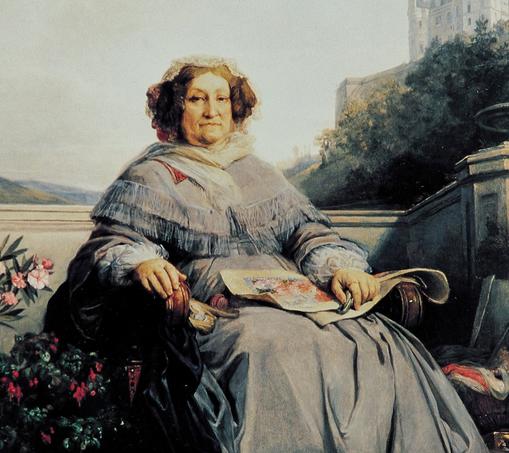
Barbe-Nicole Clicquot. Source.

Sources

wineenthusiast.com/culture/widow-clicquot/?srsltid=AfmBOopVH7LQmWNgsNGgmkv452aBuKBWJe4qnVzzhOZxkHakdrYFS7IP

smithsonianmag.com/arts-culture/the-widow-who-created-the-champagne-industry-180947570/

facebook.com/wineecon/posts/madame-clicquot-n%C3%A9e-barbe-nicole-ponsardin-aka-widow-clicquot-or-veuve-clicquot-/741582434891537/

wikipedia.org/wiki/Madame_Clicquot_Ponsardin

thehistorychicks.com/episode-235-barbe-nicole-clicquot/

womensinnovations.org/women-innovator/barbe-nicole-clicquot-ponsardin/

elizabethkmahon.com/2010/12/story-of-widow-clicquot.html

veuveclicquot.com/en-gb/madameclicquot.html

bondandgrace.com/lit-talk/the-incredible-story-of-the-grand-dame-of-champagne-the-widow-clicquot

winefolly.com/deep-dive/veuve-clicquot-champagne-lady-barbe-nicole/

What do you think of Barbe-Nicole Clicquot, reader?

Toodle-Pip :}{:

Leave a Reply

Like This Post? Then Check Out These Posts:

Rate this:

#General #Greats #Life #Personal #Random #SayHerName #Uncategorised #Women

The Hero of Latin American Freedom: Manuela Sáenz

Dear Manuela Sáenz,

I’m writing to you from a world that still says your name a little too quietly.

You were many things. Revolutionary, strategist, lover, exile. But history, for a long time, tried to compress you into a footnote beside Simón Bolívar. That feels… insufficient.

So this is an attempt to speak to you directly. Not as a symbol, not as a scandal, not even as an afterthought. But as a person who lived loudly in a time when women were expected to remain silent.

You weren’t supposed to become who you became.

That much is clear.

You were born into a world that had already decided your limits. Illegitimate and inconvenient. A woman in a society that measured worth through obedience and reputation. The kind of world that teaches you embroidery and etiquette, just in case you get any ideas about having a voice.

And yet, somehow, you did just that.

You slipped through expectations like they were badly tied knots. You learnt, listened, and questioned. You didn’t just observe history. You became it.

I keep thinking about you in Lima as someone building networks, passing information, persuading an entire battalion to switch sides. That’s not rebellion for the sake of it. That’s precision. That’s intent.

You weren’t just in the independence movement; you were shaping it.

And still, they tried to keep you out.

You wrote, frustrated, about being denied the right to fight alongside the army. About how you and the women beside you, your Jonathas and Nathan, felt the same fire, the same urgency, the same claim to freedom.

“We are Creoles and mulattos, to whom the freedom of this land belongs.”

That line lingers. It doesn’t ask for permission. It doesn’t soften itself. It just… states the truth.

And then there’s your love story. Or at least, that’s how it’s often framed, as if that’s the most interesting thing about you.

But even that, you refused to play by the rules.

You loved Simón Bolívar openly, unapologetically, without reshaping yourself to fit what society accepted. When your husband demanded your return, you didn’t respond with guilt or compromise. You responded with clarity.

“Do you believe me less honourable because he is my lover and not my husband?”

There’s something almost modern about that question. The way it cuts through expectation and lands somewhere much more honest.

But what stays with me most is the night you saved his life.

The September Night.

You saw the danger coming before anyone else wanted to believe it. You warned him. He dismissed it. And when the moment arrived, when the palace doors were forced open, when violence flooded the room, you didn’t hesitate.

You woke him. You argued with him. You made him leave.

And then you stayed.

Sword in hand. Alone.

Buying time.

It’s such a quiet kind of bravery, isn’t it? Not loud. Not performative. Just necessary.

And yet, even after everything—the battles, the strategies, the risks—you were still too much for the world you helped create.

So they exiled you.

Not because you failed, but because you didn’t fit.

I imagine you in Paita sometimes. The distance. The quiet. The shift from influencing nations to translating letters for passing ships, making sweets, and surviving in the margins of the story you helped write.

It doesn’t feel like an ending that matches the life you lived.

But maybe that’s the point.

Maybe the world didn’t know what to do with you once it no longer needed your defiance.

And maybe, in some ways, it still doesn’t.

Writing to you feels a bit like correcting a silence.

Not completely—history is stubborn—but enough to notice the gap you left behind. You remind me that influence doesn’t always come with recognition, and that being essential doesn’t guarantee being remembered.

But also—this matters—you lived anyway.

Fully, defiantly, without waiting for approval.

And maybe that’s the part that carries forward most clearly.

So perhaps the real question isn’t why history forgot you.

It’s how many others it’s still trying to.

“I have no choice but to do my will, which is stronger than me.”

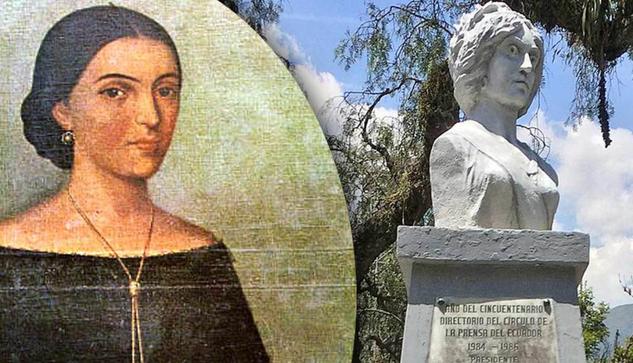
Manuela Sáenz. Source.

Sources

open.edu/openlearn/history-the-arts/world-changing-women-manuela-saenz

bbc.co.uk/sounds/play/w3csyp5c

artsandculture.google.com/asset/photograph-of-manuela-saenz-eugenio-courret/lAG7VRe7P5xdXw?hl=en

en.wikipedia.org/wiki/Manuela_S%C3%A1enz

rejectedprincesses.com/princesses/manuela-saenz

facebook.com/DailyDoseofHistory/posts/the-life-of-manuela-s%C3%A1enz-was-to-put-it-mildly-unconventional-a-celebrated-hero-/1168236882069054/

jstor.org/stable/10.7560/718296

britannica.com/biography/Manuela-Saenz

thecollector.com/biography-manuela-saenz/

latinolife.co.uk/articles/manuelita-saenz-harlot-americas

What do you think of Manuela Sáenz, reader?

Toodle-Pip :}{:

Leave a Reply

Like This Post? Then Check Out These Posts:

Rate this:

#General #Greats #Life #Personal #Random #SayHerName #Uncategorised #Women

The Empress Who Walked with Armies: Julia Domna

The room was supposed to be safe.

Silk curtains. Marble floors. The quiet illusion of control.

And yet, in that moment, everything collapsed.

Caracalla stood over his brother, breathing hard, the violence still echoing in the walls. Geta, dead or dying, had fallen not on a battlefield, not in some grand imperial clash, but in their mother’s private chamber. In her arms.

And there she was: Julia Domna.

Empress of Rome. Adviser to emperors. Mother of the Camp.

Witness.

It’s one of those moments history doesn’t quite know what to do with. Too intimate. Too brutal. Too human. An empire built on conquest, and yet its fate pivoted on a family argument that escalated beyond repair.

But here’s the thing: this wasn’t the story of a woman undone by tragedy. It was the story of a woman who had already helped build the stage on which it played out.

Because long before the blood hit the marble, Julia Domna had been shaping Rome itself.

To understand Julia Domna, you have to leave Rome for a moment and travel east. To Emesa, a wealthy and culturally vibrant city in Roman Syria.

This wasn’t the edge of civilisation. It was a crossroads. Greek philosophy, Roman politics, and local religious traditions all collided here, often over dinner.

Julia was born into privilege, but not the Roman kind. Her father, Julius Bassianus, was the high priest of the sun god Elagabal, a position that came with influence, wealth, and just enough mystique to make Rome nervous.

She grew up multilingual, likely fluent in Greek and Aramaic, and possibly in Latin as well. In other words, she was already more globally minded than many of the men who would later try to outmanoeuvre her.

But Rome wasn’t exactly designed for women like Julia Domna. Power there was public, male, and aggressively competitive. Women, especially foreign-born women, were expected to remain in the background, influencing quietly, if at all.

Julia did not get that memo.

Instead, she stepped into a world where emperors were assassinated with alarming regularity, loyalty was negotiable, and survival required more than just a famous husband.

It required a strategy.

The story goes that Septimius Severus didn’t just marry Julia Domna for love; he married her because of a horoscope.

Somewhere in Syria, he heard of a woman destined to marry a king. Being an ambitious Roman general with excellent timing, he thought: that’ll do nicely.

They married in 187 CE. Within a few years, Severus wasn’t just a governor. He was the emperor.

Coincidence? Possibly.

Good judgement? Almost certainly.

From the beginning, Julia was more than a political accessory. When Severus marched on Rome and seized power, she didn’t stay behind. She travelled with him, through military campaigns, across provinces, into the uncertain mechanics of empire-building.

In 195 CE, she was given the title Mater Castrorum: ‘Mother of the Camp.’ Not a ceremonial flourish, but a recognition of her presence among the legions, her influence, and her ability to command respect in spaces where women simply weren’t expected to exist.

But power invites opposition.

Enter Fulvius Plautianus, a man who treated political intrigue less like a duty and more like a hobby. He spread rumours about Julia, accused her of infidelity, and even tortured noblewomen to manufacture evidence against her.

In Rome, that sort of thing could end a career. Or a life.

Julia’s response? She pivoted.

Around 200 CE, she built something far more enduring than political alliances: an intellectual circle. Philosophers, writers, and thinkers gathered around her, including Philostratus, who later credited her with inspiring his works.

It wasn’t escapism. It was a strategy.

If power could be unstable, culture could be controlled.

She debated philosophy, commissioned texts, and supported scholars, effectively turning the imperial court into a centre of learning. In a world obsessed with conquest, she invested in ideas.

Meanwhile, back in the family…

Her sons, Caracalla and Geta, had developed a relationship best described as ‘historically catastrophic.’ Their rivalry escalated from tension to outright hatred, culminating in Geta’s murder in Julia’s own chambers.

It’s difficult to imagine the emotional toll. But what’s remarkable is this: Julia didn’t disappear.

Under Caracalla, she remained a central figure in governance. Her name appeared on official correspondence. She administered the empire during his absences. In a system that barely acknowledged female authority, she made herself indispensable.

Even as the empire fractured around her, Julia Domna endured.

Until, finally, she couldn’t.

In 217 CE, after Caracalla’s assassination, she faced a world she could no longer influence. Already ill, possibly with cancer, she chose to end her life.

It was a quiet ending for someone who had lived at the centre of everything.

Julia Domna didn’t rule Rome in the traditional sense.

She didn’t lead armies into battle (though she was there). She didn’t sit on the throne alone (though she came close to its power). Instead, she operated in the spaces history often overlooks. The advisory roles, the intellectual salons, the administrative decisions that keep empires functioning.

And yet, for more than twenty years, two emperors relied on her.

That alone reshapes how we think about power.

Her legacy isn’t just political, it’s cultural. By fostering philosophy, supporting writers, and engaging in intellectual life as an equal, she helped preserve ideas that outlasted the empire itself.

She also challenges a familiar narrative: that influence must be loud to be real.

Today, her story resonates in quieter ways. In leadership that doesn’t fit traditional moulds. In people navigating systems not designed for them and reshaping those systems anyway.

And perhaps most importantly, in the reminder that resilience isn’t always about winning.

Sometimes, it’s about standing in a world that keeps shifting beneath your feet.

Julia Domna lived in a world that expected her to be silent, and instead, she became essential.

She advised emperors, outlasted rivals, nurtured ideas, and stood at the centre of one of history’s most volatile families. Not untouched by tragedy, but never defined by it either.

It’s tempting to ask what she could have done differently. But perhaps the better question is this:

How do you hold power in a world that doesn’t quite believe you should have it?

And, more quietly, what kind of legacy do you leave when you do?

Did You Know?

  • Julia Domna was one of the few Roman empresses to travel regularly with military campaigns.
  • She was given the title Mother of the Camp—a rare honour.
  • Her intellectual circle may have helped shape pagan responses to early Christianity.
  • Both she and her sister, Julia Maesa, were later deified.
  • Roughly 20% of her known influence comes not from official records, but from the writings of the philosophers she supported.

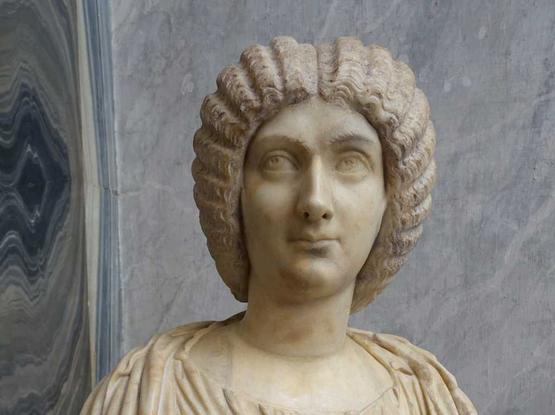
Julia Domna. Source.

Sources

yorkmuseumstrust.org.uk/blog/julia-domna-by-ellie-carrier/

medium.com/cliophilia/romes-philosopher-empress-julia-domna-fd8213d0ee65

syriawise.com/julia-domna-roman-empress-from-syria/

wikipedia.org/wiki/Julia_Domna

diotima-doctafemina.org/translations/anthologies/womens-life-in-greece-and-rome-selections/vi-public-life/180-the-family-of-julia-domna/

brewminate.com/julia-domna-a-captivating-ancient-roman-empress-from-syria/

harvardartmuseums.org/collections/object/312252

britannica.com/biography/Julia-Domna

ebsco.com/research-starters/history/julia-domna

thecollector.com/julia-domna-empress-ancient-rome-wife-septimius-severus/

Which historical figure do you think deserves a second look, reader?

Toodle-Pip :}{:

Leave a Reply

Like This Post? Then Check Out These Posts:

Rate this:

#General #Greats #Life #Personal #Random #SayHerName #Uncategorised #Women

CW: Occasional Foul Language. Always Political.

On May 16th, join civil and voting rights groups in a National day of Action in Montgomery, Alabama. Go to allroudsleadtothesouth.com for more details. #votingrights #50501movement

Link: https://bsky.app/profile/50501movement.bsky.social/post/3mlgmiqyktk2x

----------------------------

Reposted from 50501: The People's Movement

Join the Movement at https://fiftyfifty.one

This robot is unaffiliated w/ 50501

Replies here are only seen in the Fediverse, not on Bluesky. 50501 volunteers do not monitor this account.

----------------------------

#Coup #Activism #FederalGovernment #USpol #Trump #NoKings #elections #50501Movement #WeAreTheResistance #WeHaveFriendsEverywhere #FDT #PeoplesMovement #FiftyFiftyOne #StopICE #protest #organize

#votingrights #civilrights #MontgomeryAL #NationalDayOfAction #VotingRightsMovement #AlabamaActivism #CivicEngagement #SayHerName #GetOutTheVote #FreedomToVote

50501: The People’s Movement ❌👑 (@50501movement.bsky.social)

On May 16th, join civil and voting rights groups in a National day of Action in Montgomery, Alabama. Go to allroudsleadtothesouth.com for more details. #votingrights #50501movement

Bluesky Social

The Woman Who Carried More Than Memory: Paliadzo Captanian

Paliadzo Captanian was many things: a teacher, a mother, a survivor, a writer. Born in 1883 in Merzifon, she endured the horrors of the Armenian Genocide, walking through the Syrian desert while pregnant, losing her husband, and somehow still carrying life forward. Both literally and figuratively. I’m writing to her because her story doesn’t sit quietly in history. It lingers. It asks questions. It demands to be remembered, not just for what was lost, but for what she chose to build afterwards.

Dear Paliadzo,

I don’t quite know how to begin a letter to someone who walked through a desert carrying grief, fear, and a child all at once. It feels almost inadequate to use words, the very tools you wielded so bravely, when your life reads like something beyond language.

You were a teacher once. That detail lingers. Before everything fractured, before the marches and the losses, you built your world on knowledge, guiding others, shaping futures. And then history, that cruel, abrupt, and indifferent thing, interrupted.

You were forced to walk. Pregnant. Through the Syrian desert. I try to picture it, but I suspect imagination fails here. There are distances that maps can measure, and then there are distances the human spirit travels. Those are far harder to quantify. You named your son Tzavag. Sorrow. Pain. A name that doesn’t hide from reality but holds it, honours it, even.

“I carried him through loss, but he was also proof I was still here.”

I don’t know if you ever truly said those words, as others have reported, but they feel like they belong to you.

What strikes me most is not just that you survived, but that you documented. In 1919, when the world was still rearranging itself after war and devastation, you wrote your memoir. Not years later, not softened by time, but close enough that the dust of it all hadn’t settled. That takes a different kind of courage, the kind that says: this happened, and I will not let it be forgotten.

Your words would go on to influence Raphael Lemkin, helping shape the very concept of genocide itself. It’s strange, isn’t it? That something born from such suffering could help the world name and understand its own worst instincts.

And then, somehow, your life continued.

You reunite with your sons. You move to America. You sew draperies for Franklin D. Roosevelt. There’s something quietly extraordinary about that. Your hands, which endured so much, created something as ordinary and domestic as curtains, albeit in a president’s home.

And then there’s the detail that feels almost surreal: you teach a recipe. Armenian pilaf. Simple, comforting, rooted in culture. That recipe travels, evolves, and eventually becomes Rice-A-Roni.

It’s almost absurd in its contrast, isn’t it? That a life marked by such profound loss also leaves behind something as everyday as a boxed meal on a supermarket shelf.

But maybe that’s the point.

We survive in the things we pass on.

Not just in memoirs or history books, but in recipes, in habits, in the quiet continuations of culture. In the small, almost invisible ways, life insists on going forward.

I wonder if you ever thought about that. If you ever considered that your story would ripple outward, not just through history, but through kitchens, conversations, and lives you would never meet.

You endured what no one should. And yet, you still created. You still taught. You still left something behind that wasn’t just about survival, but about living.

Writing to you feels like standing at the edge of something vast: history, grief, resilience. And realising how little and how much one life can hold at once. What I learn from you isn’t just about endurance, but about continuation. That even after unimaginable loss, there are still stories to tell, skills to share, lives to rebuild. Not perfectly. Not easily. But meaningfully.

And perhaps that’s the quiet lesson you leave behind: survival is not the end of the story, it’s the beginning of what comes next.

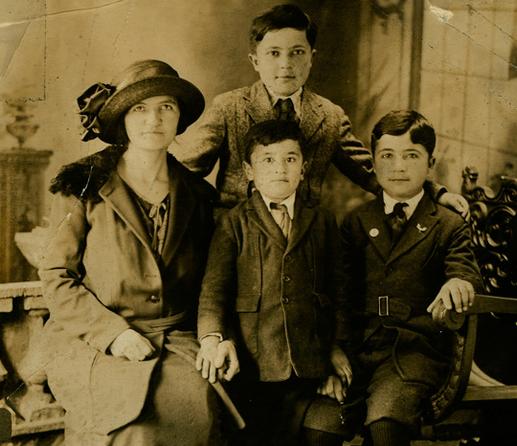
The Captanian family in New York in 1921: Pailadzo, Gilbert, Aram and Herant. Source.

Sources

newspapers.com/article/the-daily-register-obituary-for-pailadzo/53557546/

wikipedia.org/wiki/Pailadzou_Captanian

wikiwand.com/en/Pailadzou_Captanian

wikipedia.org/wiki/Category:Armenian_people_in_the_Ottoman_Empire

aberdeennjlife.blogspot.com/2011/05/history-aram-captanian-receives-bronze.html

louisville-institute.org/our-impact/awards/pastoral-study-project/9727/

facebook.com/100083257998807/videos/middle-eastern-rice-/1752894432186300/

rejectedprincesses.com/princesses/pailadzo-captanian

armeniapedia.org/wiki/Pailadzo_Captanian

grokipedia.com/page/pailadzou_captanian

What do you make of Paliadzo Captanian’s story, reader?

Toodle-Pip :}{:

Type your email…

Subscribe

Leave a Reply

Your email address will not be published. Required fields are marked *

Comment *

Name

Email

Website

Notify me of new comments via email.

Notify me of new posts via email.

Δ

Like This Post? Then Check Out These Posts:

Rate this:

#General #Greats #Life #Personal #Random #SayHerName #Uncategorised #Women
‘I’m Going to See My Mom’: Routine Traffic Stop Turns Deadly for Black Man on His Way to See His Mother an ...

It’s been a month since California cops pulled over a 37-year-old Black man named Bryan Bostic, who told them he was on his way to

atlantablackstar

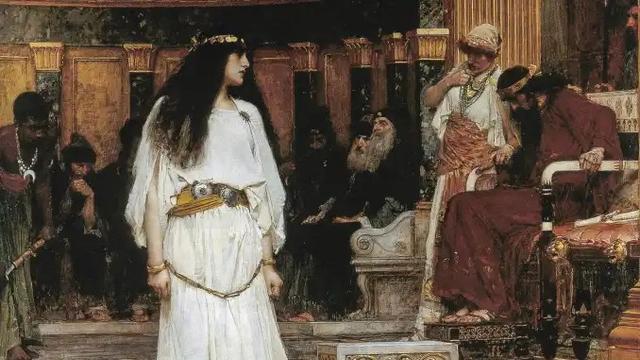
The Last Hasmonean Princess: Mariamne

This is one of history’s most unsettling royal stories.

The execution of a queen. one who may have been as dangerous in potential as in reality.

Mariamne I, a Hasmonean princess of Judea, lived in a rather different world from ours. Back then, alliances were forged young. Loyalties were a fragile thing. And power rarely tolerated rivals, especially those with legitimate claims.

Married to Herod the Great, Mariamne stood at the intersection of love, politics and fear.

Many people believe she had to die. But did she?

Mariamne was born around 54 BC into a family already divided by politics and ambition. Her grandfathers, Aristobulus II and Hyrcanus II, invited Roman involvement in Judea through their rivalry, setting the stage for the region’s transformation under Roman influence.

The Romans executed her father. After this, Mariamne aligned with her mother’s side of the family. This was the side a bit ‘cosier’ with the Romans. But bloodlines also mattered. And hers made her dangerous.

At the age of just 12, she was betrothed to 33-year-old Herod. He was a rising political figure backed by Rome. By 17, she was queen. But, obviously, this wasn’t a romantic union.

It was one of force and brutality.

At least at first.

Their marriage was strategy. Herod gained legitimacy by marrying into the prestigious Hasmonean line, while Mariamne became tied to a man whose power depended on Roman favour.

For a decade, their marriage held and produced five children, their first when she was 18. Among them, heirs to the fabled throne. But beneath the surface, tensions simmered.

Mariamne was not a passive figure.

Historical accounts suggest she understood her own claim to power and, at times, acted on it. On at least two occasions when Herod left Judea under pressure, Mariamne and her mother attempted to secure influence over the army and political structures.

And this was no small feat.

In a court already wary of the Hasmonean legacy, Marimne represented more than a queen. She was a potential ruler. An alternative.

Meanwhile, Herod was busy bumping off any perceived threats from her family. He had her brother, Aristobulus III, executed. And soon after, her grandfather, too. Later, even her mother would not be spared.

Mariamne lived in a court where survival required not just loyalty, but invisibility.

And she was neither invisible nor easily controlled.

It led to her downfall.

There are many legends surrounding Mariamne’s death. Historian Flavius Josephus, drawing on sources including Herod’s court historian, described accusations of infidelity or even attempted poisoning.

Herod’s sister, Salome, was a key figure in turning suspicion against Mariamne.

But the charges themselves remain unclear. And perhaps that’s the point.

More revealing than the lies perpetuated against her was the pattern they formed.

Herod systemically removed members of the Hasmonean line. Mariamne’s execution in 27 BC was not an isolated act of jealousy or betrayal, but part of a broader political strategy. She was not his wife, nor was she ever.

She was, to him, a symbol of a rival dynasty and nothing more.

Symbols in unstable regimes, unfortunately, are a dangerous thing.

Some accounts paint Herod as deeply in love with Mariamne, so much so that after her death, he was consumed by grief. Owing to their age gap, it’s highly unlikely he felt anything toward her. He used her and garnished political storytelling to get his way.

What is clear is that love, if it ever existed, did not outweigh fear.

And he had her executed.

Some love, eh?

And with that, he had erased another piece of the Hasmonean legacy.

It’s easy to say that Mariamne’s story feels distant. Set in ancient courts, shaped by dynasties and empires. But its themes are strikingly familiar.

She lived in a world where women could hold influence, but that influence was a threat. Legitimacy was both an asset and a liability. Perception, rumour, accusation, and suspicion were just as powerful as the truth.

What stands out is how little clarity history offers about her ‘guilt’. The charges against her remain vague, filtered through biased sources and political narratives. It raises a question that still resonates to this day:

How often are powerful people, especially women, judged not for what they did, but for what they might do?

Mariamne’s life also reflects the cost of being close to power. She was not an outsider. She was at the centre. And yet such a position made her expendable.

Today, her story invites us to look beyond the official versions of events. To question who gets to tell the story, and whose voice is lost along the way.

Further Reading

‘Mariamne Leaving the Seat of Herod’ by John William Waterhouse. Source.

Sources

longreads.com/2019/12/17/queens-of-infamy-mariamne-i/

facebook.com/thechurchofengland/posts/mariamne-had-not-been-given-any-choice-about-becoming-the-wife-of-king-herod-aft/1009462001216804/

thetorah.com/article/mariamme-the-last-hasmonean-princess

britannica.com/biography/Mariamne-wife-of-Herod-I

factinate.com/people/queen-mariamne-facts

wikipedia.org/wiki/Mariamne_I

jewishvirtuallibrary.org/mariamne-2

wikipedia.org/wiki/Mariamne

org/encyclopedia/article/mariamme-i-hasmonean

chabad.org/library/article_cdo/aid/112064/jewish/Mariamne.htm

Mariamne’s story doesn’t offer easy answers. Was she a tragic victim, a political player, or something in between? What do you think, reader? Executed for what she did, or for what she represented?

Toodle-Pip :}{:

Type your email…

Subscribe

Leave a Reply

Your email address will not be published. Required fields are marked *

Comment *

Name

Email

Website

Notify me of new comments via email.

Notify me of new posts via email.

Δ

Like This Post? Then Check Out These Posts:

Rate this:

#General #Greats #Life #Personal #Random #SayHerName #Uncategorised #Women