Iowa State University: Digging deeper on how tillage methods affect soil health, yield. “Tillage’s impact on soil carbon is also important to companies that pay farmers to reduce tilling to help meet corporate carbon emissions goals…. A database built by Iowa State researchers aims to provide more certainty by digging deep into the effects of tillage, integrating the results of more than […]
https://rbfirehose.com/2026/04/11/iowa-state-university-digging-deeper-on-how-tillage-methods-affect-soil-health-yield/
Iowa State University: Digging deeper on how tillage methods affect soil health, yield. “Tillage’s impact on soil carbon is also important to companies that pay farmers to reduce tilling to h…
"Nutrients streamed in both directions through the hyphal tunnels. As the fungi extended more hyphae, the branching network pulsed and gradually expanded into a nutrient-gobbling lace. If the hyphae were to grow any less densely, the network would be ineffective; any denser, and it would be inefficient."
"The imaging revealed how hundreds of thousands of independent fungal tips form an efficient network. On their endless search for nutrients, hyphae encroached into empty spaces. When filaments bumped into each other, they fused. And when a hyphal route returned too little nourishment, the fungi cut their losses and redirected growth elsewhere."
"The study is phenomenal in its precision. I’ve heard one of my colleagues describe it as a masterpiece.”
#Nature #Science #Fungi #FungiFriday #Biodiversity #Biology #Soil #Ecology #Ecosystems
Final version out:
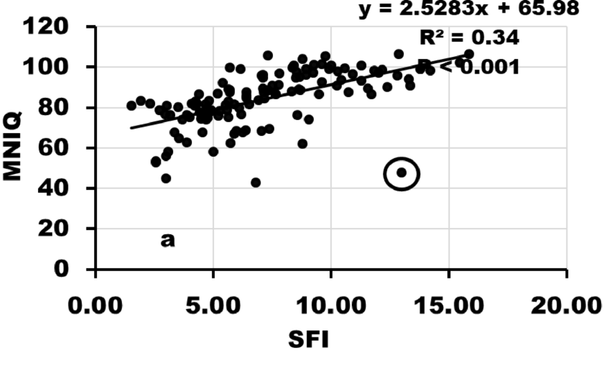
Critical thresholds in soil physical properties driven by microplastics | Microplastics and Nanoplastics
We find quite low thresholds for microplastic effects on soil physical properties, using a published dataset
https://link.springer.com/article/10.1186/s43591-026-00188-3
The @soilbiome lab has always been a joy to work with over the years!
I have been slow to post some of the projects I've worked on with them because I am allergic to social media 🤣 but late is better than never!
#scienceillustration #education
#geology #agriculture #soil #farming #microbes

🧪🌍 𝗗𝗶𝗱 𝘆𝗼𝘂 𝗸𝗻𝗼𝘄? Many of the antibiotics we rely on today originate from soil microorganisms. One scientific analysis estimated that if 10,000 actinomycetes (a major family of soil bacteria) were screened, around 2,500 would produce antibiotic compounds. 🔎 𝗛𝗼𝘄? Actinomycetes live in competitive soil environments where producing bioactive molecules gives them an advantage over other microbes. Over decades, scientists have isolated these naturally occurring compounds from soil and developed them into antibiotics and other life-saving medicines. 𝗪𝗵𝘆 𝗶𝘁 𝗺𝗮𝘁𝘁𝗲𝗿𝘀? This highlights soil as a hidden reservoir of medical innovation. Protecting soil biodiversity is not only an environmental priority. It is essential for future drug discovery, public health resilience, and tackling antimicrobial resistance. 📖 𝗦𝗼𝘂𝗿𝗰𝗲: Demain, A. L. & Sanchez, S. Microbial drug discovery: 80 years of progress. https://lnkd.in/gfVVP-sC 🌱💡 Explore our project to see how we’re combining ecological knowledge and digital innovation for healthier soils and societies: https://lnkd.in/dq8sbhn5
"Albeit little-known, plant microbiota or holobionts are essential for plant health and sustainable agriculture. The work of Philippe Vandenkoornhuyse in discovering their role has earned this @cnrs ecologist international recognition." https://news.cnrs.fr/articles/the-super-powers-of-the-plant-microbiota
#science #plants #ecology #microbiota #soilLife #soil #agriculture #gardening #foodSecurity