Models warn Thwaites Glacier could rival entire Antarctic ice loss by 2067

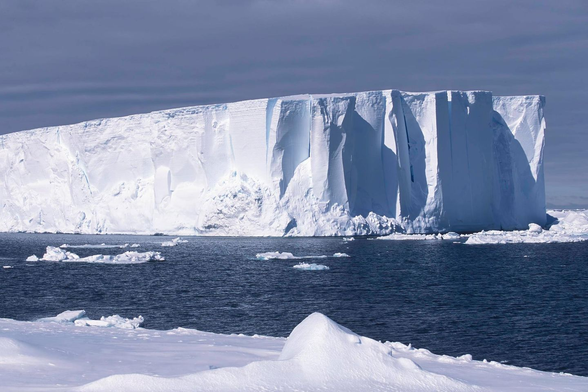
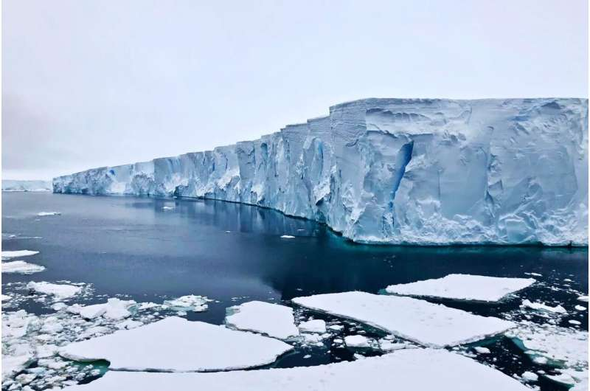
The future of one of Antarctica's most iconic #glaciers could be far more dramatic than scientists previously thought. Using satellite calibrated ice sheet models, a team of researchers from the University of Edinburgh found that the #ThwaitesGlacier in West #Antarctica could be shedding 180–200 gigatonnes of ice per year by 2067—a rate roughly comparable to the entire Antarctic ice sheet's current mass loss. That would represent a stunning acceleration in ice loss from a single glacier and underlines urgent concerns about future contributions to #SeaLevelRise.

https://phys.org/news/2026-03-thwaites-glacier-rival-entire-antarctic.html

#ClimateScience
#ClimateCatastrophe
#Cryosphere
#Uhhps

Centuries of net-negative emissions are required to secure a safe climate future, two studies suggest

Two new studies conclude that stabilizing long-term #climate risks will require sustained net-negative carbon dioxide (#CO2) #emissions for centuries. Approaching the problem from distinct perspectives—legal and technological feasibility on the one hand, and economic optimization under uncertainty on the other—the research converges on a consistent message:

--> reaching net zero is not enough.

Both studies were led by researchers from the Exploratory Modeling of Human-natural Systems Research Group of the #IIASA Advancing Systems Analysis Program and underline that achieving the #ParisAgreement goals will demand durable commitments to large-scale #CarbonDioxide removal (#CDR) extending far beyond current policy timelines.

Stabilizing #SeaLevelRise and #permafrost thaw demands long-term carbon removal commitments

https://phys.org/news/2026-03-centuries-net-negative-emissions-required.html

#ClimateScience
#ClimateCrisis
#Uhhps

Centuries of net-negative emissions are required to secure a safe climate future, two studies suggest

Two new studies conclude that stabilizing long-term climate risks will require sustained net-negative carbon dioxide (CO₂) emissions for centuries. Approaching the problem from distinct perspectives—legal and technological feasibility on the one hand, and economic optimization under uncertainty on the other—the research converges on a consistent message: reaching net zero is not enough.

Phys.org

Klima: Erderwärmung deutlich beschleunigt

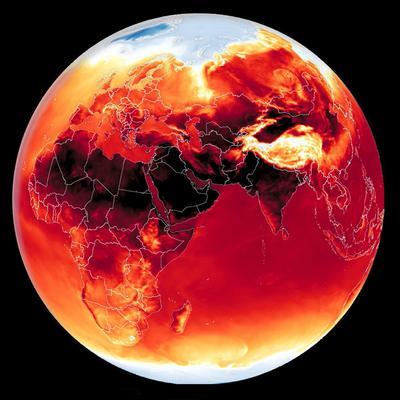
Die #Erderwärmung hat sich seit etwa 2015 deutlich beschleunigt. Das zeigt eine Studie, für die natürliche Einflüsse auf das #Klima herausgerechnet wurden. Während die globale Temperatur von 1970 bis 2015 um durchschnittlich 0,2 Grad Celsius pro Jahrzehnt gestiegen sei, seien es in der Dekade danach etwa 0,35 Grad gewesen.

Wenn man die Einflüsse von #ElNiño, Vulkanausbrüchen und solaren Zyklen herausrechnet, dann liege die Erderwärmung von 1970 bis 2015 wie genannt bei durchschnittlich 0,2 Grad pro Jahrzehnt und in der Dekade seit 2015 bei 0,35 Grad, erläutert Rahmstorf auf Anfrage. Bevor die natürlichen Faktoren abgezogen wurden, seien diese Trends aber fast die gleichen gewesen, nur der Unsicherheitsbereich sei dann viel größer, und daher werde die statistische Signifikanz nicht erreicht.

„Wir können nun erstmals eine starke und statistisch signifikante Beschleunigung der Erderwärmung nach 2015 belegen“, betont auch Co-Autor Foster. "Entscheidend ist, dass wir aus den Messdaten bekannte, natürliche Schwankungen herausrechnen, sodass das zufällige „Rauschen" geringer wird und daher das langfristige Erwärmungssignal klarer hervortritt.“

https://science.orf.at/stories/3234513/

#Klimawissenschaft
#Klimakrise
#Uhhps

Klima: Erderwärmung deutlich beschleunigt

Die Erderwärmung hat sich seit etwa 2015 deutlich beschleunigt. Das zeigt eine Studie, für die natürliche Einflüsse auf das Klima herausgerechnet wurden. Während die globale Temperatur von 1970 bis 2015 um durchschnittlich 0,2 Grad Celsius pro Jahrzehnt gestiegen sei, seien es in der Dekade danach etwa 0,35 Grad gewesen.

ORF.at

Meeresspiegel: Pegel liegen höher als gedacht

Fehlerhafte Methodik führte zu unterschätzten Ausgangswerten in 90 Prozent der Studien

Methodik-Fehler: Gängige Studien haben den aktuellen #Meeresspiegel für viele Küstenregionen falsch ermittelt – er liegt bis zu einem Meter höher als gedacht, wie eine Metaanalyse enthüllt. Das bedeutet: Auch das #Risiko für #Überflutungen und #Landverlust wurde vielerorts stark unterschätzt. Schon jetzt leben demnach 68 Prozent mehr Menschen unter dem Meeresspiegel und 37 Prozent mehr Landfläche ist betroffen, so das Team in „Nature“. Schuld an der Diskrepanz sind falsche Referenzwerte und fehlerhafte Methoden.

https://www.scinexx.de/news/geowissen/meeresspiegel-groesstenteils-falsch-ermittelt/

#Fernerkundung
#Klimawissenschaft
#Meeresspiegelanstieg
#Uhhps

We may be underestimating the true carbon cost of northern wildfires

#Wildfires in the northern boreal #forests of #Alaska, #Canada, #Scandinavia, and #Russia may be more damaging to the #climate than previously thought, a new UC Berkeley-led study suggests. That's because these #fires don't just burn through trees; they can also penetrate deep into the #carbon-rich layers of #soil underneath many #boreal forests, releasing carbon that has been accumulating for hundreds or even thousands of years.

https://phys.org/news/2026-02-underestimating-true-carbon-northern-wildfires.html

#ClimateScience
#Uhhps
#ClimateCatastrophe

We may be underestimating the true carbon cost of northern wildfires

Wildfires in the northern boreal forests of Alaska, Canada, Scandinavia, and Russia may be more damaging to the climate than previously thought, a new UC Berkeley-led study suggests. That's because these fires don't just burn through trees; they can also penetrate deep into the carbon-rich layers of soil underneath many boreal forests, releasing carbon that has been accumulating for hundreds or even thousands of years.

Phys.org

Wichtiger Kohlenstoffspeicher hat Leck

Ein riesiger Kohlenstoffspeicher in der Demokratischen Republik #Kongo hat ein Leck. Seen geben dort uralten Kohlenstoff in die #Atmosphäre ab, wie eine Studie der Eidgenössische Technische Hochschule (#ETH) Zürich zeigt. Bisher galt der Speicher als sicher.
Die riesigen Sumpf- und Torfgebiete im #Kongobecken spielen eine wichtige Rolle im globalen #Kohlenstoffkreislauf wie die ETH Zürich am Montag in einer Mitteilung zur Studie betonte.
Obwohl sie nur 0,3 Prozent der Landoberfläche ausmachen, lagert dort ein Drittel des in tropischen Torfgebieten gespeicherten Kohlenstoffs.
Die WissenschaftlerInnen stellten, dass die Seen große Mengen #Kohlenstoff in Form von #CO2 ausstoßen. Entgegen den bisherigen Annahmen stammt dieser Kohlenstoff nicht nur aus jüngst abgestorbener #Pflanzenmasse. Altersbestimmungen zeigten, dass bis zu 40 Prozent des freigesetzten Kohlenstoffs aus #Torf stammt, der sich über Tausende von Jahren in den umliegenden #Sümpfe'n abgelagert hat. Die Forschenden sprechen von einem „Leck“ im #Kohlenstoffspeicher.

#Uhhps
#Klimakatastrophe

https://science.orf.at/stories/3234340/

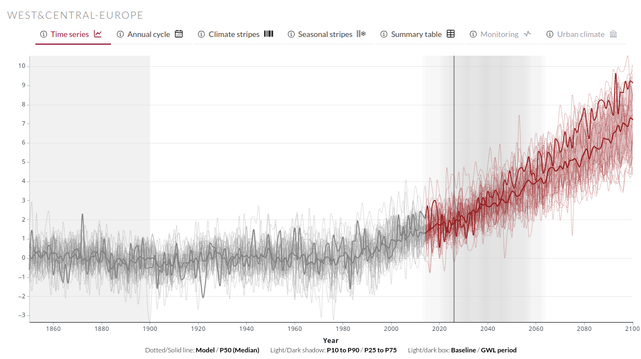
"... But, warming itself appears to be accelerating: the rate has risen from roughly 0.05°C per decade in the mid-20th century to about 0.31°C per decade today (Figure 1C)."

#Uhhps

Climate change is now warming the deepest parts of the Arctic Ocean

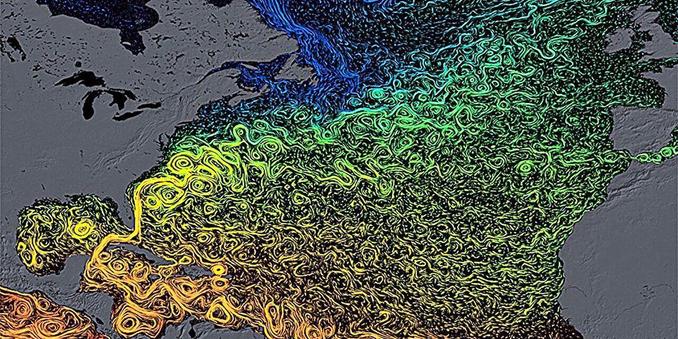
While it is well known that #ClimateChange is heating the world's #oceans, it was thought that the #DeepSea was safe from its effects—until now. Researchers have discovered that a rapidly warming part of the #Atlantic is leading to the heating up of #Arctic #Ocean depths.

https://phys.org/news/2025-11-climate-deepest-arctic-ocean.html

#ClimateScience
#ClimateCrisis
#Uhhps

Vier zentrale Komponenten des Klimasystems zeigen Vorzeichen eines Umkippens

Alarmierende Vorzeichen: Vier zentrale, miteinander gekoppelte Komponenten des irdischen #Klimasystems verlieren an Stabilität, wie Klimaforscher ermittelt haben. Demnach erholen sich das #Grönlandeis, die #AtlantischeUmwälzströmung, der #Amazonas #Regenwald und das südamerikanische #Monsunsystem nur noch verzögert von Störungen. Dies sei ein Indiz für eine Annäherung an den #Kipppunkt dieser #Klimaelemente, so das Team in „Nature Geoscience“.

https://www.scinexx.de/news/geowissen/warnsignale-bei-vier-klima-kippelementen/

#Klimakatastrophe
#Uhhps

Warnsignale bei vier Klima-Kippelementen

Alarmierende Vorzeichen: Vier zentrale, miteinander gekoppelte Komponenten des irdischen Klimasystems verlieren an Stabilität, wie Klimaforscher ermittelt

scinexx | Das Wissensmagazin

The Production Gap

Governments, in aggregate, still plan to produce more than double the amount of fossil fuels in 2030 than would be consistent with limiting warming to 1.5°C. The persistence of the global production gap puts a well-managed and equitable energy transition at risk.

Governments have explicitly acknowledged the need to transition away from fossil fuels to achieve this goal, a conclusion now reinforced by an opinion of the International Court of Justice. Yet 10 years on from the Paris Agreement, the situation remains stark: Cumulatively, countries are planning even more fossil fuel production than before, putting global climate ambitions at increasing risk.

https://productiongap.org/2025report/

Report (PDF):
https://productiongap.org/wp-content/uploads/2025/09/PGR2025_full_web.pdf

#ClimateCrisis
#ClimateCatastrophe
#FossilFuel
#Capitalism
#CO2
#GreenhouseGas
#ParisAgreement
#BigOil
#Uhhps