Conversation with Dr. Lawrence Krauss on Non-“Ism” Humanism and Nothing
Scott Douglas Jacobsen
In-Sight Publishing, Fort Langley, British Columbia, Canada
Correspondence: Scott Douglas Jacobsen (Email: [email protected])
Received: October 27, 2024
Accepted: N/A
Published: January 15, 2025
Abstract
This interview explores the intersection of science and humanism through the insights of Dr. Lawrence Krauss, an esteemed theoretical physicist and public intellectual. Dr. Krauss discusses the fundamental principles of humanism, including the acceptance of reality, the use of reason and intelligence to improve society, and the importance of skepticism and scientific integrity. The conversation delves into challenges in science communication, the misconceptions surrounding the concept of “nothing,” and the dynamics of engaging with differing ideologies. Additionally, Dr. Krauss shares his experiences in public debates, his views on effective science communicators, and the role of humanism in promoting equality and resisting oppressive structures. This interview provides a comprehensive understanding of Dr. Krauss’s vision for a scientifically informed and humanistic society.
Keywords: Debates, Equality, Humanism, Lawrence Krauss, Nothing, Philosophy of Science, Public Understanding of Science, Science Communication, Scientific Integrity, Skepticism, Oppression
Introduction
Dr. Lawrence Krauss, a prominent theoretical physicist and bestselling author, is renowned for his ability to bridge complex scientific concepts with public discourse. In this interview conducted by Scott Douglas Jacobsen, Dr. Krauss delves into the essence of humanism, emphasizing its reliance on reason, intelligence, and the acceptance of reality to foster societal improvement. The discussion addresses the challenges inherent in communicating intricate scientific ideas to a broader audience, highlighting the importance of integrity and skepticism in both scientific endeavors and humanistic practices. Dr. Krauss also reflects on his experiences in public debates, offering critiques on effective science communication and the interplay between science and philosophy. Furthermore, he elucidates the nuanced understanding of “nothing” within the context of physics and cosmology, countering common misconceptions. This interview sheds light on Dr. Krauss’s commitment to promoting a scientifically literate and equitable society through his work with The Origins Project and his role as a public intellectual.
Main Text (Interview)
Interviewer: Scott Douglas Jacobsen
Interviewee: Dr. Lawrence Krauss
Section 1: Defining Humanism
Scott Douglas Jacobsen: Today, we are here with Lawrence Krauss, probably one of the most prominent humanists. Thank you for taking the time today and indulging in a pipsqueak like me, as an older term for endearment. Today’s focus will be humanism and nothing. I’m an independent journalist. So, I can choose the topic and don’t necessarily have to engage in “gotcha” journalism or focus on one thing and another. I want to focus on a couple topics of interest and expertise for someone for a limited allotted time. So, when we’re focusing on humanism and nothing in this interview, it makes you an expert in something and nothing. You have a broad palette!
Dr. Lawrence Krauss: The two are not that different.
Section 2: Characteristics of Humanist Communities
Jacobsen: When you see humanism, at least the theory as opposed to the practice, what is its characteristic for you as you travel the world and see different humanist communities?
Krauss: Well, I guess, first of all, I don’t tend to label people in terms of “-isms.” I don’t think in terms of “-isms.” I don’t say, “This is a humanist community,” or “These people are humanists.” People are individuals, and I don’t label myself except, perhaps, as a scientist.
But humanism is a willingness to accept the world for what it is and realize that we can try to make the world a better place with intelligence and reason. Those are the two basic features: accept reality and take the evidence of reality as your guide, and use your intelligence, reason, and observations to try to make the world a better place for both people and, in my case, nature as well.
Section 3: Filtering Facts Through Ideologies
Jacobsen: Do you think a common mistake for most people is filtering the world’s facts through a particular ideology, religious or otherwise?
Krauss: We all do it. We’re all hardwired to do it, so we have to fight against it. We learned a neat tool about 500 years ago—certainly at least 400—that helps overcome this natural human tendency. It’s called science. We learned that scientists are flawed, but the scientific process is self-correcting.
This process involves taking data, making predictions, checking them against the data, and making your ideas open to rigorous scrutiny and attack from colleagues and others. This way, you filter out what’s wrong. You check again, do more experiments, and repeat the process. It works and helps overcome the natural human tendency to want to believe things—like Fox Mulder in The X-Files.
Section 4: Challenges in Scientific Training
Jacobsen: What part of scientific training do you think was the most difficult when training junior scientists?
Krauss: The hardest part is learning to work equally hard to prove your ideas wrong as you do to prove them right. The easiest person to fool is yourself. It’s easy to be skeptical of other people’s data but harder to be skeptical of your ideas. The most difficult challenge is being willing to look for what’s wrong with your arguments.
Section 5: Effective Science Communicators
Jacobsen: Who do you think is the best science communicator?
Krauss: “The best science communicator,” one of my favourite science communicators is Jacob Bronowski. He made a TV series called The Ascent of Man and wrote several great books. The Ascent of Man is one of the best examples of science communication, but it’s not just about science. It’s one of the best science and humanist art TV series ever. He was brilliant, and his books are wonderful. So he’s high on my list, though he could be more well-known today. He was more recognized back when his show aired—13 parts, if I remember correctly.
But anyway, he was a great science communicator—a scientist of sorts. Richard Feynman was another excellent science communicator who got people excited and thinking. However, Carl Sagan has done an outstanding job of inspiring people. Albert Einstein also wrote clear books about relativity.
And, of course, Charles Darwin is at the top of the list.
Section 6: Reflections on Darwin and Communication
Jacobsen: I’m sure the late Daniel Dennett would have agreed on that point.
Krauss: Well, maybe he would have, I don’t know. Richard Dawkins is always surprised when I say that, as a physicist, Darwin is my top choice. Not because of On the Origin of Species but because I was captivated by his earlier work, The Voyage of the Beagle. It’s a gripping book—it reads like a Hollywood movie. He’s almost always getting killed, making you think about everything. It’s remarkable. It’s a great read. I thought it would be tedious and difficult, but it’s not.
Section 7: Communicating Big Ideas to the Public
Krauss: Big ideas—general relativity, quantum mechanics, and so on—have at least been communicated to the public. These are foundational theories that the general public may not fully understand since we don’t all have the math or training, but the concepts have been explained clearly. For example, if you drop a rock and a feather, most people think the rock falls faster because it’s heavier. That misconception is independent of college education, as I’ve discovered.
At some level, though, certain ideas filter down. The fact that the universe had a beginning, even if people don’t believe it was only 6,000 years ago, filters through. The idea of the Big Bang is a profound result. General relativity involves the curvature of space and the existence of black holes—those ideas filter in.
That’s why I write books: to give people perspective. I don’t expect them to understand the details. The biggest surprise for me when I first wrote a book, which was originally a disappointment, was that many readers didn’t grasp the full depth. But I got over it.
Section 8: Reader Feedback and Misunderstandings
Krauss: When people write to me, saying, “I loved your book” and “I loved this part, blah blah blah,” it’s often completely different from what I had written. I need clarification on what I wrote. At first, I thought, “How disappointing.” But I had inspired them to think about it, and maybe that’s what matters.
Section 9: Communicating Humanist Ideas and Misunderstandings
Jacobsen: Do you find a similar experience when communicating humanist ideas or humanism in general—particularly when advancing science education for the public? Do you encounter similar misunderstandings of what you’re writing about humanism or values that would be considered humanist?
Krauss: Absolutely. First, what happens online is that people often only read the title or what someone else says about the title. So, of course, there are misunderstandings because most people need to be tuned to read what I say. They read what someone thinks I said or just the title and that’s enough for them.
Online, the level of discourse is sometimes below kindergarten level—they read almost nothing. They glance at the title, feel they’ve read enough, and then comment, usually writing something antagonistic. Sometimes, they love it without even reading it.
For example, when my Substack article or video is released, I’ll get “I love it” responses within 15 seconds of it going live, which tells me they probably didn’t read or watch it. It’s nice that they love it, but engaging with the content would be good.
Section 10: Misconceptions About “Nothing”
Jacobsen: That leads to the second topic—with almost nothing as the transition. You’ve explained this hundreds of times, I’m sure. When people think of “nothing,” they imagine an endless black void. What’s wrong with that image, and what’s the appropriate way to understand it?
Krauss: As I said in my book, A Universe from Nothing, there are many versions of “nothing.” For example, the Bible’s idea of “nothing” is often depicted as an endless void, which is one version of “nothing.” But there are many more. The easiest “nothing” to talk about is space—because space isn’t empty. It’s filled with virtual particles popping in and out of existence, and some eventually become real particles. So, that “nothing” is unstable; if you wait long enough, something will happen.
Then, you have another level of “nothing,” no space or time. That’s the version I was mostly talking about in my book. You take all the space and time we live in and imagine none existed. Then, suddenly, it did. That’s possible, even though some people struggle with the concept, asking, “What was out there before?” or “Was there anything else?” These are generally meaningless questions because everything in our universe—space and time—did not exist before, and then it did. Whether there was some preexisting structure or something else is irrelevant.
Our universe didn’t exist, and then it did. It’s like a magic trick. I’ve been practicing magic tricks while talking to you.
Section 11: Theological Pushback on “Nothing”
Jacobsen: So, Penn Jillette would be proud.
Krauss: Well, Penn is proud! He’s happy that I value magic.
Jacobsen: I should send him an email. I interviewed the late James Randi before he passed away, and I’m glad I had the chance to do that.
Krauss: One of my favourite pictures is of Penn, me, and Randi. I love it because I’m happy to be with two men I admire, and we all fit in the same frame. It was remarkable, especially because Randi was much shorter than me!
Section 12: Defining “Something from Nothing”
Jacobsen: So, what would be another definition of something from nothing?
Krauss: A lot of what you see in the world is illusion, too. The difference is, in science, we try to distinguish between illusion and reality.
Section 13: Theological Pushback and Meaning of “Why”
Jacobsen: When you discuss the concept of “nothing,” more precisely defined as it relates to how the real world operates, what kind of pushback do you typically get from theologians or people looking for more than just that explanation?
Krauss: What do I get from theologians? Nothing much. When you say they’re looking for more of an answer, do you mean they want some meaning behind why it’s happening?
Jacobsen: Correct. You explain, but they often ask, “Why.” And when you respond that “why” has no inherent meaning, that can be frustrating for them, right?
Krauss: They’re looking for an answer that implies some underlying purpose or immateriality.
Section 14: The Meaning of “Why” and the Laws of Physics
Jacobsen: But as you’ve pointed out, when they ask “why,” they often mean “how.” They expect answers about purpose when the question is about reality’s mechanisms. And then they ask, “Where did the laws of physics come from?” or similar questions, right?
Krauss: Yes, that’s a common follow-up. The simplest and most honest answer is, “I don’t know.” And that’s the point of my last book. The three most important words in science—and in life, really—are “I don’t know.”
That means there’s more to learn. But there are many possible answers, and they would prefer something else would need more. The simplest answer is that the laws of physics came into existence simultaneously with the universe. That’s an answer only some people find satisfying, but it’s possible. Another possibility is that some laws have preexisted the universe.
When you say “laws,” it implies that there’s maybe only one underlying set of rules by which physical existence can manifest. At least one thing is certain: many of the laws in our universe are emergent, effective laws—they are accidents of our universe. The properties of elementary particles and the four forces of nature are likely accidental consequences of what happened after the Big Bang. But fundamental concepts, like general relativity and quantum mechanics, may be intrinsic properties of nature. Why does nature have those properties? Who knows?
And maybe—again—it’s unclear whether that question even has meaning. So, it’s almost a meaningless question to ask if the laws were “eternal.” Because if time itself came into existence with the universe, then what does “eternal” even mean?
Section 15: The Concept of “Eternal” and Time
Krauss: “Eternal” only has meaning if time exists. If time came into existence with the universe, then “eternal” becomes an ill-defined concept. There could be a global time variable in some space outside our universe or in some other context from which our universe emerged. In that case, there could be an “eternal” time variable. But it needs to be better defined, especially when talking about the origin of our universe, where we know the laws of physics break down at the point where space and time began.
Section 16: Occam’s Razor and Extra Dimensions
Jacobsen: That could also be reduced to Occam’s Razor—parsimony. If people are positing some invariant time outside of our regular universe, does that create a rickety structure of assumptions?
Krauss: Again, it depends on what you mean by “outside of our universe.” Our universe could be infinite. But if our universe emerged spontaneously as a closed universe, there would be no “outside” as it expanded. It just came into existence. There may be other spaces, but there’s no reason to assume our universe was embedded in those spaces.
Now, there are extra dimensions that we’re embedded in some larger multidimensional space. Despite being a well-motivated idea, that’s another possibility, though it currently needs more evidence.
Section 17: String Theory’s Definition of “Nothing”
Jacobsen: Do string theorists define “nothing” differently than what you’ve described?
Krauss: Do string theorists define “nothing” differently? No. String theorists are physicists, so we all define “nothing” similarly. It still comes down to quantum mechanics and general relativity because that’s what string theory is based on. String theory expands upon these ideas, but the fundamental definition of “nothing” remains the same.
And what I can say that maybe generalizes string theory, especially beyond four dimensions of space and time, is that string theory suggests there’s a smallest possible distance you can get to—it doesn’t allow you to reach zero size. In other words, you can achieve a fundamental smallest scale, a minimum length, known as the Planck length.
String theory also implies there’s the smallest time increment because space and time are intertwined. The best way to put it is that there’s a minimum space-time interval. Things popping in and out of existence still happen. Still, string theory allows for a much larger framework for these phenomena. Not only does it allow, but it requires more than four dimensions—beyond the three spatial dimensions and one-time dimensions we’re familiar with—for the theory to be mathematically consistent.
If string theory describes our universe, there are likely more than four space-time dimensions. The theory is well-defined. However, we’re still learning about the mathematical structures within it. Strings used to be considered the fundamental building blocks. Still, we know that strings are only some fundamental constructs in string theory. We’ve moved to more complex entities like membranes (branes) and manifolds.
It’s a complicated mathematical framework—I was about to say “mess,” but I don’t know if that’s fair. It’s a work in progress.
Section 18: Sean Carroll and Poetic Naturalism
Jacobsen: Sean Carroll is another prominent humanist and popularizer of science.
Krauss: I think of him more as a philosopher, however.
Jacobsen: He’s an effective presenter.
Krauss: He is. Sometimes, yes. He could be overly poetic for my taste, but he’s an effective communicator.
Jacobsen: He uses this concept of “poetic naturalism” to encapsulate his views.
Krauss: Yes, that’s where I don’t quite align with him. He’s effective but sometimes makes things sound grand, maybe to appear smarter. He’s written entire books on many-worlds interpretation, which feels like a waste of pages. The key issue isn’t what interpretation of quantum mechanics we use—whether it’s many-worlds or something else. The important thing is not how we interpret quantum mechanics but how we interpret classical mechanics.
The world is inherently quantum mechanical. So, trying to frame it in terms of some “effective” classical theory and then coming up with something that sounds bizarre doesn’t add much. Of course, quantum mechanics is weird, but the point is that the world is quantum mechanical, and we should embrace that.
So, any classical interpretation of quantum mechanics seems weird. But again, Sean Carroll is more of a philosopher because philosophers love creating and quoting these definitions. I don’t think in terms of definitions. What is “poetic naturalism”? I’m sorry, I’m going on a rant here. But anytime you start creating these fancy terms, it feels like something philosophers love to do, and often, it just obfuscates, as far as I can see. What’s the formal definition of poetic naturalism?
Section 19: Poetic Naturalism Defined
Jacobsen: I don’t know the formal definition, but I understand it’s about using ordinary language to describe the world while acknowledging that we operate under physical laws and principles.
Krauss: Maybe. But if that’s what it is, why not just say that? It is an overly grandiose way of describing something very straightforward. Anyway, I’m digressing.
Section 20: Experiences in Public Debates
Jacobsen: You’ve participated in a few debates—what was your favourite moment from those debates?
Krauss: I generally don’t enjoy debates. They’re more rhetorical exercises than explanation, logic, and critical thinking discussions. I don’t think about favourites, but I recall one of the most effective moments.
Unfortunately, I debated William Lane Craig several times. I assumed he was well-meaning the first time, but I soon realized that was my mistake. Afterward, I tried to avoid him, though I debated him again despite attempting to convince the organizers in Australia not to invite him. We did three debates for a Christian group—very nice people—with large audiences, mostly Christians. It was fun to expose the superficiality of his thinking on certain topics.
There were two notable things: first, his arguments were low-hanging fruit, and second, he distorts and lies, which is why I found it so frustrating—one moment that resonated with the audience occurred during the Q&A section of one of these debates. Unfortunately, most of these debates were moderated by philosophers who often seemed more interested in hearing themselves talk than in asking us meaningful questions. But one asked, “What would it take to change your mind?”—specifically about belief in God.
Section 21: Response to William Lane Craig’s Question
Jacobsen: What did you say?
Krauss: I said that if I looked up at the night sky and the stars realigned to spell out “I’m here” in Aramaic, Hebrew, English, or even Russian, I’d be impressed. That would be a remarkable event. It would make me reconsider things. William, on the other hand, gave a remarkably facile answer. This surprised me, considering he has debated this topic his whole life.
William Lane Craig said that if his daughter died, he’d question the existence of God. Wow, that’s a pretty flimsy belief system.
Then there was another moment, similar in tone. I had heard him debate before, and I think this came from one of those debates. It was about the Amalekites. You know, the biblical story where the Israelites are commanded to kill all the Amalekite men, women, and children—everyone.
Section 22: Debating Biblical Narratives
Jacobsen: Yes, I’m familiar with it.
Krauss: So, I asked him, “What about the children? Why did they have to be killed? They hadn’t done anything wrong.”
His response was, again, remarkable. First, he said, “The children haven’t done anything wrong, so they’ll go to heaven.” Great—because that’s what parents want to hear, right? Then he said something even more shocking: “I don’t feel sorry for the children. I feel sorry for the Hebrew soldiers who had to kill them under God’s orders because they would have been traumatized.”
That alienated most of the audience. It was a moment that stuck with me.
Section 23: Connection to Humanism and Human Rights
Jacobsen: That’s astounding.
Krauss: Yes, it was.
Jacobsen: This ties into humanism. A deep sense of fairness, equality, and human rights is important to many humanists, though not all. Noam Chomsky, for example, has a long history of political activism and has been described as a humanist and self-describes as an atheist.
I remember during one debate, you refused to take part because they were planning gender segregation. Could you tell me more about that moment and your decision?
Section 24: Refusing to Debate on Principle
Krauss: Yes, I did refuse. Noam Chomsky—by the way, I don’t think he necessarily identifies as an atheist, even though he’s often described that way. He doesn’t care about that label. He’s often told me that he doesn’t care what people believe, only what they do. It’s about actions, not beliefs, for him. And that’s true for me as well.
Section 25: Maintaining Principles Amidst Pressure
Jacobsen: That makes sense. So, how do you maintain that courage in the face of pressure, especially when you’re in a situation where standing up for equality could result in pushback from the crowd? Chomsky has a long history of activism and has faced backlash. I imagine you’ve encountered similar resistance.
Krauss: It isn’t easy sometimes. In that particular case, when I refused to debate in a segregated environment, I was standing by a principle I believe in deeply, secularism in a secular forum. It’s not about making grand gestures; it’s about not compromising on fundamental values. I knew there would be consequences, but you can’t let that deter you.
The key is to remind yourself of the bigger picture. When you’re in front of a crowd, it’s easy to get caught up in their reactions, but you must stay focused on what’s right rather than on what’s popular. Over time, you develop the resilience to withstand that kind of pushback. It helps to remember that history often judges those who stand for equality and justice more favourably in the long run than those who try to appease the status quo.
Section 26: Facing Hostility and Real Courage
Jacobsen: At that moment, you were facing pushback from the crowd. Was that a scary situation for you?
Krauss: There have been scarier moments, but it wasn’t about courage in the traditional sense. You either act in a way you believe is right or don’t. When you put yourself in that position, you must back up your words with action. Deciding not to debate and walking out if they didn’t desegregate the audience wasn’t the most courageous thing I’ve ever done. For me, it was a no-brainer.
I did it partly because I felt it was disingenuous—they had told me the event wouldn’t be segregated, and then it was. But more importantly, two young men sitting in the women’s section were about to be dragged out, and they asked for my help. They were scared, so I stepped in. That wasn’t the scary part, however.
The really scary part was afterward, looking into the eyes of the women in burkas. There was so much hate in their eyes because of the desegregation. You don’t know what people might be carrying under their burkas, and the hostility was palpable. During the question period, one of these women asked, “How dare you? What right do you have to do that?”
I tried to be gentle in my response, explaining that if we were in a mosque, she’d have every right to feel that way. But we were in a university lecture hall, in a secular society. If she went to a football game, she couldn’t say, “Stop the game until the women sit on one side and the men on the other.” The event was videotaped and recorded; she didn’t have to come if she didn’t want to sit next to a man. But in a secular society, she couldn’t expect her religious needs to dictate public events.
People sometimes call me or Richard Dawkins brave, but let me tell you what real bravery is. I recently came back from an event in Oslo with ex-Muslims from around the world. These are people who face death threats for renouncing their faith. They have to flee their countries, and their parents say they wish they had killed them when they were babies. These people live with that pain, and they still call their parents, who tell them they wish they had been killed. That’s real bravery.
That’s a different level of courage than simply getting up and walking out of a debate.
Section 27: Closing the Debate Discussion
Krauss: That’s a different level of courage than simply getting up and walking out of a debate.
Jacobsen: Lawrence, thank you for the opportunity and your time today, sharing insights on something and nothing.
Krauss: I wonder if I gave you many insights, but I owe you more time. Hopefully, there’s something useful in all of that.
Section 28: Final Remarks
Jacobsen: Excellent. Dr. Krauss, thank you very much for your time today. I appreciate it.
Krauss: Thank you for giving me this opportunity. If you need anything, please don’t hesitate to contact me or my team. It’s been a pleasure to join you today. Thank you for the invitation.
Jacobsen: Take care. Nice to meet you.
Krauss: Bye-bye.
Jacobsen: Bye-bye.
Discussion
This interview with Dr. Lawrence Krauss provides a profound exploration of the principles of humanism as they intersect with scientific inquiry and public discourse. Dr. Krauss emphasizes that humanism is fundamentally about accepting the world as it is and striving to improve it through reason and intelligence. He highlights the inherent challenges in science communication, particularly the tendency for audiences to engage superficially with complex ideas, often leading to misunderstandings or misinterpretations. Dr. Krauss’s critique of online discourse underscores the importance of depth and engagement in fostering a scientifically literate society.
A significant portion of the discussion centers around the concept of “nothing” in physics and cosmology. Dr. Krauss elucidates the different interpretations of “nothing,” challenging common misconceptions and addressing theological pushback. His explanations demystify complex scientific concepts, making them more accessible to the public while maintaining their intricate nuances. This approach reinforces the role of scientists as educators and communicators who bridge the gap between specialized knowledge and public understanding.
Dr. Krauss also shares his experiences in public debates, particularly his interactions with William Lane Craig. These anecdotes illustrate the challenges of engaging with deeply entrenched ideological positions and the limitations of debates as platforms for genuine understanding. His reflections reveal a commitment to integrity and principled discourse over rhetorical victories, aligning with the core tenets of humanism that prioritize truth and ethical responsibility.
Overall, the interview underscores Dr. Krauss’s dedication to promoting a society that values scientific integrity, critical thinking, and humanistic principles. His insights advocate for a more informed and equitable public discourse, where complex ideas are communicated effectively, and societal challenges are addressed through reasoned and ethical approaches.
Methods
The interviewer, Scott Douglas Jacobsen, conducted an in-depth, semi-structured interview with Dr. Lawrence Krauss. The conversation was arranged with Dr. Krauss’s consent and took place in a setting conducive to a comprehensive dialogue, either online or in person, based on logistical considerations. The interview was recorded to ensure accuracy and fidelity to both participants’ viewpoints. Following the interview, the recording was transcribed verbatim, capturing Dr. Krauss’s responses in their entirety. The transcript was then meticulously edited for clarity and brevity, ensuring that the essence and substance of Dr. Krauss’s insights were preserved without introducing any bias or alteration. This methodological approach facilitated a rich qualitative analysis of Dr. Krauss’s perspectives on humanism, science communication, and the interplay between science and society, allowing for an in-depth understanding of his philosophical and scientific viewpoints.
Data Availability
No datasets were generated or analyzed during the current article. All interview content remains the intellectual property of the interviewer and interviewee.
References
(No external academic sources were cited for this interview.)
Journal & Article Details
- Publisher: In-Sight Publishing
- Publisher Founding: March 1, 2014
- Web Domain: http://www.in-sightpublishing.com
- Location: Fort Langley, Township of Langley, British Columbia, Canada
- Journal: In-Sight: Interviews
- Journal Founding: August 2, 2012
- Frequency: Four Times Per Year
- Review Status: Non-Peer-Reviewed
- Access: Electronic/Digital & Open Access
- Fees: None (Free)
- Volume Numbering: 13
- Issue Numbering: 2
- Section: A
- Theme Type: Idea
- Theme Premise: “Outliers and Outsiders”
- Theme Part: 33
- Formal Sub-Theme: None
- Individual Publication Date: January 15, 2025
- Issue Publication Date: April 1, 2025
- Author(s): Scott Douglas Jacobsen
- Word Count: 4,168
- Image Credits: Photo by NASA Hubble Space Telescope on Unsplash
- ISSN (International Standard Serial Number): 2369-6885
Acknowledgements
The author thanks Dr. Lawrence Krauss for his time and willingness to participate in this interview.
Author Contributions
S.D.J. conceived and conducted the interview, transcribed and edited the conversation, and prepared the manuscript.
Competing Interests
The author declares no competing interests.
License & Copyright
In-Sight Publishing by Scott Douglas Jacobsen is licensed under a Creative Commons Attribution-NonCommercial-NoDerivatives 4.0 International License.
© Scott Douglas Jacobsen and In-Sight Publishing 2012–Present.
Unauthorized use or duplication of material without express permission from Scott Douglas Jacobsen is strictly prohibited. Excerpts and links must use full credit to Scott Douglas Jacobsen and In-Sight Publishing with direction to the original content.
Supplementary Information
Below are various citation formats for Conversation with Dr. Lawrence Krauss on Non-“Ism” Humanism and Nothing.
American Medical Association (AMA 11th Edition)
Jacobsen S. Conversation with Dr. Lawrence Krauss on Non-“Ism” Humanism and Nothing. January 2025;13(2). http://www.in-sightpublishing.com/kraussAmerican Psychological Association (APA 7th Edition)
Jacobsen, S. (2025, January 15). Conversation with Dr. Lawrence Krauss on Non-“Ism” Humanism and Nothing. In-Sight Publishing. 13(2).Brazilian National Standards (ABNT)
JACOBSEN, S. Conversation with Dr. Lawrence Krauss on Non-“Ism” Humanism and Nothing. In-Sight: Interviews, Fort Langley, v. 13, n. 2, 2025.Chicago/Turabian, Author-Date (17th Edition)
Jacobsen, Scott. 2025. “Conversation with Dr. Lawrence Krauss on Non-“Ism” Humanism and Nothing.” In-Sight: Interviews 13 (2). http://www.in-sightpublishing.com/krauss.Chicago/Turabian, Notes & Bibliography (17th Edition)
Jacobsen, S. “Conversation with Dr. Lawrence Krauss on Non-“Ism” Humanism and Nothing.” In-Sight: Interviews 13, no. 2 (January 2025). http://www.in-sightpublishing.com/krauss.Harvard
Jacobsen, S. (2025) ‘Conversation with Dr. Lawrence Krauss on Non-“Ism” Humanism and Nothing’, In-Sight: Interviews, 13(2). http://www.in-sightpublishing.com/krauss.Harvard (Australian)
Jacobsen, S 2025, ‘Conversation with Dr. Lawrence Krauss on Non-“Ism” Humanism and Nothing’, In-Sight: Interviews, vol. 13, no. 2, http://www.in-sightpublishing.com/krauss.Modern Language Association (MLA, 9th Edition)
Jacobsen, Scott. “Conversation with Dr. Lawrence Krauss on Non-“Ism” Humanism and Nothing.” In-Sight: Interviews, vol. 13, no. 2, 2025, http://www.in-sightpublishing.com/krauss.Vancouver/ICMJE
Jacobsen S. Conversation with Dr. Lawrence Krauss on Non-“Ism” Humanism and Nothing [Internet]. 2025 Jan;13(2). Available from: http://www.in-sightpublishing.com/kraussNote on Formatting
This layout follows an adapted Nature research-article structure, tailored for an interview format. Instead of Methods, Results, and Discussion, we present Interview transcripts and a concluding Discussion. This design helps maintain scholarly rigor while accommodating narrative content.
#Debates #equality #Humanism #LawrenceKrauss #Nothing #Oppression #philosophyOfScience #PublicUnderstandingOfScience #scienceCommunication #ScientificIntegrity #skepticism
 In the Dark
 Jona Lendering


 World of Paleoanthropology



 In-Sight Publishing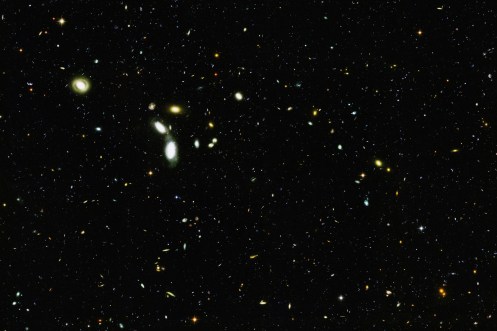

 Paul Guinnessy
 michael
 Bieke Zaman

 Matt Hodgkinson