Happy to share our new piece (w/ @MsPhelps) on #metadata completeness in @crossref and submission systems was published by #PLOSone. All data, code and peer review openly available. We'd be delighted to continue the conversation with publishers and submission system vendors:

👆🏾https://doi.org/10.1371/journal.pone.0345417.

Manuscript submission systems and metadata completeness in Crossref: Patterns and associations

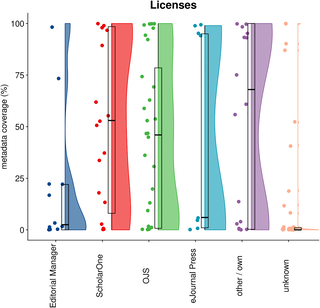
The importance of open research information, particularly publication metadata, is widely recognised. Crossref is one of the most important infrastructures for registering open metadata as part of DOI record registration. It is widely known, however, that the metadata of many publications is far from complete, with many publishers making certain metadata openly available, but failing to do so for other metadata elements. Publishers’ ability to register this metadata with Crossref depends on their capacity to capture and retain this data in their production workflows. Manuscript submission systems are an important, yet largely overlooked, factor in the extent to which publishers make metadata available through Crossref. In this paper, we present the results of an analysis investigating the relation between the level of metadata that publishers deposit with Crossref and the submission systems that they deploy for their journals. We have looked at the 153 publishers with the largest amounts of publications in Crossref and concentrate on the four most commonly used systems: Editorial Manager, ScholarOne, Open Journal Systems (OJS) and eJournalPress. We show that some submission systems appear better suited to capturing certain metadata elements. However, there are always cases where publishers using the same system differ widely in the level of metadata they register, suggesting that technology is not the only prohibiting factor and other considerations are at play.

We need a better way to fund basic #research in 🇪🇺 to stimulate innovation. so far with have #Horizon program and #ERC . Both are great but we lack a lower level of funding for testing or proof of concept (2 Years ~140k€ + postdoc) no overhead allowed (100% dedicated to research) . Selection of projects on the model of #PlosOne . @EUCommission

If a journal asks me to do a peer-review for them, which I accept, then it makes a decision before the review deadline, without waiting for my review, and without letting me know that I do not need to do the review.. while I use my spare time to complete the peer-review by the deadline... then I am not going to do any more peer-review for that journal 🤷

(#PLoSOne in this case 🫤)
#AcademicChatter #PeerReview

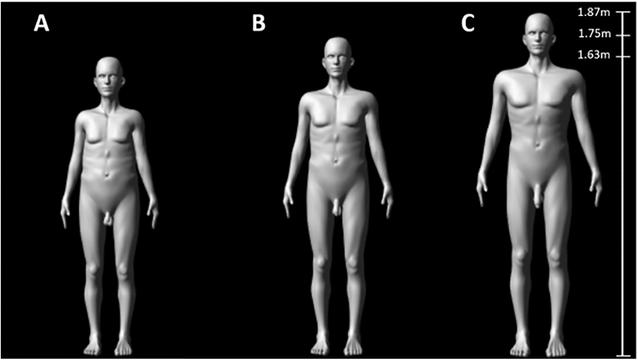
#PLoSONE Experimental evidence that penis size, height, and body shape influence assessment of male sexual attractiveness and fighting ability in humans journals.plos.org/plosbiology/...

El nuevo hallazgo que derrumba mitos sobre la Isla de Pascua

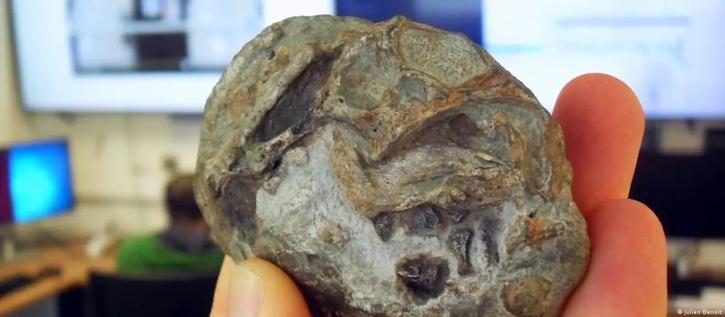
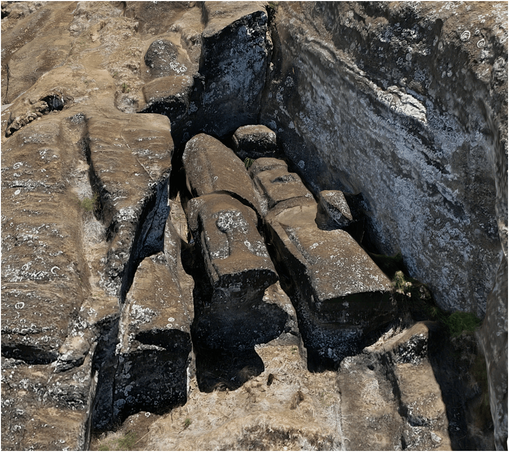
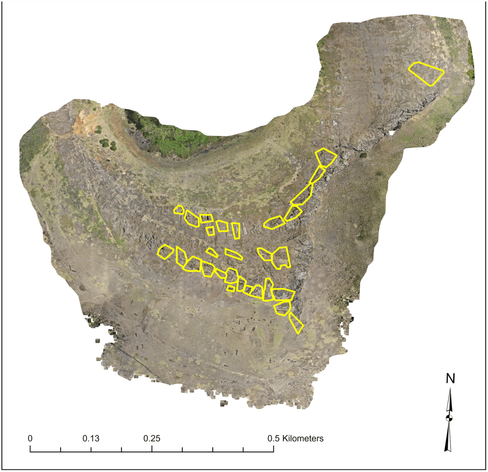
Un estudio publicado en PLOS ONE acaba de sacudir viejas certezas: la famosa cantera Rano Raraku, donde nacieron más de mil moai, no fue la fábrica centralizada de una élite todopoderosa, sino un entramado horizontal de talleres autónomos. Rapa Nui vuelve a demostrar que las grandes obras humanas también pueden surgir sin jerarquías. Por Alcides Blanco para Noticias La Insuperable Se identificaron diversos métodos de producción en los distintos talleres.Tres enfoques de tallado: […]

https://noticiaslainsuperable.com.ar/2025/12/02/el-nuevo-hallazgo-que-derrumba-mitos-sobre-la-isla-de-pascua/

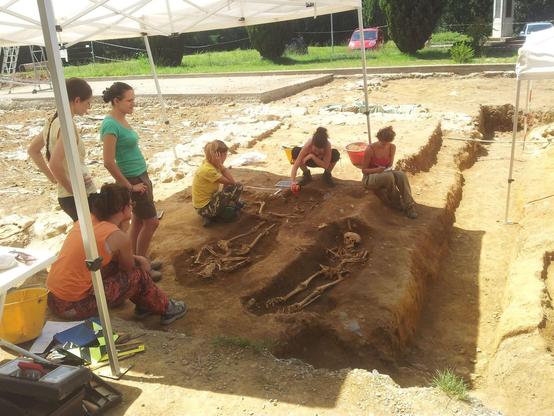
New research from Latvia’s Zvejnieki cemetery reveals that Stone Age women and children were as likely as men to be buried with stone tools, challenging “Man the Hunter” stereotypes and highlighting shared ritual traditions.

https://wildhunt.org/2025/09/research-on-a-stone-age-burial-again-challenges-man-the-hunter-stereotype.html

#archaeology #PLOSONE #stoneage #gender #latvia #science #equality

Research on a Stone Age Burial Again Challenges “Man the Hunter” Stereotype

New research from Latvia’s Zvejnieki cemetery reveals that Stone Age women and children were as likely as men to be buried with stone tools, challenging “Man the Hunter” stereotypes and highlighting shared ritual traditions.

The Wild Hunt
Neurobiological substrates of altered states of consciousness induced by high ventilation breathwork accompanied by music

The popularity of breathwork as a therapeutic tool for psychological distress is rapidly expanding. Breathwork practices that increase ventilatory rate or depth, facilitated by music, can evoke subjective experiential states analogous to altered states of consciousness (ASCs) evoked by psychedelic substances. These states include components such as euphoria, bliss, and perceptual differences. However, the neurobiological mechanisms underlying the profound subjective effects of high ventilation breathwork (HVB) remain largely unknown and unexplored. In this study, we investigated the neurobiological substrates of ASCs induced by HVB in experienced practitioners. We demonstrate that the intensity of ASCs evoked by HVB was proportional to cardiovascular sympathetic activation and to haemodynamic alterations in cerebral perfusion within clusters spanning the left operculum/posterior insula and right amygdala/anterior hippocampus; regions implicated in respiratory interoceptive representation and the processing of emotional memories, respectively. These observed regional cerebral effects may underlie pivotal mental experiences that mediate positive therapeutic outcomes of HVB.

@nobodyinperson I have not published with @plosclimate but with @PLOS (#PLOSOne), so can't answer your question directly. However, some experience may transfer from PLOS to PLOS. I wouldn't hesitate to work eight them again. It's open and really multidisciplinary which are two big pluses for me. Only bad experience was the time it took them to fix a table formatting error they've introduced (something like 2 years...) but that was pretty minor.
Aussi sur Le Monde (article en partie réservé aux gens qui ont un abonnement).
"Dans un article publié lundi 4 août dans « PNAS », la revue de l’Académie nationale des sciences des Etats-Unis, des mathématiciens et des biologistes ont recensé des pratiques frauduleuses grandissantes dans les revues de recherche."
https://www.lemonde.fr/sciences/article/2025/08/10/la-fraude-aux-publications-scientifiques-s-industrialise-alerte-une-etude-americaine_6627655_1650684.html
#esr #recherche #université #revuesSavantes #fraude #falsification #criminalite #PNAS #PlosOne
La fraude aux publications scientifiques s’industrialise, alerte une étude américaine

Dans un article publié lundi 4 août dans « PNAS », la revue de l’Académie nationale des sciences des Etats-Unis, des mathématiciens et des biologistes ont recensé des pratiques frauduleuses grandissantes dans les revues de recherche.

Le Monde
A new #PLOSOne study finds AI-generated music triggers stronger emotional arousal than human compositions - more pupil dilation & skin responses. Fascinating, but “emotionally powerful” ≠ "better" music. I wonder why do AI tunes punch harder? #GenAI #Music #ResearchSky

Study finds AI-created music t...
Study finds AI-created music triggers greater emotional arousal than human compositions

Generative artificial intelligence (Gen AI) is transforming the world of creativity, and music is no exception. A study recently published in PLOS One, explores a key question: Can AI-generated music produce the same emotional responses as human-composed music in audiovisual contexts?

Phys.org