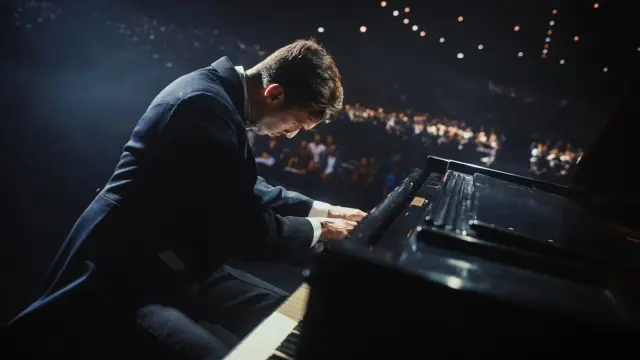
#Study from Sep '25 claims they've proven that #pianists can alter #timber, #brightness, w/ how they play (the #percussion #instrument by pressing keys).
But for all its wordiness, they never describe a single #technique used, they never discuss what they saw w/ all those cameras. They don't say what #music they used or its complexity, how the #listeners heard it (was it #recorded? #live in the room?).
Put simply: I don't believe them (& I'm a pianist).
#PianoForte #keys
https://www.sciencedaily.com/releases/2025/10/251002073956.htm
A century-old piano mystery has just been solved

Scientists confirmed that pianists can alter timbre through touch, using advanced sensors to capture micro-movements that shape sound perception. The discovery bridges art and science, promising applications in music education, neuroscience, and beyond.

ScienceDaily
GitHub - Oh-Sheet-Team/oh-sheet: Turn any song into playable piano sheet music. Paste a YouTube link or upload audio — get a PDF score. Open-source pipeline: Basic Pitch transcription, two-hand arrangement, RL-trained engraving.

Turn any song into playable piano sheet music. Paste a YouTube link or upload audio — get a PDF score. Open-source pipeline: Basic Pitch transcription, two-hand arrangement, RL-trained engraving. -...

GitHub

Fryderyk Chopin – Cello Sonata in G minor

Chopin wrote his Sonata for cello and piano in 1845, dedicating it to his friend, cellist Auguste Franchomme. A unique work for Chopin: among the few chamber works of the composer, this is the only one that belongs to the mature period. During this time, Chopin reveals the most pioneering and experimental aspect of his music.

Structure

The piece is structured in four movements:

  • Allegro Moderato: a determined theme in G minor contrasts with a second theme in G major that is more delicate and sweet. The dialogue between cello is intense: the piano part is dense, and the cello struggles to gain the right prominence. The harmonies are very complex, and foreshadow impressionistic sonorities.
  • Scherzo – Allegro con brio: a rhythmic theme with numerous variations. Notably, the Trio, in which the cello part predominates distinctly over the piano part.
  • Largo: in 27 measures Chopin creates an atmosphere similar to a Nocturne, with a nostalgic dialogue between piano and cello.
  • Finale – Allegro: it returns to the vigor of the first movement, with complex and sometimes unpredictable passages. In the central part, a noteworthy counterpoint characterizes the development of the theme. The theme is taken from an incomplete Canon in F, which here returns in the form of a canon, alternated between the cello and the piano parts. The Coda concludes the piece in a positive and lavish atmosphere.

Curiosities

Chopin felt uncomfortable writing for an instrument other than the piano. This led him to set aside and later resume composition; it took him a total of two years to complete a version worthy (in his opinion) of being published.

The difficulties that Chopin had to face in writing a piece for an unfamiliar instrument can also be seen in another aspect. On several occasions, he accompanied the cellist Franchomme (to whom the work is dedicated) at his home, for a small audience of trusted friends. This allowed him to gather opinions before the publication of the piece. Something absolutely new for Chopin, who was not used to collecting others’ impressions before publishing a work.

For the first performance of the work, in Paris in 1848, the first movement Allegro Moderato was completely eliminated. This movement was deemed too complex and difficult, and hard to understand both by his friends and by experts. Only the Scherzo, the Largo, and the Finale were performed.

Reaction of the Critics

The Sonata for cello and piano is one of Chopin’s compositions that has never received the right consideration, not even today. Rarely performed in concert settings, from its first performance it was considered too innovative to be understood by the public and critics.

#camera #cello #chopin #frederichChopin #FryderykChopin #piano #pianoforte #sonata

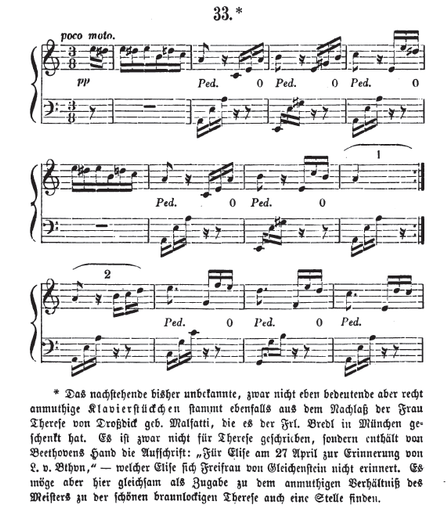
The Bagatelle No. 25 in A minor for Solo #Piano was written #today in 1810.
It became known as "Fur Elise" (For 'Elise') only after it was discovered posthumously and #published in 1867, 40 years after the #composer's death(!), in an #anthology by Ludwig Nohl, "New Letters by #Beethoven".
The inscription read: "For Elise on April 27 in memory by L. v. Bthvn"
But, who was "Elise"?!? Scholars suggest three possibilities.
#FurElise #pianoforte #classical #romantic #music
https://en.wikipedia.org/wiki/F%C3%BCr_Elise#Identity_of_%22Elise%22
Für Elise - Wikipedia

Fryderyk Chopin – Sonata per Violoncello in Sol minore

Chopin scrisse la sua Sonata per violoncello e pianoforte nel 1845, dedicandola all’amico violoncellista Auguste Franchomme. Un’opera unica per Chopin: tra le poche opere cameristiche del compositore, questa è l’unica che appartiene al periodo della maturità. In questo periodo Chopin rivela l’aspetto più pionieristico e sperimentale della sua musica.

Struttura

Il pezzo di divide in quattro movimenti:

  • Allego Moderato: un tema deciso in Sol minore si contrappone ad un secondo tema in Sol maggiore più delicato e dolce. Il dialogo tra violoncello è serrato: la parte pianistica è densa, e il violoncello lotta per ottenere il giusto risalto. Le armonie sono molto complesse, e preannunciano sonorità impressionistiche
  • Scherzo – Allegro con brio: un tema ritmico con numerose variazioni. Degno di nota il Trio, in cui la parte violoncellistica risulta nettamente predominante rispetto quella pianistica.
  • Largo: in sole 27 battute Chopin crea una atmosfera simile ad un Notturno, con un dialogo nostalgico tra pianoforte e violoncello
  • Finale – Allegro: si ritorna al vigore del primo tempo, con tratti complessi e a volte imprevedibili. Nella parte centrale un notevole contrappunto caratterizza lo sviluppo del tema. Tema che è ripreso da un incompiuto Canone in Fa, che qui torna proprio in forma di canone, alternato nelle parti del violoncello e del pianoforte. La Coda porta a conclusione il pezzo in una atmosfera positiva e fastosa.

Curiosità

Chopin si sentiva poco a suo agio a scrivere per uno strumento che non fosse il pianoforte. Questo lo portò ad accantonare e a riprendere successivamente la composizione; impiegò in totale due anni per completare una versione degna (a suo parere) di essere pubblicata.

Le difficoltà che Chopin dovette affrontare per la scrittura di un pezzo per uno strumento a lui non familiare si possono notare anche in un altro aspetto. In diverse occasioni accompagnò al pianoforte il violoncellista Franchomme (a cui è dedicata l’opera) nella sua abitazione, per un pubblico di pochi amici fidati. Questo gli permise di raccogliere opinioni prima della pubblicazione del pezzo. Cosa assolutamente nuova per Chopin, che non era solito raccogliere impressioni altrui prima della pubblicazione di un pezzo.

Per la prima esecuzione dell’opera, a Parigi nel 1848, fu eliminato completamente il primo movimento Allegro Moderato. Questo movimento fu giudicato troppo complesso e difficile, e di ostica comprensione sia da parte dei suoi amici sia da parte di esperti. Vennero quindi eseguiti solo lo lo Scherzo, il Largo e il Finale.

Reazione della critica

La Sonata per violoncello e pianoforte è una delle composizioni di Chopin che non hanno mai ricevuto la giusta considerazione, nemmeno al giorno d’oggi. Raramente eseguita in sede di concerti, fin dalla prima esecuzione era considerata troppo innovativa per essere compresa dal pubblico e dalla critica.

#camera #cello #chopin #frederichChopin #FryderykChopin #piano #pianoforte #sonata

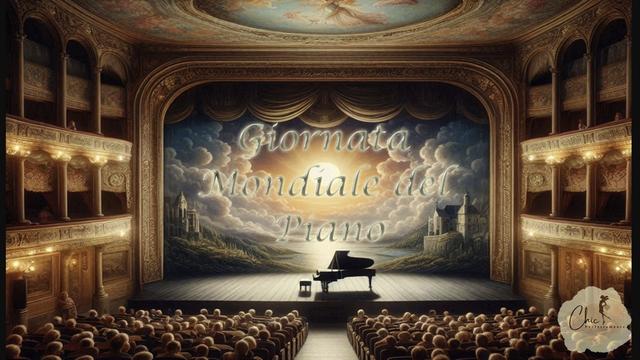
🎹✨ Oggi celebriamo il World Piano Day: una giornata dedicata al pianoforte e alla magia dei suoi 88 tasti che uniscono il mondo in musica!

Leggi l’articolo completo sul blog 💫

#WorldPianoDay #PianoDay #Musica #Pianoforte #PerfettamenteChic #GiornateMondiali #MusicaClassica #MusicLovers #Arte

http://perfettamentechic.com/2026/03/28/giornata-mondiale-del-piano/

Giornata Mondiale del Piano

World Piano Day è una delle ricorrenze più amate dagli appassionati di musica

Perfettamente Chic
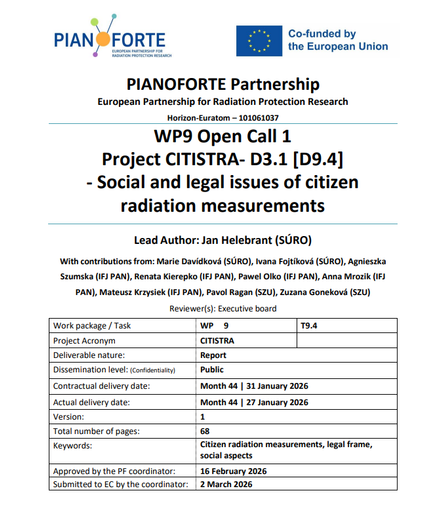
Dear colleagues, the #PIANOFORTE #CITISTRA report "Social and legal issues of citizen radiation measurements" is now publicly available: https://pianoforte-partnership.eu/citistra/ #Chornobyl #Fukushima #radioactivity #radiation #citizenscience #SAFECAST #SaveDnipro #ZhavaMista

In aeroporto, al pianoforte, suonano tutti la stessa canzone, Nuvole Bianche di Ludovico Einaudi.
I più virtuosi poi attaccano con il theme di Interstellar.
Stamattina l'avrò sentita già 14 volte! 😁

#giroviaggiare #pianoforte