 PyCharm Blog
Build a Live Object Detection App for the Reachy Mini With TensorFlow and PyCharm
#Pycharm #Datascience #Tutorials #Computervision #Objectdetection #Python #Tensorflow

 anoncheg
Title: P3: preparing for interview and reading paper [2024-02-28 Wed]
detection networks. It uses predefined anchor boxes and their
pyramides. There is a sliding window, a box-regression layer
(reg) and a box-classification layer (cls).
Anchor-free object detection methods is CenterNet, FCOS
(Fully Convolutional One-Stage Object Detection) and
DETR (DEtection TRansformers)
😶 #dailyreport #cv #objectdetection #fsl #deeplearning
Title: P2: preparing for interview and reading paper [2024-02-28 Wed]
- Learn-to-Parameterize - param eterizing the base learner or
some subparts of base learner for a novel task so that it can
address this task specifically. meta learner generate weights
for base learner.
- Learn-to-Adjust
- Learn-to-Remember
Also this article have good overview of all ML tasks.
Region Proposal Network (RPN) is a backbone of first object #dailyreport #cv #objectdetection #fsl #deeplearning
Title: P1: preparing for interview and reading paper [2024-02-28 Wed]
- data augmentation - supervised or unsupervised
- metric learning
- meta learning. which is
- Learn-to-Measure
- Learn-to-Finetune - finetune a base learner for task T using
its few support samples and make the base learner converge fast
on these samples within several parameter update steps. base
learner and a meta learner #dailyreport #cv #objectdetection #fsl #deeplearning
- data augmentation - supervised or unsupervised
- metric learning
- meta learning. which is
- Learn-to-Measure
- Learn-to-Finetune - finetune a base learner for task T using
its few support samples and make the base learner converge fast
on these samples within several parameter update steps. base
learner and a meta learner #dailyreport #cv #objectdetection #fsl #deeplearning
Title: P0: preparing for interview and reading paper [2024-02-28 Wed]
Few shot learning (FSL):
- 2023 A Survey on Machine Learning from Few Samples
CV Object detecttion:
- 2016 Faster R-CNN: Towards Real-Time Object
Detection with Region Proposal Networks
- 2018 Mask R-CNN
- 2015 YOLO
Most solutions for FSL in non-deep period before 2015
was generative based, but then discriminative.
Discriminative approaches is: #dailyreport #cv #objectdetection #fsl #deeplearning
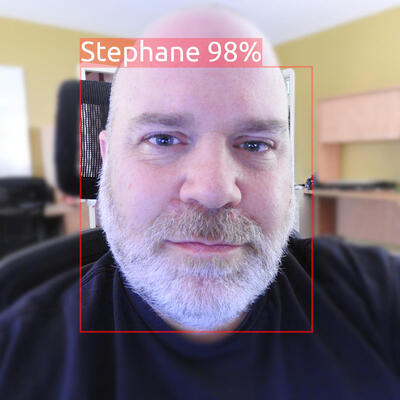 Stéphane Charette 🇨🇦
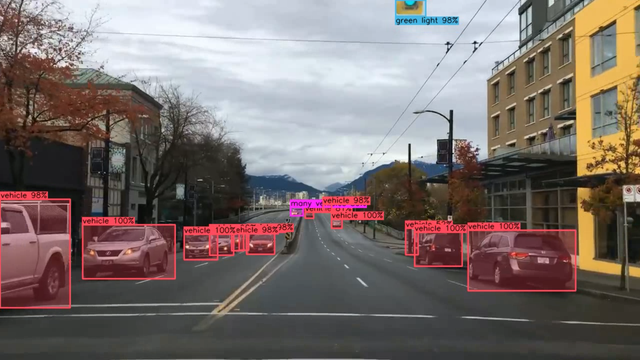
Talk on the discord about how much time it takes to process images with Darknet/YOLO. No need to guess and throw wild speculation -- run any of the built-in Darknet/YOLO tools and it will tell you exactly how long it takes at every step.
loading /home/stephane/nn/driving/set_04_dash/frame_064661.jpg
-> reading image from disk ........... 3.781 milliseconds [1280 x 720 x 3] [78.7 KiB]
-> resizing image to network dims .... 0.383 milliseconds [640 x 352 x 3]
-> using Darknet to predict .......... 2.581 milliseconds [7 objects]
-> using Darknet to annotate image ... 0.071 milliseconds [1280 x 720 x 3]
-> save output image to disk ......... 2.123 milliseconds [84.9 KiB]
-> total time elapsed ................ 9.324 milliseconds [107 FPS]
 hansakwast
Train Custom Deep Learning Models Without Coding using QGIS, Roboflow and Ultralytics
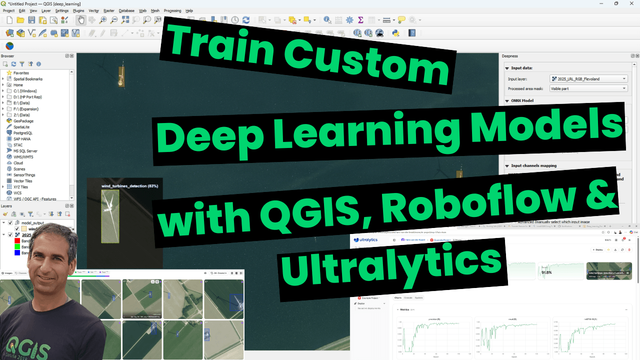
Train Custom Deep Learning Models Without Coding using QGIS, Roboflow and Ultralytics
I don't talk about Darknet/YOLO much anymore on Mastodon. But I maintain the modern Darknet/YOLO repo.
This repo, written in C++ and CUDA, is used to analyze images and video frames to find objects. You train a neural network to identify things you need, and then you give it images or videos to inspect.
Darknet/YOLO is completely free. Uses the Apache 2 license.
The GitHub mirror is here: https://github.com/hank-ai/darknet/tree/v6-dev#table-of-contents
The main repo is here: https://codeberg.org/CCodeRun/darknet/src/branch/v6-dev#table-of-contents
An example image:
#Darknet #YOLO #NeuralNetwork #ObjectDetection
 HitechDigital Solutions
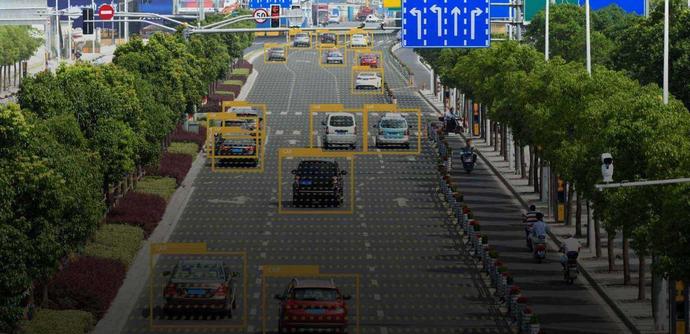
A closer look at image annotation in AI systems
Machines need labeled data to understand images. image annotation services provide that structure by marking objects and patterns. This helps AI systems process visual information and deliver more accurate and reliable outcomes.
Know more: https://www.hitechdigital.com/image-annotation-services
#ImageAnnotationServices #DataAnnotationServices #ImageLabeling #ComputerVision #AITrainingData #MachineLearning #ObjectDetection
 strickvl
That brings panlabel to 13 supported formats with full read, write, and auto-detection. Single binary, no Python dependencies.
This is the kind of project I enjoy just steadily plodding away at — ticking off one format at a time until every common object detection annotation format is covered.
https://github.com/strickvl/panlabel
#ObjectDetection #Rust #MachineLearning #ComputerVision #OpenSource
