« L’Iran est sur le point d’obtenir l’arme nucléaire » : trente ans de prophéties démenties

https://lvsl.fr/liran-est-sur-le-point-dobtenir-larme-nucleaire-trente-ans-de-propheties-dementies/?utm_source=brevo&utm_campaign=Newsletter%20Derniers%20Articles&utm_medium=email

> En 1995, la CIA alertait : l’Iran est capable de développer une arme nucléaire en dix ans. En 2005, dix ans plus tard donc, elle alertait de nouveau : dans cinq ans, l’Iran aura la bombe. Cinq ans plus tard, en 2010, le chef du renseignement militaire américain (Defense Intelligence Agency, DIA), alertait à son tour : « il […]
#Iran
#nucleaire
#nuclearBomb
#stopTheWarOnIran

According to our elected leaders, we should be scared that #Iran could get a #nuclearbomb. But #Israel already has them, and its government is increasingly unstable and belligerent. #Zionists #Gaza #Genocide #Netanyahu #IDF #Murderers

🦩 Read more: https://www.currentaffairs.org/news/wait-why-is-israel-allowed-to-have-nukes

Wait, Why Is Israel Allowed To Have Nukes?

According to our elected leaders, we should be very scared of the possibility that Iran could get a nuclear bomb. But Israel already has them, and its government is increasingly unstable and belligerent.

😹😹😹 🤡🤡🤡
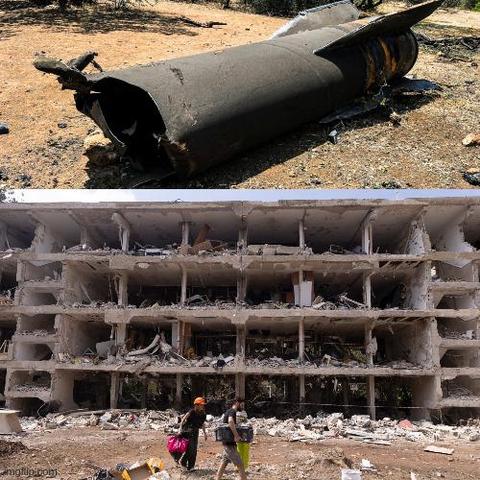
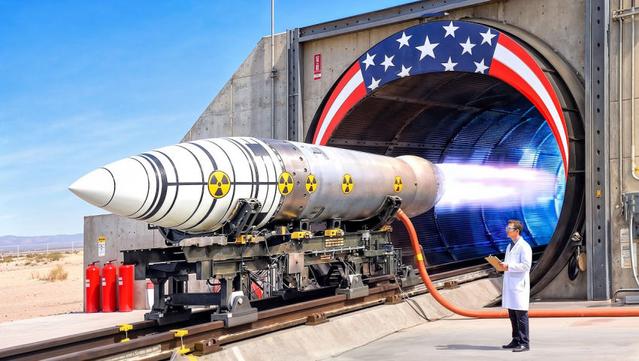
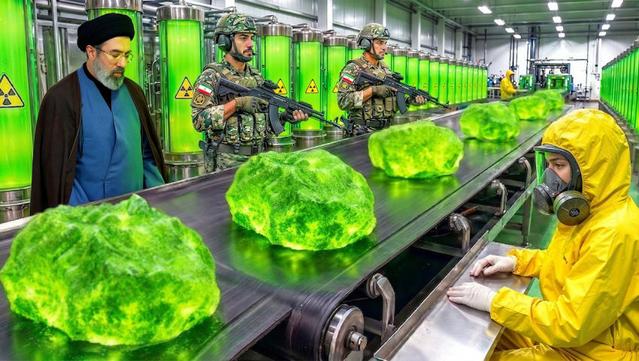
La bombe nucléaire furtive iranienne qui n'existe que dans le cerveau de #netanyahuWarCriminal depuis 25 ans.
The Iranian stealth nuclear bomb that has only existed in the mind of #netanyahuWarCriminal for 25 years.

#NoWarWithIran
#Iran
#nuclearBomb
#zionistsAreTerrorists

Would countries stop invading each other if every country has a nuclear bomb?
#nuclearweapons #atomicbomb #nuclearproliferation #warfare #internationalrelations #diplomacy #nuclearbomb #nuclearwar

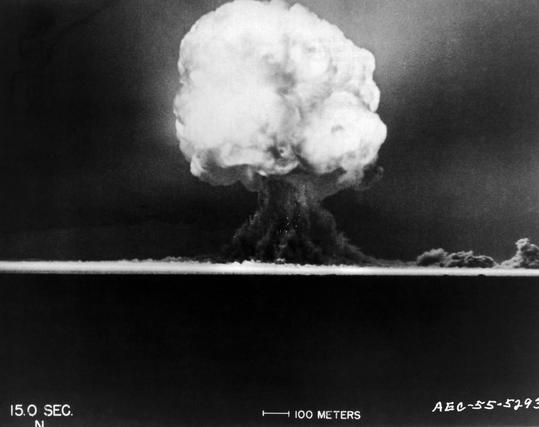
Today in Labor History February 18, 1955: The U.S. launched Operation Teapot at the Nevada Nuclear Test Site. Teapot included 14 nuclear bomb tests. Wasp was the first, detonated on February 18. It had a yield of 1.2 kilotons. During shot Wasp, ground forces participated in Exercise Desert Rock VI. This included an armored task force moving to within 3,000 ft of ground zero, while the mushroom cloud was still growing. From 1945 through 1962, the U.S. conducted 230 atmospheric nuclear weapons tests, with approximately 235,000 military personnel participating. Most were enlisted men, from the navy. However, millions of people were exposed to the fallout from U.S. nuclear weapons tests in the southwest of the U.S. and the Marshall Islands. University of Arizona economist Keith Meyers estimates that radioactive fallout was responsible for 340,000 to 690,000 American deaths from 1951 to 1973.

#workingclass #LaborHistory #nucleartest #nuclearbomb #coldwar #nuclear #radioactive #publichealth #radiation #indigenous #marshallislands #atomic #warcrimes

youtube.com/watch?v=9QMt... #BrazilRussia #nuclearfission deal is open defiance of #DonroeDoctrine though it is not directly a #MonroeDoctrine challenge. Offering #Brazil #nuclear tech & missiles clearly puts it in position to build #nuclearbomb technology to keep #WashingtonDC out of #AbyaYala.

Brazil DEFIES Washington: Russ...
Brazil DEFIES Washington: Russia Nuclear Deal Shakes the Western Hemisphere

YouTube

Are US Nukes Returning To Britain? Implications For Europe’s Security Order

Are US Nukes Returning To Britain? Implications For Europe’s Security Order

By Uriel Araujo

Growing secrecy around US military bases in the UK has reignited speculation about the return of American nuclear weapons to British soil. Infrastructure upgrades, NATO’s nuclear reconfiguration, and Washington’s shifting posture toward Europe raise troubling questions. At a time of transatlantic strain and Arctic tensions, Britain’s silence speaks loudly.

Secrecy is a kind of silence, but sometimes silence speaks volumes: over the past year, London’s growing reluctance to disclose details about the US military presence on British soil has fuelled renewed suspicion that Washington may be quietly deploying or storing nuclear weapons in the United Kingdom. This has been speculated for some time now, but recent developments add fuel to the fire, so to speak. The timing is interesting: the lack of transparency surrounding US bases in Britain coincides with a broader NATO nuclear reconfiguration, a confused European security debate, and a transatlantic relationship under unprecedented strain.

A recent investigative report revealed that the UK government has increasingly classified information about the number, role, and operational scope of US forces stationed at British bases, citing security concerns while avoiding parliamentary scrutiny. The refusal to clarify whether US assets at sites such as RAF Lakenheath include nuclear-capable infrastructure has inevitably raised alarm. One may recall that RAF Lakenheath hosted US nuclear weapons throughout the Cold War, and that Britain officially declared their removal only in 2008. The infrastructure, however, never truly disappeared.

In any case, recent developments (since 2025) show evidence of upgrades and possible redeployment of US nuclear weapons to the base (e.g., suspected B61-12 arrivals in July 2025).

Indeed, already in March 2025, credible defence reporting suggested that Washington intended to deploy nuclear weapons to Britain for the first time in nearly two decades, citing upgrades to storage facilities compatible with B61 nuclear bombs.

Some analysts argue that these moves fit a broader US strategy of repositioning nuclear assets closer to what Washington sees as potential theatres of confrontation, particularly in Europe’s northern and eastern flanks. Thus far, neither London nor Washington have denied these reports outright, relying instead on NATO’s familiar “neither confirm nor deny” approach.

This silence takes place in an interesting enough moment. Over the past two years, Europe has witnessed a steady erosion of arms-control frameworks and a revival of nuclear brinkmanship. In August 2024, Germany became the focal point of what I described back then as a new Cuban Missile Crisis-like episode, after Berlin and Washington announced the deployment of long-range US missile systems eliminated under the INF Treaty, systems that could be nuclear-capable despite official assurances to the contrary. That debate has not come to an end; if anything, it has “normalized” the idea that European soil can again host strategic weapons aimed at Russia.

Poland followed a similar trajectory. In September 2025, senior Polish officials openly advocated joining NATO’s nuclear-sharing program and even floated the possibility of developing national nuclear capabilities, framed as a “race for security”. The catch here is that Europe’s eastern flank no longer fully trusts American guarantees, yet feels pushed by Washington into ever riskier postures. It goes without saying that such ambitions skirt the spirit of the Non-Proliferation Treaty while deepening regional instability.

More recently, what has fundamentally altered the strategic landscape, however, are Trump’s threats against Denmark over Greenland: a blatant enough assertion of American strategic entitlement in the Arctic, also tied to interests pertaining to energy routes and rare-earth resources.

It is no wonder European leaders, visibly shaken, have begun debating scenarios in which the American “ally” is no longer a guarantor of security but a potential threat. EU officials have thus even discussed invoking Article 42.7 of the EU Treaty as a hedge against American unpredictability, in a scenario about which I speculated whether it would make sense for Europe to “pivot” to Russia to some extent.

This is where Britain’s role becomes pivotal. Does it make sense to assume that, as continental Europe hedges and even tentatively reopens dialogue with Moscow, Washington might view the UK as a more reliable partner? Possibly. Britain for one thing remains outside the EU, hosts extensive US military infrastructure, and maintains deep intelligence and nuclear ties with Washington.

It is true that Franco-British nuclear cooperation has been openly discussed, and even Sweden is reportedly eyeing arrangements involving British and French deterrence, Yet this very alignment has its contradictions, given the overall context. In any case, if the UK becomes America’s primary nuclear foothold across the Atlantic, it thereby absorbs disproportionate strategic exposure, turning British territory into a frontline in any future escalation.

Britain’s silence on US nuclear deployments certainly increases tensions. So-called democratic societies, moreover, cannot be expected to shoulder risks without transparency or consent;

The paradox here is striking enough. Trump claims to seek an end to the American proxy war in Ukraine and a reduction of tensions with Moscow, yet simultaneously advances policies that further encircle Russia in the Arctic (yes, that includes Greenland) and basically revive Cold War-style nuclear deployments, apparently.

Europe, meanwhile, is left confused enough to wonder whether it should prepare to defend itself against Russia (as its rhetoric would have it) or against the United States, even though the only explicit military threats have come from Washington itself, through Trump’s voice.

Uriel Araujo, Anthropology PhD, is a social scientist specializing in ethnic and religious conflicts, with extensive research on geopolitical dynamics and cultural interactions.

Disclaimer: The views expressed in this article are author’s own and do not necessarily reflect the editorial policy of Voice of East.


#Britain #Europe #Geopolitics #NATO #NuclearBomb #Russia #TheArctic #UK #Ukraine #USA

Turkey warns of nuclear arms race if Iran gets weapons

Turkish Foreign Minister Hakan Fidan warned that Turkey could be pulled into a nuclear arms race if Iran…
#NewsBeep #News #Headlines #airstrike #armsrace #AyatollahAliKhamenei #HakanFidan #Iran #islamicregime #IslamicRepublic #MiddleEast #nuclearbomb #nuclearweapon #RecepTayyipErdogan #Spotlight #Tehran #Turkey #willisraelattackiran #willusattackiran #World
https://www.newsbeep.com/392266/

We Could All Get Nuked Tomorrow (Here's Why)

YouTube