 Youth Mental Health Canada
Useful questions to ask yourself when you experience a setback.
#thoughts #negativethinking #negativethoughts #emotionalawareness #emotionalhealth #mentalhealth #mentalwellness #resilience #copingskills #copingstrategies #ymhc
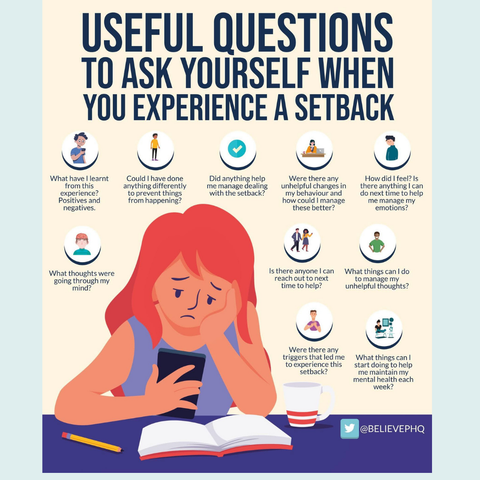
Useful questions to ask yourself when you experience a setback.
#thoughts #negativethinking #negativethoughts #emotionalawareness #emotionalhealth #mentalhealth #mentalwellness #resilience #copingskills #copingstrategies #ymhc
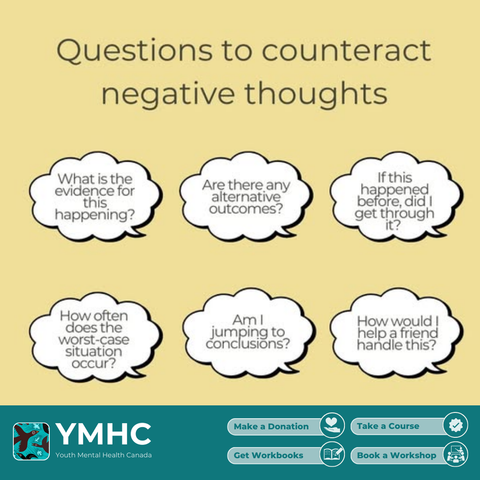
Questions to counteract negative thoughts. What is the evidence for this happening?
#thoughts #negativethinking #negativethoughts #automaticnegativethoughts #emotionalawareness #emotionalhealth #mentalwellness #ymhc
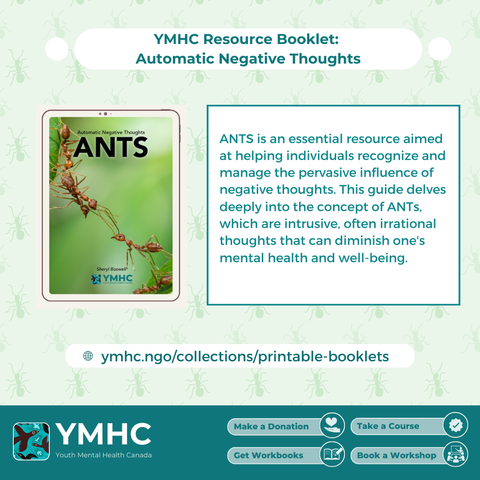
YMHC Resource Booklet: Automatic Negative Thoughts.
#thoughts #negativethinking #negativethoughts #automaticnegativethoughts #emotionalawareness #emotionalhealth #mentalhealtheducation #resources #ymhc
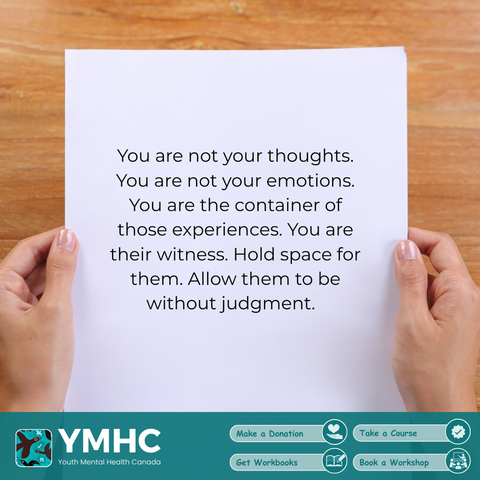
You are not your thoughts.
You are not your emotions.
You are the container of those experiences. You are their witness. Hold space for them. Allow them to be without judgment.
#thoughts #negativethinking #negativethoughts #feelthefeeling #feelings #emotions #automaticnegativethoughts #emotionalawareness #emotionalhealth #ymhc
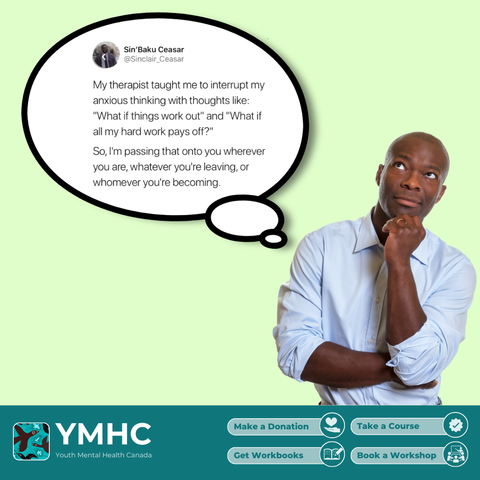
By Sinclair_Ceasar
#anxiety #anxietyawareness #mentalhealth #mentalhealthmatters #stress #mentalwellness #emotionalhealth #mentalhealthawareness #studentmentalhealth #ymhc #thoughts #negativethinking #positivevibes
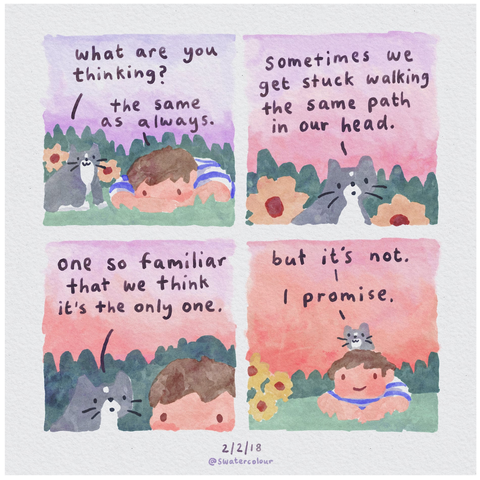
What are you thinking? The same as always. Sometimes we get stuck walking the same path in our head. One so familiar that we think it's the only one. But it's not. I promise.
By swatercolour
#thoughts #negativethinking #negativethoughts #emotionalawareness #emotionalhealth #mentalwellness #mentalhealthmatters #positivevibes #inspiration #ymhc
When you look for your thoughts

Negative thinking limits potential. Positive thinking creates possibilities. The mindset you choose shapes the results you see.
#panjabipod #positivethinking #negativethinking #podcasting #podcastalert #lifeskills #lifejourney #outcomes #mindsetmatters
Study Explores How Self-Esteem and Negative Thinking Influence Burnout in Students
A recent study conducted by researchers at Bielefeld University, published in Communications Psychology, investigates the interplay between self-esteem, repetitive negative thinking, and burnout among university students. The study utilized ecological momentary assessment (EMA), collecting real-time... [More info]

Background Psychological problems such as depression and anxiety increase the risk of cognitive impairment in older adults. But mechanisms on the effect of psychological disorder on cognitive function is inconclusive. Repetitive negative thinking (RNT) is a core symptom of a number of common psychological disorders and may be a modifiable process shared by many psychological risk factors that contribute to the development of cognitive impairment. RNT may increase the risk of cognitive impairment. However, there are fewer studies related to RNT and cognitive function, and there is a lack of epidemiological studies to explore the relationship between RNT and cognitive function. Methods A cross-sectional study of 424 older adults aged 60 years or over was performed form May to November 2023 in hospital. To investigate the RNT level by using the Perseverative Thinking Questionnaire (PTQ), and investigate the cognitive function level by using the Montreal Cognitive Assessment Scale (MoCA). Multivariable linear regression and subgroup analyses were used to explore the relationship between RNT and cognitive function. Results We categorized the total RNT scores into quartiles. The multivariable linear regression analysis showed that after adjusting for all covariates, the participants in the Q3 and Q4 groups exhibited lower cognition scores (Q3:β = -0.180, 95%CI -2.849~-0.860; Q4:β = -0.164, 95% -2.611~-0.666) compared to the Q1 group. The results of the subgroup analyses showed that individuals aged 60 ~ 79 years, junior high school and above are more prone to suffer from cognitive impairment with a high RNT score. Conclusion The study reveals a negative association between RNT and cognitive function in community-dwelling older adults. However, multi-center and a longer time span cohort studies on the relationship between RNT and cognitive function should be carried out to further explore the mechanisms involved.
 Mr. Funk E. Dude’s PeerTube
 Panjabi Pod
 chronosotheym at KillBait
 N-gated Hacker News