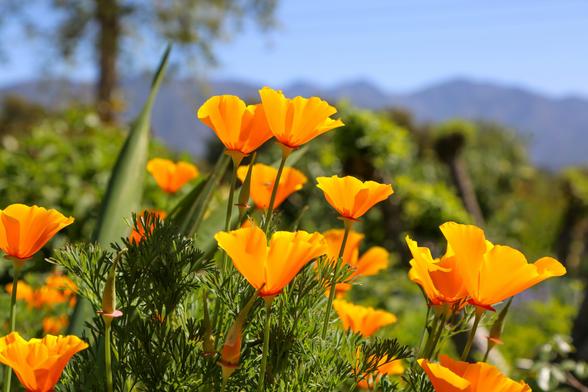
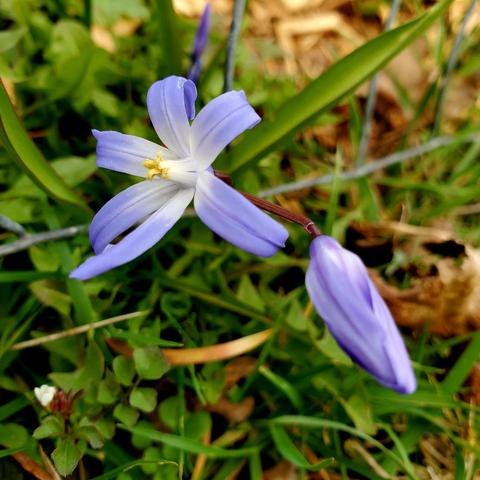
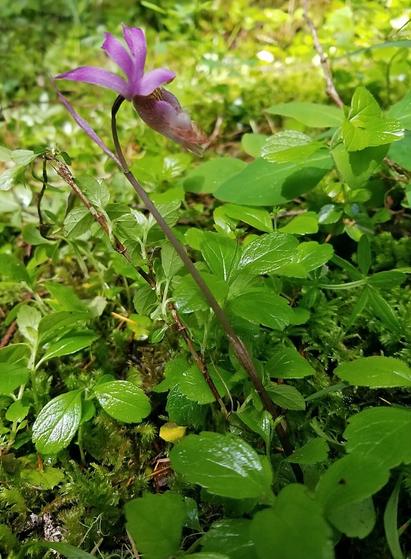
This #thanksgiving I am most thankful for this beautiful planet Earth 💙 Today I am planting #nativewildflower seeds for future #pollinators and #wildlife
#blessedbe

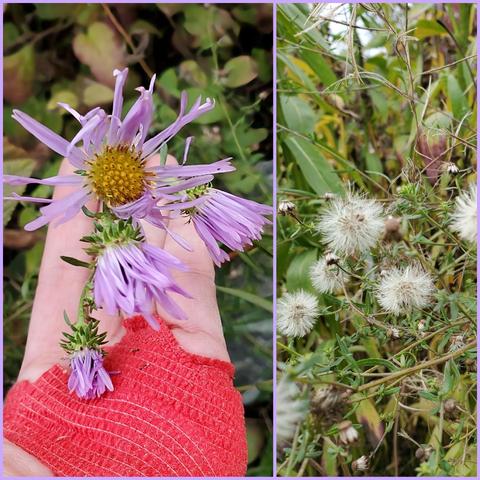
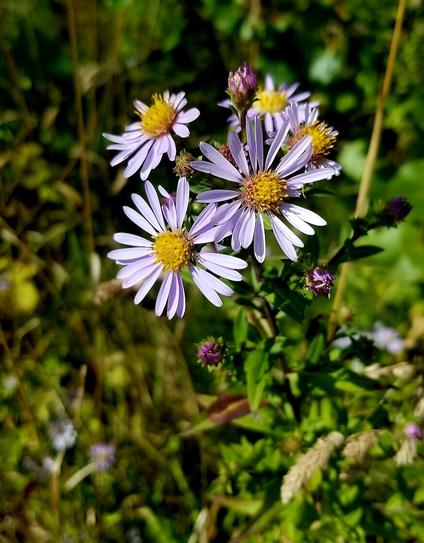
#PacificAster is one of my fave #NativePlants to use for #rewilding & for attracting more #pollinators.

It's a small, hardy, beautiful purple #NativeWildflower which is found from BC to California. It's tolerant of many different coastal habitats, from ocean sand dunes to rocky outcrops to salt marshes to grasslands to forests. Great plant to use for soil erosion & slopes stabilization work. It has a deep, clumpy, extensive fibrous root system - don't grow beside plants with weaker root systems.

Pacific aster is extremely easy to grow in it's native grow zones, across coastal PNW areas. You'll love their long bloom time, from late May into late October. It provides pollen sources for pollinators in Fall. After they stop blooming, they'll produce fluffy seed heads, full of prolific wind-born #seeds. Snip off tops of seed heads to save them. I store mine in airtight jars & share a lot of them too.

#gardening #Bloomscrolling #florespondence #Saanich #Gardeners #botanical #Flowers #PollinatorGarden #VictoriaBC #YYJ #VancouverIsland #VanIsle #PacificNorthwest #Cascadia #PNW #Zone8 #perennials #VictoriaBC #Wsanec #PlantLovers #FallFlowers #Autumn #Nature #SeedSavers #SeedKeepers #SeedSharing #SeedBanking #SeedCollecting #SilentSunday #biodiversity

As well as spring beauty and trout lily plants, I saw a few (two) bloodroot plants. In the wild, bloodroot is a protected plant in many areas. If you come across a patch of bloodroot, appreciate it from a distance and leave it undisturbed. The XF150-600mmF5.6-8 R LM OIS WR lens allows me to zoom in from afar, leaving the bloodroot and other native plants undisturbed.

Bloodroot can be found in the eastern part of North America, specifically in areas ranging from southern Canada to the eastern United States. It typically grows in moist, wooded areas and can often be found near streams or other bodies of water. The area along the bank of Rock Brook is the perfect environment for bloodroot. I discovered two hiking trails Rock Hopper and Pryde'S Point-Alexauken Creek during the pandemic with large colonies of bloodroot. Zion Crossing Park is closer to home.

Bloodroot (Sanguinaria canadensis) · Monday 1 May 2023 · FujiFilm X-T3 · XF150-600mmF5.6-8 R LM OIS WR

The most striking feature of the bloodroot plant is its unique flower, which is pure white and has a bright yellow centre. The fragile spring flower develops and rises from the centre of its curled leaf, opening in full sun and closing at night. I've tried unsuccessfully to grow trout lilies in my patio "meadow container" garden.

In terms of when the bloodroot grows, it is an early spring bloomer, typically appearing in late March or early April. The flowers of the bloodroot plant are short-lived and will only last a few days. A part of me wonders if the plants have already bloomed and I've missed the show. I'll have to visit Zion Crossing Park and the Rock Hopper and Pryde'S Point-Alexauken Creek trails to confirm my suspicions.

https://islandinthenet.com/bloodroot/

#bloodroot #HollowRoad #NativeWildflower #RockBrook #SanguinariaCanadensis #Spring #ZionCrossing

Rockhopper Trail - Island in the Net - Photography, Technology and Everything in between.

Bhavna and I ventured out to another trail in West Amwell Township we had not visited before. This one was odd in that the trailhead starts on private property. We passed an old barn and some cars.…

Island in the Net

The Silky Dogwood (Cornus amomum) is a notable native shrub found in Hobler Park and many other areas around Montgomery Township. Silky Dogwood thrives in the park's moist, low-lying areas, particularly around the unnamed tributary of Bedens Brook at the southern end.

I am always drawn to its smooth, reddish-brown stems and clusters of small, white flowers that bloom in late spring. In the fall, it produces blue-black berries that attract birds. The presence of Silky Dogwood contributes to the park's biodiversity, providing food and habitat for wildlife.

https://islandinthenet.com/silky-dogwood-cornus-amomum/

#CornusAmomum #HoblerPark #NativeWildflower #SilkyDogwood

Hobler Park - Island in the Net - Photography, Technology and Everything in between.

Exploring Hobler Park, I shifted focus from birds to wildflowers, finding both native and invasive species in this peaceful setting.

Island in the Net

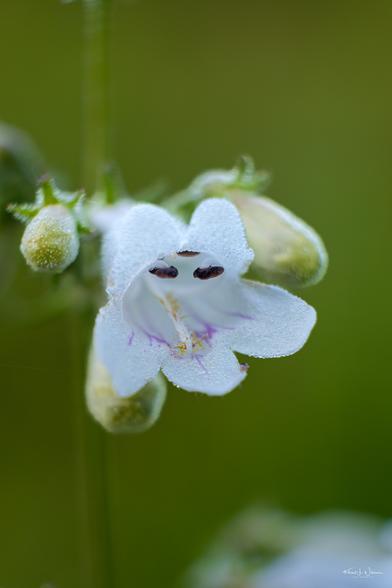
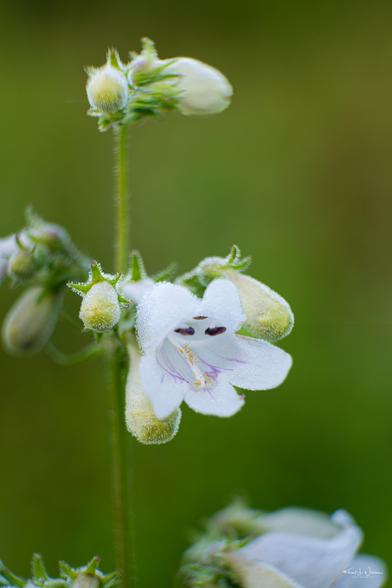
On my early morning outing to Van Horne Park, I was prepared for every photographic opportunity that my minimalist camera kit could accomplish. I had the XF150-600mmF5.6-8 R LM OIS WR which I used to photograph deer and rabbit and the XF16-55mmF2.8 R LM WR and MCEX-16 macro extension tube which came in handy for macro photographs of native wildflowers, like Foxglove Beardtongue.

Penstemon digitalis, commonly known as Foxglove Beardtongue, is a wildlife-friendly native perennial plant. It loves moist, well-drained soils but can adapt to various soil types, including sand, loam, and even clay. While I don't have specific information about the soil type in Van Horne Park, the park seems to have the right soil conditions. I found more than one patch of this wildflower as I walked around Van Horne Park. Most of the park receives full sun to partial shade.

Foxglove Beardtongue (Penstemon digitalis) · 31 May 2024 · FujiFilm X-T3 · XF16-55mmF2.8 R LM WR

Foxglove Beardtongue is highly beneficial to insects and other wildlife. It attracts a variety of pollinators, including bees, butterflies, and hummingbirds. The tubular white flowers, which bloom from April to June, is an excellent nectar source.

From what I read online, Penstemon digitalis can be planted in personal gardens. It may be an excellent choice for my flower beds. The plant grows to a height of 3-5 feet with a spread of 1-2 feet. It's also deer-resistant and has medium drought tolerance, which adds to its appeal for me.

https://islandinthenet.com/foxglove-beardtongue-penstemon-digitalis/

#FoxgloveBeardton #MacroPhotography #NativeWildflower #PenstemonDigitalis #VanHornePark

"Buck season! Rabbit season!" - Island in the Net - Photography, Technology and Everything in between.

Throughout April and MayI focused on photographing birds in Charles H. Rogers Wildlife Refuge and Institute Woods. But I wanted a change. It’s not that I was bored with bird photography I just wond…

Island in the Net

#WesternAster aka #PacificAster is a pretty #NativePlant #NativeWildflower & fab for #rewilding. It's also used in #environmental restoration work; it's been proven to absorb #selenium pollution.

Cold tolerant, hardy from sea to mountain elevations & will grow in poor soil.

#SymphyotrichumAscendens #Asteraceae #bloomscrolling #FlowersIdentification #PollinatorGarden #Saanich #Gardeners #VictoriaBC #Gardening #Zone8 #YYJ #Spring #Wsanec #VancouverIsland #PNW #botanical #PlantIdentification #PNW

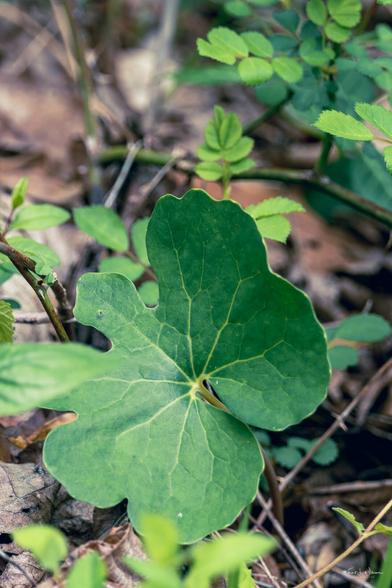
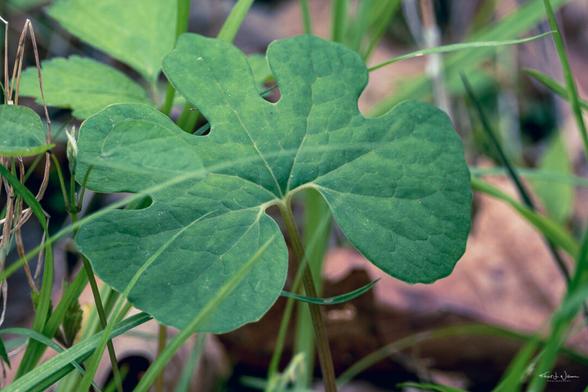
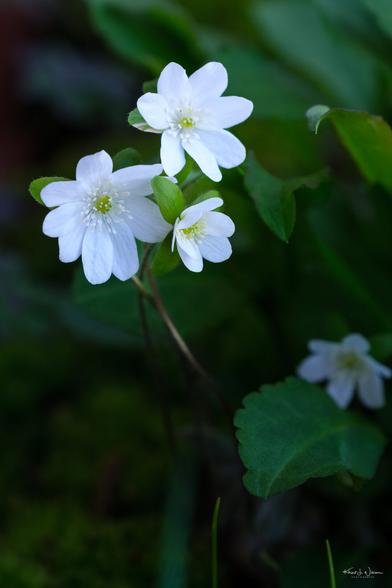
I planted this in one of my large planters on my west-facing balcony. I don’t remember when or where I purchased it but I thought it was dead. It could be Anemone americana which is often found in the Sourland Mountains. The first time I encountered hepatica was when I saw round-lobed Hepatica (Hepatica americana) in 2015.

But I was unsure which variety, Hepatica acutiloba (sometimes treated as H. nobilis var. acuta) or round-lobed hepatica, Hepatica americana (sometimes treated as H. nobilis var. obtusa). Hepatica acutiloba and Hepatica americana are both perennial herbaceous plant that typically grows in woodland habitats (like the Sourland Mountains). Hepatica acutiloba produces white, pink, or purple flowers in early spring while Hepatica americana produces white, pink, or blue flowers in early spring.

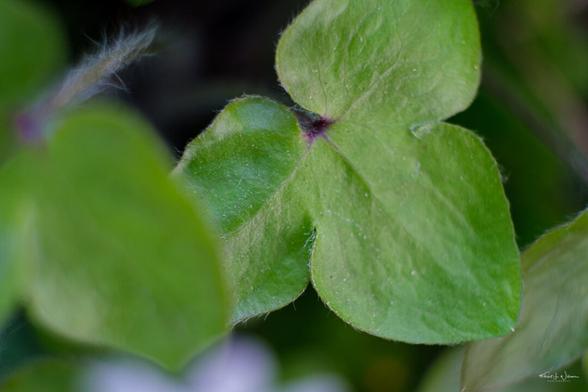
From what I have read online, Hepatica nobilis var. acuta and Hepatica nobilis var. obtusa are two varieties of the same species. The main difference lies in their leaf morphology. Var. acuta has sharply pointed lobes on its leaves, while var. obtusa has rounded or obtuse lobes. Additionally, var. acuta is often found in more northern regions, while var. obtusa is more common in southern areas. Both varieties produce similar white, pink, or blue flowers in early spring.

Sharp-lobed Hepatica (Hepatica nobilis var. acuta) · 25 April 2024 · FujiFilm X-T3 · XF16-55mmF2.8 R LM WR

Based on the macro photographs of the leaves I think this is Hepatica nobilis var. acuta aka sharp-lobed hepatica.

https://islandinthenet.com/rue-anemone-thalictrum-thalictroides/

#AnemoneHepaticaVarAcuta #Hepatica #HepaticaAcutiloba #HepaticaNobilis #HepaticaNobilisVarAcuta #NativeWildflower #SharpLobedHepatica #Spring

Anemone americana - Island in the Net - Photography, Technology and Everything in between.

I observed some early spring treasure, Hepatica Nobilis flowers, growing in a small patch along the Aunt Molly trail section of the St. Michael's Farm Preserve and then got back to thinking about l…

Island in the Net