We keep saying “put a human in the loop” as if that guarantees control. But what if it doesn’t? What if control isn’t about presence—but about how responsibility and authority are designed? Where does HITL actually break down? #AI #AgenticAI #HumanAgentCenteredDesign #ProductStrategy

https://www.designative.info/2026/04/10/human-in-the-loop-is-not-a-strategy/

Human-in-the-Loop Is Not a Strategy » { design@tive } information design

Human-in-the-loop (HITL) promises control—but without clear roles and boundaries, control fragments and responsibility become unclear.

{ design@tive } information design

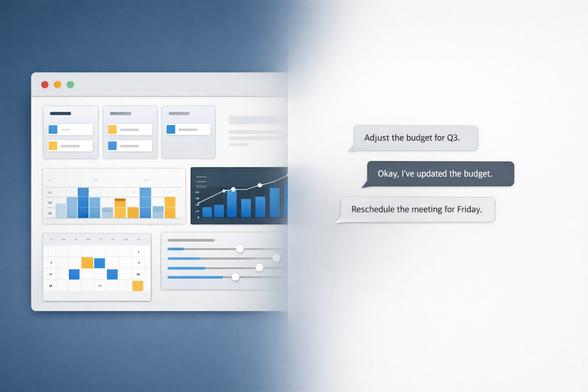
We spent decades moving beyond #commandline—toward #interfaces that made work visible.

Now we’re rebuilding everything as chat.
Not because it fits the work, but because the tech allows it.

This isn’t a technical shift. It’s a design regression worth debating.

#AI #AgenticAI #UX #UserExperience #ConversationDesign #ConversationalUI #HumanAgentCenteredDesign

https://www.designative.info/2026/03/19/the-conversation-trap-why-defaulting-to-chat-might-be-the-biggest-interaction-design-mistake-of-the-ai-era/

The Conversation Trap: why defaulting to chat might be the biggest interaction design mistake of the AI era » { design@tive } information design

We didn’t evolve past command lines to return to them in disguise. Not every task should be conversational—and designers should know better.

{ design@tive } information design

If agentic systems hide their reasoning, trust collapses.
What if interaction wasn’t about issuing commands—but about questioning, negotiating, and governing autonomy? This post argues interaction is where trust is earned. #humanagentcentereddesign #AI #UXforAI #mlUX #AIUX #AgenticAI

https://www.designative.info/2026/01/15/designing-human-agent-interaction-principles-for-trustworthy-collaboration/

Designing Human-Agent Interaction: Principles for Trustworthy Collaboration » { design@tive } information design

Agentic systems demand new interaction models: visible reasoning, preserved human control, trust via dialogue—not blind automation.

{ design@tive } information design

Most #AI failures don’t come from bad intent—but from unexamined decisions. What if discovery rituals, not principles, are where Unintended Outcomes really surface? How do second-order effects sneak in? #unintendedconsequences #Ethics #Design #HACD #HumanAgentCenteredDesign

https://www.designative.info/2026/01/05/managing-unintended-consequences-designing-encapsulated-workflows-to-anticipate-ai-side-effects/

Managing Unintended Consequences: Designing Encapsulated Workflows to Anticipate AI Side Effects » { design@tive } information design

Well-intended decisions often create unintended consequences. Understand why product discovery rituals matter before AI decisions harden into systems.

{ design@tive } information design

2025 wasn’t about better #AI tools—it was about the consequences we quietly locked into #workflows, #agents, and systems.

This post reflects on what changed, what we overlooked, and why responsibility became a design concern again.

#AgenticAI #Ethics #HumanAgentCenteredDesign

https://www.designative.info/2026/01/01/2025-year-in-review/

2025 Year in Review » { design@tive } information design

A reflection on 2025: from AI tools to consequences, from speed to responsibility, and why Human–Agent-Centered Design started to matter.

{ design@tive } information design
Operationalizing AI Ethics in Design: From High-Level Principles to Encapsulated Workflows » { design@tive } information design

How can designers operationalize AI ethics? Turn ethical principles into workflow guardrails that make agentic systems safe, fair, and contestable.

{ design@tive } information design

Agents are collapsing our workflows into invisible steps. If flows move “inside” the system, what should designers actually be designing: screens, or human–agent contracts? How are you handling authority, guardrails, and trust in your agentic products today? #HumanAgentCenteredDesign #HACD #AI

https://www.designative.info/2025/12/16/workflow-encapsulation-in-human-agent-centered-design-from-doing-work-to-governing-outcomes/

Workflow Encapsulation in Human–Agent Centered Design: From Doing Work to Governing Outcomes » { design@tive } information design

H-ACD's "Workflow Encapsulation" explains how to design for intent, authority, and governance when flows collapse and agents execute tasks on our behalf.

{ design@tive } information design

#AgenticAI experiences only “work” only when both humans and systems succeed in tandem. Not just one. This post explores how H-ACD’s "Dual Evaluation" principle helps build trust, create value, and make better product decisions. #Usability #HumanAgentCenteredDesign #AI #UX #artificialintelligence #UserExperience #UserResearch #Metrics #ProductManagement

https://www.designative.info/2025/12/01/dual-evaluation-measuring-both-human-experience-and-agent-effectiveness/

Dual Evaluation: Measuring Both Human Experience and Agent Effectiveness » { design@tive } information design

H-ACD’s "Dual Evaluation" principle explains why great agentic experiences succeed only when both humans and agents perform well together.

{ design@tive } information design

We’ve spent decades perfecting user flows. But what happens when AI collapses the steps and users just express outcomes? Is “flow” still a useful concept in modern UX—or do we need a new mental model entirely? Let’s debate. #AI #AgenticAI #HumanAgentCenteredDesign #InteractionDesign #InterfaceDesign #UX #ConversationDesign #UXforAI

https://www.designative.info/2025/11/20/flows-age-agentic-ai-what-if-our-core-ux-models-no-longer-apply/

Flows in the Age of Agentic AI: Our Core UX Models No Longer Apply? » { design@tive } information design

Design is shifting from mapping steps to understanding intentions. What happens to user flows when Agents perform the work instead of humans?

{ design@tive } information design

As #AI makes concept design generation and #prototyping instantaneous, we risk confusing speed with insight. #DesignCritiques used to be about understanding intent — aligning teams around the “why” behind a solution. In the AI era, that discipline becomes even more critical.

- How can we anchor critiques in vision rather than fidelity?
- How can we use AI-generated prototypes as prompts for reflection and alignment, not as answers?

#HumanAgentCenteredDesign #HACD

https://www.designative.info/2025/11/10/rethinking-design-critiques-in-the-age-of-ai-prototyping/

Rethinking Design Critiques in the Age of AI Prototyping » { design@tive } information design

How design critiques must evolve to balance AI-driven prototying speed with vision, intent, and shared understanding.

{ design@tive } information design