FBI announces arrests of 2 men in last weekend's Harvard Medical School explosion
Authorities say they've arrested two Massachusetts men in connection with a weekend explosion at Harvard Medical School. Logan David Patterson and Dominick Frank Cardoza face charges of conspiracy to damage by means of fire or an explosive, according to the charging document. Patterson, an 18-year-old from Plymouth, and Cardoza, a 20-year-old from Bourne, were arrested Tuesday morning and are due to be arraigned in federal court later in the day. The blast occurred early Saturday on the fourth floor of Harvard Medical School. No one was injured. The building houses labs and offices associated with the medical school’s neurobiology department.

Science Jobs - Find science and research jobs - 3,166 jobs
The international job board for scientists, by scientists. Find science jobs in academia or industry: MSc, PhD, Postdoc, Scientist, Faculty and more!
Science Jobs - Find science and research jobs - 3,166 jobs
The international job board for scientists, by scientists. Find science jobs in academia or industry: MSc, PhD, Postdoc, Scientist, Faculty and more!
Science Jobs - Find science and research jobs - 3,166 jobs
The international job board for scientists, by scientists. Find science jobs in academia or industry: MSc, PhD, Postdoc, Scientist, Faculty and more!
Science Jobs - Find science and research jobs - 3,166 jobs
The international job board for scientists, by scientists. Find science jobs in academia or industry: MSc, PhD, Postdoc, Scientist, Faculty and more!
Science Jobs - Find science and research jobs - 3,166 jobs
The international job board for scientists, by scientists. Find science jobs in academia or industry: MSc, PhD, Postdoc, Scientist, Faculty and more!

A revised single-cell transcriptomic atlas of Xenopus embryo reveals new differentiation dynamics - preLights
A cell’s eye view of development: Kseniya Petrova et al. explore early frog development at the single-cell level, producing a new and improved atlas resource.
Unlocking a new frontier in the fight against aging and age-related diseases


Common mouse models of tauopathy reflect early but not late human disease - Molecular Neurodegeneration
Background Mouse models that overexpress human mutant Tau (P301S and P301L) are commonly used in preclinical studies of Alzheimer’s Disease (AD) and while several drugs showed therapeutic effects in these mice, they were ineffective in humans. This leads to the question to which extent the murine models reflect human Tau pathology on the molecular level. Methods We isolated insoluble, aggregated Tau species from two common AD mouse models during different stages of disease and characterized the modification landscape of the aggregated Tau using targeted and untargeted mass spectrometry-based proteomics. The results were compared to human AD and to human patients that suffered from early onset dementia and that carry the P301L Tau mutation. Results Both mouse models accumulate insoluble Tau species during disease. The Tau aggregation is driven by progressive phosphorylation within the proline rich domain and the C-terminus of the protein. This is reflective of early disease stages of human AD and of the pathology of dementia patients carrying the P301L Tau mutation. However, Tau ubiquitination and acetylation, which are important to late-stage human AD are not represented in the mouse models. Conclusion AD mouse models that overexpress human Tau using risk mutations are a suitable tool for testing drug candidates that aim to intervene in the early formation of insoluble Tau species promoted by increased phosphorylation of Tau.
Hello hello Mastodon!
I’m a #postdoc in the Barouch Lab at #harvardmed, developing #vaccines against #infectious #diseases and making next-gen #mrna therapeutics! Looking forward to discussing more #virology, #immunology and all things #science! And of course, meeting new people!
 Flyover Project
 jobRxiv
 preLights
 innovation2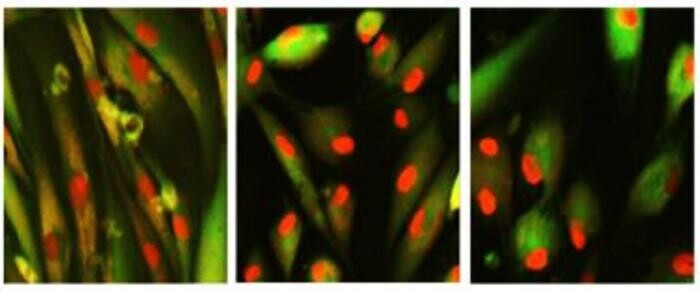
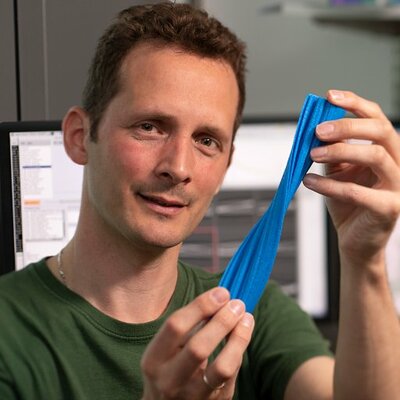 Sjors Scheres
 Ninaad Lasrado