
ENERGY BILLS: New data shows 40% of people are afraid to get help after energy bills more than double — as Iran conflict threatens to push costs even higher

Energy bills in south Wales have more than doubled since 2008 — and new research suggests four in ten people are still too embarrassed or afraid to seek help when they can’t afford to pay.

Now, with the Iran conflict pushing wholesale gas prices sharply higher and a significant price cap rise expected in July, the situation could be about to get worse before it gets better.

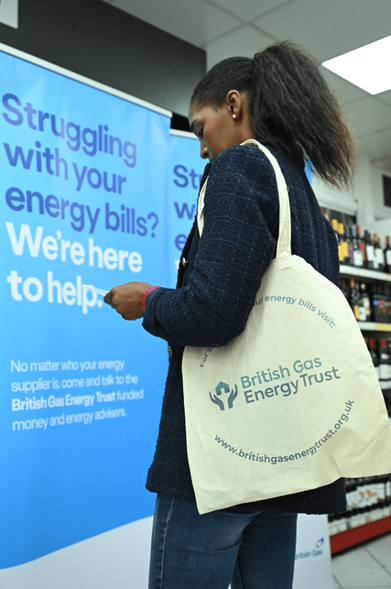
British Gas Energy Trust, working with Age Cymru Dyfed, is bringing free drop-in advice events to four west Wales venues this month to help households get on top of their bills before that happens.

Sessions take place at Prince Philip Hospital in Llanelli on 19 May, Glangwili Hospital in Carmarthen on 20 May, Asda Llanelli on 27 May and Tesco Ammanford on 28 May — all running from 10am to 1pm and open to customers of any energy supplier.

The average domestic electricity bill in south Wales has climbed from £444 in 2008 to £1,129 — a rise of more than 150% in under two decades. South Wales households are among the hardest hit in the UK, with rural grid maintenance costs, higher heating demand and limited access to competitive tariffs all contributing.

Carmarthenshire families reliant on heating oil have faced some of the sharpest increases of all, with many paying triple what they once did — and rural communities have faced the additional threat of fuel theft as prices have rocketed.

The £150 average reduction applied automatically to bills from April offered some relief. But analysts at Cornwall Insight warn that the Ofgem price cap is on course to rise by around 20% in July — pushing the average annual bill from £1,641 to £1,973 — more than wiping out any April saving.

The driving force is the conflict in Iran. US and Israeli strikes against Iran began on 28 February 2026, prompting Iran to warn ships not to cross the Strait of Hormuz — a waterway that usually provides passage for around 20% of the world’s petroleum and liquefied natural gas supply. UK wholesale natural gas prices rose by roughly 75% between late February and late March as a result.

The government has responded with an energy package aimed at reducing the effect of higher gas prices on electricity bills, including offering voluntary long-term fixed contracts to low-carbon generators and raising the electricity generator levy from 45% to 55%. But the NIESR has warned the government has little fiscal space to provide anything like the £40 billion support package deployed during the 2022 energy crisis.

Swansea West MP Torsten Bell has written about the need to protect households from the economic fallout of the Iran conflict, while Citizens Advice Cymru has warned there is already no sign of easing in the cost of living crisis across Wales.

New research commissioned by British Gas Energy Trust found 40% of people still don’t seek help when struggling with bills. Stigma and embarrassment are the biggest barrier, cited by 38% of respondents — up from 33% the previous year. Others wrongly believe they won’t qualify for support (29%), or find the application process too daunting (17%).

It is in this context that the west Wales drop-in events take on added significance — offering a rare chance to get free, practical, face-to-face help at a time when many households are bracing for another difficult winter.

At the Llanelli, Carmarthen, Ammanford and Asda sessions, trained advisers will help with budget planning, managing energy debt, applying for debt write-off grants and accessing energy-saving measures. British Gas representatives will also be on hand to explain payment plan options and support schemes.

Tracey Talbot, Interim Chief Executive Officer at British Gas Energy Trust, said the partnership with local charities was designed to bring help directly into communities. “No one should feel alone in this — and we want people to know that help is not only available, but designed to work for them, wherever they are in life,” she said.

Daniel Barr, Senior Vulnerable Customer Lead at British Gas, said the first conversation with an adviser could make a real difference. British Gas has committed £140 million to help customers with energy bills since 2021 — the biggest voluntary support package from an energy company, it says.

Research also found 67% of people believe there should be more government and charity programmes to help manage rising energy costs. With the July price cap rise looming, the four events in west Wales this month may come at exactly the right moment for households already struggling to keep up.

#AgeCymru #BritishGasEnergyTrust #Carmarthen #costOfLiving #electricityBill #energyBills #energyPriceCap #gasBill #heatingOil #Llanelli #Ofgem

How does it make sense when the media says that average households will save £117 a year with the new OFGEN energy price cap? Especially when the price cap changes four times a year?

Am I the only one who notices it goes up just in time for winter and comes down when it gets warmer (though not by as much as it seems to go up (this time only 7%))?

#ofgen #ukpolitics #EnergyPriceCap

South Wales electricity bills surge 154% since 2008, new figures show

Households across South West Wales are being hit with record energy costs this autumn, as the latest Ofgem rates confirm standing charges at unprecedented levels and long‑term analysis shows bills have risen more than 150% since 2008.

The average domestic electricity bill in South Wales has climbed from £444 in 2008 to £1,129 in 2024, according to UK Government data analysed by OHMS Renewables. That’s an increase of over £680 in just 16 years, leaving families in Swansea, Neath Port Talbot, Carmarthenshire, Pembrokeshire and Bridgend struggling to absorb the extra costs.

Direct Debit customers — the majority of households — have seen bills climb by 168%, while prepayment customers, often among the most financially vulnerable, have still faced rises of 132%.

South Wales electricity bill increases (2008–2024)

Bill Type2008 (£)2024 (£)% IncreaseCredit4551178158.9Direct Debit4221133168.4Prepayment4571060131.9Overall4441129154.2

OHMS Renewables energy analyst, David Walker said:

“Households are paying far more today for the same level of consumption. Although price caps and efficiency measures have provided some protection, the underlying trend remains deeply concerning.”

Current costs in South Wales (Oct–Dec 2025)

Gas unit rateGas standing chargeElectricity unit rateElectricity standing charge6.46p per kWh34.30p per day26.83p per kWh51.69p per day

The Energy Price Cap rose by 2% on 1 October, setting the average annual dual‑fuel bill for Direct Debit households at £1,755, up from £1,720. The increase was largely driven by higher standing charges — the fixed daily costs just for being connected — which now average £320 a year for Direct Debit customers, up from £296. That’s what households pay before they even switch on a light or boil a kettle.

Regional disparities

Across the UK, bills have risen by an average of 163% since 2008. But South Wales households are among those hit hardest, with only Northern Scotland and North Wales seeing sharper increases. Factors such as rural grid maintenance costs, higher heating demand in coastal areas and limited access to competitive tariffs are thought to contribute to the sustained rises in Wales.

Coping with costs

Experts say households can take steps to manage bills, including:

  • Switching from prepayment to direct debit where possible
  • Choosing fixed‑rate tariffs for stability
  • Improving insulation and draught‑proofing
  • Upgrading to energy‑efficient appliances
  • Checking for support schemes such as ECO4

#directDebit #electricBill #electricity #electricityBill #energy #energyPriceCap #energyEfficiency #fixedRateTariff #Ofgem #StandingCharges

As Leader of the Opposition, Sir Keir Starmer insisted that Labour had a fully costed plan to ensure that energy prices would not increase. Funny how he seems to have forgotten that assertion.
Or was he lying?
#Politics #EnergyPriceCap

Oh look, something else the new Labour government will disappoint us on...can't imagine why they're doing so poorly in the Polls....

https://www.theguardian.com/money/2024/oct/01/martin-lewis-energy-price-cap-cheaper-deal

#WinterFuelPayments #EnergyPriceCap #Labour #MartinLewis #UKPOL #Ukpolitics

Martin Lewis says energy price cap is a ‘pants cap’

Consumer champion urges people to head to a price comparison website to find a cheaper deal

The Guardian
The pensioners pushed into fuel poverty with Ofgem price cap increase

One man is required to keep his bungalow at 22 degrees due to his chronic illness

The Independent
Ofgem energy price cap could have been £500 lower, campaigners say

Morning Star
The announced energy price cap lowering for July calculations say that I'll pay a whopping £2 less a month until prices inevitably rise in October. Be still my beating heart.
#UK #CostofLiving #energyPriceCap #Gas #Electricity

#EnergyBills: #StandingCharges are not standing still

Despite a 12.3% cut in April’s #EnergyPriceCap, there is an important fixed element in your bill that is rising again
https://www.theguardian.com/money/2024/mar/30/energy-bills-standing-charges-are-not-standing-still
#ToryPoliciesInAction #Privatisation #Greed

Energy bills: standing charges are not standing still

Despite a 12.3% cut in April’s energy price cap, there is an important fixed element in your bill that is rising again

The Guardian

UK households urged to submit meter readings ahead of energy price cut

Martin Lewis among those encouraging consumers to make a note so they do not overpay when cap reduce

Millions of households are being urged to submit meter readings to their energy supplier this weekend to ensure they do not overpay when cheaper prices come in on Monday.

https://www.theguardian.com/money/2024/mar/28/uk-households-urged-to-submit-meter-readings-ahead-of-energy-price-cut

#EnergyPrices #EnergyPriceCap #electricity #gas #utilities

UK households urged to submit meter readings ahead of energy price cut

Martin Lewis among those encouraging consumers to make a note so they do not overpay when cap reduced

The Guardian